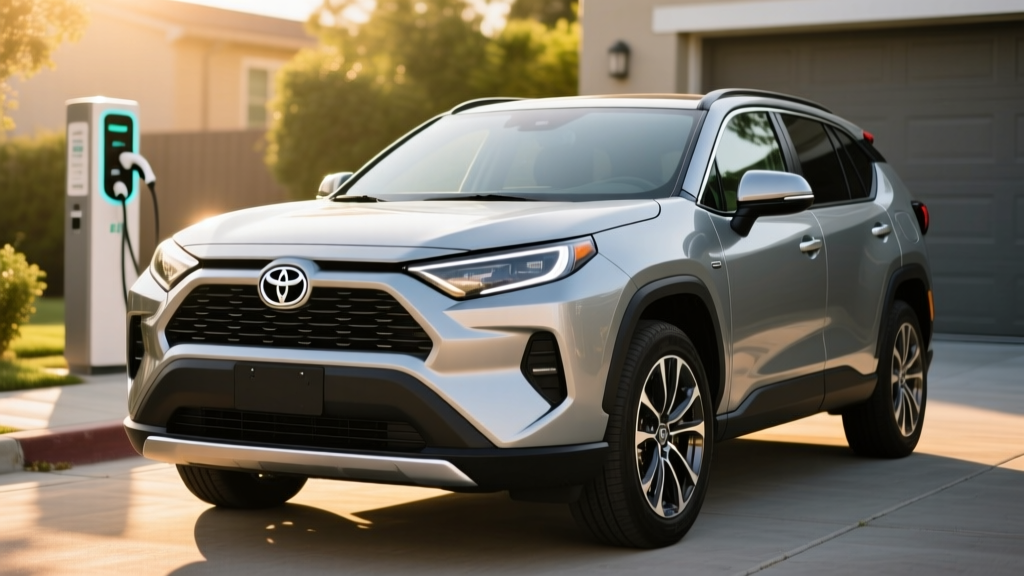
Quick Verdict: The 2025 RAV4 LE Hybrid at a Glance
The 2025 RAV4 LE Hybrid remains one of the most practical compact SUVs for buyers who want meaningful fuel savings without plugging in. As the base trim in Toyota's hybrid lineup, the LE pairs a 2.5-liter four-cylinder engine with Toyota's fifth-generation hybrid system to deliver an EPA-estimated 41 MPG combined — a number that's genuinely achievable in mixed driving. Starting at $31,995 (including destination), it undercuts many rivals on price while offering standard all-wheel drive, a suite of advanced safety features, and the long-term reliability Toyota has built over two decades of hybrid production.
This guide covers everything a prospective buyer needs: exact fuel economy figures, real-world MPG expectations, the hybrid powertrain breakdown, battery longevity and warranty coverage, tax credit eligibility, and how the RAV4 LE Hybrid stacks up against plug-in hybrid and fully electric alternatives.
HEV vs PHEV: Where the RAV4 LE Hybrid Fits
Before diving into specs, it's essential to distinguish between the two types of electrified RAV4 models Toyota offers — because the difference affects your daily routine, your fuel bill, and your tax situation.
Conventional Hybrid (HEV) — RAV4 LE Hybrid
- No plug required. The battery recharges through regenerative braking and the gasoline engine.
- Self-charging system: You drive it exactly like a gas car — fill up at the station, and the hybrid system handles the rest.
- Battery size: ~1.6 kWh nickel-metal hydride (NiMH) — small, proven, and designed for frequent shallow cycling.
- Best for: Drivers who lack home charging access, apartment dwellers, or anyone who wants EV-like efficiency without lifestyle changes.
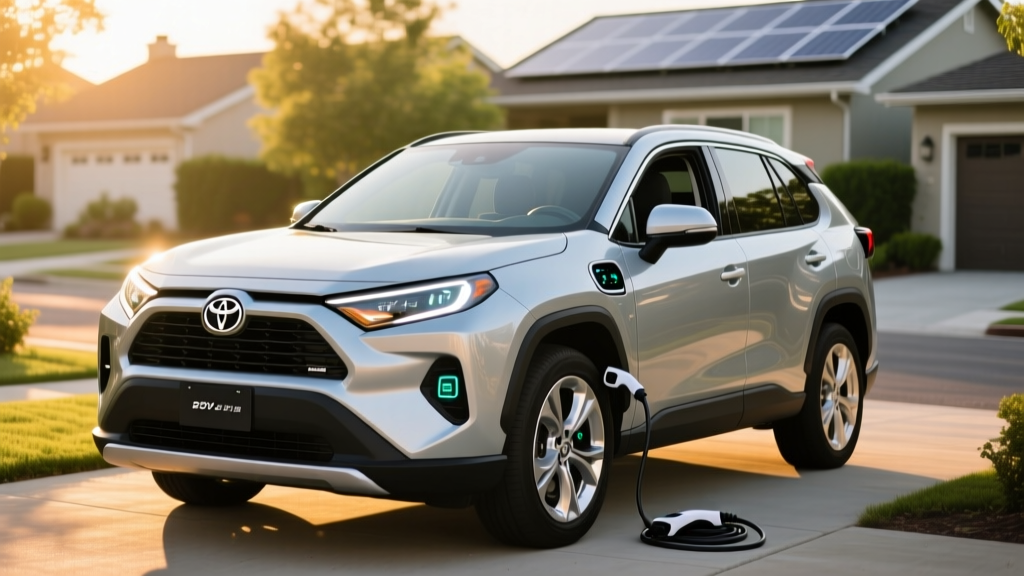
Plug-In Hybrid (PHEV) — RAV4 Prime
- Requires plugging in to access the full 42 miles of electric-only range.
- Larger battery: 18.1 kWh lithium-ion, chargeable via Level 1 (120V) or Level 2 (240V) — no DC fast charging.
- Federal tax credit eligible (subject to phase-out and sourcing rules — see below).
- Best for: Drivers with home charging who want electric-only commuting with a gas backup for longer trips.
The RAV4 LE Hybrid is a conventional HEV. You will never need to plug it in, and there is no electric-only driving mode beyond very low-speed, short-distance creeping. If you want plug-in capability, you need the RAV4 Prime, which starts significantly higher at approximately $44,000.
Fuel Economy: EPA Ratings and Real-World MPG
The headline number for the 2025 RAV4 LE Hybrid is its EPA-estimated fuel economy. Here's the full breakdown from fueleconomy.gov:
| Driving Cycle | EPA Estimate | Real-World Expectation |
|---|---|---|
| City | 41 MPG | 40–44 MPG (hybrids often exceed EPA in stop-and-go) |
| Highway | 38 MPG | 35–38 MPG (aerodynamic drag and sustained speed reduce advantage) |
| Combined | 41 MPG | 38–42 MPG depending on driving mix |
Why Hybrids Often Beat EPA in the City
Conventional hybrids like the RAV4 LE shine in urban driving because regenerative braking recovers energy that a gas car wastes as heat. At low speeds and during frequent stops, the electric motor handles more of the propulsion load, and the engine shuts off entirely at idle. Owners who do predominantly city driving routinely report 42–44 MPG in warmer months.
Where MPG Drops
Highway driving at 75+ MPH, sustained mountain grades, and cold-weather operation (below 30°F) all reduce efficiency. Expect highway-heavy commutes to net 35–37 MPG. In extreme cold, the engine runs more frequently to maintain cabin heat and battery temperature, which can drop city figures to 36–38 MPG until the system warms up. These are normal hybrid behaviors, not defects.
Powertrain and Performance Specs
| Specification | 2025 RAV4 LE Hybrid |
|---|---|
| Engine | 2.5L Dynamic Force 4-cylinder (176 hp, 163 lb-ft) |
| Front Electric Motor | 134 hp, 199 lb-ft |
| Rear Electric Motor (AWD) | 54 hp, 89 lb-ft |
| Net Combined Horsepower | 219 hp |
| Transmission | eCVT (electronically controlled continuously variable) |
| Drivetrain | Electronic On-Demand AWD (standard) |
| 0–60 MPH | ~7.4 seconds |
| Hybrid Battery | ~1.6 kWh NiMH (sealed, self-charging) |
| Towing Capacity | 1,750 lbs |
| Cargo Volume (behind rear seats) | 37.6 cu ft |
| Base MSRP (incl. destination) | $31,995 |
The 219 combined horsepower figure represents the maximum net output the system can deliver at any given moment — not the simple sum of engine and motor ratings, because the engine and motors don't always peak simultaneously. The eCVT uses planetary gearsets rather than a belt or chain, which contributes to the smooth, linear acceleration feel and the powertrain's long-term durability.
The electronic on-demand AWD system is worth noting: the rear axle is driven entirely by the rear electric motor, with no mechanical connection to the front drivetrain. This means AWD engagement is instantaneous and only draws power when needed, minimizing the efficiency penalty that traditional mechanical AWD systems impose.
Battery Warranty, Lifespan, and Replacement Cost
Toyota Hybrid Battery Warranty
Coverage: 10 years or 150,000 miles (whichever comes first), applicable to all 50 states for 2025 models.
What's covered: Defects in materials or workmanship, and capacity loss below a defined threshold (typically ~70% of original capacity) that impairs hybrid system function.
Transferability: Fully transferable to subsequent owners, which supports strong resale values.
How Long Do Toyota Hybrid Batteries Actually Last?
Toyota has been producing the RAV4 Hybrid since the 2016 model year, and the broader Prius hybrid platform dates to 1997 in Japan and 2000 in the US. The data from nearly three decades of real-world operation is encouraging: the majority of Toyota hybrid NiMH batteries last 150,000–200,000+ miles before significant degradation. The small 1.6 kWh battery is never deeply discharged — the hybrid system keeps the state of charge (SoC) between roughly 40% and 80%, which dramatically extends cycle life compared to the deeper cycling a full EV battery undergoes.
Battery Replacement Cost
If a replacement is eventually needed out of warranty, a new OEM hybrid battery pack for the RAV4 Hybrid typically costs between $2,500 and $4,000 installed at a Toyota dealer. Independent hybrid specialists and refurbished battery options can bring this down to $1,500–$2,500. Given the 10-year/150,000-mile warranty and the battery's track record, most original owners will never face this expense.
Is the Hybrid System Reliable Overall?
Toyota's hybrid synergy drive system has consistently earned top reliability marks from Consumer Reports and J.D. Power. The eCVT has no clutch packs, torque converter, or shifting mechanisms that wear out in conventional automatics. Regenerative braking reduces wear on the friction brake pads — many RAV4 Hybrid owners report original brake pads lasting 80,000+ miles. The primary maintenance items remain oil changes (every 10,000 miles with synthetic), cabin air filter, and tire rotations.
Pricing, Trims, and Tax Credit Eligibility
| 2025 RAV4 Hybrid Trim | MSRP (incl. destination) | Federal Tax Credit |
|---|---|---|
| LE | $31,995 | Not eligible (§30D requires plug-in) |
| XLE | $33,495 | Not eligible |
| XLE Premium | $35,095 | Not eligible |
| SE | $35,595 | Not eligible |
| XSE | $36,595 | Not eligible |
| Limited | $39,495 | Not eligible |
Does the RAV4 LE Hybrid Qualify for Any Tax Credit?
No. Under IRS §30D Clean Vehicle Credit rules, only plug-in electric vehicles (BEVs and PHEVs) with a minimum battery capacity of 7 kWh qualify for the federal tax credit. The RAV4 LE Hybrid's ~1.6 kWh NiMH battery does not meet this threshold. This applies to all conventional hybrids — the Honda CR-V Hybrid, Ford Escape Hybrid, and Toyota Highlander Hybrid are similarly ineligible.
If the federal tax credit is a priority for your purchase, the RAV4 Prime (PHEV) may qualify for up to $7,500, subject to current-year battery sourcing requirements, MSRP caps ($80,000 for SUVs), buyer income limits ($300,000 joint / $150,000 individual AGI), and the point-of-sale transfer option. Consult a tax professional and check the latest IRS guidance before relying on credit eligibility, as sourcing rules have tightened significantly since 2024.
State and Local Incentives
Some states and municipalities offer rebates or HOV lane access for conventional hybrids, though these are far less common than BEV/PHEV incentives. Check your state energy office or AFDC incentive database for current programs in your area. A few utilities also offer reduced electric rates for hybrid owners who participate in demand-response programs, though this is rare.
RAV4 LE Hybrid vs. PHEV vs. Full EV: Which Should You Choose?
Choose the RAV4 LE Hybrid If:
- You live in an apartment or lack reliable home charging access
- Your budget is under $35,000 and you want a new AWD SUV
- You regularly drive 300+ miles in a day and don't want to plan charging stops
- You want minimal lifestyle change — just buy gas as usual
- You prioritize long-term reliability data and low maintenance costs
Consider the RAV4 Prime (PHEV) If:
- You have a garage or driveway with a 120V or 240V outlet
- Your daily commute is under 42 miles round-trip (the Prime's electric-only range)
- You want to drive on electricity most days while keeping gas flexibility for road trips
- You qualify for the federal tax credit, which significantly narrows the price gap
- You want 302 combined hp — the Prime is the quickest RAV4 variant
Go Full EV (e.g., Tesla Model Y, Hyundai Ioniq 5) If:
- You have reliable Level 2 home charging and your daily driving is under 250 miles
- You want zero tailpipe emissions and minimal moving parts
- You qualify for the full $7,500 federal credit and state incentives
- You're comfortable with route planning on road trips using DC fast charging
- You want the lowest per-mile fuel cost (electricity at $0.12/kWh ≈ $4/gallon equivalent)
The Decision Framework
The single most important question is: Can you charge at home? If the answer is no, a conventional hybrid like the RAV4 LE is your best path to electrified efficiency. If yes, the math shifts toward a PHEV or BEV, where the per-mile cost drops substantially and the tax credit can offset the higher purchase price. The RAV4 LE Hybrid occupies the sweet spot for buyers who want efficiency, AWD capability, and Toyota reliability without any charging infrastructure dependency.
5-Year Ownership Cost Snapshot
| Cost Factor | 2025 RAV4 LE Hybrid | 2025 RAV4 LE (Gas AWD) | Notes |
|---|---|---|---|
| MSRP | $31,995 | $30,495 | Hybrid premium: ~$1,500 |
| Fuel (5 yr / 75,000 mi) | ~$6,100 | ~$8,820 | Based on $3.50/gal, 41 vs 28 MPG combined |
| Federal Tax Credit | $0 | $0 | Neither qualifies |
| Estimated Maintenance (5 yr) | ~$2,200 | ~$2,800 | Hybrid: less brake wear, no alt./starter replacement |
| 5-Year Total (est.) | ~$40,295 | ~$42,115 | Hybrid saves ~$1,800 over 5 years |
The hybrid premium pays for itself in roughly 3.5 to 4 years for a driver covering 15,000 miles annually at current fuel prices. If gas prices rise above $4.00/gallon, the payback period shortens further. Insurance costs are comparable between the hybrid and gas variants, typically within $50–$100/year depending on carrier and region.
Frequently Asked Questions
How many MPG does the 2025 RAV4 LE Hybrid actually get?
The EPA rates it at 41 city / 38 highway / 41 combined. In real-world mixed driving, expect 38–42 MPG. City-heavy routes in warm weather can push into the low-to-mid 40s. Highway-only driving at 75+ MPH typically yields 35–37 MPG.
Does the RAV4 LE Hybrid need to be plugged in?
No. The RAV4 LE Hybrid is a conventional hybrid (HEV). Its battery charges automatically through regenerative braking and the gasoline engine. There is no plug, no charging cable, and no need for any charging infrastructure. You refuel it at a gas station like any other car.
Is the RAV4 Hybrid battery expensive to replace?
A new OEM replacement battery costs approximately $2,500–$4,000 installed. However, Toyota's hybrid battery warranty covers 10 years or 150,000 miles, and real-world data shows most Toyota hybrid batteries last well beyond that point. The vast majority of original owners will never replace the hybrid battery.
Does the 2025 RAV4 LE Hybrid qualify for the $7,500 federal tax credit?
No. Under current IRS §30D rules, only plug-in vehicles (BEVs and PHEVs) with at least 7 kWh of battery capacity qualify. The RAV4 LE Hybrid's ~1.6 kWh battery does not meet this threshold. Only the RAV4 Prime (PHEV) may qualify, subject to income, MSRP, and battery sourcing requirements.
How does the RAV4 LE Hybrid compare to the RAV4 Prime?
The RAV4 Prime is a plug-in hybrid with 42 miles of electric-only range, 302 combined hp, and a starting price around $44,000 — roughly $12,000 more than the LE Hybrid. The Prime requires plugging in to realize its electric benefits and may qualify for the federal tax credit. The LE Hybrid is the value play: lower price, no plug required, and still excellent fuel economy at 41 MPG combined.
Is the 2025 RAV4 Hybrid reliable?
Toyota's hybrid powertrain has one of the strongest reliability track records in the industry, backed by nearly 25 years of production data. The eCVT transmission eliminates the most failure-prone components of conventional automatics, and regenerative braking extends brake pad life significantly. Toyota's 10-year/150,000-mile hybrid battery warranty provides additional peace of mind. The RAV4 Hybrid consistently earns top marks from Consumer Reports for predicted reliability.
What's the difference between the RAV4 Hybrid LE and higher trims?
All 2025 RAV4 Hybrid trims share the same 219 hp powertrain, AWD system, and 41 MPG combined rating. The LE is the base trim and includes Toyota Safety Sense 2.5 (adaptive cruise, lane-keeping, automatic emergency braking), an 8-inch touchscreen, wireless Apple CarPlay/Android Auto, and LED headlights. Higher trims add features like a power liftgate, larger touchscreen, SofTex seating, panoramic roof, and premium audio — but the mechanical and efficiency experience is identical across the lineup.