Quick Verdict: The RAV4 Hybrid Still Sets the Bar
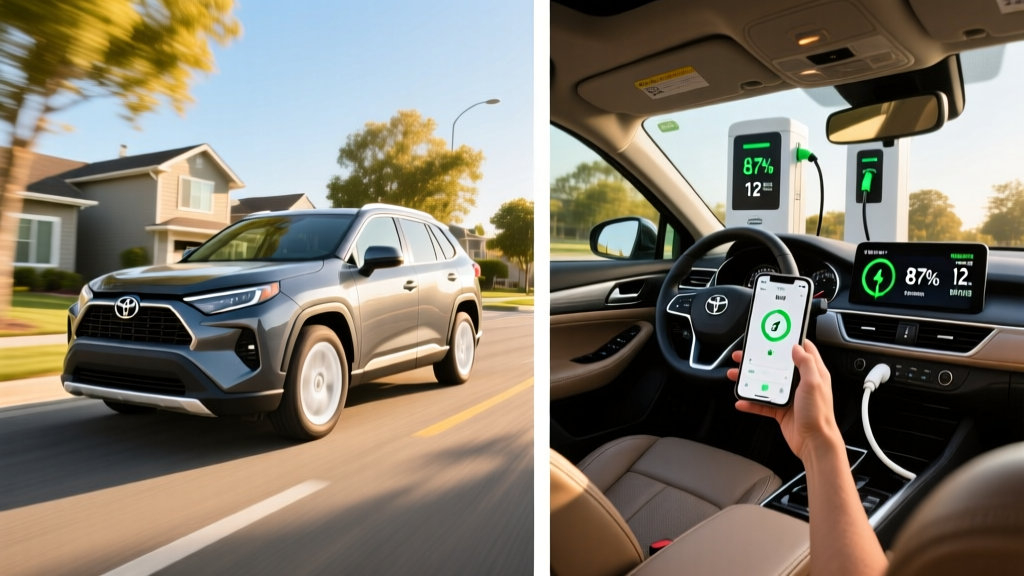
The 2025 Toyota RAV4 Hybrid remains one of the most efficient compact SUVs on the market without requiring a single plug. With an EPA-rated 41 MPG city / 38 MPG highway / 39 MPG combined, it delivers hybrid fuel savings seamlessly while maintaining the cargo space, all-wheel drive capability, and reliability reputation that made the RAV4 America's best-selling non-truck. For buyers weighing electrified options, understanding the real-world MPG, the difference between the standard Hybrid (HEV) and the plug-in RAV4 Prime (PHEV), and long-term battery costs is essential before signing a purchase agreement.
| Spec | Value |
|---|---|
| EPA Fuel Economy (City / Hwy / Combined) | 41 / 38 / 39 MPG |
| Powertrain | 2.5L 4-cyl + 3 electric motors (AWD) |
| Combined Horsepower | 219 hp (net system) |
| Battery Type / Capacity | Nickel-Metal Hydride (NiMH), ~1.6 kWh (sealed, self-charging) |
| 0–60 mph | 7.4 seconds |
| Drivetrain | Electronic On-Demand AWD (standard) |
| Cargo Volume (behind rear seats) | 37.5 cu ft |
| Starting MSRP (LE trim) | $33,595 (incl. destination) |
| Hybrid Battery Warranty | 10 years / 150,000 miles |
2025 RAV4 Hybrid MPG: EPA vs. Real-World Numbers
The EPA rates the 2025 RAV4 Hybrid at 39 MPG combined across all trims (LE, XLE, XLE Premium, SE, Woodland Edition, Limited). Because the hybrid system recaptures energy during braking and relies heavily on its electric motors at low speeds, real-world city driving often exceeds the EPA city estimate. Owners consistently report 42–45 MPG in stop-and-go urban traffic, where regenerative braking is most active.
Highway driving tells a different story. At sustained 70–80 mph speeds, the gasoline engine carries more of the load, and real-world highway efficiency typically drops to 34–36 MPG — below the EPA highway sticker. Cold weather (below 35°F) can reduce overall efficiency by 8–12% as the engine runs more frequently to provide cabin heat and maintain battery temperature.
- City driving: 42–45 MPG (often beats EPA 41 city)
- Highway (70 mph cruise): 34–36 MPG (below EPA 38 hwy)
- Mixed commute: 38–41 MPG (aligns with EPA 39 combined)
- Cold weather (sub-35°F): 34–36 MPG combined
- Total range per tank (~14.5 gal): ~520–580 miles mixed
Source: EPA fueleconomy.gov and aggregated owner reports.
RAV4 Hybrid (HEV) vs. RAV4 Prime (PHEV): Which Powertrain Fits You?
Toyota offers two electrified RAV4 variants, and confusing them is one of the most common buyer mistakes. The standard RAV4 Hybrid is a conventional hybrid (HEV) — it never plugs in, generates its own electricity via the engine and regenerative braking, and operates like a gas car at the pump. The RAV4 Prime is a plug-in hybrid (PHEV) with a larger battery, a plug port, and meaningful electric-only range.
| Attribute | RAV4 Hybrid (HEV) | RAV4 Prime (PHEV) |
|---|---|---|
| Plugs In? | No — self-charging | Yes — Level 1 or Level 2 |
| Battery Capacity | ~1.6 kWh (NiMH) | 18.1 kWh (Lithium-ion) |
| Electric-Only Range | N/A (EV mode very limited, <1 mi at low speed) | 42 miles (EPA) |
| Combined System HP | 219 hp | 302 hp |
| 0–60 mph | 7.4 sec | 5.7 sec |
| EPA Combined (gas mode) | 39 MPG | 38 MPG (gas) / 94 MPGe (electric+gas) |
| Total Range | ~520–580 mi | ~600 mi (42 EV + ~560 gas) |
| Level 2 Charge Time (0–100%) | N/A | ~2.5 hours (at 240V / 32A) |
| DC Fast Charging | N/A | Not supported |
| Starting MSRP | $33,595 | $44,765 |
| Federal Tax Credit (§30D) | Not eligible | Not eligible (phased out for Toyota) |
The RAV4 Prime's 42-mile electric-only range covers most daily commutes without burning a drop of gasoline, and its 302 hp makes it the quickest RAV4 Toyota has ever built. However, it commands an ~$11,000 premium over the Hybrid LE, and Toyota's §30D federal tax credit eligibility ended after the manufacturer hit the 200,000-vehicle cap under prior rules. Under current 2025–2026 IRS §30D guidelines, the RAV4 Prime does not qualify for the federal clean vehicle credit because it fails the critical-mineral and battery-component sourcing requirements. Always verify current eligibility before purchase.
Powertrain Deep Dive: How the Hybrid System Works
The 2025 RAV4 Hybrid pairs a 2.5-liter Dynamic Force inline-four engine (176 hp, 163 lb-ft) with Toyota's fourth-generation hybrid system. Two electric motor-generators sit at the front axle, while a third independent motor powers the rear axle for electronic on-demand AWD. Combined net output is 219 horsepower.
Unlike turbocharged gas engines, the hybrid system delivers its best efficiency in exactly the conditions where gas-only vehicles struggle most: low-speed city driving. The engine can shut off entirely at stops and during gentle cruising, with the electric motors providing silent, zero-emission propulsion for short stretches. The transition between gas and electric is nearly imperceptible — a hallmark of Toyota's hybrid synergy drive refinement.
The eCVT (electronically controlled continuously variable transmission) uses a planetary gearset rather than a belt-and-pulley design, which contributes to the system's long-term durability. There are no traditional transmission bands or clutches to wear out.
Battery Longevity, Warranty, and Replacement Cost
Hybrid battery lifespan remains the top concern for first-time hybrid buyers. Toyota backs the RAV4 Hybrid's battery with a 10-year / 150,000-mile warranty (in all 50 states), covering defects and capacity loss below a defined threshold. This is one of the most comprehensive hybrid battery warranties in the industry.
- Warranty: 10 years / 150,000 miles (transferable to second owner)
- Chemistry: Nickel-Metal Hydride (NiMH) — proven, durable, less energy-dense than lithium-ion but highly tolerant of daily shallow charge cycles
- Expected Lifespan: 150,000–200,000+ miles based on fleet and owner data
- OEM Replacement Cost: $3,000–$4,500 (dealer-installed new battery pack)
- Refurbished/Aftermarket Replacement: $1,500–$2,500 (reconditioned modules, independent shops)
- Individual Module Replacement: Some specialists can replace failed modules within the pack for $500–$1,200
In practice, Toyota's hybrid batteries have demonstrated exceptional longevity. Taxi fleets using Toyota hybrids routinely exceed 250,000 miles on original battery packs. The NiMH chemistry in the RAV4 Hybrid is less energy-dense than lithium-ion but is far more tolerant of the shallow charge-discharge cycles that define hybrid operation. Unlike a full EV battery, the hybrid pack is never deeply discharged or charged to true 100% — the system maintains a state-of-charge buffer (roughly 40–80%) to minimize degradation.
Pricing, Trims, and Tax Credit Reality
The 2025 RAV4 Hybrid is available in six trims, all with standard AWD:
- LE: $33,595 — 8" touchscreen, Toyota Safety Sense 2.5, wireless CarPlay/Android Auto
- XLE: $35,095 — dual-zone climate, blind-spot monitor, alloy wheels
- XLE Premium: $37,095 — SofTex seats, moonroof, power liftgate
- SE: $36,595 — sport-tuned suspension, 19" wheels, paddle shifters
- Woodland Edition: $36,895 — TRD-tuned suspension, all-terrain tires, roof rack
- Limited: $39,895 — 12.3" display, premium audio, heated/ventilated front seats
Federal tax credit: The standard RAV4 Hybrid (HEV) does not qualify for the IRS §30D Clean Vehicle Credit. That credit is reserved for plug-in electric vehicles (BEVs and PHEVs) that meet battery sourcing, MSRP cap ($80,000 for SUVs), and buyer income limits. The RAV4 Prime PHEV also currently fails the critical-mineral sourcing requirements under the Inflation Reduction Act provisions. Some states offer their own hybrid or PHEV incentives — check your state energy office or the Alternative Fuels Data Center for local programs.
Who Should Choose the RAV4 Hybrid vs. a Full EV or Gas Car?
- 39 MPG combined with zero behavior change — no plugging in
- Standard AWD across all trims
- Proven hybrid reliability with 10yr/150k battery warranty
- Strong real-world city MPG (often 42–45)
- 37.5 cu ft cargo, competitive with gas RAV4
- No range anxiety in cold weather or remote areas
- Lower upfront cost than PHEV or BEV alternatives
- Highway MPG drops below EPA sticker at 75+ mph
- No federal tax credit eligibility
- eCVT drone under hard acceleration (common to Toyota hybrids)
- Interior materials lag behind Hyundai Tucson Hybrid / Kia Sportage Hybrid
- Base LE lacks some features standard on competitors
- No DC fast charging capability (HEV — not applicable)
- Choose the RAV4 Hybrid if: You want maximum MPG without plugging in, drive a mix of city and highway, live in an area with limited charging infrastructure, or want Toyota's long-term reliability track record. Ideal for apartment dwellers who can't install a home charger.
- Choose the RAV4 Prime (PHEV) if: You have home Level 2 charging, your daily commute is under 42 miles round-trip, you want the option of electric-only driving for daily errands, and you value the 302 hp performance boost.
- Choose a full EV (e.g., Tesla Model Y, Hyundai Ioniq 5) if: You have reliable home charging, your daily driving is under 250 miles, you want zero tailpipe emissions, lower per-mile fuel cost, and access to the $7,500 federal tax credit on eligible models.
- Stick with a gas RAV4 if: Your annual mileage is very low (under 8,000 mi/yr), the hybrid premium doesn't pay back within your ownership horizon, or you prioritize the lowest possible purchase price.
5-Year Cost of Ownership Snapshot
At 15,000 miles per year and $3.40/gallon regular unleaded, the RAV4 Hybrid's fuel cost runs approximately $1,300/year — roughly $500–$600 less per year than the gas-only RAV4 AWD (EPA 30 MPG combined). Over five years / 75,000 miles, that's ~$2,500–$3,000 in fuel savings, which largely offsets the hybrid's ~$1,800 premium over the gas LE AWD.
Insurance premiums for the RAV4 Hybrid tend to run 3–5% higher than the gas model due to higher repair costs for hybrid-specific components, though this varies by carrier and state. Maintenance costs are generally lower: no starter motor to replace, regenerative braking extends pad life (often 60,000+ miles on original pads), and the eCVT requires no fluid changes under normal use.
Frequently Asked Questions
How many MPG does the 2025 RAV4 Hybrid actually get?
The EPA rates it at 41 city / 38 highway / 39 combined. In real-world driving, expect 42–45 MPG in city conditions (hybrids excel here) and 34–36 MPG on sustained highway drives. Mixed driving typically lands between 38–41 MPG.
Does the RAV4 Hybrid need to be plugged in?
No. The RAV4 Hybrid is a conventional (self-charging) hybrid. It generates all its own electricity through the gasoline engine and regenerative braking. You fuel it exactly like a gas car — there is no plug and no electric-only range of practical significance.
How far can the RAV4 Prime go on electric only?
The 2025 RAV4 Prime (PHEV) delivers an EPA-rated 42 miles of electric-only range on a full charge of its 18.1 kWh lithium-ion battery. Once depleted, it operates as a conventional hybrid at 38 MPG combined. The standard RAV4 Hybrid (HEV) has no meaningful electric-only range.
Is the RAV4 Hybrid reliable, and what does a battery replacement cost?
Toyota's hybrid system is among the most proven in the industry, with millions of units on the road. The hybrid battery carries a 10-year/150,000-mile warranty. If replacement is needed out of warranty, expect $3,000–$4,500 for an OEM pack at a dealer, or $1,500–$2,500 for a refurbished unit from a specialist. Most original packs last 150,000–200,000+ miles.
Does the 2025 RAV4 Hybrid qualify for any tax credit?
The standard RAV4 Hybrid (HEV) does not qualify for the federal §30D Clean Vehicle Credit — that credit applies only to plug-in vehicles (BEVs and eligible PHEVs). The RAV4 Prime PHEV currently does not meet the battery-sourcing requirements either. Some states offer separate incentives for hybrids; check your state's energy office or the DOE Alternative Fuels Data Center.
How does the RAV4 Hybrid compare to the Honda CR-V Hybrid?
The 2025 Honda CR-V Hybrid is rated at 40 city / 35 highway / 37 combined (AWD trims), giving the RAV4 Hybrid a slight edge in combined and highway MPG. The CR-V Hybrid offers marginally more rear-seat legroom and cargo space, while the RAV4 Hybrid provides more trim variety and the off-road-oriented Woodland Edition.
Can the RAV4 Hybrid battery be repaired instead of replaced?
Yes. Hybrid battery specialists can diagnose and replace individual failed modules within the battery pack rather than replacing the entire assembly, often for $500–$1,200. This is a viable option for out-of-warranty vehicles and can extend the pack's life by several more years.