2025 RAV4 Hybrid MPG: The Numbers That Actually Matter
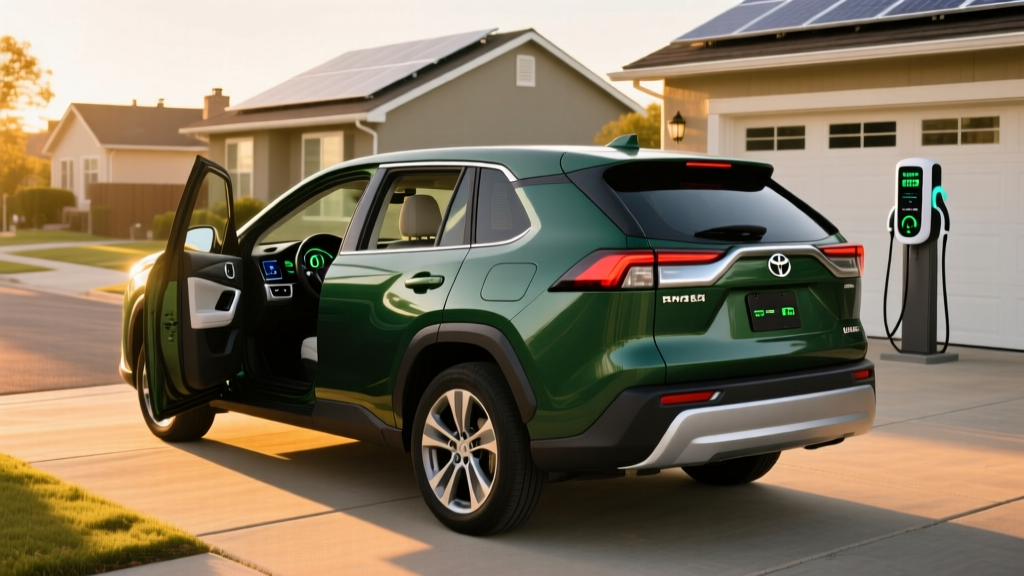
The Toyota RAV4 Hybrid remains one of the most popular hybrid SUVs in the U.S. for a reason: it delivers genuine fuel savings without requiring you to change your habits. No plug, no range anxiety, no charging apps — just significantly better mileage than a gas-only compact SUV. For 2025, Toyota carries over the proven 2.5-liter Dynamic Force hybrid powertrain across all RAV4 Hybrid trims, and the EPA fuel economy figures hold steady from prior model years.
But the EPA sticker only tells part of the story. Hybrid fuel economy behaves differently than gas cars — city driving often beats the EPA estimate, while sustained highway speeds can fall short. Below, we break down the official numbers, what you'll actually see in real-world driving, and how the RAV4 Hybrid stacks up against the RAV4 Prime PHEV and full electric alternatives.
| Configuration | City MPG | Highway MPG | Combined MPG |
|---|---|---|---|
| AWD (all trims: LE, XLE, XLE Premium, SE, XSE, Woodland, Limited) | 41 | 38 | 39 |
Source: EPA / fueleconomy.gov
EPA combined: 39 MPG
Real-world city / suburban (under 45 mph): expect 40–44 MPG — hybrids thrive in stop-and-go where regenerative braking recovers energy.
Real-world highway (70–80 mph sustained): expect 34–37 MPG — aerodynamic drag dominates and the electric motor contributes less at steady high speed.
Cold weather (below 32°F): expect 33–36 MPG combined — the engine runs more frequently to provide cabin heat and warm the catalytic converter.
Your results depend heavily on driving style, terrain, and climate. Owners in mild coastal climates routinely report 42+ MPG combined; those in cold mountain regions may see mid-30s.
RAV4 Hybrid (HEV) vs. RAV4 Prime (PHEV): What's the Difference?
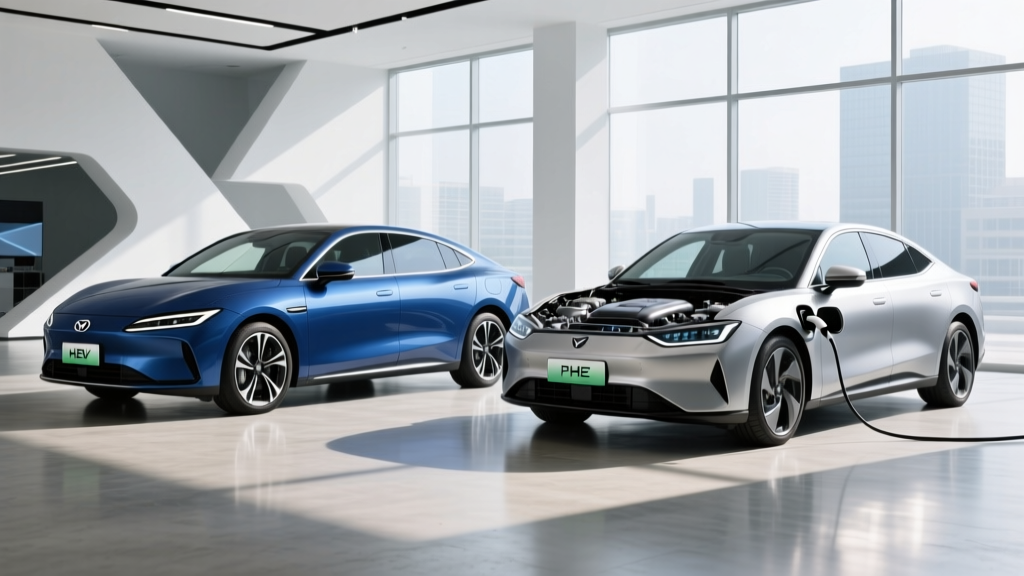
Toyota sells two electrified RAV4 variants, and the distinction matters for your wallet and daily routine. The conventional RAV4 Hybrid is a self-charging hybrid (HEV) — it never plugs in. The RAV4 Prime is a plug-in hybrid (PHEV) with a larger battery that provides meaningful electric-only range before the gas engine kicks in.
RAV4 Hybrid (HEV)
- No plug required — charges via regenerative braking and the engine
- 1.6 kWh nickel-metal hydride battery (not user-chargeable)
- 219 hp combined (2.5L 4-cyl + front/rear electric motors)
- 39 MPG combined (EPA)
- Electric-only capability: less than 1 mile at low speed — not a practical EV mode
- Starts at ~$33,575 MSRP (LE AWD, including destination)
RAV4 Prime (PHEV)
- Plugs in — Level 1 (120V) or Level 2 (240V) charging
- 18.1 kWh lithium-ion battery (usable ~14.5 kWh)
- 302 hp combined (2.5L 4-cyl + more powerful front/rear motors)
- 42 miles electric-only (EPA), then 38 MPG combined as a hybrid
- No DC fast charging — Level 2 (~2.5 hours) or Level 1 (~10 hours)
- Starts at ~$44,975 MSRP (SE AWD, including destination)
The RAV4 Prime delivers 42 miles of electric-only range — enough for most daily commutes without burning a drop of gas. When the battery depletes, it operates as a conventional hybrid at 38 MPG combined. However, the Prime commands an ~$11,400 premium over the Hybrid LE, and availability has been constrained since its introduction. If you can charge at home and your commute falls within 40 miles round-trip, the Prime pays dividends. Otherwise, the standard Hybrid delivers outstanding efficiency with zero lifestyle change.
Powertrain Deep Dive: How the RAV4 Hybrid Achieves 39 MPG
The 2025 RAV4 Hybrid uses Toyota's fifth-generation hybrid system, pairing a 2.5-liter Dynamic Force four-cylinder engine (176 hp, 163 lb-ft) with two electric motors — one driving the front axle and a smaller one on the rear axle for electronic AWD. Combined system output is 219 horsepower.
The front electric motor contributes 118 hp and 149 lb-ft of torque, providing strong low-speed acceleration where the gas engine is least efficient. The rear motor adds 54 hp for traction and stability, engaging automatically when slip is detected or during hard acceleration. This electronic AWD system (Toyota calls it AWD-i) eliminates the mechanical driveshaft found in conventional AWD vehicles, reducing parasitic losses and improving efficiency.
The continuously variable transmission (eCVT) is actually a planetary gearset — not a belt-driven CVT — which Toyota has refined over decades. It's exceptionally durable and contributes to the RAV4 Hybrid's reputation for long-term reliability. The 0-60 mph time sits at approximately 7.4 seconds, which is brisk for the segment and noticeably quicker than the non-hybrid RAV4 AWD (~8.2 seconds).
| Specification | Value |
|---|---|
| Engine | 2.5L Dynamic Force 4-cylinder (176 hp / 163 lb-ft) |
| Front Electric Motor | 118 hp / 149 lb-ft |
| Rear Electric Motor | 54 hp / 89 lb-ft |
| Combined System Output | 219 hp |
| Transmission | eCVT (planetary gearset) |
| Drivetrain | Electronic AWD (AWD-i) |
| Hybrid Battery | 1.6 kWh NiMH (sealed, self-charging) |
| 0–60 mph | ~7.4 seconds |
| Towing Capacity | 1,750 lbs |
Pricing, Trims, and Tax Credit Eligibility
The 2025 RAV4 Hybrid is available across a wide trim range, all with AWD as standard:
| Trim | Approximate MSRP |
|---|---|
| LE | $33,575 |
| XLE | $35,075 |
| XLE Premium | $37,375 |
| SE | $37,075 |
| XSE | $38,575 |
| Woodland Edition | $37,475 |
| Limited | $41,075 |
The standard RAV4 Hybrid (HEV) does not qualify for the federal §30D Clean Vehicle Credit. That credit applies only to plug-in electric vehicles (BEVs and PHEVs) that meet battery sourcing, MSRP cap, and buyer income requirements under current IRS rules. The RAV4 Hybrid's small 1.6 kWh battery and self-charging design place it outside the program's scope.
The RAV4 Prime (PHEV) may qualify for up to $7,500 under §30D, but eligibility depends on the buyer's modified adjusted gross income, the vehicle's MSRP (must be ≤$80,000 for SUVs), and critical mineral / battery component sourcing requirements that change annually. The point-of-sale transfer option allows eligible buyers to apply the credit as a down payment reduction. Always verify current-year rules at IRS.gov and consult a tax professional before purchasing.
Some states offer their own hybrid or PHEV incentives independent of the federal credit. These vary widely by jurisdiction — check your state's energy office or DMV for current programs. A handful of states offer rebates or HOV lane access for PHEVs like the RAV4 Prime; conventional hybrids rarely qualify for state incentives.
Battery Longevity, Warranty, and Replacement Cost
Toyota covers the RAV4 Hybrid battery for 10 years or 150,000 miles (whichever comes first) in all 50 states. This applies to both the HEV (NiMH) and the Prime PHEV (lithium-ion). The warranty guarantees the battery will retain sufficient capacity to function properly — Toyota defines this as maintaining the ability to hold a charge and deliver power to the hybrid system.
Hybrid Battery Warranty (All Trims): 10 years / 150,000 miles
Hybrid System Components: 8 years / 100,000 miles (inverter, motors, control modules)
Powertrain (engine, transaxle): 5 years / 60,000 miles
The RAV4 Hybrid's 1.6 kWh NiMH battery is small, proven, and conservatively managed — Toyota's hybrid system never fully charges or fully depletes it, keeping it in a longevity-friendly state of charge window (roughly 40–80%). Real-world data from millions of Toyota hybrids on the road shows that these batteries routinely last 150,000–200,000+ miles before significant degradation. Failures before 100,000 miles are uncommon.
If replacement is needed out of warranty, a new OEM hybrid battery for the RAV4 Hybrid costs approximately $2,500–$4,000 including labor. Third-party refurbished batteries are available for $1,500–$2,500. For the RAV4 Prime's larger lithium-ion pack, replacement costs are higher — roughly $6,000–$9,000 — reflecting the larger capacity and more complex chemistry.
The hybrid system's overall reliability is a major selling point. The eCVT planetary gearset has no belts or clutches to wear, the regenerative braking system reduces wear on the friction brakes (pads often last 80,000+ miles), and the engine runs less frequently than in a gas-only vehicle, reducing long-term mechanical wear. Toyota's hybrid lineup consistently earns top marks from IIHS for safety and from reliability surveys.
RAV4 Hybrid vs. RAV4 Prime vs. Full EV: Which Fits You?
Choosing between a conventional hybrid, a plug-in hybrid, and a battery electric vehicle comes down to your daily driving pattern, charging access, and budget. Here's a practical decision framework:
- You don't have reliable access to home or workplace charging
- You want better fuel economy with zero behavior change
- Your budget is under $40,000
- You drive a mix of city and highway and want 39 MPG combined without thinking about it
- You live in an apartment or park on the street where plug-in charging isn't feasible
- You can install a Level 2 charger at home (240V outlet or hardwired station)
- Your daily round-trip commute is under 42 miles — you'll rarely burn gas on weekdays
- You want the option of electric-only driving but need gas flexibility for road trips
- You qualify for the §30D federal tax credit (up to $7,500) and/or state PHEV incentives
- You want 302 hp — the Prime is the quickest RAV4 in the lineup
- You have reliable home Level 2 charging and your daily driving is under 250 miles
- You want zero tailpipe emissions and the lowest per-mile fuel cost (~$0.04–$0.06/mile on home electricity vs. ~$0.13–$0.16/mile on gas at 39 MPG)
- You're comfortable planning around public DC fast charging on road trips
- You qualify for the full $7,500 federal EV tax credit and want the lowest total cost of ownership over 5+ years
For the majority of buyers who lack home charging infrastructure or who frequently drive long distances in rural areas, the RAV4 Hybrid is the pragmatic sweet spot. You'll save roughly $600–$900 per year on fuel compared to the gas-only RAV4 AWD (which gets 27 MPG combined), assuming 12,000 miles/year and $3.50/gallon gas. That savings adds up to $3,000–$4,500 over five years — a meaningful offset to the Hybrid's modest price premium over the gas model.
Pros, Cons, and the Bottom Line
Pros
- 39 MPG combined — among the best in the compact SUV segment
- AWD standard on every trim (no FWD-only base model)
- Strong real-world city MPG (often exceeds EPA in stop-and-go)
- 10-year/150,000-mile hybrid battery warranty
- Proven reliability — Toyota's hybrid system has decades of refinement
- 219 hp provides confident acceleration (7.4s 0–60)
- Spacious cargo area (37.6 cu ft behind rear seats)
- No charging infrastructure needed
Cons
- No federal tax credit eligibility (HEV)
- Highway MPG drops to ~34–37 in real-world driving at 75+ mph
- Cold weather reduces efficiency noticeably (engine runs for cabin heat)
- Towing limited to 1,750 lbs (Prime tows 2,500 lbs)
- Engine noise under hard acceleration (CVT drone on highway merges)
- Infotainment system functional but not class-leading in responsiveness
- Dealer markups remain common on popular trims (XLE, XSE)
Frequently Asked Questions
How many MPG does the 2025 RAV4 Hybrid get in real driving?
The EPA rates it at 41 city / 38 highway / 39 combined. In real-world use, expect 40–44 MPG in city and suburban driving, 34–37 MPG on sustained highway trips at 70–80 mph, and 33–36 MPG combined in cold winter conditions. Many owners report lifetime averages of 38–41 MPG across mixed driving.
Does the RAV4 Hybrid need to be plugged in?
No. The RAV4 Hybrid is a conventional (self-charging) hybrid. Its small 1.6 kWh battery recharges through regenerative braking and the gas engine. You simply fill it with gas and drive — no plug, no charger, no change to your routine. Only the RAV4 Prime (PHEV) requires plugging in to access its electric-only range.
How far can the RAV4 Prime go on electric only?
The 2025 RAV4 Prime delivers an EPA-rated 42 miles of electric-only range on a full charge. After that, it operates as a conventional hybrid at 38 MPG combined. Total range (electric + gas tank) exceeds 600 miles. The Prime charges in approximately 2.5 hours on a Level 2 (240V) charger or about 10 hours on a standard 120V outlet. It does not support DC fast charging.
Is the RAV4 Hybrid reliable, and what does battery replacement cost?
Toyota's hybrid system is among the most proven in the industry, with millions of units on the road. The hybrid battery is covered for 10 years / 150,000 miles. Out-of-warranty replacement runs approximately $2,500–$4,000 for a new OEM battery. Real-world data suggests most hybrid batteries last well beyond 150,000 miles with proper maintenance. The eCVT has no wear-prone belts or clutches, and regenerative braking extends friction brake life significantly.
Does the RAV4 Hybrid qualify for any tax credits?
The conventional RAV4 Hybrid (HEV) does not qualify for the federal §30D Clean Vehicle Credit — that program requires plug-in capability and minimum battery capacity. The RAV4 Prime (PHEV) may qualify for up to $7,500 depending on your income, the vehicle's MSRP, and battery sourcing requirements. Some states offer separate incentives for hybrids or PHEVs — check your state energy office for details. Always verify eligibility at IRS.gov before purchasing.
How does the RAV4 Hybrid compare to the gas-only RAV4?
The gas-only 2025 RAV4 AWD gets 27 MPG combined (27 city / 35 highway for the LE trim, though highway is rated higher due to the different test cycle weighting — see EPA data). The Hybrid's 39 MPG combined saves roughly 3–4 gallons per 100 miles driven, translating to $600–$900 in annual fuel savings at current gas prices. The Hybrid also provides more power (219 hp vs. 203 hp) and standard AWD across all trims, making it the stronger value proposition despite a ~$1,500–$2,000 price premium over equivalent gas trims.