Quick Verdict: The 2025 Ram 1500 Hybrid Is a Mild Hybrid, Not a Full Hybrid
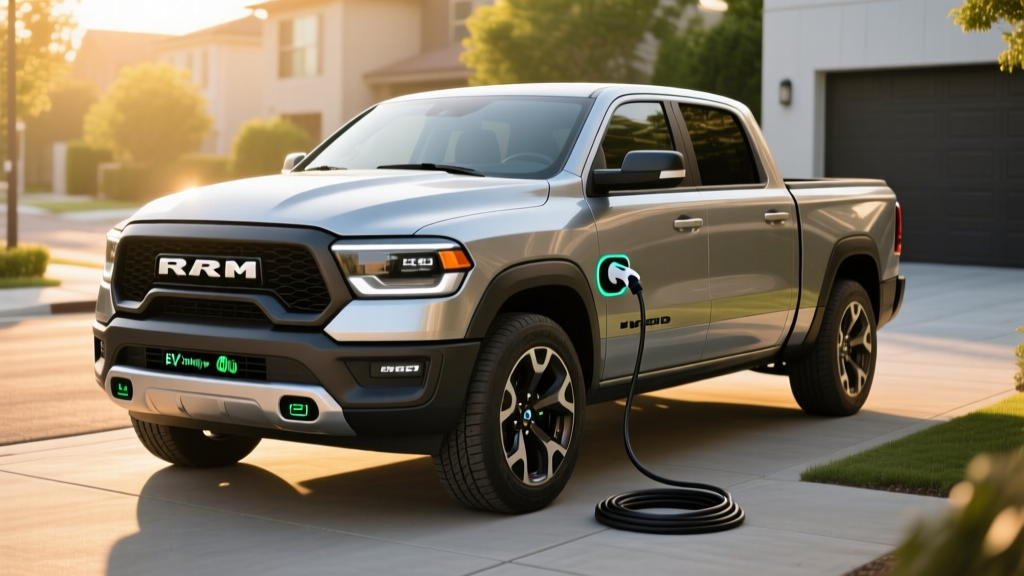
If you're searching for a "2025 Ram 1500 hybrid," here's what you need to know upfront: Ram does not currently offer a conventional full hybrid (HEV) or plug-in hybrid (PHEV) version of the 1500. What Ram does offer is the eTorque mild-hybrid system — a 48-volt belt-driven motor-generator paired with the 3.6L Pentastar V6 or the 5.7L HEMI V8. It's a fundamentally different technology from the Toyota Tacoma i-FORCE MAX or the Ford F-150 PowerBoost full hybrid.
The eTorque system provides a modest electric assist during acceleration, smoother stop-start operation, and a slight fuel-economy bump — but it cannot drive the truck on electric power alone, nor does it plug in. If you're expecting Prius-level MPG gains or 30 miles of electric-only range, you'll be disappointed. If you want a smoother, marginally more efficient V6 or V8 pickup without any charging hassle, the eTorque system delivers meaningful refinement.
- Mild Hybrid (eTorque): Small 48V battery assists the engine; cannot propel the vehicle alone; no plug-in charging.
- Full Hybrid (HEV): Larger battery + electric motor can drive the vehicle at low speeds; charges via regenerative braking; no plug required (e.g., Ford F-150 PowerBoost).
- Plug-In Hybrid (PHEV): Even larger battery; 20–40+ miles of electric-only range; requires plug-in charging to maximize benefit (e.g., Jeep Wrangler 4xe).
Powertrain Specs: eTorque V6 and V8 Configurations
The 2025 Ram 1500 carries over the eTorque mild-hybrid system on select trims. Here's exactly what's under the hood:
| Spec | 3.6L V6 eTorque | 5.7L HEMI V8 eTorque |
|---|---|---|
| Engine | 3.6L V6 | 5.7L V8 |
| Combined Horsepower | 305 hp (engine) + 12 hp (eTorque assist) | 395 hp (engine) + 16 hp (eTorque assist) |
| Combined Torque | 269 lb-ft + 39 lb-ft assist | 410 lb-ft + 130 lb-ft assist |
| 48V Battery Capacity | ~0.43 kWh (300 Wh usable) | ~0.43 kWh (300 Wh usable) |
| Transmission | 8-speed automatic (TorqueFlite) | 8-speed automatic (TorqueFlite) |
| Drivetrain | RWD / 4WD | RWD / 4WD |
| Electric-Only Driving | No | No |
| Plug-In Charging | No | No |
The eTorque motor-generator replaces the traditional alternator and is driven by a belt connected to the crankshaft. It can add torque during initial acceleration (the 130 lb-ft assist on the V8 is genuinely noticeable off the line), enable smoother engine stop-start, and provide brief torque fill during gear shifts. The 0.43 kWh lithium-ion battery pack is mounted behind the rear seat and recharges exclusively through regenerative braking and engine power.
Fuel Economy: EPA MPG and Real-World Expectations
The eTorque system's fuel-economy gains are real but modest — typically 1–2 MPG combined versus the non-eTorque versions of the same engines. Here's the EPA data from fueleconomy.gov:
| Configuration | City MPG | Highway MPG | Combined MPG |
|---|---|---|---|
| 3.6L V6 eTorque, RWD | 20 | 25 | 22 |
| 3.6L V6 eTorque, 4WD | 19 | 24 | 21 |
| 5.7L HEMI V8 eTorque, RWD | 15 | 22 | 17 |
| 5.7L HEMI V8 eTorque, 4WD | 15 | 21 | 17 |
For context, the Ford F-150 PowerBoost full hybrid achieves an EPA 23 MPG combined (4WD), and the non-eTorque 3.6L V6 Ram 1500 gets 21 combined. The eTorque advantage is real but incremental — roughly $100–$150/year in fuel savings over the standard V6 at 15,000 miles and $3.50/gallon.
eTorque Mild Hybrid vs. Full Hybrid vs. PHEV: Which Truck Fits You?
If you're cross-shopping the Ram 1500 eTorque against other electrified trucks, here's an honest comparison framework:
| Feature | Ram 1500 eTorque (Mild Hybrid) | Ford F-150 PowerBoost (Full Hybrid) | Ford F-150 Lightning (BEV) |
|---|---|---|---|
| Combined MPG / MPGe | 21–22 MPG | 23 MPG | ~70 MPGe |
| Electric-Only Driving | No | Brief, low-speed only | 100% electric |
| Plug-In Required | No | No | Yes |
| Total Range | ~500+ miles | ~600+ miles | 230–320 miles |
| Max Towing | ~12,750 lbs (V8) | ~12,700 lbs | ~10,000 lbs |
| Federal Tax Credit (§30D) | Not eligible | Not eligible | Up to $7,500* |
| Starting MSRP (approx.) | ~$42,000 | ~$54,000 | ~$55,000 |
*Federal EV tax credit eligibility under IRS §30D depends on MSRP caps, buyer income limits, and battery critical-mineral sourcing requirements. See IRS.gov for current rules. Mild hybrids and conventional HEVs do not qualify for §30D credits.
- Choose the Ram 1500 eTorque if: You want a proven V6/V8 pickup with slightly improved fuel economy, seamless stop-start, and zero lifestyle change — no charging, no range planning, no plug. It's the lowest-friction "electrified" option.
- Choose the Ford F-150 PowerBoost (full hybrid) if: You want 2–3 MPG more combined, onboard generator capability (Pro Power Onboard up to 7.2 kW), and don't mind a higher entry price.
- Choose a BEV (F-150 Lightning, Silverado EV) if: You have reliable home charging, drive under 250 miles/day, want the lowest per-mile fuel cost, and can absorb the higher upfront price offset by the $7,500 federal credit.
Pricing, Trims, and Tax Credit Eligibility
The eTorque system is not a standalone trim — it's integrated into specific engine choices across the Ram 1500 lineup. For 2025, the V6 eTorque is standard on most trims (Tradesman, Express, Big Horn/Lone Star, Laramie), while the HEMI V8 eTorque is available on Laramie and above. Here's approximate base MSRP:
- Tradesman (V6 eTorque, RWD): ~$42,000
- Big Horn (V6 eTorque, 4WD): ~$50,000
- Laramie (V6 eTorque, 4WD): ~$56,000
- Laramie (V8 eTorque, 4WD): ~$59,000
- Limited (V8 eTorque, 4WD): ~$68,000+
Tax credit reality check: The Ram 1500 eTorque does not qualify for the federal §30D new clean vehicle credit. The IRS requires a battery capacity of at least 7 kWh for plug-in hybrids and specific critical-mineral and battery-component sourcing for full EVs. The eTorque's 0.43 kWh battery and non-plug-in architecture place it outside the program entirely. Some states may offer minimal incentives for mild-hybrid vehicles, but these are rare — check your state's energy office for specifics.
Reliability, Battery Warranty, and Long-Term Costs
The eTorque system has been in the Ram 1500 since the 2019 model year (current generation), giving it a multi-year track record. Here's what buyers should know:
- 48V eTorque Battery: 8 years / 100,000 miles (hybrid component warranty)
- Powertrain (engine, transmission): 5 years / 60,000 miles
- Bumper-to-Bumper: 3 years / 36,000 miles
The 48V battery is a lithium-ion pack with its own dedicated cooling system. Unlike the large traction batteries in full hybrids and EVs, it stores very little energy and undergoes shallow charge/discharge cycles — which generally translates to excellent longevity. Most mild-hybrid 48V systems are expected to last the vehicle's lifetime without replacement.
Battery replacement cost: If the 48V eTorque battery does need replacement out of warranty, estimates range from $800 to $1,500 for the battery module itself, plus labor. This is dramatically less than the $3,000–$8,000+ cost of replacing a full-hybrid or EV traction battery. The motor-generator unit, if it fails, runs approximately $1,200–$2,000 to replace.
Known reliability considerations: Early 2019–2020 eTorque models had some owner reports of battery-related warning lights and occasional rough stop-start transitions. Ram issued software updates and hardware revisions for 2021+ models that largely addressed these issues. The 8-speed TorqueFlite transmission paired with eTorque has been in production since 2012 and is generally well-regarded. Always check the NHTSA recall database for any open recalls on a specific VIN before purchasing.
What the eTorque System Actually Does on the Road
The eTorque system's benefits are felt more than measured on a fuel-economy readout. Here's what it changes in daily driving:
- Smoother stop-start: The 48V motor restarts the engine nearly instantly at traffic lights — no shudder or delay compared to traditional 12V stop-start systems. This alone makes city driving noticeably more pleasant.
- Torque fill on acceleration: The electric assist provides immediate torque while the engine revs build, reducing the "lag" sensation typical of large-displacement engines. The V8's 130 lb-ft of electric assist makes off-the-line acceleration feel surprisingly responsive.
- Regenerative braking: During deceleration, the motor-generator captures kinetic energy to recharge the 48V battery. You won't feel aggressive regen like one-pedal driving in an EV — it's subtle and integrated with the conventional friction brakes.
- Sail mode (V6 only): Under light-load highway cruising, the V6 eTorque can shut off fuel injection and let the truck coast ("sail") with reduced drag, then seamlessly restart when you touch the throttle.
Who Should Buy the 2025 Ram 1500 eTorque — And Who Shouldn't
✓ Buy It If:
- You want a traditional body-on-frame V6/V8 truck with no charging requirements
- You tow regularly (10,000+ lbs) and need proven ICE reliability
- You live in a rural area with limited EV charging infrastructure
- You value a refined stop-start experience in daily traffic
- You want the Ram 1500's class-leading ride quality (coil-spring or air suspension rear)
✗ Skip It If:
- You expected a full hybrid with 25+ MPG combined
- You want electric-only driving for short commutes
- You're looking for a vehicle that qualifies for the $7,500 federal EV tax credit
- You want the lowest possible per-mile fuel cost (a BEV or PHEV wins here)
- You want onboard power output for job-site tools (F-150 PowerBoost offers 7.2 kW)
2025 Ram 1500 Hybrid FAQ
How many MPG does the 2025 Ram 1500 eTorque get?
The EPA rates the V6 eTorque at 20 city / 25 highway / 22 combined (RWD) and 19/24/21 (4WD). The V8 eTorque returns 15/22/17 (RWD) and 15/21/17 (4WD). Real-world results generally fall within 1–2 MPG of these figures depending on driving style and load.
Is the 2025 Ram 1500 eTorque a plug-in hybrid?
No. The eTorque is a mild-hybrid system with a 48-volt battery that charges exclusively through regenerative braking and the engine. There is no plug, no charging port, and no electric-only driving capability. It is fundamentally different from a PHEV like the Jeep Wrangler 4xe.
Does the Ram 1500 eTorque qualify for any federal tax credit?
No. The federal §30D clean vehicle credit requires either a battery-electric vehicle or a plug-in hybrid with at least 7 kWh of battery capacity. The eTorque's 0.43 kWh battery does not meet this threshold. Check IRS.gov for the latest eligibility criteria.
How long will the eTorque 48V battery last?
The 48V battery is covered by Ram's hybrid component warranty for 8 years / 100,000 miles. Because it operates in a shallow charge-discharge range (never fully depleted or fully charged), it's designed to last the vehicle's service life. Replacement cost, if needed out of warranty, is approximately $800–$1,500.
Will Ram offer a full hybrid or PHEV 1500 in the future?
Stellantis has announced a Ram 1500 REV (battery-electric) and the Ram 1500 Ramcharger (an extended-range EV with an onboard gasoline generator), but as of the 2025 model year, neither a traditional full hybrid nor a PHEV variant of the Ram 1500 has been officially confirmed for production. The eTorque mild hybrid remains the only electrified option in the current lineup.
Is the eTorque system worth the cost?
The eTorque system is standard on most V6 trims, so there's no add-on cost to evaluate. For the V8, it's bundled into the HEMI option. The fuel savings alone (~$100–$150/year over a non-eTorque V6) don't justify a premium, but the refinement benefits — smoother stop-start, improved off-the-line torque, and seamless sail mode — make it a worthwhile inclusion at no extra charge.