The Case for the CX-90 PHEV in Mazda's Lineup
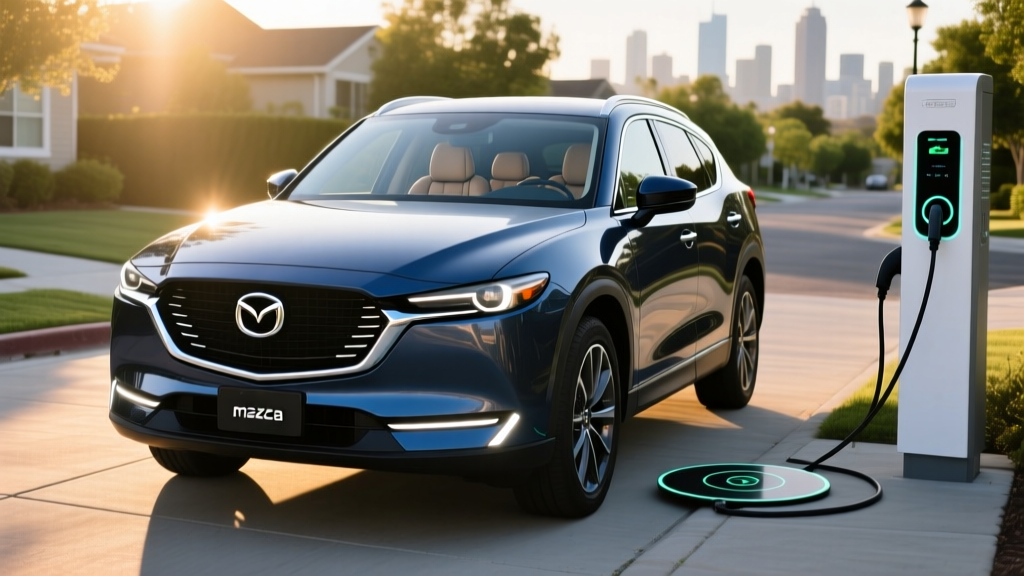
The Mazda CX-90 is the brand's flagship three-row SUV, and the plug-in hybrid (PHEV) variant sits at the intersection of luxury, practicality, and partial electrification. For buyers researching a 2025 Mazda CX-90 PHEV lease, the proposition is specific: a 26-mile electric-only commute range for daily driving, a turbocharged inline-six for road trips, and a premium interior that punches above its price class — all without the range anxiety of a full battery-electric vehicle.
But lease math, real-world efficiency, and tax-credit eligibility don't always match the brochure. Here's the data-driven breakdown you need before signing.
HEV vs. PHEV: Which CX-90 Are You Actually Getting?
Mazda offers the CX-90 with two distinct electrified powertrains. Confusing them is a common mistake — they operate very differently.
| Feature | CX-90 Turbo (Mild Hybrid) | CX-90 PHEV |
|---|---|---|
| Powertrain | 3.3L Turbo I-6 + 48V mild hybrid | 2.5L I-4 + electric motor |
| Plug-in capable | No — self-charging only | Yes — plug in to charge battery |
| Electric-only driving | No (48V assists engine only) | Yes — up to 26 miles |
| Battery (usable) | ~0.5 kWh (48V system) | 17.8 kWh (lithium-ion) |
| Combined horsepower | 280 hp / 340 hp (Premium+) | 323 hp |
| EPA combined | 25 MPG (combined) | 56 MPGe / 25 MPG gas-only |
| Requires charging? | No | Optional but recommended for EV range |
The mild-hybrid Turbo models are conventional hybrids in the broadest sense — the 48-volt system smooths stop-start and assists acceleration, but it never drives the wheels on electricity alone. The PHEV is the model that can operate as a short-range EV. If your goal is to drive on electricity for your daily commute, the PHEV is the only CX-90 that delivers that.
EPA Efficiency, Electric Range, and Real-World MPG
The EPA rates the CX-90 PHEV at 56 MPGe (miles per gallon equivalent) when operating in combined electric-gas mode, and 25 MPG combined (24 city / 27 highway) when the battery is depleted and the gasoline engine takes over. The electric-only range is rated at 26 miles per the EPA on fueleconomy.gov.
| Driving Mode | City | Highway | Combined |
|---|---|---|---|
| Charge-depleting (EV + gas) | 56 MPGe | ||
| Charge-sustaining (gas only) | 24 MPG | 27 MPG | 25 MPG |
| Electric-only range | 26 miles (EPA) | ||
| Total range (EV + gas tank) | ~490 miles | ||
Powertrain Specs: 323 Horsepower from Four Cylinders and Electrons
The CX-90 PHEV pairs a naturally aspirated 2.5-liter inline-four gasoline engine with an electric motor integrated into the 8-speed automatic transmission. Combined output is 323 horsepower and 369 lb-ft of torque. That's competitive with the higher-output turbo-six mild-hybrid models and delivers confident passing power and merging capability.
| Specification | 2025 Mazda CX-90 PHEV |
|---|---|
| Engine | 2.5L DOHC inline-4 |
| Electric motor | Integrated PHEV motor (in transmission) |
| Combined horsepower | 323 hp |
| Combined torque | 369 lb-ft |
| Transmission | 8-speed automatic (no torque converter — clutch-based) |
| Drivetrain | All-wheel drive (standard) |
| 0–60 mph | ~6.3 seconds (est.) |
| Towing capacity | 3,500 lbs |
| Battery (gross / usable) | 17.8 kWh gross / ~14.2 kWh usable |
| EV range (EPA) | 26 miles |
| Fuel tank | 18.5 gallons |
| Seating | 6 or 7 passengers (trim-dependent) |
| Cargo (behind 3rd row) | 14.9 cu ft |
One mechanical note: Mazda uses a clutch-based 8-speed automatic rather than a traditional torque-converter unit. This improves efficiency but can produce slightly different shift feel compared to conventional automatics — most drivers adapt quickly, but it's worth noting on a test drive.
Charging the CX-90 PHEV: Speed, Connectors, and Home Setup
The CX-90 PHEV's 17.8 kWh battery can be recharged two ways: plugging in or using the gasoline engine (charge mode). Here's what the numbers look like:
| Charging Method | Power | Time (0–100%) | Connector |
|---|---|---|---|
| Level 1 (120V household outlet) | ~1.4 kW | ~11–12 hours | J1772 |
| Level 2 (240V home/public) | ~3.3 kW (onboard charger limit) | ~4–5 hours | J1772 |
| DC fast charging | Not supported | ||
The CX-90 PHEV's onboard charger is limited to approximately 3.3 kW, which means even if you plug into a 7.2 kW or 11.5 kW Level 2 station, the vehicle will only accept 3.3 kW. This is a common limitation among PHEVs (the Toyota RAV4 Prime is a notable exception at 6.6 kW). For overnight home charging on a Level 2 circuit, this is perfectly adequate — a full charge in 4–5 hours means you can easily replenish the battery during a workday or overnight.
No DC fast charging is available. This is typical for PHEVs with smaller batteries — the use case assumes home or workplace Level 2 charging rather than road-trip DC stops.
2025 CX-90 PHEV Lease Pricing and Tax Credit Eligibility
The 2025 CX-90 PHEV is offered in several trims, and lease terms vary by region, dealer, and Mazda's national incentive programs. Here's the MSRP landscape as a baseline for lease negotiations:
| Trim | MSRP (incl. destination) |
|---|---|
| PHEV Preferred | ~$50,975 |
| PHEV Premium | ~$55,975 |
| PHEV Premium Plus | ~$59,475 |
Federal tax credit (§30D): The CX-90 PHEV may qualify for up to $3,750 of the federal plug-in vehicle tax credit, depending on battery component and critical-mineral sourcing requirements under current IRS §30D rules. The full $7,500 requires meeting both critical-mineral and battery-component thresholds; many PHEVs assembled in Japan with non-US-sourced battery cells qualify for the $3,750 partial credit. Important: The CX-90 is assembled in Japan (Hofu plant), which affects eligibility under the North American final-assembly requirement — verify current eligibility on the IRS clean vehicle credit page and fueleconomy.gov before committing.
Typical lease structure: A 36-month CX-90 PHEV lease in early 2025 with ~$3,500–$4,500 due at signing has been advertised in the $550–$750/month range depending on trim and regional incentives. Mazda periodically offers loyalty cash or conquest bonuses that can reduce payments by $500–$1,500 over the lease term.
Battery Warranty, Reliability, and Replacement Costs
- Duration: 8 years / 100,000 miles (whichever comes first)
- Coverage: Defects and capacity loss below a specified threshold (typically 60–70% of original capacity)
- Hybrid system components: Covered under the same 8yr/100k warranty — includes electric motor, inverter, and control electronics
Mazda's hybrid and PHEV systems use proven lithium-ion battery packs. The CX-90 PHEV's battery is relatively small (17.8 kWh gross) and the vehicle's thermal management system keeps it within optimal temperature ranges, which mitigates degradation. Based on industry-wide PHEV battery data, expect 5–10% capacity loss over 8–10 years under normal use — meaning your 26-mile EV range might become 23–24 miles after a decade. This is well within the warranty threshold.
Battery replacement cost: If replacement is needed out of warranty, PHEV battery packs in this size class typically cost $4,000–$7,000 including labor. However, out-of-warranty PHEV battery failures are rare — most degradation is gradual, and the 8-year/100k warranty covers premature failures.
General reliability: The CX-90's powertrain is newer to Mazda's lineup (introduced for the 2024 model year), so long-term data is still accumulating. Mazda's brand-level reliability ratings from Consumer Reports and J.D. Power have been mixed in recent years, with some models scoring well and others drawing complaints for infotainment and build-quality issues. The PHEV-specific components (battery, motor, inverter) carry less mechanical risk than the turbocharged inline-six variants, as the naturally aspirated 2.5L engine is a simpler, proven design.
CX-90 PHEV vs. Full EV vs. Gas SUV: Which Is Right for You?
Choose the CX-90 PHEV if:
- Your daily commute is under 25 miles round-trip and you can charge at home
- You need a three-row SUV but want to reduce fuel consumption for local driving
- You take road trips where charging infrastructure is unreliable
- You want premium interior quality without the $65K+ price of German rivals
Choose a full EV (like the Kia EV9 or Tesla Model X) if:
- You have reliable home Level 2 charging
- Your daily driving rarely exceeds 200 miles
- You want zero tailpipe emissions and minimal maintenance
- You can access DC fast chargers for road trips
Choose the CX-90 Turbo (mild hybrid, gas) if:
- You cannot charge at home (apartment, no garage outlet)
- Your commute is long and mostly highway — the PHEV's EV advantage disappears
- You want a lower purchase price and simpler ownership
Pros and Cons at a Glance
Pros
- Premium three-row interior at a mainstream price
- 26-mile EV range covers most daily commutes
- 323 hp with standard AWD — confident acceleration
- No range anxiety — gas engine for long trips
- Quiet, refined ride quality
- 8-year/100k battery warranty
Cons
- 3.3 kW onboard charger — slow for Level 2
- No DC fast charging
- Third row is tight for adults on longer trips
- PHEV premium over Turbo trims adds ~$4K–$6K
- Japan-built — §30D credit eligibility limited or excluded
- 25 MPG gas-only is unremarkable for a hybrid
Frequently Asked Questions
How many MPG does the 2025 Mazda CX-90 PHEV get?
The EPA rates it at 56 MPGe when combining electric and gas operation, and 25 MPG combined (24 city / 27 highway) once the battery is depleted. In real-world city driving with regular charging, many owners report averaging 30–40 MPG equivalent because short trips stay within the EV range.
How far can the CX-90 PHEV go on electric only?
The EPA rates it at 26 miles of electric-only range. In practice, expect 20–26 miles depending on temperature, speed, and terrain. Cold weather (below 40°F) and highway speeds above 65 mph reduce range to the low 20s or high teens.
Does the CX-90 PHEV qualify for a federal tax credit?
Possibly up to $3,750, but eligibility is uncertain. The CX-90 is assembled in Japan, and the §30D credit requires North American final assembly for purchases. However, leased vehicles may qualify under the commercial credit (§45W) loophole that some lessors apply. Always verify on the IRS clean vehicle page and consult a tax professional.
Is the CX-90 PHEV reliable? What about battery replacement?
The PHEV powertrain uses a proven naturally aspirated 2.5L engine with an electric motor — mechanically simpler than the turbo-six variants. The battery is covered by an 8-year/100,000-mile warranty. Out-of-warranty replacement, if needed years down the line, would likely cost $4,000–$7,000, but premature PHEV battery failures are uncommon.
Should I lease or buy the CX-90 PHEV?
Leasing makes sense if you want lower monthly payments, plan to upgrade in 3 years, and don't drive excessive miles (most leases cap at 10K–12K/year). Buying makes sense if you want to capture any available tax credit directly, drive high annual miles, and plan to keep the vehicle 5+ years. A 2025 Mazda CX-90 PHEV lease is particularly attractive if Mazda is offering lease cash incentives that effectively pass through the federal credit value.
Can I charge the CX-90 PHEV at a DC fast charger?
No. The CX-90 PHEV does not support DC fast charging. It charges via Level 1 (120V, ~11 hours) or Level 2 (240V at 3.3 kW, ~4–5 hours). This is standard for most PHEVs — the battery is small enough that overnight Level 2 charging is sufficient.
What happens if I never plug it in?
The CX-90 PHEV functions as a conventional hybrid when the battery is depleted, getting 25 MPG combined on gasoline. You won't damage anything by never plugging in, but you'll forfeit the efficiency advantage and the lower per-mile cost of electric driving. At that point, you're paying a PHEV price premium for a vehicle operating as a mild hybrid.