Quick Verdict
The 2025 Mazda CX-70 PHEV is a premium two-row midsize SUV that lets you commute on electricity and road-trip on gas — without the range anxiety of a full BEV. With 26 miles of EPA-rated electric-only range, 327 combined horsepower, and a starting price of $41,845, it targets buyers who want daily EV driving with a gasoline safety net. The catch? It doesn't qualify for the federal §30D tax credit, and highway fuel economy once the battery depletes is merely average for the class.
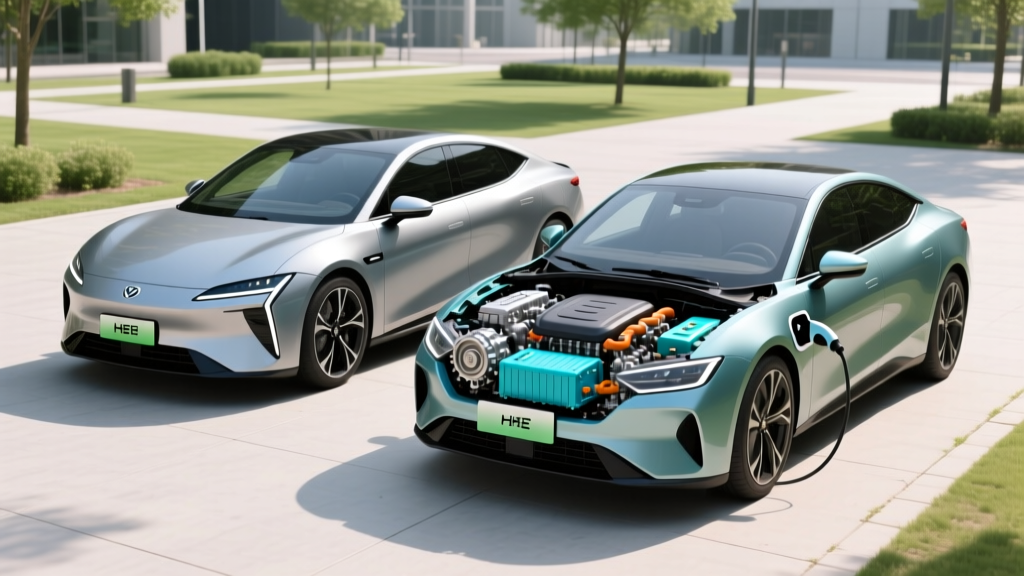
HEV vs PHEV: What Mazda Actually Offers
Before digging into the numbers, it's worth clarifying what Mazda sells — and doesn't sell — in the CX-70 lineup, because the distinction between a conventional hybrid and a plug-in hybrid fundamentally changes the ownership experience.
Conventional Hybrid (HEV)
The CX-70 also comes as a mild-hybrid with the 3.3L turbocharged inline-six. This system uses a small 48V battery that cannot be plugged in. It recovers energy during braking and assists the gas engine, improving MPG slightly. You never charge it externally — it manages itself.
Plug-In Hybrid (PHEV)
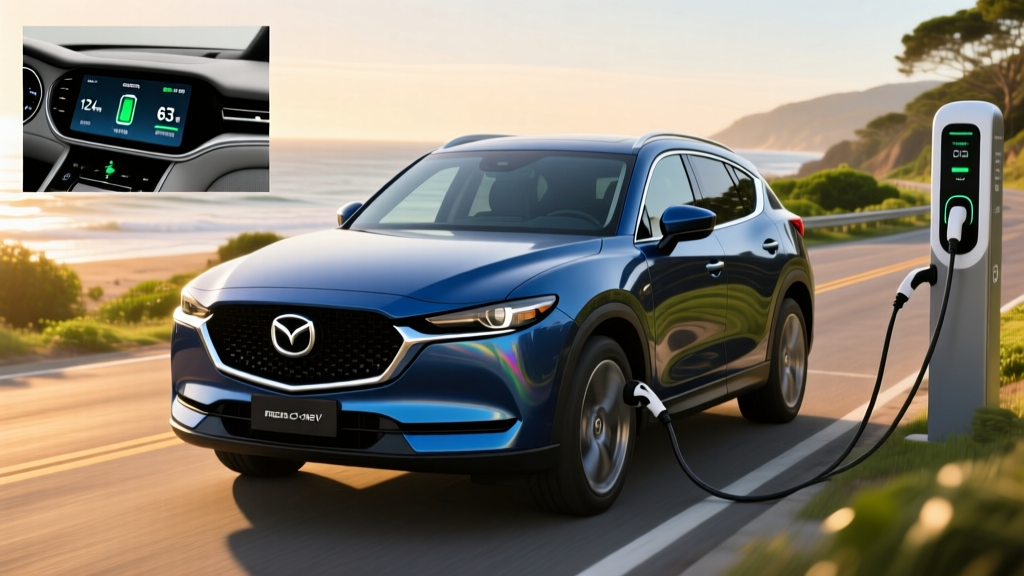
The CX-70 PHEV pairs a 2.5L four-cylinder engine with a larger 17.8 kWh battery pack and a more powerful electric motor. You plug it in to access the full 26 miles of electric-only range. Once the battery depletes, it operates as a conventional hybrid.
This guide focuses on the PHEV variant. If you can charge at home or at work, the PHEV unlocks meaningful electric commuting. If you can't plug in regularly, the HEV variant avoids the weight and cost penalty of a battery you'll never fully use.
Fuel Economy: EPA Numbers and Real-World MPG
| Metric | EPA Rating | Real-World Expectation |
|---|---|---|
| Electric-only range | 26 miles | 22–28 miles (weather/load dependent) |
| MPGe (electric + gas combined) | 56 MPGe | 50–58 MPGe with regular charging |
| Gas-only city MPG (battery depleted) | 25 MPG | 24–27 MPG |
| Gas-only highway MPG (battery depleted) | 24 MPG | 22–25 MPG |
| Gas-only combined MPG (battery depleted) | 25 MPG | 23–26 MPG |
What the numbers mean in practice: MPGe (miles per gallon equivalent) measures efficiency when the vehicle uses both electricity and gasoline, converting electrical energy into a gasoline-equivalent figure. It's useful for comparing a PHEV to a BEV or gas car on a single scale, but it only applies when you're regularly plugging in.
Once the 17.8 kWh battery is depleted — after roughly 26 miles of electric driving — the CX-70 PHEV reverts to its gas-engine hybrid mode. At that point, you're looking at 25 MPG combined, which is respectable for a 4,800-pound SUV but not class-leading. The Toyota RAV4 Prime, for comparison, returns 38 MPG combined in hybrid mode after its electric range is spent.
Real-world factors that shift these numbers: Cold weather (below 40°F) can reduce electric-only range by 15–25% due to battery chemistry limitations and cabin heating demands. Highway driving above 70 mph also reduces electric range — expect closer to 18–20 electric miles at sustained interstate speeds. Conversely, city driving with frequent regenerative braking can stretch the electric range to 28+ miles in mild weather.
According to fueleconomy.gov, the CX-70 PHEV's total combined range (electric + full tank) is approximately 490 miles, which is plenty for any road trip without strategic charging stops.
Battery, Charging, and Powertrain Specs
| Specification | 2025 Mazda CX-70 PHEV |
|---|---|
| Battery capacity | 17.8 kWh (lithium-ion) |
| Electric-only range (EPA) | 26 miles |
| Engine | 2.5L inline-4 + electric motor |
| Combined system output | 327 hp / 332 lb-ft torque |
| 0–60 mph | ~6.0 seconds (est.) |
| Level 1 charging (120V, 1.4 kW) | ~11 hours (0–100%) |
| Level 2 charging (240V, 7.2 kW) | ~2.5 hours (0–100%) |
| DC fast charging | Not available |
| Drivetrain | AWD (i-Activ) |
| Towing capacity | 3,500 lbs |
| Cargo volume (behind rear seats) | 30.6 cu ft |
Charging Reality: No DC Fast Charging
The CX-70 PHEV charges exclusively via AC — either a standard 120V household outlet (Level 1) or a 240V Level 2 home or public charger. There is no DC fast-charging capability. This is typical for PHEVs in this class; the smaller battery doesn't justify the cost and weight of DC hardware.
At Level 2 (7.2 kW onboard charger), a full charge takes about 2.5 hours. For most owners, plugging in overnight on a Level 2 home charger means waking up to a full battery every morning — more than enough to cover a 20–25 mile commute on electricity alone.
If you're limited to a 120V outlet (Level 1 at ~1.4 kW), expect roughly 11 hours for a full charge. That's workable for overnight charging if your daily electric driving stays under 20 miles, since you'll recover enough overnight. But a Level 2 home installation is strongly recommended for PHEV ownership.
Important distinction — kW vs kWh: The battery stores 17.8 kWh of energy (think of it as the tank size). The onboard charger accepts up to 7.2 kW of power (think of it as the flow rate). Dividing 17.8 kWh by 7.2 kW gives roughly 2.5 hours — the math checks out.
Pricing, Trims, and Tax Credit Eligibility
| Trim Level | MSRP (incl. destination) |
|---|---|
| Preferred | $41,845 |
| Premium | $47,275 |
| Premium Plus | $53,400 |
Federal Tax Credit: Does the CX-70 PHEV Qualify?
Under current IRS §30D rules, the 2025 Mazda CX-70 PHEV does not qualify for the federal plug-in electric vehicle tax credit (up to $7,500). The primary reason is that the credit's battery-component and critical-mineral sourcing requirements, which tightened significantly in 2024, have excluded most Mazda plug-in models. The CX-70 PHEV's battery supply chain does not meet the domestic-content thresholds mandated by the Inflation Reduction Act.
§30D Federal Tax Credit Requirements (2025)
- MSRP cap: SUVs must be under $80,000 (CX-70 PHEV passes this)
- Buyer income cap: $150K single / $300K joint AGI (varies by buyer)
- Battery component sourcing: Must be manufactured or assembled in North America — CX-70 PHEV does not meet this
- Critical minerals sourcing: Must come from the U.S. or FTA partners — CX-70 PHEV does not meet this
- Final assembly: Must occur in North America (CX-70 is assembled in Alabama — passes)
Source: IRS.gov — Clean Vehicle Credits. Rules are subject to change; consult a tax professional before purchasing.
State incentives may still apply. Several states offer their own PHEV rebates or HOV-lane access regardless of federal eligibility. Check your state's energy or DMV website for current programs — these vary widely and change frequently.
Battery Longevity, Warranty, and Replacement Cost
Mazda PHEV Battery Warranty
Hybrid/EV battery coverage: 8 years / 100,000 miles (whichever comes first)
Capacity retention threshold: Mazda warrants the battery against defects and abnormal capacity loss. If the battery falls below a functional threshold (typically ~60–70% of original capacity), Mazda will repair or replace it under warranty.
Powertrain warranty: 5 years / 60,000 miles
Out-of-warranty replacement cost estimate: $4,000–$7,000 for the 17.8 kWh pack, based on current PHEV battery pricing. This is significantly less than a full BEV battery replacement because the pack is much smaller.
How Long Will the CX-70 PHEV Battery Last?
Lithium-ion batteries in PHEVs degrade gradually, losing a small percentage of capacity each year. For a 17.8 kWh pack, real-world data from similar Mazda and Toyota PHEV systems suggests 10–15% capacity loss over 8–10 years under normal use. That means your 26-mile electric range might become 22–23 miles after a decade — still very usable.
Key factors that accelerate degradation:
- Frequent 100% charging and deep discharges — keeping the battery between 20–80% SoC when possible extends life (though PHEV software already manages a buffer)
- Extreme heat exposure — prolonged parking in 100°F+ environments without thermal management running
- High-mileage fast cycling — draining and recharging the full pack multiple times per day, every day
The 8-year/100,000-mile warranty is federally mandated for emissions-related components (which includes the hybrid battery) and provides solid protection. Most PHEV batteries outlast their warranty periods without requiring replacement. According to Mazda's official CX-70 PHEV page, the battery system includes active thermal management to mitigate temperature-related degradation.
Who Should Buy the CX-70 PHEV (and Who Shouldn't)
✓ Pros
- Premium interior quality at a mainstream price
- 26 miles electric covers most daily commutes
- 327 hp provides confident passing and merging
- No range anxiety — 490-mile total range
- Standard AWD for all-weather confidence
- 3,500-lb towing capacity
✗ Cons
- No federal tax credit eligibility
- Gas-only MPG (25 combined) is mediocre once battery depletes
- No DC fast charging
- Electric range (26 mi) trails RAV4 Prime (42 mi)
- Two-row only — no third-seat option
- Heavier than gas CX-70, affecting handling
CX-70 PHEV vs Full EV vs Gas: Which Fits You?
Choose the CX-70 PHEV if: You have home charging, your daily commute is under 25 miles, you take road trips where charging infrastructure is sparse, and you want premium styling without a luxury badge price. You accept the lack of a federal tax credit as the trade-off for Mazda's interior quality and driving dynamics.
Choose a full EV (e.g., Tesla Model Y, Hyundai Ioniq 5) if: You have reliable home charging, your daily driving is under 250 miles, you want to eliminate gas entirely, and you qualify for the $7,500 federal credit. A BEV's lower operating cost (electricity vs. gas) and near-zero maintenance offset the higher upfront price over 5+ years.
Choose a conventional gas or HEV CX-70 if: You cannot charge at home or at work. A PHEV you never plug in is just a heavier, more expensive gas car — the 25 MPG hybrid mode doesn't justify the $5,000+ PHEV premium over the mild-hybrid inline-six variant.
Real-World Ownership: What to Expect
After evaluating the CX-70 PHEV's specs, here's what daily ownership actually looks like for a typical commuter:
Morning: Unplug from your Level 2 home charger. The battery shows 100% and an estimated 24–26 miles of electric range (slightly less in winter). You drive 18 miles to work — entirely on electricity, using zero gas.
At work: If your office has Level 2 chargers, a 2-hour top-up restores enough range for the drive home on electric. If not, the 18-mile return trip still falls within your remaining electric range, or the gas engine seamlessly kicks in for the last few miles.
Weekend road trip: You drive 200 miles to visit family. After the first 26 electric miles, the gas engine takes over at 25 MPG combined. You refuel once (~$45 at current gas prices) and don't think about charging until you're back home.
Annual cost estimate: If you drive 12,000 miles/year and charge at home (at $0.14/kWh national average), and your commute stays within electric range ~80% of weekdays, you might use roughly 250 gallons of gas (~$875 at $3.50/gal) and ~1,800 kWh of electricity (~$252). Total fuel cost: approximately $1,127/year. Compare that to a gas-only CX-70 at 24 MPG combined: 500 gallons, or roughly $1,750/year. The PHEV saves about $623 annually in fuel, which takes roughly 8 years to recoup the PHEV price premium over the mild-hybrid variant — longer without a tax credit.
Frequently Asked Questions
How many MPG does the 2025 Mazda CX-70 PHEV get?
The EPA rates the CX-70 PHEV at 56 MPGe when using both electricity and gasoline, and 25 MPG combined (25 city / 24 highway) once the battery is depleted and the vehicle operates in hybrid mode. Real-world gas-only MPG typically falls between 23–26 depending on driving style, terrain, and temperature.
How far can the CX-70 PHEV go on electric only?
The EPA rates it at 26 miles of electric-only range. In real-world conditions, expect 22–28 miles depending on temperature, speed, and terrain. Highway driving at 75+ mph and cold weather below 40°F will reduce this to the lower end of that range.
Does the CX-70 PHEV qualify for any tax credit?
As of 2025, the CX-70 PHEV does not qualify for the federal §30D clean vehicle tax credit due to battery sourcing requirements. It may qualify for certain state-level incentives depending on your jurisdiction. Check IRS.gov and your state energy office for current eligibility.
Is the CX-70 PHEV reliable, and what does battery replacement cost?
Mazda's PHEV powertrain is based on proven technology shared with the CX-90 PHEV and uses a conventional 2.5L engine with a well-understood hybrid system. The high-voltage battery is covered by an 8-year/100,000-mile warranty. Out-of-warranty replacement is estimated at $4,000–$7,000, which is moderate for a PHEV pack of this size.
Can the CX-70 PHEV charge at a DC fast charger?
No. The CX-70 PHEV only supports AC charging — Level 1 (120V) and Level 2 (240V). There is no DC fast-charging port. This is standard for PHEVs; the smaller 17.8 kWh battery charges fully in about 2.5 hours on Level 2, making DC capability unnecessary for most use cases.
How does the CX-70 PHEV compare to the RAV4 Prime?
The Toyota RAV4 Prime offers 42 miles of electric range (vs. 26), 38 MPG in hybrid mode (vs. 25), and qualifies for more state incentives. However, the CX-70 PHEV delivers a significantly more premium interior, more horsepower (327 vs. 302), and a more refined driving experience. It's a trade-off between efficiency (RAV4 Prime) and luxury (CX-70 PHEV).
Should I get the CX-70 PHEV or the gas CX-70?
If you can charge at home and your daily driving is under 25 miles, the PHEV lets you commute on electricity and save on fuel. If you can't charge regularly, the mild-hybrid CX-70 with the inline-six engine is the smarter buy — you'll avoid the PHEV price premium and the dead weight of a battery you never use.