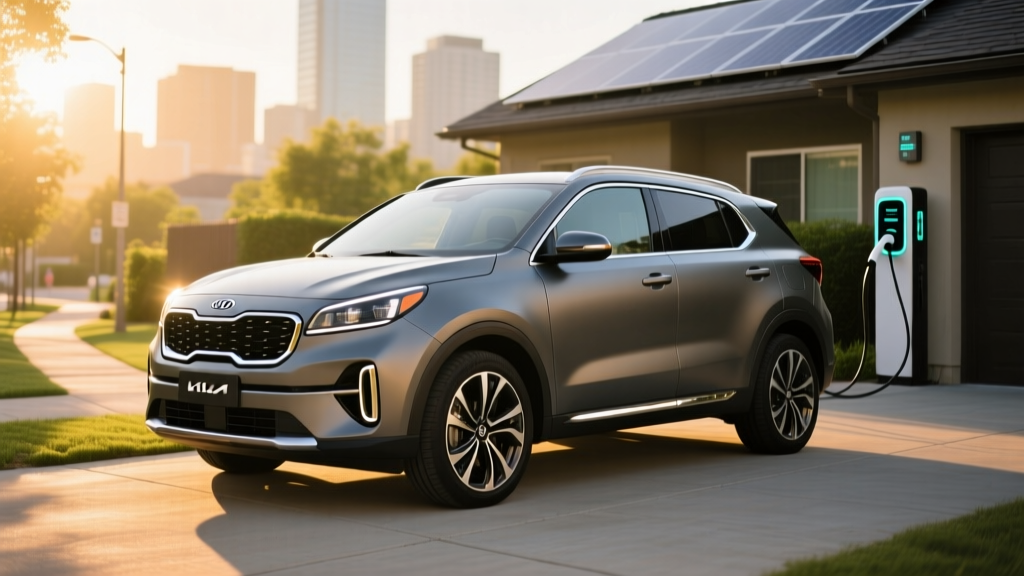
The 2025 Kia Sportage Plug-In Hybrid occupies a specific niche: buyers who want electric-only commuting most days but need a gas engine for road trips, all without the range anxiety of a full BEV. With 33 miles of EPA-rated electric range, 261 combined horsepower, and a starting MSRP of $40,990, it competes directly with the Toyota RAV4 Prime and Ford Escape PHEV. But does the math work for your commute, and does it qualify for federal tax incentives? Here's the data-driven breakdown.
Quick Verdict: Who Should Consider the Sportage PHEV?
Choose the 2025 Kia Sportage PHEV if: Your daily round-trip commute is under 30 miles, you have access to Level 2 home charging, and you regularly take road trips where charging infrastructure is sparse.
Look at a full BEV instead if: You can charge at home and your longest regular drive is under 200 miles — the savings on fuel and maintenance will be greater.
Choose the conventional Sportage HEV instead if: You cannot install a home charger and mostly drive in stop-and-go city traffic.
HEV vs PHEV: What Kia Actually Sells
Kia offers the 2025 Sportage in three powertrains. Confusing them at the dealership is easy — the naming is similar but the ownership experience is fundamentally different.
| Feature | Sportage HEV (Hybrid) | Sportage PHEV (Plug-In Hybrid) | Sportage ICE (Gas) |
|---|---|---|---|
| Plugs in? | No — self-charging | Yes — Level 1 & Level 2 | No |
| Electric-only range | None | 33 miles (EPA) | None |
| Battery size | ~1.49 kWh | 13.7 kWh (usable) | N/A |
| Combined HP | 226 hp | 261 hp | 187 hp |
| EPA combined MPG / MPGe | 38 MPG combined | 84 MPGe (elec) / 35 MPG (gas) | 28 MPG combined |
| Starting MSRP | $29,990 | $40,990 | $27,990 |
| Federal tax credit | None | Up to $3,750 (§30D)* | None |
*Tax credit eligibility depends on income, MSRP caps, and battery sourcing. See IRS section below.
The HEV is a conventional hybrid: it recovers energy through regenerative braking and the engine, never needs plugging in, and works like a more-efficient gas car. The PHEV adds a larger battery pack and a more powerful electric motor, enabling genuine electric-only driving at highway speeds — but only if you plug it in regularly. If you never plug in the PHEV, you're carrying 300+ lbs of dead battery weight and getting worse fuel economy than the HEV.
Fuel Economy and Electric Range: The Real Numbers
Here's the EPA-certified efficiency data for the 2025 Sportage PHEV, sourced from fueleconomy.gov:
| Metric | EPA Rating | Real-World Expectation |
|---|---|---|
| Combined MPGe (electric + gas) | 84 MPGe | 75–90 MPGe (depends on charge frequency) |
| Electric-only range | 33 miles | 28–35 miles (weather/terrain dependent) |
| Gas-only combined MPG | 35 MPG | 30–34 MPG highway; 33–37 MPG city |
| Gas-only city MPG | 36 MPG | 33–38 MPG (regen helps in stop-and-go) |
| Gas-only highway MPG | 34 MPG | 29–33 MPG at 70+ mph |
| Total range (full tank + full battery) | 430 miles | ~380–410 miles real-world |
Real-world range note: The 33-mile EPA electric range assumes moderate temperatures and mixed driving. In freezing weather (below 32°F), expect 20–25% range reduction — roughly 25 miles electric. Highway driving at 75+ mph also reduces electric range to approximately 27–29 miles. The Sportage PHEV does have a heat pump, which helps preserve range in cold weather compared to resistive heating.
When the battery is depleted and the 1.6L turbocharged engine takes over, 35 MPG combined is competitive for a compact SUV. The hybrid system recovers energy during braking, and city driving often yields slightly higher MPG than highway — the opposite of a conventional gas car. Owners with short commutes who charge nightly report effectively using zero gasoline for weeks at a time.
Powertrain: 261 HP With Turbo and Electric Torque
| Specification | 2025 Kia Sportage PHEV |
|---|---|
| Engine | 1.6L turbocharged 4-cylinder (178 hp) |
| Electric motor | Permanent-magnet synchronous (97 hp / 66 kW) |
| Combined system output | 261 hp / 258 lb-ft torque |
| Transmission | 6-speed automatic |
| Drivetrain | AWD (standard on all PHEV trims) |
| Battery chemistry | NMC (nickel-manganese-cobalt) lithium-ion |
| Battery capacity | 13.7 kWh usable |
| 0–60 mph | ~7.4 seconds |
| Towing capacity | 2,000 lbs |
The PHEV powertrain pairs a 1.6-liter turbo four-cylinder with a 66 kW (97 hp) electric motor integrated into the transmission. Combined output of 261 hp makes it the quickest Sportage variant — noticeably more responsive than the HEV's 226 hp, particularly in the 0–30 mph range where electric torque fills the turbo lag gap. All-wheel drive is standard on every PHEV trim; the rear axle is mechanically linked to the engine, not a separate electric motor (unlike some competitors).
Charging: Level 2 Only, No DC Fast Charging
This is where PHEV buyers need to set expectations. The Sportage PHEV charges exclusively via AC — there is no DC fast charging capability, which is typical for plug-in hybrids with smaller battery packs.
| Charging Level | Power | Time (0–100%) | Connector |
|---|---|---|---|
| Level 1 (120V household) | ~1.4 kW | ~10–11 hours | J1772 |
| Level 2 (240V home/public) | ~7.2 kW | ~2 hours | J1772 |
| DC Fast Charge | Not supported | N/A | N/A |
With a 13.7 kWh battery, a 240V Level 2 home charger replenishes the pack in roughly two hours — practical for overnight charging or topping off during a work day. Level 1 (standard 120V outlet) technically works but at ~1.4 kW, a full charge takes 10+ hours. For PHEV ownership, a dedicated 240V Level 2 charger at home is strongly recommended; installation typically costs $500–$1,500 depending on panel proximity and whether your electrical panel needs an upgrade.
kW vs kWh reminder: The battery stores 13.7 kWh of energy (capacity). A Level 2 charger delivers up to 7.2 kW of power (rate). Dividing capacity by rate gives approximate charge time: 13.7 ÷ 7.2 ≈ 1.9 hours.
Pricing, Trims, and Federal Tax Credit Eligibility
The 2025 Sportage PHEV is offered in two trims, both with AWD:
| Trim | MSRP | Key Features |
|---|---|---|
| X-Line | $40,990 | 19" wheels, heated seats, dual 12.3" displays, Highway Driving Assist |
| X-Line Prestige | $44,490 | Leather, ventilated front seats, panoramic sunroof, Harman Kardon audio, HUD |
Does the 2025 Sportage PHEV Qualify for a Federal Tax Credit?
Under IRS §30D rules, the 2025 Kia Sportage PHEV qualifies for up to $3,750 in federal tax credits — not the full $7,500. Here's why, and who qualifies:
- Credit amount: $3,750 (meets critical minerals requirement but does not meet the battery component sourcing threshold for the additional $3,750)
- MSRP cap: Must be under $80,000 for SUVs — Sportage PHEV qualifies at $40,990–$44,490
- Buyer income cap: AGI must not exceed $150,000 (single), $225,000 (head of household), or $300,000 (joint filing)
- Point-of-sale transfer: Yes — you can transfer the credit to the dealer at purchase for an immediate price reduction, per current IRS rules
- Battery sourcing: Kia sources battery cells from suppliers that meet the critical minerals threshold but not the full domestic component assembly requirement — hence $3,750, not $7,500
Tax credit rules under §30D are subject to change and depend on your individual tax situation. Always verify current eligibility at irs.gov and consult a tax professional before relying on credit amounts in your purchase decision.
After a potential $3,750 credit, the effective starting price drops to approximately $37,240 for the X-Line trim — narrowing the gap with the Sportage HEV SX Prestige ($36,590) and making the PHEV a more compelling value for those who can charge at home.
Battery Longevity, Warranty, and Reliability
Battery lifespan is the number-one concern for hybrid and PHEV buyers. Here's what Kia covers:
| Component | Warranty Coverage |
|---|---|
| Hybrid/PHEV battery pack | 10 years / 100,000 miles |
| Hybrid system components (motor, inverter) | 10 years / 100,000 miles |
| Basic vehicle warranty | 5 years / 60,000 miles |
| Powertrain warranty | 10 years / 100,000 miles |
| Capacity retention threshold | Below ~70% of original capacity triggers warranty claim |
Kia's 10-year/100,000-mile hybrid battery warranty is among the best in the industry, matching Hyundai and exceeding Toyota's 8-year/100,000-mile coverage. The NMC battery pack in the Sportage PHEV is liquid-cooled, which significantly slows degradation compared to passively-cooled packs. Based on data from earlier Kia Niro PHEV and Hyundai Tucson PHEV owners using similar battery architecture, real-world degradation after 5 years typically falls in the 8–12% range — meaning you'd still see approximately 29–30 miles of electric range after 60,000 miles.
Battery replacement cost: If the battery does fail outside of warranty, a replacement pack for the Sportage PHEV is estimated at $4,000–$6,000 including labor, based on comparable Kia/Hyundai PHEV service data. However, outright battery failures in modern liquid-cooled packs are rare — most warranty claims involve cell imbalance that can sometimes be addressed without full replacement.
Regarding overall reliability: the 2025 Sportage PHEV carries over the powertrain introduced for the 2023 model year. Early owner surveys and IIHS testing show no systemic powertrain issues. The turbocharged 1.6L engine and 6-speed automatic are proven components in the Hyundai-Kia lineup. One note: the PHEV's added weight (~3,900 lbs curb weight vs ~3,500 for the gas model) means slightly faster brake and tire wear — budget accordingly.
Interior, Tech, and Daily Livability
The PHEV is available exclusively in the sportier X-Line body style, which gives it a more aggressive stance and standard 19-inch wheels. Interior highlights:
- Dual 12.3-inch displays (instrument cluster + infotainment) with wireless Apple CarPlay and Android Auto
- PHEV-specific displays: energy flow monitor, charge scheduling, electric-range estimator
- Cargo space: 34.5 cu ft behind rear seats (slightly less than gas model due to battery placement under the floor)
- Heated front seats standard; ventilated seats on Prestige trim
- Highway Driving Assist (Level 2 ADAS): adaptive cruise + lane centering on highways
Cargo space takes a minor hit compared to the gas Sportage (39.6 cu ft) because the larger battery pack sits beneath the cargo floor. The difference is noticeable when loading tall items but doesn't affect everyday grocery or luggage duty. The PHEV also loses the spare tire found on some gas trims, substituting a tire inflator kit.
Sportage PHEV vs. the Competition
The compact PHEV SUV segment is small but competitive. Here's how the Sportage stacks up against its primary rivals:
| Spec | 2025 Kia Sportage PHEV | 2025 Toyota RAV4 Prime | 2025 Ford Escape PHEV |
|---|---|---|---|
| Electric range (EPA) | 33 mi | 42 mi | 37 mi |
| Combined HP | 261 hp | 302 hp | 210 hp |
| Gas MPG (combined) | 35 MPG | 38 MPG | 40 MPG |
| Battery (kWh) | 13.7 kWh | 18.1 kWh | 14.4 kWh |
| AWD standard? | Yes | Yes | No (FWD only) |
| DC fast charge? | No | No | No |
| Starting MSRP | $40,990 | $44,425 | $39,230 |
| Federal credit (max) | $3,750 | $3,750 | $3,750 |
| Battery warranty | 10 yr / 100k mi | 10 yr / 150k mi* | 8 yr / 100k mi |
*Toyota's hybrid battery warranty extends to 10 years/150,000 miles for models equipped with the newer battery monitoring system.
The RAV4 Prime leads on electric range and horsepower but costs $3,400+ more at base and has limited dealer availability. The Escape PHEV offers the best gas-only MPG but is FWD-only, which may deter snow-belt buyers. The Sportage PHEV's advantage is its balance of AWD standard, competitive pricing, strong warranty, and Kia's generally better infotainment UX.
5-Year Ownership Cost Snapshot
Assuming 15,000 miles/year, 60% of miles driven on electricity, $0.14/kWh home electricity, and $3.50/gallon gas:
| Cost Category | Sportage PHEV | Sportage HEV | Sportage Gas (AWD) |
|---|---|---|---|
| Purchase (after credit) | $37,240 | $34,590 | $29,990 |
| Fuel/electricity (5 yr) | ~$3,200 | ~$5,800 | ~$8,400 |
| Maintenance (5 yr) | ~$2,800 | ~$3,200 | ~$3,800 |
| Estimated insurance (5 yr) | ~$8,500 | ~$7,800 | ~$7,200 |
| Total 5-yr cost | ~$51,740 | ~$51,390 | ~$49,390 |
The PHEV's higher purchase price is substantially offset by fuel savings, bringing its 5-year total cost within $350 of the HEV. If your electricity rate is lower than $0.14/kWh or gas prices rise above $4/gallon, the PHEV pulls ahead. Insurance premiums tend to be slightly higher for PHEVs due to repair complexity and higher MSRP — get quotes before committing.
Pros
- 33 miles electric handles most commutes gas-free
- 261 hp makes it the quickest Sportage
- AWD standard on all trims
- 10-year/100,000-mile battery warranty
- Eligible for $3,750 federal tax credit (point-of-sale)
- Strong infotainment with dual 12.3" screens
Cons
- No DC fast charging
- Shorter electric range than RAV4 Prime (42 mi) and Escape PHEV (37 mi)
- Cargo space reduced vs. gas model
- Premium over HEV takes years to recoup without home charging
- Level 1 charging too slow for daily use — Level 2 install recommended
- Only two trim levels available
Frequently Asked Questions
How many MPG does the 2025 Kia Sportage Plug-In Hybrid get?
The EPA rates the Sportage PHEV at 84 MPGe when combining electric and gas driving. Once the battery is depleted, it operates as a conventional hybrid at 35 MPG combined (36 city / 34 highway). In real-world use, owners who charge daily and have short commutes report using very little gasoline, while those who rarely charge see closer to 30–33 MPG on the highway.
How far can the Sportage PHEV go on electric only?
The EPA rates it at 33 miles of electric-only range. Real-world results vary: expect 28–30 miles at highway speeds or in cold weather, and up to 35 miles in mild conditions with city driving. This is enough for most daily commutes but falls short of the RAV4 Prime's 42-mile rating.
Should I get the Sportage PHEV, HEV, or a full EV?
If you can charge at home and your daily driving stays under 30 miles, the PHEV lets you commute on electricity while keeping a gas engine for road trips. If you can charge at home and rarely drive over 200 miles in a day, a full EV (like the Kia EV6 or Hyundai Ioniq 5) will save more on fuel and maintenance. If you cannot charge at home at all, the conventional HEV is the better choice — a PHEV you never plug in is less efficient than an HEV.
Is the Sportage PHEV reliable? What does battery replacement cost?
The PHEV powertrain uses proven Hyundai-Kia components with no widespread failure reports since its 2023 introduction. Kia covers the battery for 10 years/100,000 miles, and liquid cooling helps ensure longevity. Out-of-warranty battery replacement is estimated at $4,000–$6,000, though complete pack failures in modern liquid-cooled systems are uncommon.
Does the 2025 Sportage PHEV qualify for a tax credit?
Yes, but only the partial $3,750 credit under IRS §30D, not the full $7,500. The vehicle meets critical minerals sourcing requirements but not the battery component assembly threshold. Buyer income caps apply ($150K single / $300K joint), and the credit can be transferred to the dealer at point of sale for an immediate price reduction. Always verify current eligibility at irs.gov before purchasing.
Can I DC fast charge the Sportage PHEV on road trips?
No. Like virtually all PHEVs, the Sportage PHEV only accepts AC charging (Level 1 at 120V or Level 2 at 240V). A full Level 2 charge takes about 2 hours. On road trips, the gasoline engine handles all driving once the battery is depleted — you simply refuel at any gas station as normal.
Do I need to install a home charger for the Sportage PHEV?
You don't need one, but you should have one. Level 1 (120V) charging takes 10+ hours for a full charge, which means you may not fully replenish the battery overnight if you drive it hard. A 240V Level 2 home charger cuts that to about 2 hours, ensuring you start every morning with a full battery and maximum electric range. Installation typically costs $500–$1,500 depending on your electrical panel's capacity and proximity to the parking spot.
Sources: EPA fuel economy data from fueleconomy.gov; IRS §30D credit rules from irs.gov; safety ratings from IIHS. All MSRP figures reflect 2025 model year pricing and are subject to change. Tax credit eligibility depends on individual circumstances and current regulations.