Quick Verdict: A Benchmark Hybrid SUV That Still Delivers
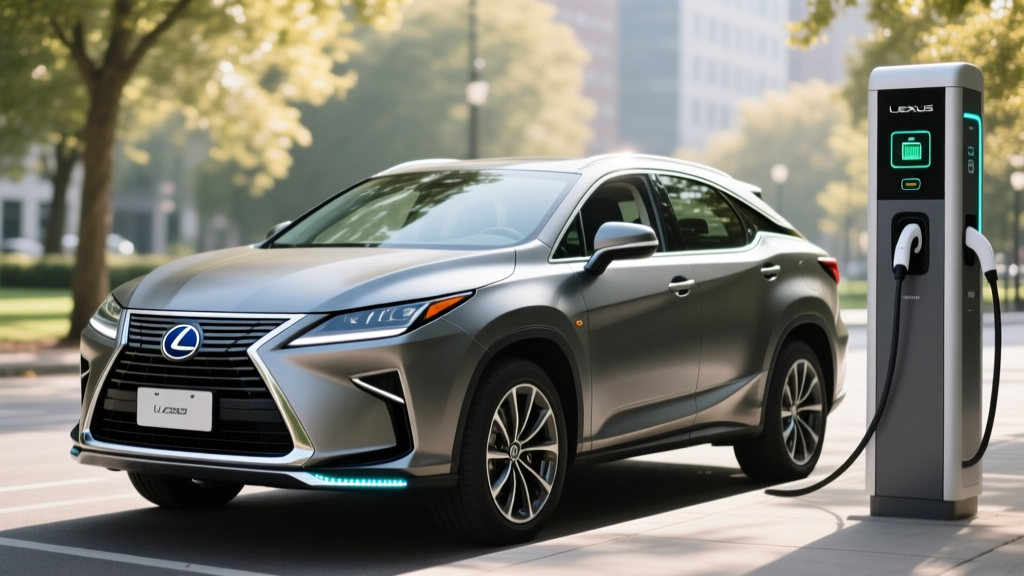
The 2013 Lexus RX 450h hybrid remains one of the most capable and reliable luxury hybrid SUVs on the used market. Built on Toyota's proven Hybrid Synergy Drive system, this midsize crossover pairs a 3.5-liter V6 with electric motors to deliver 295 combined horsepower and an EPA-estimated 30 MPG combined. For buyers seeking luxury SUV comfort without plug-in complexity or range anxiety, the RX 450h offers a compelling value proposition — especially at current used-car prices ranging from $12,000 to $18,000 depending on mileage and condition.
This guide covers everything you need to know before buying: real-world fuel economy, hybrid battery longevity, replacement costs, and how this conventional hybrid (HEV) compares to modern plug-in hybrids and full EVs in 2026.
Understanding the Powertrain: Conventional Hybrid (HEV) vs Plug-In
The 2013 Lexus RX 450h is a conventional hybrid electric vehicle (HEV), not a plug-in hybrid. This distinction matters:
HEV (This Vehicle)
- No plug required: The battery charges via regenerative braking and the gasoline engine
- Small battery: ~1.9 kWh nickel-metal hydride (NiMH) pack
- No electric-only range: Electric motors assist the engine but cannot power the vehicle alone for meaningful distances
- No federal tax credit: The §30D credit applies only to new plug-in vehicles (PHEVs and BEVs)
PHEV (Plug-In Hybrid)
- Requires charging: Larger battery (typically 10-20 kWh) charges from a wall outlet or public charger
- Electric-only range: 20-50 miles on battery alone before the gas engine kicks in
- Tax credit eligible: New PHEVs may qualify for up to $7,500 federal credit (subject to income, MSRP, and battery-sourcing rules)
The RX 450h's hybrid system is designed for seamless efficiency, not electric-only driving. You'll never need to find a charger or worry about plug compatibility — you simply fuel up at any gas station and let the hybrid system optimize power delivery automatically.
Fuel Economy: EPA Estimates vs Real-World MPG
| Driving Condition | EPA Estimate | Real-World Expectation |
|---|---|---|
| City | 32 MPG | 30-34 MPG (hybrids excel in stop-and-go) |
| Highway | 28 MPG | 26-30 MPG (less regenerative braking benefit) |
| Combined | 30 MPG | 28-32 MPG (varies by driving style and climate) |
Source: EPA Fuel Economy Guide
The RX 450h's hybrid system shines in city driving, where frequent braking regenerates the battery and allows the electric motors to handle low-speed acceleration. Highway driving reduces this advantage, as the gasoline engine does most of the work at sustained speeds. Expect a 5-10% fuel economy penalty in extreme cold (below 20°F) due to reduced battery efficiency and increased engine warm-up time.
For comparison, the non-hybrid 2013 Lexus RX 350 (3.5L V6, gasoline-only) achieves 21 MPG combined — meaning the hybrid saves roughly 2.5 gallons per 100 miles, or about $750 annually at 15,000 miles/year and $3.50/gallon fuel prices.
Powertrain Specifications and Performance
| Engine | 3.5L V6 Atkinson-cycle |
| Engine Power | 245 HP @ 6,000 RPM |
| Electric Motors | Front: 123 kW / Rear: 50 kW (AWD models) |
| Combined System Output | 295 HP |
| Transmission | Electronically controlled CVT (eCVT) |
| Drivetrain | FWD standard / AWD optional (E-Four electronic AWD) |
| 0-60 MPH | 7.4 seconds (FWD) / 7.8 seconds (AWD) |
| Battery Type | Nickel-Metal Hydride (NiMH) |
| Battery Capacity | ~1.9 kWh (gross) |
| Towing Capacity | 3,500 lbs (when properly equipped) |
The Atkinson-cycle V6 sacrifices some low-end torque for improved thermal efficiency, but the electric motors fill the gap with instant torque delivery. The result is smooth, linear acceleration that feels more responsive than the horsepower figure suggests. The eCVT transmission uses planetary gearsets rather than belts, providing seamless power delivery without the rubber-band effect common in traditional CVTs.
The AWD system (branded "E-Four") uses a dedicated rear electric motor rather than a mechanical driveshaft, reducing weight and complexity. It engages automatically when slip is detected, making it suitable for light snow and rain but not serious off-road use.
Hybrid Battery Longevity and Replacement Costs
Original Warranty Coverage
Hybrid Battery: 8 years / 100,000 miles (10 years / 150,000 miles in California and states adopting CARB emissions standards)
Hybrid System Components: 8 years / 100,000 miles (inverter, converter, control modules)
Powertrain: 6 years / 70,000 miles
For a 2013 model, the original hybrid battery warranty has expired unless the vehicle has exceptionally low mileage. However, real-world data from Toyota/Lexus hybrid owners shows that NiMH batteries in this generation typically last 150,000-200,000 miles before significant degradation. Many RX 450h examples are still running on their original batteries at 12+ years old.
Battery Replacement Cost (2026):
- OEM Lexus battery: $3,500-$4,500 installed at a dealership
- Aftermarket/remanufactured battery: $2,000-$2,800 installed at an independent hybrid specialist
- DIY replacement: $1,500-$2,000 for the battery pack alone (requires high-voltage safety training)
Unlike full EVs with 60-100 kWh battery packs costing $10,000-$20,000 to replace, the RX 450h's small hybrid battery is relatively affordable. Many owners report that the fuel savings over 150,000 miles ($3,000-$4,000 compared to the gas-only RX 350) offset the eventual battery replacement cost.
Signs of hybrid battery degradation:
- Reduced fuel economy (3-5 MPG drop)
- More frequent engine cycling (engine starts/stops more often)
- Dashboard warning: "Check Hybrid System" or "Hybrid Battery Malfunction"
- Reduced regenerative braking effectiveness
If you're considering a used RX 450h, request a hybrid battery health check from a Lexus dealer or independent hybrid shop. They can read the battery's state of health (SoH) via OBD-II and identify weak cells before they fail completely.
Pricing and Ownership Economics
Used Market Pricing (2026):
- 80,000-100,000 miles: $16,000-$18,000
- 100,000-130,000 miles: $14,000-$16,000
- 130,000-160,000 miles: $12,000-$14,000
The RX 450h commands a $1,500-$2,500 premium over the gas-only RX 350 in the used market, reflecting its superior fuel economy and Lexus's reputation for hybrid reliability.
Tax Credit Eligibility: As a conventional hybrid (HEV), the 2013 RX 450h does not qualify for the federal §30D plug-in vehicle tax credit. That credit applies only to new battery electric vehicles (BEVs) and plug-in hybrids (PHEVs) with sufficient battery capacity and compliant battery sourcing. Some states offer modest used-EV rebates, but these typically exclude conventional hybrids.
5-Year Ownership Cost Estimate (15,000 miles/year):
- Fuel: $8,750 (30 MPG combined, $3.50/gallon)
- Insurance: $7,500-$9,000 (varies by location and driving record)
- Maintenance: $3,000-$4,000 (oil changes, brakes, tires — hybrid systems require minimal additional maintenance)
- Repairs: $1,500-$3,000 (budget for potential hybrid battery replacement if over 150,000 miles)
- Total 5-Year Cost: $20,750-$24,750 (excluding purchase price)
For comparison, a 2026 Lexus RX 350h (current-generation hybrid) achieves 36 MPG combined and starts at $52,000, making the 2013 RX 450h a compelling value for budget-conscious buyers who don't need the latest tech features.
Reliability and Common Issues
The 2013 RX 450h benefits from Toyota/Lexus's decades of hybrid development. The Hybrid Synergy Drive system has proven exceptionally reliable, with few common failure points beyond normal wear items.
Known issues to watch for:
- Inverter coolant pump: Some 2010-2013 RX 450h models experienced premature inverter coolant pump failure, which can overheat the hybrid system. Check for recalls or service history.
- Brake actuator: The regenerative braking system uses an electric brake actuator that can fail around 100,000-120,000 miles. Replacement costs $1,200-$1,800.
- 12V auxiliary battery: Like all hybrids, the RX 450h has a conventional 12V battery that powers accessories. It typically lasts 4-6 years and costs $200-$300 to replace.
- Suspension components: Struts, control arms, and bushings wear normally for a vehicle of this age and weight (4,600 lbs).
Safety Ratings: The 2013 RX 450h earned a 5-star overall rating from the National Highway Traffic Safety Administration (NHTSA), with 5 stars in frontal crash, 5 stars in side crash, and 4 stars in rollover resistance.
Who Should Choose the 2013 RX 450h Hybrid?
Choose This Hybrid If:
- You want luxury SUV comfort with 30 MPG efficiency
- You lack access to home or workplace charging (no plug required)
- You prioritize proven reliability over cutting-edge technology
- You drive 12,000-18,000 miles/year and want to minimize fuel costs
- You need AWD capability for snow/rain without sacrificing efficiency
- You prefer a quieter, smoother ride than most gas-only SUVs
Consider Alternatives If:
- You want electric-only driving for short commutes (consider a PHEV)
- You need the latest infotainment, driver-assist, or smartphone integration
- You drive less than 8,000 miles/year (fuel savings won't offset the hybrid premium)
- You want to eliminate gasoline entirely (consider a full EV like the Tesla Model Y or Ford Mustang Mach-E)
- You need third-row seating (the RX is strictly a 5-passenger SUV)
Hybrid vs PHEV vs EV: Which Fits Your Needs?
| Factor | HEV (This Vehicle) | PHEV | Full EV (BEV) |
|---|---|---|---|
| Plug-In Required? | No | Yes (optional) | Yes (required) |
| Electric-Only Range | N/A | 20-50 miles | 200-400 miles |
| Total Range | 500+ miles | 400-600 miles | 200-400 miles |
| Fuel Cost (per mile) | $0.12 | $0.04-$0.10 | $0.03-$0.06 |
| Home Charging Needed? | No | Recommended | Essential |
| Federal Tax Credit | None | Up to $7,500 (new only) | Up to $7,500 (new/used) |
| Best For | No charging access, long trips | Short commutes + road trips | Home charging, daily driving |
The 2013 RX 450h makes sense if you want hybrid efficiency without lifestyle changes. If you have home charging and a short commute, a modern PHEV like the Toyota RAV4 Prime (42 miles electric-only) or a full EV like the Hyundai Ioniq 5 (303 miles range) may offer lower operating costs — but at significantly higher purchase prices.
FAQ: 2013 Lexus RX 450h Hybrid
How many MPG does the 2013 Lexus RX 450h get?
The EPA rates the RX 450h at 32 MPG city, 28 MPG highway, and 30 MPG combined. Real-world driving typically yields 28-32 MPG combined, with city driving often exceeding the EPA estimate thanks to regenerative braking. Expect a 5-10% drop in extreme cold or aggressive driving.
Is the 2013 RX 450h a plug-in hybrid?
No. The 2013 RX 450h is a conventional hybrid (HEV) that charges its battery via regenerative braking and the gasoline engine. You never need to plug it in. Lexus did not offer a plug-in RX variant until the 2023 RX 450h+.
How long does the hybrid battery last?
Most 2013 RX 450h hybrid batteries last 150,000-200,000 miles before requiring replacement. Many examples are still running on original batteries at 12+ years old. Replacement costs $2,000-$4,500 depending on whether you choose OEM or aftermarket.
Does it qualify for any tax credit?
No. The federal §30D plug-in vehicle tax credit applies only to new battery electric vehicles and plug-in hybrids with sufficient battery capacity. Conventional hybrids like the RX 450h are not eligible. Some states offer used-EV rebates, but these typically exclude HEVs.
Is the 2013 RX 450h reliable?
Yes. Lexus/Toyota hybrid systems have proven exceptionally reliable over decades of use. The main concerns are normal wear items (brakes, suspension) and potential hybrid battery replacement after 150,000+ miles. Check for inverter coolant pump recalls and brake actuator service history.
How does it compare to the gas-only RX 350?
The RX 450h achieves 30 MPG combined vs the RX 350's 21 MPG combined — a 43% improvement. The hybrid also delivers smoother acceleration (295 HP combined vs 270 HP for the gas model) and standard AWD availability. Expect to pay a $1,500-$2,500 premium in the used market.
Can I tow with the RX 450h?
Yes, the 2013 RX 450h is rated to tow 3,500 pounds when properly equipped with the factory towing package. This is sufficient for small boats, utility trailers, or a pair of jet skis, but not large campers or horse trailers.
What maintenance does the hybrid system require?
The hybrid system itself requires virtually no maintenance beyond periodic inverter coolant checks (every 100,000 miles). The gasoline engine follows standard maintenance intervals (oil changes every 5,000-10,000 miles). Regenerative braking extends brake pad life — many owners report 80,000-100,000 miles on original brake pads.
For current hybrid and PHEV options, see our complete hybrid buyer's guide or explore the latest Lexus RX lineup at Lexus.com.