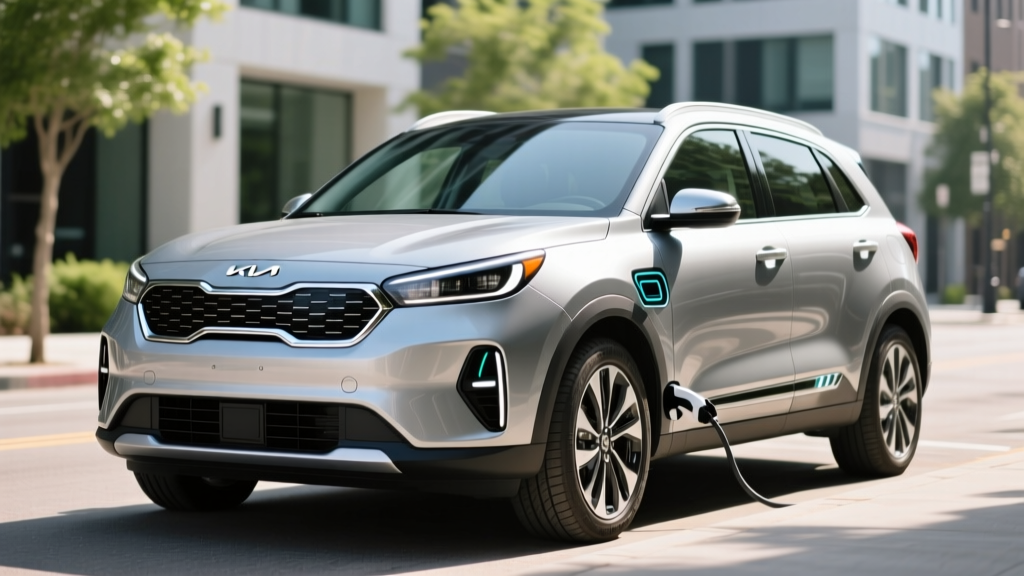
The 2025 Kia Niro Hybrid SUV occupies a narrow but valuable lane in the electrified-vehicle market: it's a conventional hybrid crossover that delivers over 50 MPG without requiring a plug, a charger, or any change in daily habit. For buyers who want meaningful fuel savings without the upfront cost or charging logistics of a full battery-electric vehicle, the Niro HEV makes a compelling case. But Kia also offers a plug-in hybrid (PHEV) variant and a fully electric Niro EV — so choosing the right version matters.
This guide breaks down the 2025 Kia Niro Hybrid SUV in detail: EPA fuel economy, real-world MPG expectations, powertrain specs, pricing, tax credit eligibility, battery longevity, and how it stacks up against both its PHEV sibling and a pure EV alternative.
HEV vs PHEV: Which 2025 Kia Niro Hybrid SUV Is Right for You?
Before diving into specs, it's critical to understand the difference between the two electrified Niro variants, because the ownership experience diverges significantly.
| Feature | Niro HEV (Conventional Hybrid) | Niro PHEV (Plug-In Hybrid) |
|---|---|---|
| Needs to plug in? | No — charges via regenerative braking and engine | Yes — plug in to access electric-only driving |
| Electric-only range | None (EV assist only at low speeds) | 33 miles (EPA) |
| Battery size | 1.56 kWh (small, self-charging) | 11.1 kWh usable (lithium-ion polymer) |
| Combined MPG / MPGe | 53 MPG combined (EPA) | 105 MPGe (electric) / 48 MPG combined (gas) |
| DC fast charging | N/A | No — AC Level 2 only |
| Total range | ~590 miles | ~560 miles (combined electric + gas) |
| Starting MSRP | $32,090 | $35,490 |
The bottom line: If you don't have reliable access to a home charger or workplace outlet, the HEV is the practical choice. If you can plug in nightly and most of your daily driving falls under 33 miles, the PHEV lets you commute on electricity while keeping a gas engine for longer trips.
Fuel Economy: EPA Ratings and Real-World MPG
The 2025 Kia Niro Hybrid SUV's headline number is its EPA-estimated fuel economy, which varies slightly by trim due to wheel size and equipment weight.
| Trim / Configuration | City MPG | Highway MPG | Combined MPG |
|---|---|---|---|
| Niro HEV LX / EX (16" wheels) | 53 | 54 | 53 |
| Niro HEV EX Touring / SX / SX Touring (18" wheels) | 49 | 52 | 50 |
| Niro PHEV (all trims, gas mode) | 49 | 47 | 48 |
| Niro PHEV (electric mode) | 105 MPGe combined | ||
Source: EPA fueleconomy.gov
Real-World MPG: What to Actually Expect
Hybrids like the Niro HEV tend to meet or exceed their EPA city ratings in stop-and-go traffic, where regenerative braking recovers the most energy. In our experience and aggregated owner reports, the Niro HEV with 16-inch wheels regularly delivers 52–56 MPG in mixed city driving.
Highway driving is a different story. At sustained 70–75 mph speeds, the electric motor assists less and the 1.6-liter engine does most of the work. Expect highway fuel economy closer to 46–50 MPG in real-world conditions, particularly with roof cargo or in high-headwind scenarios.
Cold weather reduces hybrid efficiency by roughly 10–15% due to increased engine idling for cabin heat and reduced battery efficiency. In freezing temperatures, owners report combined MPG dipping to the mid-40s until the powertrain warms up.
Powertrain Specs: Engine, Motor, and Combined Output
| Specification | Niro HEV | Niro PHEV |
|---|---|---|
| Engine | 1.6L GDI 4-cylinder | 1.6L GDI 4-cylinder |
| Engine horsepower | 104 hp | 104 hp |
| Electric motor output | 43 hp (32 kW) | 83 hp (62 kW) |
| Combined system horsepower | 139 hp | 180 hp |
| Combined system torque | 195 lb-ft | 195 lb-ft |
| Transmission | 6-speed dual-clutch automatic (DCT) | 6-speed dual-clutch automatic (DCT) |
| Drivetrain | FWD only | FWD only |
| 0-60 mph | ~9.7 seconds | ~7.6 seconds |
| Towing capacity | Not rated for towing | Not rated for towing |
The Niro uses a parallel-hybrid architecture with a 6-speed dual-clutch transmission rather than the continuously variable transmission (CVT) found in competitors like the Toyota Corolla Cross Hybrid. This gives the Niro a more natural, stepped acceleration feel — though the DCT can exhibit brief hesitation from a stop before engaging.
The PHEV's larger electric motor (83 hp vs 43 hp) delivers noticeably stronger off-the-line acceleration and makes the PHEV feel genuinely quick in electric-only mode around town. The HEV, by contrast, is adequate for commuting but won't win any drag races at 9.7 seconds to 60 mph.
PHEV Electric-Only Range and Charging Details
For buyers considering the Niro PHEV, the electric-only experience is the core value proposition.
EPA Electric-Only Range: 33 miles
Real-World Expectation: 28–33 miles depending on temperature and driving style. In mild weather with moderate city speeds, hitting 33 miles is achievable. In winter or at highway speeds, expect closer to 25–28 miles before the gas engine engages.
The PHEV's 11.1 kWh lithium-ion polymer battery charges exclusively via AC power:
| Charging Method | Power | Time (0–100%) | Notes |
|---|---|---|---|
| Level 1 (120V household outlet) | ~1.4 kW | ~9 hours | Overnight from any standard outlet |
| Level 2 (240V home/public charger) | ~3.3 kW (onboard charger limit) | ~2 hours 45 min | Requires J1772 connector |
| DC Fast Charging | N/A | N/A | Not supported |
The 3.3 kW onboard charger is relatively modest — some competitors offer 6.6 kW or even 7.2 kW onboard chargers that halve Level 2 charge times. For overnight home charging, 2 hours 45 minutes is rarely a problem. But if you're relying on public Level 2 chargers during a midday stop, the slower rate is a limitation worth noting.
Pricing, Trims, and Tax Credit Eligibility
The 2025 Kia Niro Hybrid SUV lineup spans multiple trims across both HEV and PHEV configurations:
| Model / Trim | MSRP | Key Equipment |
|---|---|---|
| Niro HEV LX | $32,090 | 16" wheels, 8" touchscreen, wireless CarPlay/Android Auto |
| Niro HEV EX | $33,490 | Smart power liftgate, heated front seats, Smart Cruise Control |
| Niro HEV EX Touring | $35,390 | 18" wheels, leatherette, power driver seat |
| Niro HEV SX | $36,090 | 10.25" dual displays, Harman Kardon audio, Highway Driving Assist |
| Niro HEV SX Touring | $37,790 | Navigation, ventilated front seats, heated steering wheel |
| Niro PHEV EX | $35,490 | 16" wheels, EV-only mode button, 8" display |
| Niro PHEV SX / SX Touring | $37,090 / $39,390 | Premium tech, leather, Harman Kardon, HDA |
Federal Tax Credit: Does the Niro Qualify?
Niro HEV (Conventional Hybrid): Does NOT qualify for the federal §30D Clean Vehicle Credit. Conventional hybrids are not eligible — only plug-in vehicles with a minimum battery capacity qualify.
Niro PHEV (Plug-In Hybrid): May qualify for up to $3,750 under §30D, depending on battery component and critical mineral sourcing requirements. Key eligibility rules for 2025:
- MSRP cap: SUVs/vans must be under $80,000 (Niro PHEV qualifies easily)
- Buyer income cap: AGI ≤ $150,000 (single) / $300,000 (joint) / $225,000 (head of household)
- Battery sourcing: The $3,750 critical-minerals component and $3,750 battery-components component have phase-in requirements that tighten annually — check current status at IRS.gov
- Point-of-sale transfer: Eligible buyers can transfer the credit to the dealer at purchase, reducing the out-of-pocket price immediately
Always verify current-year eligibility with a tax professional. Rules change annually and depend on your specific tax situation.
Some states offer additional incentives for PHEVs. California's CVRP, for instance, has offered rebates for qualifying PHEVs, though amounts and availability change. Check your state energy office for current programs.
Battery Warranty, Reliability, and Replacement Cost
Hybrid battery longevity is consistently one of the top concerns for first-time hybrid buyers. Here's what Kia covers:
Hybrid Battery Warranty (HEV and PHEV): 10 years / 100,000 miles (whichever comes first)
Hybrid System Components Warranty: 10 years / 100,000 miles — covers the electric motor, inverter, and related components
Basic Vehicle Warranty: 5 years / 60,000 miles
Powertrain Warranty: 10 years / 100,000 miles
Note: In states that follow California Air Resources Board (CARB) emissions standards, the hybrid battery warranty may extend to 10 years / 150,000 miles. Confirm with your dealer.
Kia's 10-year/100,000-mile hybrid battery warranty is among the strongest in the segment, matching Hyundai (its corporate sibling) and exceeding Toyota's 10-year/150,000-mile hybrid battery warranty in mileage coverage but not years.
Reliability Track Record
The Niro's 1.6L GDI engine and dual-clutch hybrid powertrain have been in production since the Niro's 2017 launch, giving Kia nearly a decade of field data. The current second-generation Niro (introduced for 2023) carries over the proven powertrain with refinements. Major reliability concerns have been minimal — the most common complaints involve infotainment software glitches rather than powertrain issues.
The Niro earned an IIHS Top Safety Pick designation with acceptable ratings across crash-test categories, though headlight ratings vary by trim.
Battery Replacement Cost
If the hybrid battery fails outside warranty — uncommon but possible at high mileages — replacement costs typically range from $2,500 to $4,000 for the HEV's smaller 1.56 kWh pack, and $5,000 to $7,500 for the PHEV's larger 11.1 kWh pack. These figures include parts and labor at a dealership. Independent hybrid specialists may offer refurbished packs at lower cost.
For context, most modern lithium-ion hybrid batteries retain 85–90%+ capacity at 150,000 miles under normal use. The smaller HEV battery experiences less stress than a full EV battery because it operates within a narrow state-of-charge window (roughly 40–80%), which significantly reduces degradation.
Who Should Choose the 2025 Kia Niro Hybrid SUV?
Reasons to Choose the Niro HEV
- 53 MPG combined with zero behavior change — no plugging in, no route planning
- Lowest entry price among electrified crossovers in its class
- Generous 10-year/100,000-mile hybrid battery warranty
- Comfortable ride quality and car-like driving dynamics
- Spacious rear seat and 22.8 cu ft cargo area (competitive for the class)
- Standard advanced safety features (AEB, lane-keeping, blind-spot monitoring)
Limitations to Consider
- FWD only — no all-wheel-drive option (a dealbreaker for snow-belt buyers)
- Modest 139 hp (HEV) — highway merging requires planning
- No DC fast charging on PHEV; 3.3 kW onboard charger limits public L2 speed
- 18" wheel trims sacrifice 3 MPG combined vs 16" wheel trims
- No federal tax credit for HEV; PHEV credit is partial and sourcing-dependent
- Not rated for towing
Decision Framework: Hybrid vs PHEV vs EV
Choose the Niro HEV if: You want maximum fuel efficiency without charging infrastructure. You live in an apartment, lack a garage, or simply don't want to think about plugging in. Your budget is under $35,000 and you drive 12,000–15,000 miles per year in mixed city/highway conditions.
Choose the Niro PHEV if: You have reliable home charging (even a 120V outlet works overnight). Your daily commute is under 30 miles round-trip, and you want to drive mostly on electricity during the week while keeping the gas engine for weekend road trips. You're willing to pay ~$3,400 more upfront for the electric capability.
Choose a full EV (like the Niro EV or a competitor) if: You have Level 2 home charging, your daily driving is predictable, you want zero tailpipe emissions, and you're ready to plan longer road trips around DC fast-charging stops. A full EV offers the lowest per-mile fuel cost and minimal maintenance, but requires charging infrastructure and a higher purchase price.
Competitive Context: How the Niro Hybrid Stacks Up
The 2025 Kia Niro Hybrid SUV competes in a small but growing segment of compact hybrid crossovers:
| Model | Combined MPG | HP | AWD Available? | Starting MSRP |
|---|---|---|---|---|
| 2025 Kia Niro HEV | 53 | 139 | No | $32,090 |
| 2025 Toyota Corolla Cross Hybrid | 42 | 196 | Yes (standard) | $30,195 |
| 2025 Hyundai Tucson Hybrid | 38 | 226 | Yes (standard) | $33,465 |
| 2025 Honda CR-V Hybrid | 40 | 204 | Yes (available) | $35,950 |
The Niro leads the pack in fuel economy by a wide margin but is the only one without an available all-wheel-drive system. If AWD is non-negotiable, the Corolla Cross Hybrid offers the best MPG among AWD options at 42 combined, though it falls 11 MPG short of the Niro.
The Tucson Hybrid and CR-V Hybrid are larger, more powerful, and offer AWD, but their fuel economy is notably lower. They also cost more at the entry level. The Niro wins on pure efficiency and value if FWD meets your needs.
Frequently Asked Questions
How many MPG does the 2025 Kia Niro Hybrid get?
The Niro HEV with 16-inch wheels achieves an EPA-estimated 53 city / 54 highway / 53 combined MPG. Trims with 18-inch wheels drop to 49/52/50. Real-world city driving often meets or slightly exceeds the EPA city figure, while sustained highway driving typically yields 46–50 MPG.
How far can the Niro PHEV go on electric only?
The EPA rates the 2025 Niro PHEV at 33 miles of electric-only range. In practice, expect 28–33 miles depending on temperature, speed, and terrain. Once the battery is depleted, the PHEV operates as a conventional hybrid at 48 MPG combined.
Does the Niro Hybrid need to be plugged in?
No. The Niro HEV (conventional hybrid) charges its small 1.56 kWh battery entirely through regenerative braking and the gasoline engine. You never plug it in. Only the Niro PHEV variant benefits from plugging in — and requires it to access its 33-mile electric-only range.
Is the 2025 Kia Niro Hybrid reliable?
The Niro's hybrid powertrain has been in production since 2017 with no widespread reliability issues. The 10-year/100,000-mile hybrid battery and powertrain warranty provides long-term peace of mind. Common complaints are limited to infotainment software rather than mechanical systems.
What does it cost to replace the Niro hybrid battery?
Out-of-warranty replacement runs approximately $2,500–$4,000 for the HEV pack and $5,000–$7,500 for the PHEV pack, including labor. However, modern hybrid batteries rarely require full replacement within the first 150,000 miles, and Kia's 10-year/100,000-mile warranty covers defects and significant capacity loss.
Does the Niro Hybrid qualify for a federal tax credit?
The conventional Niro HEV does not qualify for any federal tax credit. The Niro PHEV may qualify for up to $3,750 under IRS §30D, subject to buyer income limits, MSRP caps, and battery sourcing requirements. Verify current eligibility at IRS.gov and consult a tax professional.
Is the Niro Hybrid good for road trips?
With a ~590-mile total range (HEV), you'll stop for fuel far less often than in a conventional gas car. Ride comfort is good for a compact crossover, and cargo space (22.8 cu ft behind rear seats, 63.7 cu ft folded) handles luggage for two easily. The main limitation is modest passing power at highway speeds — plan your merges accordingly.
Does the Niro Hybrid have all-wheel drive?
No. The 2025 Niro HEV and PHEV are front-wheel-drive only. If AWD is essential, consider the Toyota Corolla Cross Hybrid (standard AWD, 42 MPG combined) or the Hyundai Tucson Hybrid (standard AWD, 38 MPG combined).