The 2025 Kia Hybrid and PHEV Lineup at a Glance
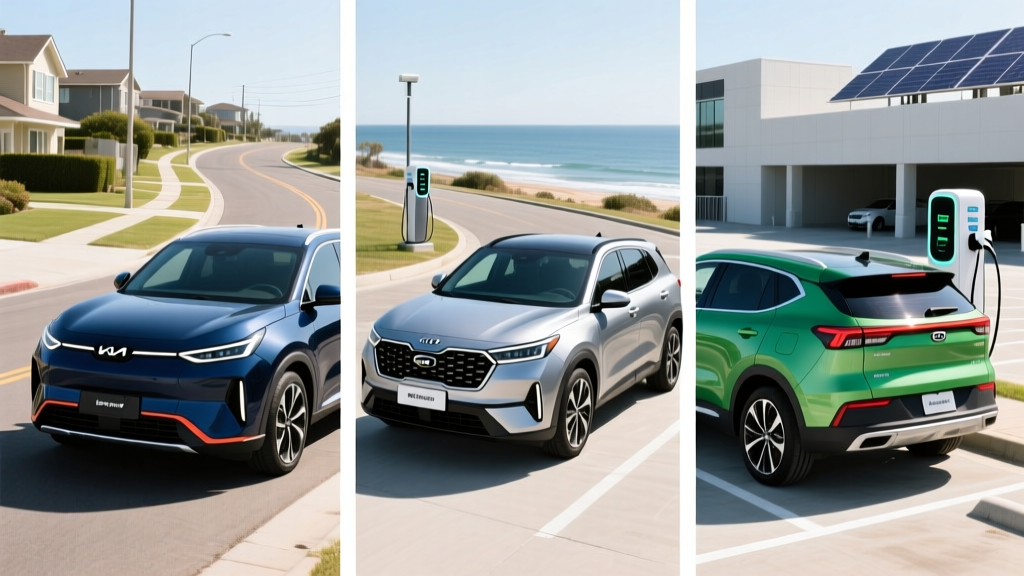
Kia offers one of the broadest electrified portfolios among mainstream automakers, spanning conventional hybrids (HEVs) that never need plugging in and plug-in hybrids (PHEVs) that deliver meaningful electric-only commuting range. For 2025, the lineup centers on three nameplates — the compact Niro, the midsize three-row Sorento, and the compact SUV Sportage — each available in both HEV and PHEV configurations.
This guide breaks down exact EPA fuel economy, battery specifications, powertrain output, pricing, and real-world ownership considerations so you can determine which 2025 Kia hybrid fits your driving pattern and budget.
HEV vs. PHEV: What's the Difference?
Conventional Hybrid (HEV): Uses a small battery (typically 1-2 kWh) charged entirely by regenerative braking and the gasoline engine. You never plug it in. The electric motor assists the engine to improve MPG, particularly in stop-and-go city driving. Think of it as a more efficient gas car.
Plug-in Hybrid (PHEV): Carries a larger battery (10-18+ kWh) that can be charged from a wall outlet or public charger. This enables 25-40+ miles of pure electric driving before the gasoline engine engages. Once the battery depletes, it operates as a conventional hybrid. Best for drivers with short commutes and home charging access.
EPA Fuel Economy: How Many MPG Do 2025 Kia Hybrids Get?
Fuel economy varies significantly across the lineup depending on whether you choose HEV or PHEV, FWD or AWD, and which trim level you select. Here are the official EPA figures:
| Model | Type | City MPG | Highway MPG | Combined MPG | PHEV MPGe |
|---|---|---|---|---|---|
| Niro Hybrid | HEV | 53 | 54 | 53 | — |
| Niro Plug-in Hybrid | PHEV | 49 (hybrid mode) | 47 (hybrid mode) | 48 (hybrid mode) | 108 MPGe |
| Sportage Hybrid | HEV (FWD) | 42 | 44 | 43 | — |
| Sportage Hybrid AWD | HEV (AWD) | 38 | 38 | 38 | — |
| Sportage Plug-in Hybrid | PHEV | 38 (hybrid mode) | 38 (hybrid mode) | 38 (hybrid mode) | 84 MPGe |
| Sorento Hybrid | HEV (AWD) | 34 | 34 | 34 | — |
| Sorento Plug-in Hybrid | PHEV (AWD) | 33 (hybrid mode) | 34 (hybrid mode) | 33 (hybrid mode) | 79 MPGe |
Source: fueleconomy.gov — EPA estimates. Your actual mileage will vary based on driving conditions, terrain, climate control usage, and driving style.
Real-World MPG vs. EPA Stickers
Kia's hybrids — particularly the Niro — tend to meet or slightly exceed EPA city estimates in real-world driving because regenerative braking recovers more energy in stop-and-go traffic than the test cycle captures. Highway MPG, however, often falls 3-5 MPG below the sticker at sustained 75-80 mph speeds, where aerodynamic drag dominates and the electric motor provides minimal assist.
For the Sorento Hybrid AWD, owners commonly report 30-32 MPG combined in mixed driving with regular highway use, slightly below the 34 MPG EPA combined figure. The heavier vehicle mass and AWD system parasitic losses account for the gap. In city-heavy commutes, the Sorento Hybrid can match or exceed its 34 MPG city rating.
PHEV Electric-Only Range and Battery Specifications
If you're considering a Kia plug-in hybrid, electric-only range is the number that matters most for daily commuting. Here's the breakdown by model:
| Model | Battery Capacity | Electric-Only Range (EPA) | Total Range | Level 2 Charge Time | DC Fast Charge |
|---|---|---|---|---|---|
| Niro PHEV | 11.1 kWh (NMC) | 33 miles | ~430 miles | ~2 hrs 45 min (240V) | No |
| Sportage PHEV | 13.7 kWh (NMC) | 34 miles | ~430 miles | ~3 hrs 15 min (240V) | No |
| Sorento PHEV | 13.7 kWh (NMC) | 32 miles | ~420 miles | ~3 hrs 25 min (240V) | No |
What 32-34 Miles of Electric Range Means in Practice
The EPA electric-only range figures assume moderate temperatures, flat terrain, and speeds around 50-55 mph. In real-world use, expect the following:
- Ideal conditions (spring/fall, city speeds under 45 mph): You may see 35-38 miles before the engine kicks in.
- Highway driving (65-75 mph): Electric range drops to roughly 22-26 miles due to aerodynamic drag and the higher energy demand of sustained speeds.
- Cold weather (below 32°F): Battery chemistry becomes less efficient and cabin heating draws significant power. Expect 18-24 miles of electric range — a 25-40% reduction.
None of Kia's 2025 PHEVs support DC fast charging. This is common for PHEVs in this price class — the smaller batteries (11-14 kWh) simply don't justify the cost and weight of DC fast-charge hardware. Level 2 charging at home (240V) is the intended use case, and a full charge in roughly 3 hours means you can easily top off during the workday if you have access to a Level 2 outlet.
Level 1 charging (standard 120V household outlet) is also viable for Kia PHEVs given the small battery sizes. Expect roughly 5-6 miles of range added per hour of Level 1 charging, meaning an overnight session of 10-12 hours can fully replenish the battery.
Powertrain Specs: Horsepower, Engines, and Motors
Kia uses a consistent hybrid architecture across its lineup: a turbocharged or naturally aspirated gasoline engine paired with an electric motor integrated into the transmission. Here's the power output breakdown:
| Model | Engine | Engine HP | Motor HP | Combined System HP | Transmission |
|---|---|---|---|---|---|
| Niro Hybrid | 1.6L 4-cyl | 104 | 43 | 139 | 6-speed DCT |
| Niro PHEV | 1.6L 4-cyl | 104 | 83 | 180 | 6-speed DCT |
| Sportage Hybrid | 1.6L Turbo 4-cyl | 178 | 44 | 226 | 6-speed AT |
| Sportage PHEV | 1.6L Turbo 4-cyl | 178 | 97 | 261 | 6-speed AT |
| Sorento Hybrid | 1.6L Turbo 4-cyl | 178 | 44 | 227 | 6-speed AT |
| Sorento PHEV | 1.6L Turbo 4-cyl | 178 | 97 | 261 | 6-speed AT |
The Niro prioritizes efficiency over power — 139 combined horsepower is adequate for city and suburban driving but feels strained during highway merging with a full load of passengers and cargo. The PHEV version's 180 hp is a meaningful improvement.
The Sportage and Sorento hybrids, with their turbocharged 1.6L engines and 226-261 combined horsepower, deliver confident acceleration for a compact and midsize SUV respectively. The PHEV versions are genuinely quick off the line thanks to instant electric motor torque, with 0-60 mph times in the low 7-second range for the Sportage PHEV.
Pricing and Tax Credit Eligibility for 2025 Kia Hybrids
Here's where the financial calculus gets interesting — and where many buyers get confused about what incentives actually apply.
| Model | Base MSRP | Federal Tax Credit | Effective Price (with credit) |
|---|---|---|---|
| Niro Hybrid LX | ~$28,215 | $0 | $28,215 |
| Niro PHEV LX | ~$35,565 | Up to $3,750* | ~$31,815* |
| Sportage Hybrid LX | ~$30,090 | $0 | $30,090 |
| Sportage PHEV X-Line | ~$40,490 | Up to $3,750* | ~$36,740* |
| Sorento Hybrid LX | ~$38,690 | $0 | $38,690 |
| Sorento PHEV SX Prestige | ~$51,590 | Up to $3,750* | ~$47,840* |
*Federal tax credit amounts are partial and subject to IRS §30D battery sourcing and critical minerals requirements. Conventional hybrids (HEVs) do not qualify for any federal EV tax credit.
Tax Credit Reality Check
Under current IRS §30D rules, only plug-in hybrids with sufficient battery capacity and compliant battery mineral sourcing qualify for the federal clean vehicle credit. Here's what applies to 2025 Kia PHEVs:
- Conventional hybrids (Niro HEV, Sportage HEV, Sorento HEV): Not eligible for any federal tax credit. These are classified as efficient gasoline vehicles, not clean vehicles under §30D.
- Plug-in hybrids (Niro PHEV, Sportage PHEV, Sorento PHEV): May qualify for a partial credit — typically $3,750 — depending on whether the battery meets critical minerals and battery component sourcing requirements. The full $7,500 credit requires both thresholds to be met, and as of 2025, Kia PHEVs generally meet one threshold but not both.
- Buyer income caps apply: Modified adjusted gross income must not exceed $150,000 (single), $225,000 (head of household), or $300,000 (joint filing).
- MSRP caps: PHEVs classified as SUVs have a $80,000 MSRP cap; sedans/other vehicles have a $55,000 cap. All Kia PHEVs fall under their respective caps.
- Point-of-sale transfer: As of 2024, eligible buyers can transfer the credit to the dealer at purchase, reducing the purchase price directly rather than waiting for a tax refund.
Always verify current eligibility with a tax professional and check the fueleconomy.gov tax credit database before purchasing, as sourcing rules and eligible models can change.
Battery Warranty, Reliability, and Replacement Costs
Kia Hybrid and PHEV Battery Warranty
All 2025 Kia hybrids and plug-in hybrids carry Kia's standard hybrid battery warranty: 10 years or 100,000 miles (whichever comes first). This covers defects and capacity loss below a specified threshold — typically 70% of original capacity for PHEV batteries.
The hybrid system components (motor, inverter, converter) are covered under the same 10-year/100,000-mile warranty. The conventional powertrain is covered by Kia's 5-year/60,000-mile basic warranty and 10-year/100,000-mile powertrain warranty.
How Reliable Are Kia Hybrids?
Kia's hybrid powertrains have demonstrated solid reliability since the current-generation architecture launched. The 1.6L engines (both naturally aspirated and turbocharged) are well-proven, and the dual-clutch and automatic transmissions used in hybrid applications have fewer failure points than conventional transmissions because the electric motor smooths load transitions.
The lithium-ion NMC (nickel manganese cobalt) batteries in Kia PHEVs are manufactured to automotive-grade standards with active thermal management. Based on industry-wide data from similar PHEV battery packs, degradation over 10 years typically ranges from 10-20%, meaning a 34-mile electric range when new might become 27-30 miles after a decade of use — still functional for most commutes.
Battery Replacement Cost
If a hybrid or PHEV battery fails outside warranty coverage, replacement costs vary by model:
- Niro Hybrid (1.56 kWh): $2,000–$3,500
- Niro PHEV (11.1 kWh): $4,500–$6,500
- Sportage/Sorento PHEV (13.7 kWh): $5,500–$8,000
These are estimates based on current parts pricing and dealer labor rates. Independent hybrid specialists may offer lower-cost replacements. Given the 10-year/100,000-mile warranty, most original owners will never face an out-of-pocket battery replacement.
Who Should Buy a 2025 Kia Hybrid vs. PHEV vs. Full EV?
Choose a Kia HEV (Niro, Sportage, Sorento Hybrid) If:
- You have no access to home or workplace charging
- You want maximum simplicity — no plugs, no charging apps, no range planning
- Your budget is tighter and you want to stay under $35,000
- You drive a mix of city and highway with no predictable short-commute pattern
- You want 40-53 MPG without changing any habits
Choose a Kia PHEV (Niro, Sportage, Sorento PHEV) If:
- You can charge at home (even a standard 120V outlet works overnight)
- Your daily commute is under 30 miles round-trip
- You want electric driving for errands but gas flexibility for road trips
- You want to reduce fuel consumption by 60-80% on weekdays while keeping weekend range
- You can benefit from the partial federal tax credit
Decision Framework: Hybrid vs. PHEV vs. Full EV
Go HEV if: No charging access, want lowest upfront cost, drive 200+ miles weekly on highways, and don't want to think about electricity at all.
Go PHEV if: Home charging available, commute under 35 miles, take 3+ road trips per year exceeding 200 miles, and want the safety net of a gas engine.
Go full EV (e.g., Kia EV6 or EV9) if: Home Level 2 charging is installed, daily driving under 250 miles, you want zero tailpipe emissions and minimal maintenance, and you're comfortable planning DC fast-charge stops on road trips.
2025 Kia Hybrid Lineup: Quick Verdict by Model
Niro Hybrid: The efficiency champion. At 53 MPG combined and under $29,000, it's one of the most fuel-efficient non-plug-in vehicles sold in America. Cargo space is modest (22.8 cu ft behind rear seats), but for a commuter car or small household, it's hard to beat on operating cost.
Niro PHEV: The sweet spot for apartment dwellers or those who can trickle-charge on 120V. The 33-mile electric range covers most errands, and 48 MPG in hybrid mode means you're never stranded. The ~$7,000 premium over the HEV takes several years to recoup in fuel savings unless you maximize electric driving daily.
Sportage Hybrid: The practical compact SUV pick. 43 MPG combined in FWD form with 226 hp and generous cargo space (39.5 cu ft) makes it a strong alternative to the Toyota RAV4 Hybrid. AWD drops efficiency to 38 MPG but adds all-weather capability.
Sportage PHEV: Best for families with a predictable routine. Charge overnight, drive 34 miles electric on weekdays, and use the turbocharged 261 hp powertrain for weekend adventures. The $40,490 starting price is steep before any tax credit.
Sorento Hybrid: The only three-row hybrid SUV in Kia's lineup. 34 MPG combined for a vehicle seating up to six is genuinely impressive. Third-row space is tight for adults, but for families with young children, it eliminates the minivan conversation.
Sorento PHEV: Premium-priced ($51,590) and only available in the top SX Prestige trim, which limits its value proposition. You're paying for three rows, 32 miles of electric range, and 261 hp — but the Toyota Highlander Hybrid offers similar space and MPG for less, albeit without plug-in capability.
Frequently Asked Questions
Do Kia hybrids need to be plugged in?
No. Conventional Kia hybrids (Niro Hybrid, Sportage Hybrid, Sorento Hybrid) charge their small batteries entirely through regenerative braking and the gasoline engine. You simply drive them like any other car and fill up at the gas station. Only the PHEV models (Niro PHEV, Sportage PHEV, Sorento PHEV) benefit from being plugged in to maximize electric-only driving.
How far can a Kia PHEV go on electricity alone?
The 2025 Niro PHEV achieves 33 miles of EPA-rated electric-only range, the Sportage PHEV reaches 34 miles, and the Sorento PHEV delivers 32 miles. In cold weather or at highway speeds, expect a 20-40% reduction. Once the battery is depleted, all three models continue as conventional hybrids with 33-48 MPG.
What is the total cost of ownership for a Kia hybrid vs. a gas car?
Over five years and 75,000 miles, a Niro Hybrid at 53 MPG combined uses roughly 1,415 gallons of fuel — about $4,245 at $3.00/gallon. A comparable gas-only compact SUV at 28 MPG combined would consume 2,679 gallons, costing roughly $8,037. That's nearly $3,800 in fuel savings, which largely offsets the Niro Hybrid's modest price premium. Maintenance costs are also lower due to reduced brake wear from regenerative braking and no transmission fluid changes on the DCT models at typical intervals.
Is the Kia hybrid battery reliable, and what does replacement cost?
Kia covers all hybrid and PHEV batteries with a 10-year/100,000-mile warranty. Industry data shows lithium-ion hybrid batteries typically lose 10-20% capacity over a decade. Out-of-warranty replacement costs range from roughly $2,000 for the small Niro Hybrid battery to $5,500-$8,000 for the larger PHEV packs. Most original owners will never face this expense.
Do 2025 Kia hybrids qualify for any federal tax credit?
Conventional hybrids (HEVs) do not qualify for any federal tax credit. Kia's PHEV models may qualify for a partial credit of up to $3,750 under IRS §30D, depending on battery component and critical mineral sourcing compliance, buyer income limits ($150K single / $300K joint), and MSRP caps. The credit can be transferred to the dealer at point of sale. Verify current eligibility on irs.gov before purchasing.
Can I charge a Kia PHEV on a regular household outlet?
Yes. All 2025 Kia PHEVs can charge on a standard 120V Level 1 outlet, adding roughly 5-6 miles of electric range per hour. Given the 11-14 kWh battery sizes, a full overnight charge (10-12 hours) will replenish the battery completely. A 240V Level 2 outlet or dedicated home charger reduces full-charge time to approximately 3 hours.