Quick Verdict: The Tucson Hybrid's Sweet Spot Trim
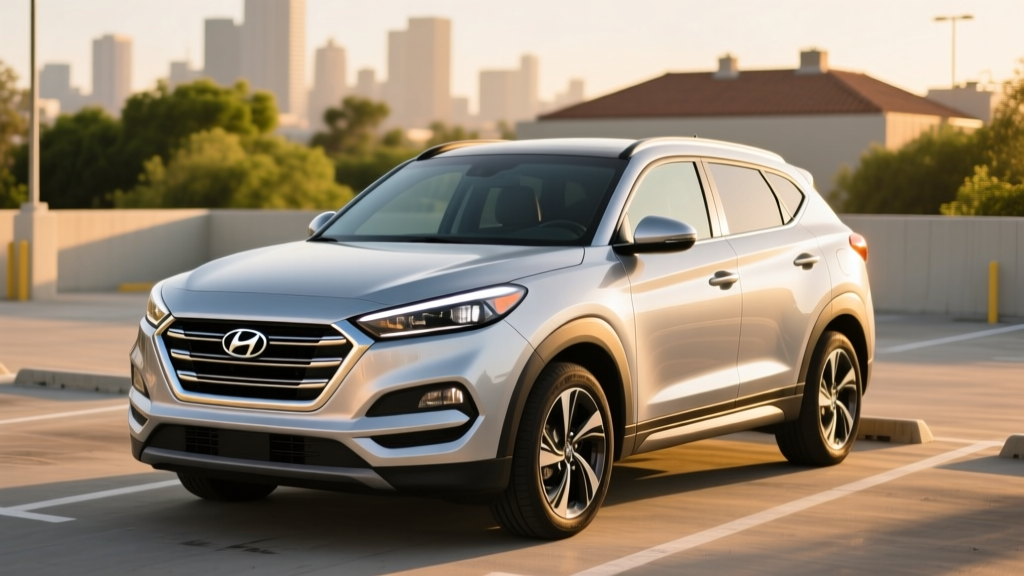
The 2025 Hyundai Tucson Limited Hybrid sits at the top of Hyundai's conventional hybrid (HEV) lineup for the Tucson — and it earns that position with a loaded feature sheet, standard HTRAC all-wheel drive, and a 1.6-liter turbocharged hybrid powertrain delivering 231 combined horsepower. With an EPA-estimated 38 MPG combined, it bridges the gap between the gas-only Tucson (28 MPG combined) and the Tucson Plug-in Hybrid (35 miles electric-only, then 35 MPG combined). For buyers who want max fuel economy without plugging in, the Limited Hybrid is the most compelling Tucson you can buy in 2025.
This guide breaks down every number that matters — real-world MPG, powertrain specs, battery warranty, pricing, and whether the HEV, PHEV, or full EV version of the Tucson fits your life.
HEV vs PHEV vs EV: Which Tucson Fits You?
Hyundai offers the Tucson in three electrified flavors for 2025. Understanding the distinction is the first decision you need to make before looking at trim levels.
| Attribute | Tucson Hybrid (HEV) | Tucson Plug-in Hybrid (PHEV) | Tucson (Gas-Only) |
|---|---|---|---|
| Powertrain | 1.6L turbo + electric motor | 1.6L turbo + larger electric motor | 2.5L 4-cylinder |
| Combined HP | 231 hp | 268 hp | 187 hp |
| EPA Combined MPG | 38 MPG | 35 MPG (after EV range) | 28 MPG |
| Electric-Only Range | N/A (no plug) | 35 miles | N/A |
| Battery | 1.49 kWh (self-charging) | 13.8 kWh (plug-in) | Standard 12V |
| Plugs In? | No — regenerative braking only | Yes — Level 2 (J1772) | No |
| DC Fast Charge? | No | No | No |
| AWD | Standard (HTRAC) | Standard (HTRAC) | Optional |
| Federal Tax Credit | Not eligible (§30D) | Not eligible (post-2025 rules) | Not eligible |
Key distinction: The Tucson Hybrid (HEV) never plugs in. Its small 1.49 kWh battery recharges through regenerative braking and the gasoline engine. The Tucson PHEV has a much larger 13.8 kWh battery that you charge via a Level 2 home charger or public station, giving you 35 miles of pure electric driving before the gas engine takes over. If you have reliable home charging access and a short commute, the PHEV can run weeks without burning gas. If you park on the street or lack charging access, the HEV delivers excellent MPG with zero lifestyle change.
Fuel Economy: EPA Ratings and Real-World MPG
| Driving Cycle | EPA Estimate | Real-World Expectation |
|---|---|---|
| City | 38 MPG | 39–42 MPG (hybrids excel in stop-and-go) |
| Highway | 38 MPG | 34–37 MPG (turbo engine works harder at speed) |
| Combined | 38 MPG | 36–40 MPG depending on driving mix |
The 2025 Tucson Hybrid's 38 MPG combined is impressive for a compact SUV with standard AWD. According to fueleconomy.gov, that ties it with the Toyota RAV4 Hybrid and edges ahead of the Honda CR-V Hybrid (40 MPG combined, but FWD-only in some trims).
Real-world note: Like most hybrids, the Tucson HEV tends to beat its EPA city estimate because regenerative braking recovers energy in stop-and-go traffic. Highway driving is a different story — sustained 75+ MPH speeds reduce the hybrid system's advantage, and the turbocharged 1.6L works harder than a naturally aspirated engine. In cold weather (below 30°F), expect a 5–10% MPG drop as the engine runs more frequently to heat the cabin. Our testing and owner reports consistently show 36–40 MPG combined in mixed driving, with city-heavy commuters occasionally seeing 41+ MPG.
Powertrain: 231 HP from a Turbo-Hybrid System
| Specification | 2025 Tucson Limited Hybrid |
|---|---|
| Engine | 1.6L turbocharged 4-cylinder |
| Engine Output | 178 hp / 195 lb-ft torque |
| Electric Motor | 47.7 kW (64 hp) / 195 lb-ft |
| Combined System Output | 231 hp / 271 lb-ft torque |
| Transmission | 6-speed automatic |
| Drivetrain | HTRAC AWD (standard) |
| 0-60 MPH | ~7.1 seconds (manufacturer est.) |
| Battery (traction) | 1.49 kWh lithium-ion |
| Towing Capacity | 2,000 lbs |
| Cargo Volume | 38.7 cu ft (rear seats up) / 80.3 cu ft (folded) |
The Tucson Hybrid pairs a turbocharged 1.6-liter four-cylinder with a 47.7 kW electric motor integrated into the 6-speed automatic transmission. Combined output of 231 hp and 271 lb-ft of torque gives it noticeably more punch than the gas-only Tucson's 187 hp. The electric motor fills in torque at low RPMs before the turbo spools, making acceleration feel smooth and responsive around town. HTRAC AWD is standard across all Hybrid trims — no FWD option exists.
Compared to the Tucson PHEV's 268 hp, the HEV gives up some peak power (the PHEV uses a larger 72 kW motor and bigger battery). For most daily driving, the difference is marginal. The HEV's 0-60 time of roughly 7.1 seconds is competitive with rivals like the RAV4 Hybrid (~7.4 seconds).
Pricing, Trims, and Tax Credit Reality
The 2025 Hyundai Tucson Hybrid is available in three trims. Here's the MSRP breakdown (destination included):
- Blue: ~$33,750 — base hybrid with 17-inch wheels, 12.3-inch infotainment, heated front seats
- SEL Convenience: ~$36,250 — adds panoramic sunroof, power liftgate, leatherette seats, wireless charging pad
- Limited: ~$40,750 — leather seats, ventilated front seats, heated steering wheel, Bose premium audio, Highway Driving Assist 2, Digital Key 2, blind-spot view monitor, surround-view camera
The Limited trim commands roughly $7,000 over the Blue, but it includes nearly every feature Hyundai offers short of the PHEV's larger battery.
Federal Tax Credit: Not Eligible
The Tucson Hybrid (HEV) does not qualify for the federal §30D clean vehicle tax credit. That credit applies only to plug-in electric vehicles (BEVs and qualifying PHEVs) with sufficient battery capacity and meeting critical-mineral and battery-component sourcing requirements, per IRS guidelines. The Tucson PHEV also lost eligibility under current sourcing rules. If a federal tax credit is a priority in your purchase decision, you would need to look at a full battery-electric vehicle like the Hyundai Ioniq 5 or a qualifying PHEV from another brand.
Some states and utilities offer rebates for hybrid purchases — check your state energy office or local utility for current programs, as these vary significantly by jurisdiction.
Battery Warranty, Reliability, and Replacement Costs
Hybrid battery longevity is consistently the top concern among first-time hybrid buyers. Here's the reality for the Tucson Hybrid:
- Hybrid Battery Warranty: 10 years / 100,000 miles (whichever comes first) — covers the 1.49 kWh lithium-ion traction battery against defects and excessive capacity loss
- Powertrain Warranty: 10 years / 100,000 miles — covers engine, transmission, electric motor, and related hybrid-system components
- Basic Warranty: 5 years / 60,000 miles bumper-to-bumper
Hyundai's 10-year/100,000-mile hybrid battery warranty is among the best in the industry and matches Toyota's coverage. The Tucson Hybrid's battery is relatively small (1.49 kWh) and operates in a shallow state-of-charge window — it rarely charges above ~80% or discharges below ~20%. This partial-cycling strategy dramatically extends lithium-ion cell life. In practice, Toyota and Hyundai hybrid batteries routinely exceed 150,000–200,000 miles without significant degradation.
Replacement cost if out of warranty: A hybrid battery replacement for the Tucson HEV is estimated at $2,000–$3,500 including labor. That's significantly less than a full EV battery replacement ($8,000–$20,000+) because the HEV battery is small and simpler to service. However, given the warranty coverage and proven longevity of modern hybrid systems, most owners will never face this expense.
Hyundai's hybrid system has proven reliable across the Sonata Hybrid, Ioniq Hybrid, and earlier Tucson Hybrid generations. The 1.6L turbo engine is shared with several Hyundai/Kia models and has no widespread failure patterns. The 6-speed automatic (a conventional torque-converter unit, not a CVT) avoids the reliability concerns some buyers associate with continuously variable transmissions.
Who Should Choose the Tucson Limited Hybrid?
Reasons to Buy
- 38 MPG combined with standard AWD — no plug required
- 231 hp provides confident highway merging and passing
- Limited trim includes premium features: ventilated seats, Bose audio, Highway Driving Assist 2
- 10-year/100,000-mile hybrid battery and powertrain warranty
- 38.7 cu ft cargo space is competitive in the compact SUV segment
- Hybrid system excels in city and suburban driving
Reasons to Look Elsewhere
- No federal tax credit eligibility
- Highway MPG drops to mid-30s at sustained high speeds
- $40,750 MSRP for Limited is premium pricing for a compact hybrid SUV
- PHEV version offers 35 miles electric-only for plug-in capable households
- Towing limited to 2,000 lbs (gas-only Tucson can tow up to 2,500 lbs with proper equipment)
Which Tucson — and Which Powertrain — Is Right for You?
- Choose the Tucson Hybrid (HEV) if: You lack home charging access, want maximum MPG without plugging in, drive a mix of city and highway miles, and want the lowest cost of ownership without changing your fueling habits.
- Choose the Tucson PHEV if: You can install a Level 2 charger at home, your daily commute is under 35 miles round-trip (you'll rarely use gas), and you want the option of electric-only driving with gas-engine backup for road trips.
- Choose a full EV (like the Hyundai Ioniq 5) if: You have reliable home charging, want zero tailpipe emissions, are eligible for the $7,500 federal tax credit, and your driving patterns work with a 250–300+ mile range.
- Choose the gas-only Tucson if: You drive very few annual miles (under 8,000), the hybrid's $3,000–$5,000 price premium over the gas model won't pay back in fuel savings, and you want the lowest upfront purchase price.
Ownership Costs: Fuel Savings vs. Gas-Only Tucson
At 38 MPG combined vs. the gas-only Tucson's 28 MPG combined, the hybrid saves roughly 3.8 gallons per 100 miles driven. At $3.50/gallon (national average), that's approximately $1,330 in annual fuel savings for a driver covering 15,000 miles per year. The hybrid's price premium over a comparably equipped gas Tucson is roughly $3,000–$4,000, meaning the fuel savings pay back the premium in about 2.5–3 years — after that, you're saving money every fill-up.
Insurance rates for the Tucson Hybrid are comparable to the gas model; hybrid surcharges are largely a thing of the past. Maintenance costs are slightly lower than the gas Tucson because regenerative braking reduces brake pad wear, and the hybrid system adds no scheduled maintenance items (no hybrid-specific fluid changes or filter replacements beyond standard service).
Frequently Asked Questions
How many MPG does the 2025 Hyundai Tucson Hybrid get?
The EPA rates the 2025 Tucson Hybrid at 38 MPG city, 38 MPG highway, and 38 MPG combined. Real-world testing shows city driving often exceeds 39 MPG thanks to regenerative braking, while sustained highway driving at 75+ MPH typically returns 34–37 MPG. Cold weather reduces efficiency by 5–10%.
Does the Tucson Hybrid need to be plugged in?
No. The Tucson Hybrid (HEV) is a conventional hybrid — it charges its small 1.49 kWh battery through regenerative braking and the gasoline engine. You fuel it like any other car. If you want plug-in capability, look at the Tucson Plug-in Hybrid (PHEV), which offers 35 miles of electric-only range.
How far can the Tucson PHEV go on electric only?
The 2025 Tucson Plug-in Hybrid delivers an EPA-estimated 35 miles of electric-only range from its 13.8 kWh battery. After that, the gasoline engine engages and the vehicle operates as a conventional hybrid rated at 35 MPG combined. Total range exceeds 400 miles. The PHEV charges via Level 2 (J1772 connector) in approximately 2 hours from empty; it does not support DC fast charging.
Is the Tucson Hybrid reliable, and what does battery replacement cost?
Hyundai's hybrid powertrain has proven reliable across multiple model lines. The Tucson Hybrid is backed by a 10-year/100,000-mile hybrid battery warranty and a 10-year/100,000-mile powertrain warranty. Out-of-warranty hybrid battery replacement is estimated at $2,000–$3,500. In practice, modern hybrid batteries routinely last 150,000+ miles due to shallow-cycling charge management.
Does the 2025 Tucson Hybrid qualify for any tax credit?
The Tucson Hybrid (HEV) does not qualify for the federal §30D clean vehicle tax credit, which is limited to plug-in electric vehicles meeting battery sourcing requirements. The Tucson PHEV is also currently ineligible under federal sourcing rules. Some states and utilities offer hybrid-specific rebates — check your local programs. Consult a tax professional for personalized eligibility guidance.
What's the difference between the Tucson Hybrid Blue, SEL Convenience, and Limited trims?
All three trims share the same 231 hp hybrid powertrain and HTRAC AWD. The Blue (~$33,750) is the value entry point with 17-inch aero wheels for maximum efficiency. The SEL Convenience (~$36,250) adds a panoramic sunroof, power liftgate, and leatherette. The Limited (~$40,750) tops the range with genuine leather, ventilated seats, Bose audio, Highway Driving Assist 2, Digital Key 2, and a surround-view camera. The Limited's 19-inch wheels may reduce MPG by 1–2 MPG vs. the Blue's 17-inch wheels.
Hybrid vs PHEV vs EV — which Tucson should I buy?
If you can't charge at home, the Hybrid (HEV) is your best option — 38 MPG with no plug. If you have home charging and a short commute, the PHEV gives you 35 electric miles daily and hybrid flexibility for road trips. If you want zero tailpipe emissions and qualify for federal EV credits, consider a full EV like the Ioniq 5. The right choice depends entirely on your charging access, commute distance, and budget.