Quick Verdict: The Tucson Hybrid Bridges Gas and Electric
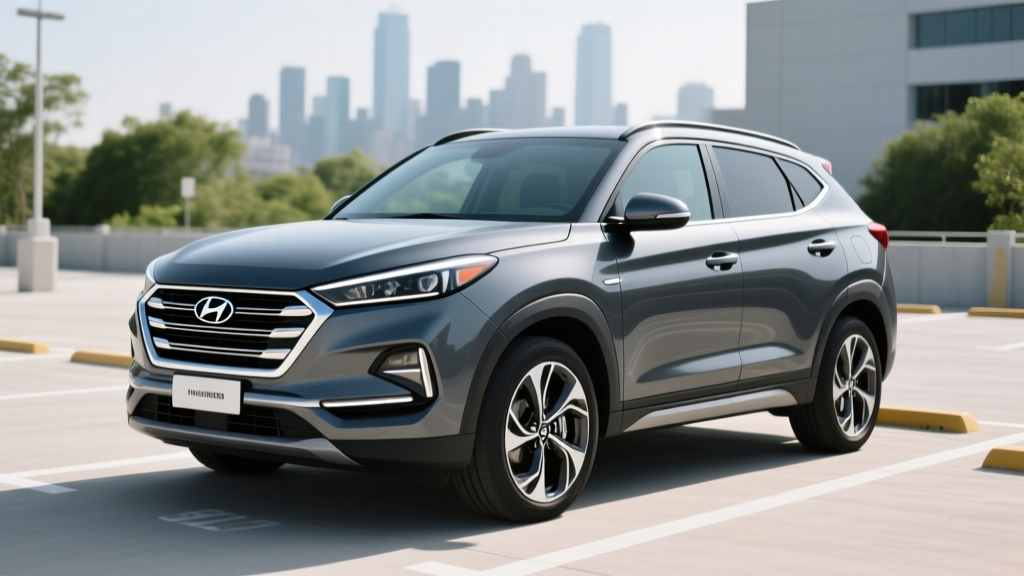
The 2025 Hyundai Tucson Hybrid SUV occupies a strategic middle ground for buyers who want electric-motor efficiency without range anxiety or charging infrastructure dependence. Available as both a conventional hybrid (HEV) and a plug-in hybrid (PHEV), the Tucson lineup covers drivers who want 38 MPG without ever plugging in, as well as those who can charge at home and want up to 33 miles of electric-only commuting. With a combined 231 horsepower in the HEV and 268 horsepower in the PHEV, neither version feels like a compromise on performance. This guide breaks down every number that matters — from real-world fuel economy to battery warranty — so you can decide which Tucson electrified powertrain fits your life.
HEV vs PHEV: Which Tucson Hybrid Is Which?
Hyundai sells the Tucson in two distinct electrified configurations. Confusing them is the most common mistake shoppers make, so let's be precise:
Conventional Hybrid (HEV)
- How it works: A 1.6L turbocharged engine paired with an electric motor and a small battery (1.49 kWh). The battery charges through regenerative braking and the engine — you never plug it in.
- Best for: Drivers without home charging access, apartment dwellers, and those who want better MPG with zero behavior change.
- Trims available: Blue, SEL Convenience, Limited.
Plug-In Hybrid (PHEV)
- How it works: Same 1.6L turbo engine but paired with a more powerful electric motor and a larger 13.8 kWh battery pack. You plug it in to charge (Level 1 or Level 2) for electric-only driving, and the gas engine kicks in for longer trips.
- Best for: Drivers with home or workplace charging who commute under 33 miles daily but still want gas-engine flexibility for road trips.
- Trims available: SEL, Limited.
The critical distinction: the HEV never needs a charger. The PHEV benefits enormously from one — without regular plug-in charging, you're just carrying extra battery weight and paying a price premium for capability you're not using.
Fuel Economy: EPA Ratings and Real-World MPG
According to fueleconomy.gov, the 2025 Tucson Hybrid delivers strong numbers across both powertrains. Here's the full breakdown:
| Powertrain | City MPG | Highway MPG | Combined MPG | MPGe (PHEV Electric) |
|---|---|---|---|---|
| Tucson Hybrid (HEV) Blue | 38 | 38 | 38 | — |
| Tucson Hybrid (HEV) SEL/Limited | 37 | 36 | 37 | — |
| Tucson PHEV (all trims) | 35 (gas only) | 35 (gas only) | 35 (gas only) | 80 MPGe |
Real-World MPG: What to Actually Expect
Hyundai's hybrid system, like most HEVs, tends to perform close to or even slightly above EPA estimates in city driving, where regenerative braking and electric-motor assist do the heavy lifting. In real-world mixed driving, owners commonly report 36–40 MPG in the Blue trim. Highway-heavy commutes at 75+ mph will pull numbers down to roughly 33–35 MPG, as aerodynamic drag and the turbo engine working solo at sustained speed reduce the hybrid advantage.
For the PHEV, the math changes entirely based on your charging habits. If you charge nightly and your commute is under 33 miles round-trip, you may use almost no gasoline for daily driving. Let the battery deplete and the 35 MPG combined gas-only figure applies — still excellent for a compact SUV, but not meaningfully better than the HEV.
PHEV Electric-Only Range and Total Range
The 2025 Tucson PHEV carries a 13.8 kWh battery pack, of which roughly 11.5 kWh is usable (the rest is buffer to protect battery longevity). The EPA rates it at 33 miles of electric-only range. In real-world conditions:
- Mild weather, city driving: 30–35 miles on electric — regen braking extends range.
- Highway at 70 mph: 25–28 miles — electric motors are less efficient at sustained high speed.
- Cold weather (below 30°F): 22–27 miles — battery chemistry is less efficient and cabin heating draws significant power.
Once the battery is depleted, the Tucson PHEV operates as a conventional hybrid with the 1.6L turbo engine, delivering the full combined range of approximately 420 miles (33 electric + ~390 gas). The 13.7-gallon fuel tank means you'll never be stranded looking for a charger.
PHEV Charging Times
| Charging Level | Power | Time (0–100%) | Notes |
|---|---|---|---|
| Level 1 (120V household) | ~1.4 kW | ~10 hours | Overnight on a standard outlet |
| Level 2 (240V home/public) | 7.2 kW | ~2 hours | Requires J1772 connector |
| DC Fast Charge | — | Not supported | No CCS/CHAdeMO port on PHEV |
The Tucson PHEV does not support DC fast charging — this is typical for plug-in hybrids, whose smaller batteries don't justify the cost and weight of DC hardware. A Level 2 home charger is the sweet spot: plug in when you get home, and the battery is full well before morning.
Powertrain Specs: Horsepower, Torque, and Acceleration
| Specification | Tucson Hybrid (HEV) | Tucson PHEV |
|---|---|---|
| Engine | 1.6L Turbo GDI 4-cyl | 1.6L Turbo GDI 4-cyl |
| Engine HP | 178 hp | 178 hp |
| Electric Motor HP | 64 hp (47 kW) | 129 hp (96 kW) |
| Combined System HP | 231 hp | 268 hp |
| Combined Torque | 258 lb-ft | 258 lb-ft |
| Transmission | 6-speed automatic | 6-speed automatic |
| Drivetrain | HTRAC AWD | HTRAC AWD |
| 0–60 mph (est.) | ~7.1 sec | ~6.3 sec |
| Towing Capacity | 2,000 lbs | 2,000 lbs |
| Battery Capacity | 1.49 kWh | 13.8 kWh |
The electric motor fills in torque at low RPM where the turbo four-cylinder is still spooling up, giving both Tucson hybrids a responsive, punchy feel around town. The PHEV's larger motor makes it noticeably quicker — the 268 combined horsepower puts it in hot-hatch territory for a compact SUV. HTRAC all-wheel drive is standard on all hybrid and PHEV trims, using the rear-mounted electric motor to send torque to the rear axle as needed.
Pricing, Trims, and Tax Credit Eligibility
2025 Tucson Hybrid (HEV) MSRP
- Blue: $33,465
- SEL Convenience: $36,615
- Limited: $40,365
2025 Tucson PHEV MSRP
- SEL: $39,990
- Limited: $45,440
All prices include destination charge. Source: Hyundai USA.
Does the Tucson Hybrid or PHEV Qualify for a Federal Tax Credit?
Under current IRS §30D rules, the Tucson PHEV may qualify for a partial or full federal tax credit of up to $7,500, but eligibility depends on several factors that change frequently:
- MSRP cap: SUVs must be under $80,000 — both Tucson PHEV trims qualify.
- Buyer income cap: Modified AGI must not exceed $150,000 (single), $225,000 (head of household), or $300,000 (joint).
- Battery sourcing: Critical minerals and battery components must meet phased-in domestic-content requirements. Hyundai's supply chain has been adjusting to these rules — verify current eligibility on irs.gov before purchasing.
- Point-of-sale transfer: As of 2024, eligible buyers can transfer the credit to the dealer for an upfront price reduction rather than waiting to claim it on their tax return.
The conventional Tucson Hybrid (HEV) does not qualify for the §30D federal EV credit — it lacks sufficient battery capacity and electric-only range. Some states offer their own hybrid incentives; check your state's energy office for details.
Battery Warranty, Reliability, and Replacement Cost
Hyundai Hybrid/PHEV Battery Warranty
- Hybrid battery: 10 years / 100,000 miles (whichever comes first)
- Powertrain warranty: 10 years / 100,000 miles
- New vehicle warranty: 5 years / 60,000 miles
- Capacity retention: Hyundai covers the battery if it falls below approximately 70% of original capacity during the warranty period
Hyundai's 10-year/100,000-mile hybrid battery warranty is among the best in the industry and should cover the vast majority of owners through the vehicle's prime ownership years. Modern lithium-ion hybrid batteries — particularly the smaller packs in HEVs that operate in a narrow state-of-charge window — rarely experience significant degradation within this period.
Is the Tucson Hybrid Reliable?
Hyundai's 1.6L turbo hybrid powertrain has been in service across multiple models (Tucson, Santa Fe, Sonata) since 2022, and early reliability data is encouraging. The hybrid system adds complexity (electric motor, inverter, high-voltage battery) but eliminates other failure points (no traditional starter motor, less brake wear thanks to regen braking). According to NHTSA, the Tucson has no major powertrain-related recalls specific to the hybrid system as of early 2026.
Battery Replacement Cost (Out of Warranty)
If a hybrid battery replacement is needed beyond the 10-year warranty window:
- HEV battery: Estimated $2,000–$3,500 (smaller pack, simpler replacement)
- PHEV battery: Estimated $5,000–$8,000 (larger 13.8 kWh pack)
These are rough estimates based on current Hyundai hybrid battery pricing and independent shop quotes. Prices are expected to decline as battery costs continue to fall industry-wide.
Who Should Choose the Tucson Hybrid vs. a Full EV or Gas Car?
Choose the Tucson HEV (conventional hybrid) if:
- You don't have access to home or workplace charging
- You want maximum MPG without changing any habits
- Your budget is under $35,000 (Blue trim)
- You drive mostly city/suburban routes where hybrid efficiency shines
Choose the Tucson PHEV if:
- You can install a Level 2 charger at home or charge at work
- Your daily commute is under 33 miles round-trip (most of your driving is electric)
- You want to reduce gasoline consumption but still take gas-powered road trips
- You qualify for the federal tax credit, narrowing the price gap with the HEV
Choose a full EV (like the Hyundai Ioniq 5) if:
- You have reliable home charging and access to DC fast chargers for road trips
- You want zero tailpipe emissions and minimal maintenance (no oil changes, no engine)
- Your daily driving is under 250 miles and you're comfortable planning charging stops on longer trips
Stick with the gas-only Tucson if:
- Your budget is tight (gas Tucson starts around $30,000)
- You drive very few miles annually, making the hybrid premium harder to recoup
- You frequently tow near the 2,000-lb limit in hilly terrain where hybrid efficiency gains diminish
Pros and Cons at a Glance
Pros
- 38 MPG combined (HEV Blue) — best-in-class for a turbo AWD compact SUV
- 231–268 HP — no performance penalty for going hybrid
- Standard HTRAC AWD across all hybrid trims
- 10-year/100,000-mile hybrid battery warranty
- PHEV offers 33 miles electric-only for gas-free commuting
- Spacious interior with 38.7 cu ft cargo (seats up), 80.3 cu ft (seats folded)
- Competitive pricing vs. Toyota RAV4 Hybrid and Honda CR-V Hybrid
Cons
- PHEV does not support DC fast charging
- HEV does not qualify for federal §30D tax credit
- PHEV price premium (~$6,500 over comparable HEV) takes years to recoup on fuel savings alone
- 6-speed automatic feels less refined than competitor e-CVT systems in stop-and-go traffic
- 33 miles electric-only range is modest vs. rivals like the Toyota RAV4 Prime (42 mi)
- Towing limited to 2,000 lbs (some competitors offer 3,500 lbs with gas powertrains)
Frequently Asked Questions
How many MPG does the 2025 Hyundai Tucson Hybrid get?
The Tucson Hybrid Blue trim is EPA-rated at 38 MPG city / 38 highway / 38 combined. The SEL Convenience and Limited trims are rated at 37/36/37 MPG. In real-world driving, owners typically see 36–40 MPG in mixed conditions, with city driving often matching or exceeding EPA estimates thanks to regenerative braking.
How far can the Tucson PHEV go on electric only?
The EPA rates the 2025 Tucson PHEV at 33 miles of electric-only range. Real-world results vary from about 22 miles in cold highway driving to 35 miles in mild-weather city conditions. Once the battery is depleted, the gas engine takes over and the vehicle operates as a conventional hybrid with approximately 420 total miles of combined range.
Does the Tucson Hybrid need to be plugged in?
No — the conventional Tucson Hybrid (HEV) never needs to be plugged in. It charges its small 1.49 kWh battery through regenerative braking and the gasoline engine. The Tucson PHEV, however, should be plugged in regularly to realize its electric-only range benefit. Without plug-in charging, the PHEV operates as a heavier, more expensive hybrid.
Does the 2025 Tucson Hybrid qualify for a federal tax credit?
The conventional Tucson Hybrid (HEV) does not qualify for the IRS §30D clean vehicle credit. The Tucson PHEV may qualify for up to $7,500, depending on your income, the vehicle's battery sourcing compliance, and current IRS rules. Always verify eligibility at irs.gov or consult a tax professional before relying on the credit in your purchase decision.
Is the Tucson Hybrid reliable, and what does a battery replacement cost?
Hyundai covers the hybrid battery for 10 years or 100,000 miles, which is among the longest warranties in the industry. Out-of-warranty replacement costs are estimated at $2,000–$3,500 for the HEV battery and $5,000–$8,000 for the PHEV battery. The 1.6L turbo hybrid powertrain has been in service across Hyundai's lineup since 2022 with no widespread reliability issues reported.
How does the Tucson Hybrid compare to the Toyota RAV4 Hybrid?
The Tucson Hybrid Blue (38 MPG combined) slightly edges the RAV4 Hybrid (39–41 MPG combined depending on trim) on paper, though both deliver similar real-world results. The Tucson PHEV offers 33 miles of electric range vs. the RAV4 Prime's 42 miles, but the RAV4 Prime carries a significantly higher starting price (~$44,000 vs. ~$40,000 for the Tucson PHEV). The Tucson offers more standard horsepower (231 vs. 219 in the RAV4 Hybrid) and Hyundai's longer 10-year powertrain warranty vs. Toyota's 8-year hybrid battery coverage.
Can I charge the Tucson PHEV at a public DC fast charger?
No. The 2025 Tucson PHEV only accepts Level 1 (120V) and Level 2 (240V) AC charging via a J1772 connector. It does not have a DC fast-charge port (CCS or CHAdeMO). This is standard for plug-in hybrids — their smaller batteries don't require or support DC fast charging. A Level 2 home charger will fully replenish the battery in about 2 hours.