Quick Verdict: Luxury Meets Efficiency Without the Plug
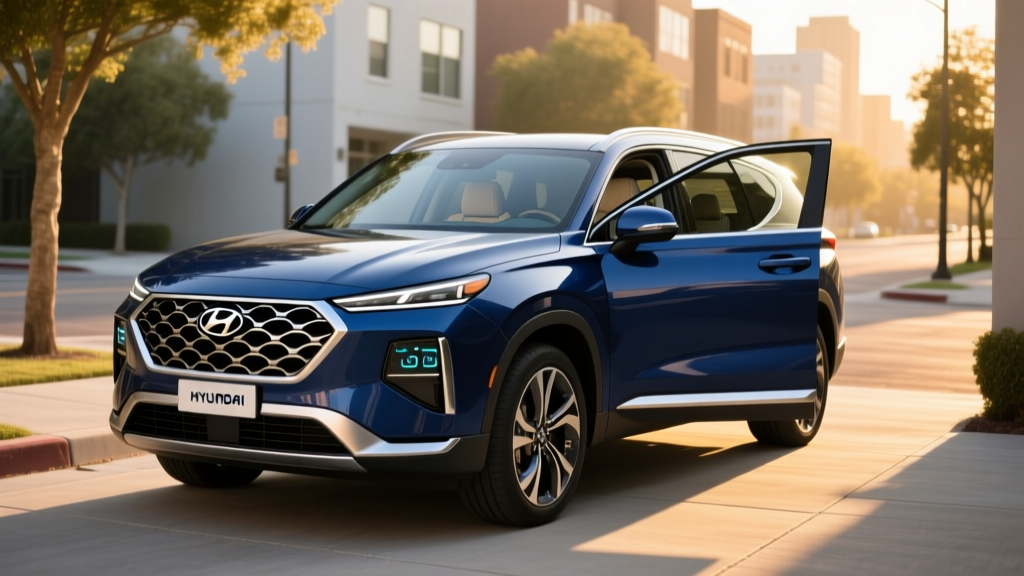
The 2025 Hyundai Santa Fe Calligraphy Hybrid occupies a specific niche: a three-row, premium-trim SUV that sips fuel without requiring you to install a home charger or plan road trips around DC fast-charging stations. At a starting MSRP of approximately $47,900 (including destination), the Calligraphy Hybrid is the top-tier trim in Hyundai's boxy, adventure-styled midsize SUV lineup. Its 1.6-liter turbocharged hybrid powertrain delivers 230 combined horsepower and an EPA-estimated 36 MPG combined — impressive for a 4,400-pound vehicle with genuine third-row seating.
This is a conventional hybrid electric vehicle (HEV), meaning it charges its own battery through regenerative braking and engine power. You never plug it in. If you want electric-only driving, Hyundai offers the Santa Fe Plug-in Hybrid (PHEV) in the mid-tier SEL Premium trim — more on that distinction below.
| Spec | 2025 Santa Fe Calligraphy Hybrid |
|---|---|
| Powertrain | 1.6L Turbo I4 + electric motor (HEV) |
| Combined Horsepower | 230 HP |
| Combined Torque | 271 lb-ft |
| Transmission | 6-speed automatic |
| Drivetrain | HTRAC AWD (standard on Calligraphy) |
| EPA MPG (City / Hwy / Combined) | 35 / 34 / 36 |
| Fuel Tank | 17.7 gallons |
| Total Range | ~637 miles |
| 0-60 mph | ~7.8 seconds (est.) |
| Seating | 7-passenger (standard) |
| Cargo (behind 3rd / 2nd / 1st row) | 14.6 / 40.5 / 79.6 cu ft |
| Base MSRP (Calligraphy Hybrid) | $47,900 |
| Battery Warranty | 10 yr / 100,000 mi |
HEV vs PHEV: Which Santa Fe Hybrid Is Right for You?
Hyundai sells the Santa Fe in two electrified flavors, and confusing them is one of the most common buyer mistakes we see. Here's the critical distinction:
| Feature | Santa Fe Hybrid (HEV) | Santa Fe Plug-in Hybrid (PHEV) |
|---|---|---|
| Plug-in Required? | No — self-charging | Yes — plug in for EV range |
| Battery Capacity | ~1.5 kWh (small buffer) | 13.8 kWh usable |
| Electric-Only Range | N/A (EV assist only) | 31 miles (EPA) |
| Combined Horsepower | 230 HP | 261 HP |
| EPA Combined MPG / MPGe | 36 MPG | 79 MPGe (EV mode) / 34 MPG (gas) |
| DC Fast Charging | N/A | No (Level 2 AC only) |
| Level 2 Charge Time (0-100%) | N/A | ~3.5 hours at 7.2 kW |
| Trims Available | SEL Premium, Limited, Calligraphy | SEL Premium only |
| Federal Tax Credit (§30D) | Not eligible | Not eligible (see below) |
| Starting MSRP | ~$40,900 (SEL Premium) | ~$45,400 (SEL Premium) |
The Calligraphy trim is HEV-only. If you want the top luxury features — quilted Nappa leather, dual 12.3-inch displays, a head-up display, digital key, and Hyundai's Highway Driving Assist 2 — you're getting the conventional hybrid. The PHEV powertrain tops out at the SEL Premium trim, which is well-equipped but lacks the Calligraphy's premium touches.
The PHEV's 31-mile electric-only range covers most daily commutes. On a Level 2 home charger (240V, 32A), it refills in about 3.5 hours. However, it does not support DC fast charging — a notable omission when competitors like the Toyota RAV4 Prime also lack it, but something to know if you expected rapid top-ups on road trips.
Fuel Economy: EPA Numbers vs Real-World MPG
The EPA rates the 2025 Santa Fe Hybrid with HTRAC AWD at 35 city / 34 highway / 36 combined MPG, per fueleconomy.gov. Wait — combined higher than city? That's unusual for gas cars but common for hybrids. The hybrid system recovers significant energy during stop-and-go driving, and the EPA's combined cycle weights city driving at 55%.
| Driving Scenario | EPA Estimate | Real-World Expectation |
|---|---|---|
| City (stop-and-go) | 35 MPG | 35-38 MPG (hybrids excel here) |
| Highway (70-75 mph) | 34 MPG | 30-33 MPG (aero drag, less regen benefit) |
| Combined | 36 MPG | 32-36 MPG |
| Cold Weather (below 32°F) | — | 28-32 MPG (engine runs more for heat) |
| Towing (max 2,000 lb) | — | 22-26 MPG |
Real-world note: In mixed suburban and highway driving at 70+ mph, expect to see 30-33 MPG. Hybrids shine in city traffic where regenerative braking recaptures kinetic energy that a gas car wastes as brake heat. On sustained highway runs, the electric motor provides less assist, and the turbocharged 1.6L engine does more of the work pushing a boxy, 4,400-pound SUV through the air. Cold weather further reduces efficiency because the engine must run more frequently to provide cabin heat — there's no heat pump on this HEV (that's a BEV/PHEV feature).
At 36 MPG combined and a national average of $3.40/gallon (regular unleaded), you're looking at roughly $0.094 per mile in fuel costs. A comparable gas-only midsize SUV at 23 MPG combined would cost about $0.148/mile — a savings of approximately $540 per year at 15,000 miles driven annually.
Powertrain Deep Dive: 230 HP From a 1.6-Liter
The Santa Fe Calligraphy Hybrid pairs a 1.6-liter turbocharged four-cylinder engine (178 HP, 195 lb-ft) with a 47.7 kW electric motor integrated into the transmission housing. Combined system output is 230 HP and 271 lb-ft of torque. The electric motor fills in torque at low RPMs before the turbo spools, eliminating the lag typical of small-displacement turbo engines.
Power routes to all four wheels through Hyundai's HTRAC all-wheel-drive system and a conventional 6-speed automatic transmission — not a CVT. This matters for driving feel: you get defined gear shifts rather than the drone-like acceleration of a continuously variable transmission. The trade-off is slightly less seamless electric-motor blending, though Hyundai's calibration is among the best in the segment.
Acceleration to 60 mph takes approximately 7.8 seconds. That's adequate for highway merging and confident passing, but it's not quick by any measure. If performance is a priority, the 2.5L turbo gas model (277 HP, ~6.5 seconds to 60) is faster — at the cost of 22-24 MPG combined.
Pricing, Trims, and Tax Credit Eligibility
The 2025 Santa Fe Calligraphy Hybrid starts at an MSRP of $47,900 (including $1,495 destination). That price includes HTRAC AWD, which is standard on the Calligraphy trim — there's no FWD-only Calligraphy Hybrid.
Fully loaded with optional accessories (carpeted floor mats, cargo tray, mud guards), you're looking at roughly $49,000-$49,500 out the door before taxes and fees.
Federal Tax Credit Status: Not Eligible. Under current IRS §30D rules, conventional hybrids (HEVs) do not qualify for the federal clean vehicle credit. The Santa Fe Plug-in Hybrid (PHEV) also does not currently qualify, as it fails the battery component and critical mineral sourcing requirements outlined by the IRS. This is subject to change as Hyundai adjusts its supply chain, but as of 2025, buyers should not count on a $7,500 credit for either Santa Fe electrified model.
Some states offer their own hybrid or PHEV rebates — check your state's energy office or the AFDC state incentives database for local programs. These vary widely and are not covered by federal rules.
Battery Warranty, Longevity, and Replacement Cost
Hybrid Battery Warranty: Hyundai covers the Santa Fe Hybrid's lithium-ion battery pack for 10 years or 100,000 miles (whichever comes first) — one of the longest hybrid battery warranties in the industry. This covers defects and capacity loss below a threshold (typically ~70% state of health).
Hybrid System Warranty: The electric motor, inverter, and related hybrid components are covered for 10 years / 100,000 miles.
General Vehicle Warranty: 5 years / 60,000 miles bumper-to-bumper; 10 years / 100,000 miles powertrain (engine and transmission).
How long do hybrid batteries actually last? Real-world data from Hyundai-Kia's hybrid platforms (shared with the Tucson Hybrid, Sorento Hybrid, and others) suggests these packs routinely last 150,000-200,000+ miles before meaningful degradation. Unlike a full EV battery (60-100 kWh), the Santa Fe HEV's small ~1.5 kWh pack operates within a narrow state-of-charge window — typically between 40% and 80% — which dramatically reduces stress on the cells. The engine and regenerative braking manage this buffer automatically; you never think about it.
Replacement cost: If the hybrid battery fails out of warranty (rare but possible at very high mileage), a replacement pack from Hyundai currently runs approximately $2,500-$4,000 including labor. That's a fraction of a full EV battery replacement ($10,000-$20,000+) because the pack is small. Third-party rebuilt packs may be available for less as the vehicle ages.
The 12-volt auxiliary battery (which powers electronics, not the drivetrain) is a standard automotive battery and typically needs replacement every 3-5 years at $200-$350 — same as any car.
Reliability and What Owners Should Watch
Hyundai's hybrid powertrain has proven solid since its introduction across the Tucson and Santa Fe lines. The 1.6L turbo engine is well-established, and the 6-speed automatic avoids the complexity and occasional reliability concerns of CVTs. Per NHTSA records, there have been no major hybrid-specific recalls for the current-generation Santa Fe Hybrid as of early 2025.
Areas to monitor based on early ownership reports and Hyundai's broader platform history:
- Infotainment glitches: Hyundai's dual-screen system occasionally exhibits lag or wireless CarPlay/Android Auto disconnections — typically resolved with OTA updates.
- Turbo engine carbon buildup: Direct-injection turbo engines can accumulate intake valve deposits over 80,000+ miles. Not unique to Hyundai, but worth noting for long-term owners.
- HTRAC AWD system: Generally reliable, but the electronically controlled coupling can exhibit slight hesitation in low-traction scenarios before fully engaging — normal behavior, not a defect.
Who Should Choose the Santa Fe Calligraphy Hybrid?
Choose the Santa Fe Calligraphy Hybrid (HEV) if:
- You want three-row seating with premium features and don't want to plug in
- Your daily driving is a mix of city and suburban (where hybrids shine)
- You don't have reliable access to home or workplace charging
- You take regular road trips and don't want to plan around charging stations
- You want luxury features (Nappa leather, HUD, premium audio) without a $60K+ price tag
Consider the Santa Fe PHEV (SEL Premium) instead if:
- Your commute is under 30 miles round-trip and you can charge at home
- You want to drive mostly on electricity for daily errands
- You're willing to accept the SEL Premium trim (no Calligraphy PHEV option exists)
Consider a full EV (like the Hyundai Ioniq 5 or Kia EV9) if:
- You have home Level 2 charging and want zero tailpipe emissions
- You want the lowest per-mile fuel cost (~$0.04/mi on home electricity vs $0.09/mi for this hybrid)
- You qualify for the $7,500 federal EV tax credit (which this hybrid does not)
- You don't need a third row, or you're willing to pay $55K+ for the three-row EV9
Stick with the gas-only Santa Fe (2.5L turbo) if:
- You tow frequently (the hybrid's 2,000-lb rating is modest; the turbo gas model matches it but delivers more power)
- You prioritize acceleration over fuel economy
- You want the lowest purchase price (gas models start ~$6,000 less than the Calligraphy Hybrid)
Pros
- 36 MPG combined in a 7-passenger luxury SUV — genuinely efficient
- Calligraphy trim delivers near-genesis luxury at a mainstream price
- No charging infrastructure required — fill up at any gas station
- 10-year / 100,000-mile hybrid battery warranty
- 6-speed automatic (no CVT drone)
- Boxy design yields excellent cargo volume and headroom
- HTRAC AWD standard on Calligraphy Hybrid
Cons
- No federal tax credit eligibility (HEV or PHEV)
- Calligraphy trim is HEV-only — no PHEV option at this luxury level
- Highway MPG drops noticeably above 70 mph
- Modest 2,000-lb towing capacity
- 230 HP feels adequate, not quick, for a 4,400-lb SUV
- Premium fuel recommended (not required) for optimal performance
- Third row is usable for children but tight for adults on long trips
Frequently Asked Questions
How many MPG does the 2025 Santa Fe Calligraphy Hybrid actually get?
The EPA rates it at 35 city / 34 highway / 36 combined MPG. In real-world mixed driving at moderate highway speeds, expect 32-36 MPG. Highway-heavy driving at 75+ mph will push it toward 30-33 MPG, and cold weather can drop it to 28-32 MPG.
Does the Santa Fe Hybrid need to be plugged in?
No. The Santa Fe Hybrid (HEV) is a self-charging conventional hybrid. It recovers energy through regenerative braking and the gasoline engine. You simply fill it with gas like any other car. Only the Santa Fe Plug-in Hybrid (PHEV) benefits from being plugged in.
Does the 2025 Santa Fe Hybrid qualify for a federal tax credit?
No. Under current IRS §30D rules, conventional hybrids are not eligible for the federal clean vehicle credit. The Santa Fe PHEV also does not currently qualify due to battery sourcing requirements. Check the IRS clean vehicle credit page for any updates, as eligibility can change with supply-chain adjustments.
How long will the hybrid battery last, and what does replacement cost?
Hyundai's hybrid battery is warranted for 10 years / 100,000 miles. Real-world data suggests these packs routinely last 150,000-200,000+ miles. Out-of-warranty replacement runs approximately $2,500-$4,000 — far less than a full EV battery because the pack is only ~1.5 kWh.
Can the Santa Fe Calligraphy Hybrid tow?
Yes, with a maximum towing capacity of 2,000 pounds when properly equipped. That's sufficient for a small utility trailer, a pair of jet skis, or a lightweight camping trailer — but not a large boat or travel trailer. Expect fuel economy to drop to the low-to-mid 20s MPG while towing.
Is the Santa Fe Hybrid better than the Kia Sorento Hybrid?
They share the same 1.6L turbo hybrid powertrain and similar EPA ratings (36 MPG combined for both). The Santa Fe has a boxier design with slightly more cargo space and a more upscale Calligraphy trim. The Sorento Hybrid is available in a PHEV variant across more trims. If you want the top luxury trim as a hybrid, the Santa Fe Calligraphy edges ahead. If you want PHEV flexibility in a higher trim, the Sorento is worth cross-shopping.
What's the difference between the Santa Fe Hybrid and a full EV?
A hybrid uses a small battery and electric motor to assist a gasoline engine — you still burn gas, just less of it. A full EV (like the Ioniq 5) runs entirely on electricity, has zero tailpipe emissions, and costs roughly $0.04/mile to fuel on home electricity versus $0.09/mile for this hybrid. The trade-off: EVs require charging infrastructure, have higher upfront costs, and may qualify for a $7,500 federal tax credit that this hybrid does not.
Sources: EPA fuel economy data via fueleconomy.gov; Hyundai USA specifications; IRS Clean Vehicle Credits (irs.gov); NHTSA vehicle records.