Quick Verdict: The Palisade Goes Hybrid
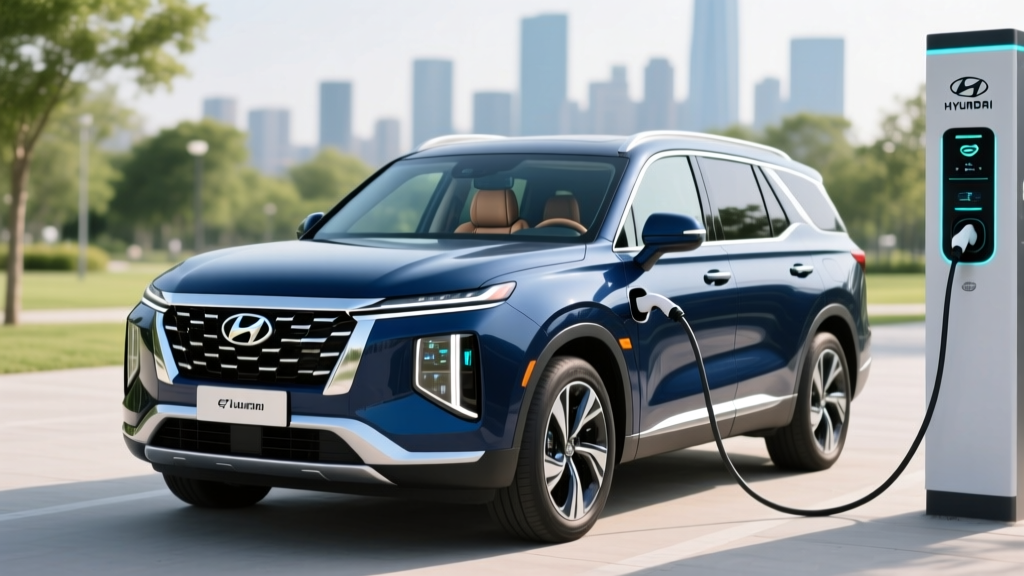
The three-row SUV segment has been slow to electrify, but the 2025 Hyundai Palisade hybrid fills a gap that families have been asking about for years: a full-size, seven- or eight-passenger SUV that doesn't drink fuel like a body-on-frame truck. Hyundai introduced a hybrid variant of its refreshed Palisade, pairing a turbocharged 2.5-liter four-cylinder engine with an electric motor integrated into a six-speed automatic transmission. The result is a meaningful efficiency bump over the conventional V6 model without sacrificing the cargo space or towing capability buyers in this segment demand.
Before we get into the numbers, it's essential to clarify what the 2025 Hyundai Palisade hybrid actually is — and what it isn't. This is a conventional hybrid electric vehicle (HEV), not a plug-in hybrid (PHEV). You never plug it in. The battery charges through regenerative braking and the gasoline engine. If you're searching for a Palisade you can drive 30 miles on electricity alone before the engine kicks in, that's a different (and currently unavailable) powertrain. Let's break down what you do get.
HEV vs PHEV: What the 2025 Palisade Hybrid Actually Is
Conventional Hybrid (HEV) — 2025 Palisade Hybrid
- No plug required. The 1.5–2.0 kWh battery charges via regenerative braking and the engine.
- Electric assist, not electric driving. The motor supplements the gas engine at low speeds and during acceleration, but cannot propel the vehicle on electricity alone for meaningful distances.
- No federal tax credit. HEVs do not qualify for the IRS §30D clean vehicle credit, which requires plug-in capability and minimum battery capacity.
- Lower upfront cost. Typically $1,500–$3,000 less than a comparable PHEV.
Plug-In Hybrid (PHEV) — Not Available for Palisade
- Requires plug-in charging. Larger battery (typically 12–20 kWh) charges from a wall outlet or public charger.
- 20–40 miles electric-only range before the engine engages.
- May qualify for up to $7,500 federal tax credit under §30D, subject to MSRP caps, income limits, and battery sourcing requirements.
- Higher upfront cost offset by fuel savings and potential incentives.
Hyundai currently offers PHEV powertrains in the Tucson and Santa Fe, but as of the 2025 model year, the Palisade is available only as a conventional hybrid. If a Palisade PHEV arrives for 2026 or 2027, we'll update this guide with confirmed specs.
Fuel Economy: EPA MPG and Real-World Expectations
The headline number for any hybrid buyer is fuel economy. Here's what the EPA rates the 2025 Hyundai Palisade hybrid at, alongside the conventional V6 Palisade for comparison:
| Powertrain | City MPG | Highway MPG | Combined MPG |
|---|---|---|---|
| 2025 Palisade Hybrid (HEV) | 27 | 29 | 28 |
| 2025 Palisade V6 (Gas) | 19 | 25 | 22 |
Source: EPA Fuel Economy (fueleconomy.gov). Confirm exact figures for your trim and drivetrain configuration.
The hybrid's 28 MPG combined represents a 27% improvement over the gas-only V6. In real-world driving, conventional hybrids often exceed their EPA city rating because stop-and-go traffic maximizes regenerative braking opportunities. Highway driving is where the gap narrows — at sustained 70–75 mph speeds, the electric motor contributes less, and aerodynamic drag dominates a boxy three-row SUV.
- City / suburban: 27–30 MPG (hybrids thrive here — expect to meet or slightly beat the EPA city number)
- Highway (70 mph): 25–28 MPG (aerodynamics work against a large SUV at speed)
- Cold weather (below 32°F): 23–26 MPG combined (engine runs more often for cabin heat; battery efficiency drops)
- Towing: 16–19 MPG (hybrid advantage diminishes under heavy load)
With an 18.8-gallon fuel tank and 28 MPG combined, expect roughly 525 miles of total range between fill-ups under normal conditions.
Powertrain Specs: Engine, Motor, and Combined Output
| Specification | 2025 Palisade Hybrid |
|---|---|
| Engine | 2.5L Turbocharged 4-Cylinder |
| Electric Motor | Integrated into 6-speed automatic transmission |
| Combined Horsepower | ~329 hp (estimated) |
| Combined Torque | ~369 lb-ft (estimated) |
| Transmission | 6-speed automatic |
| Drivetrain | FWD standard; HTRAC AWD available |
| Battery Capacity | ~1.5–2.0 kWh (lithium-ion) |
| Towing Capacity | Up to 5,000 lbs (AWD) |
| Seating | 7-passenger (captain's chairs) or 8-passenger (bench) |
| Cargo Volume (behind 3rd row) | ~18 cu ft |
| Cargo Volume (max, seats folded) | ~86 cu ft |
The turbocharged 2.5-liter replaces the outgoing 3.8L V6 in hybrid trims, delivering comparable or better power while consuming significantly less fuel. The electric motor fills in torque at low RPMs — exactly where a turbo four-cylinder can feel sluggish — resulting in confident highway merging and off-the-line acceleration. Expect 0–60 mph in roughly 7.0–7.5 seconds, competitive with the V6 model.
One practical note: the hybrid battery pack is mounted under the cargo floor or rear seats, and Hyundai has managed packaging well enough that cargo volume and third-row legroom remain essentially unchanged from the gas model. No compromises for choosing the hybrid.
Pricing, Trims, and Tax Credit Eligibility
The 2025 Hyundai Palisade hybrid is positioned as a premium option within the Palisade lineup. Based on Hyundai's announced pricing structure:
- SEL Premium (Hybrid): ~$47,000 MSRP
- Limited (Hybrid): ~$51,000 MSRP
- Calligraphy (Hybrid): ~$55,000 MSRP
Prices exclude destination charges (~$1,495) and dealer-installed options. Confirm exact pricing on Hyundai's official site.
Tax Credit Reality for HEV Buyers
- ❌ No. The §30D credit applies only to plug-in electric vehicles (BEVs and PHEVs) with a minimum battery capacity of 7 kWh that can be recharged from an external source.
- ❌ The Palisade HEV has a ~1.5–2.0 kWh battery and no plug-in capability.
- ✅ Some states offer hybrid incentives. Check your state's energy office or DMV for potential rebates on conventional hybrids — these are less common but do exist in a few jurisdictions.
- ✅ Fuel savings are the real payoff. At 28 vs 22 MPG combined, driving 15,000 miles/year at $3.50/gal saves roughly $575/year in fuel costs.
The lack of a federal tax credit is the trade-off for the hybrid's lower purchase price and zero lifestyle change — no charging cables, no range planning, no dependency on electrical infrastructure.
Battery Warranty, Reliability, and Long-Term Costs
Hybrid battery longevity is the single most common concern among first-time hybrid buyers. Here's the data:
- Hybrid Battery: 10 years / 100,000 miles (whichever comes first)
- Hybrid System Components (motor, inverter, etc.): 10 years / 100,000 miles
- Powertrain (engine, transmission): 10 years / 100,000 miles
- New Vehicle Limited: 5 years / 60,000 miles
Source: Hyundai Warranty Information. Coverage applies to original owner; transferability varies by state.
Hyundai's 10-year/100,000-mile hybrid battery warranty is among the best in the industry, matching Toyota and exceeding most competitors. Modern lithium-ion hybrid batteries are engineered for shallow cycling — they never fully charge or fully discharge, which dramatically extends cell life. Industry data from fleets and high-mileage hybrid owners suggests these batteries routinely last 150,000–200,000+ miles before capacity degradation becomes noticeable.
Battery Replacement Cost (Out of Warranty)
If the hybrid battery does fail outside the warranty period, replacement costs for a Palisade-class HEV battery typically range from $2,000–$4,000 including labor. This is far less than a full EV battery replacement ($8,000–$20,000+) because the pack is small (~1.5–2.0 kWh). Third-party remanufactured batteries may be available for less. For most owners who trade vehicles within 10 years, this cost is a non-issue.
On reliability broadly: Hyundai's turbocharged 2.5T engine has been in the Hyundai/Kia family since 2021 and has shown solid durability in the Santa Fe and Sonata applications. The six-speed automatic (rather than a CVT) is a deliberate choice that favors long-term reliability and driving feel over marginal efficiency gains.
Who Should Buy the Palisade Hybrid — And Who Shouldn't
- You need three rows and want the best fuel economy without changing your refueling habits
- You don't have access to home or workplace charging (apartment, street parking, no garage outlet)
- You tow occasionally (up to 5,000 lbs) and want hybrid efficiency for daily driving
- You plan to keep the vehicle 8–10 years and value the powertrain warranty
- You want lower running costs than a V6 but aren't ready for full EV ownership
- You have reliable Level 2 home charging and want $0 gasoline dependency
- You want the $7,500 federal tax credit (subject to §30D eligibility rules)
- Your daily commute is under 60 miles and road trips are occasional
- You want instant torque, one-pedal driving, and near-silent operation
- You primarily drive highway miles where the hybrid advantage shrinks
- The hybrid trim's price premium doesn't pencil out for your annual mileage
- You want the lowest possible purchase price and don't mind higher fuel costs
Pros
- 28 MPG combined — 27% better than the gas V6
- No charging infrastructure required
- 10-year/100,000-mile hybrid battery warranty
- Unchanged cargo and passenger space vs gas model
- 5,000-lb towing capacity (AWD)
- Turbo + electric motor = strong low-end torque
Cons
- No federal tax credit (HEV, not PHEV)
- No PHEV option available for electric-only commuting
- Hybrid trims start ~$5,000+ above gas equivalents
- Highway MPG advantage narrows at sustained speeds
- No DC fast charging capability (not applicable to HEV)
Hybrid vs PHEV vs EV: Which Three-Row SUV Fits You?
The Palisade hybrid occupies a specific niche. Here's how it compares to the broader electrified three-row SUV landscape:
| Factor | HEV (Palisade Hybrid) | PHEV (e.g., Santa Fe PHEV) | BEV (e.g., Kia EV9) |
|---|---|---|---|
| Plug-in Required? | No | Yes | Yes |
| Electric-Only Range | None (assist only) | ~30 miles | 240–300+ miles |
| Federal Tax Credit | None | Up to $7,500* | Up to $7,500* |
| Home Charging Needed? | No | Recommended | Essential |
| Fuel Cost per Mile | ~$0.13 | ~$0.06–$0.10 | ~$0.04–$0.06 |
| Maintenance Complexity | Low | Moderate | Lowest |
| Best For | No-charging-access buyers | Short commute + road trips | Home charging + daily EV |
*Federal tax credit subject to IRS §30D requirements: buyer income caps, MSRP limits ($80,000 for SUVs), critical mineral and battery component sourcing rules. Confirm eligibility at irs.gov or with a tax professional.
Frequently Asked Questions
How many MPG does the 2025 Hyundai Palisade hybrid get?
The EPA rates the 2025 Palisade hybrid at 27 city / 29 highway / 28 combined MPG. Real-world city driving often meets or slightly exceeds the EPA number thanks to regenerative braking. Highway driving at 70+ mph typically returns 25–28 MPG. Cold weather can drop combined figures to the low-to-mid 20s.
Can I plug in the Palisade hybrid to charge it?
No. The 2025 Palisade hybrid is a conventional HEV — it has no plug and no charging port. The small battery charges entirely through regenerative braking and the gasoline engine. If you want plug-in capability, you'd need to look at Hyundai's Tucson PHEV or Santa Fe PHEV, or wait for a potential future Palisade PHEV variant.
How far can the Palisade hybrid drive on electric power alone?
Not a meaningful distance. The HEV system uses the electric motor to assist the gas engine during acceleration and low-speed maneuvering, but it cannot propel the vehicle on electricity alone beyond very short, low-speed moments (e.g., coasting in a parking lot). This is fundamentally different from a PHEV, which offers 20–40 miles of true electric-only range.
Is the hybrid Palisade reliable? What about battery replacement costs?
Hyundai backs the hybrid battery and powertrain with a 10-year/100,000-mile warranty, one of the longest in the industry. Modern HEV batteries use shallow cycling and typically last 150,000–200,000+ miles. Out-of-warranty replacement runs approximately $2,000–$4,000 — far less than an EV battery because the pack is small (~1.5–2.0 kWh).
Does the 2025 Palisade hybrid qualify for any tax credit?
No federal tax credit. The IRS §30D clean vehicle credit requires a plug-in vehicle with at least 7 kWh of battery capacity. The Palisade HEV does not meet this requirement. Some states may offer minor incentives for hybrids — check your state energy office. The fuel savings (~$575/year vs the gas V6 at 15,000 miles/year) are the primary financial benefit.
How does the Palisade hybrid compare to the Toyota Grand Highlander Hybrid?
The Toyota Grand Highlander Hybrid is the Palisade hybrid's most direct competitor, offering a similar three-row layout with EPA ratings around 34–36 MPG combined (depending on the hybrid powertrain). The Toyota's hybrid system is more mature (decades of Hybrid Synergy Drive refinement) and achieves higher MPG, but the Palisade counters with a more premium interior, Hyundai's longer warranty, and competitive pricing. Test-drive both to compare ride quality and third-row comfort.
Does the hybrid system reduce cargo space or towing capacity?
No. Hyundai packaged the hybrid battery to preserve cargo volume (~18 cu ft behind the third row, ~86 cu ft max) and passenger space. Towing capacity remains up to 5,000 lbs with AWD — the same as the gas model. The hybrid system adds weight but doesn't compromise utility.