Quick Verdict: The CR-V Hybrid Is Honda's Efficiency Sweet Spot
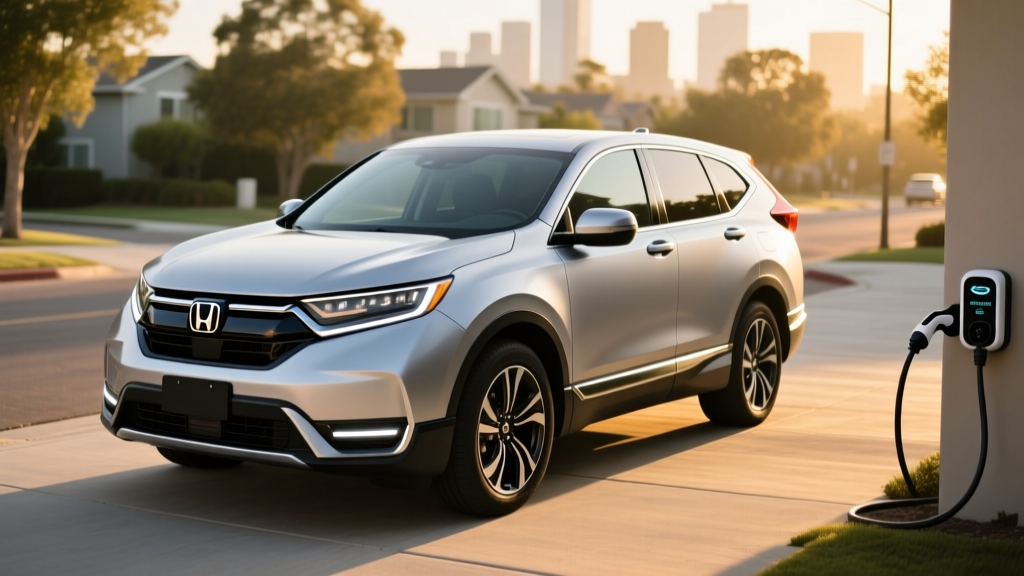
If you're searching for a 2025 Honda CR-V Hybrid for sale, you're targeting the version of Honda's best-selling SUV that actually delivers the fuel economy most buyers expect. The standard gas CR-V returns a respectable 28 MPG combined, but the hybrid bumps that to 37 MPG combined — a 32% improvement — while adding 16 horsepower and a smoother, electrically assisted driving feel. For 2025, Honda continues to offer the CR-V Hybrid exclusively as a conventional hybrid (HEV), not a plug-in hybrid (PHEV). That means no charging cable, no electric-only range, and no federal tax credit — but also no range anxiety, no dependency on charging infrastructure, and a starting price thousands below comparable PHEVs.
This guide covers everything a data-driven buyer needs: exact EPA figures versus real-world results, trim-level pricing, the two-motor hybrid powertrain, battery longevity, and whether the CR-V Hybrid fits your garage better than a full EV or a gas-only competitor.
2025 Honda CR-V Hybrid: Core Specifications at a Glance
| Specification | 2025 CR-V Hybrid (AWD) | 2025 CR-V Gas (AWD) |
|---|---|---|
| Powertrain | 2.0L 4-cyl + 2 electric motors | 1.5L turbo 4-cyl |
| Combined Horsepower | 204 hp | 190 hp |
| Combined Torque | 247 lb-ft (motor peak) | 179 lb-ft |
| EPA MPG (City / Hwy / Combined) | 40 / 34 / 37 | 27 / 32 / 28 |
| Fuel Tank | 15.3 gal | 15.3 gal |
| Total Driving Range | ~520 miles | ~428 miles |
| Drivetrain | AWD standard on hybrid | FWD std, AWD optional |
| 0-60 mph (est.) | ~7.6 sec | ~8.2 sec |
| Cargo Volume (rear seats up) | 36.3 cu ft | 36.3 cu ft |
| Towing Capacity | 1,000 lbs | 1,500 lbs |
| Base MSRP (Sport Hybrid) | $34,650 | $31,450 (LX) |
Source: EPA Fuel Economy, Honda specifications.
Fuel Economy: EPA Numbers vs. Real-World MPG
The 2025 CR-V Hybrid carries an EPA rating of 40 MPG city, 34 MPG highway, and 37 MPG combined when equipped with the standard all-wheel-drive system. Front-wheel-drive is not available on the hybrid — Honda bundles AWD across all hybrid trims (Sport, Sport-L, and Sport Touring).
| Driving Scenario | EPA Rating | Real-World Expectation |
|---|---|---|
| City (stop-and-go) | 40 MPG | 38–43 MPG (regenerative braking excels here) |
| Highway (70+ mph) | 34 MPG | 30–33 MPG (aerodynamic drag, engine-direct drive) |
| Combined (mixed) | 37 MPG | 34–39 MPG |
| Cold Weather (below 30°F) | N/A | 30–34 MPG (engine runs more for cabin heat) |
Like most hybrids, the CR-V Hybrid actually tends to beat its EPA city rating in real-world urban driving. That's because regenerative braking recaptures energy during frequent stops, and the electric motors handle low-speed propulsion where gasoline engines are least efficient. On the highway, however, expect a slight shortfall — the 2.0L Atkinson-cycle engine operates in direct-drive mode at cruising speeds, and aerodynamic drag on a boxy SUV works against efficiency.
Real-World Range Reality: With a 15.3-gallon tank and 37 MPG combined, the EPA implies roughly 566 miles of range. In mixed real-world driving (including highway stretches and climate-control use), plan for 470–530 miles between fill-ups. In cold climates during winter, that drops to approximately 430–470 miles.
How the Two-Motor Hybrid Powertrain Works
The CR-V Hybrid uses Honda's fourth-generation two-motor hybrid system, a series-parallel architecture that operates differently depending on speed and load:
- EV Drive (low speed, light load): The lithium-ion battery powers the propulsion motor alone. The gas engine stays off. This covers parking-lot speeds and gentle acceleration up to roughly 25–35 mph.
- Hybrid Drive (moderate acceleration): The gas engine spins a generator motor that feeds electricity to the propulsion motor. The engine never mechanically drives the wheels in this mode — it acts as a mobile power plant.
- Engine Drive (highway cruising): A lock-up clutch connects the 2.0L engine directly to the front wheels, bypassing the electric motors for maximum efficiency at steady speeds.
- Regenerative Braking: During deceleration, the propulsion motor reverses into a generator, converting kinetic energy back into stored battery energy.
The combined system output is 204 horsepower and up to 247 lb-ft of torque from the electric motor. That torque figure is available instantly at low RPM, which gives the CR-V Hybrid a responsive, punchy feel from stoplights — noticeably quicker than the turbo-gas model despite only a 14-hp advantage on paper.
Hybrid vs. PHEV vs. Full EV: Which Fits Your Garage?
A common question when evaluating a 2025 Honda CR-V Hybrid for sale is whether you should consider a plug-in hybrid (PHEV) or a full battery-electric vehicle (BEV) instead. Honda does not offer a CR-V PHEV in the United States, so the cross-shop typically involves competitors.
| Factor | CR-V Hybrid (HEV) | Typical PHEV (e.g., Toyota RAV4 Prime) | Full EV (e.g., Tesla Model Y) |
|---|---|---|---|
| Plug-in Charging Required? | No | Yes (for EV range benefit) | Yes (mandatory) |
| Electric-Only Range | ~1 mile (low-speed creep) | 35–42 miles | 280–330 miles |
| Total Range | ~500+ miles | ~520+ miles (EV + gas) | 280–330 miles |
| Base MSRP Range | $34,650–$40,850 | $43,690–$47,560 | $44,990–$52,990 |
| Federal Tax Credit (§30D) | Not eligible | Up to $7,500 (if eligible) | Up to $7,500 (if eligible) |
| Home Charging Setup | None needed | 120V (slow) or 240V L2 | 240V Level 2 recommended |
| Best For | No charging access, high mileage | Short commute + home charging | Home charging + mostly local/suburban |
Choose the CR-V Hybrid (HEV) if: You lack reliable access to home or workplace charging, drive more than 40 miles daily, want a lower purchase price, or take frequent road trips where charging infrastructure is uncertain.
Choose a PHEV if: You have a garage with a 240V outlet, your daily commute is under 40 miles (covering most days on electricity alone), and you want the option of gas-free local driving with road-trip flexibility.
Choose a full BEV if: You can install a Level 2 home charger, want the lowest per-mile energy cost, qualify for the full federal tax credit, and your longest regular trip falls within fast-charging infrastructure.
2025 CR-V Hybrid Pricing by Trim
Honda offers the CR-V Hybrid in three trims for 2025. All include standard AWD, Honda Sensing (the brand's ADAS suite), and the two-motor hybrid powertrain.
| Trim | MSRP (incl. destination) | Key Features |
|---|---|---|
| Sport Hybrid | $34,650 | 18" wheels, 7" touchscreen, wireless CarPlay/Android Auto, heated front seats |
| Sport-L Hybrid | $37,650 | Leather-trimmed seats, power tailgate, wireless phone charger, roof rails |
| Sport Touring Hybrid | $40,850 | 9" touchscreen, Bose 12-speaker audio, navigation, heated steering wheel, hands-free tailgate |
Tax Credit Eligibility
The 2025 CR-V Hybrid does not qualify for the federal §30D Clean Vehicle Credit. Under current IRS rules, only plug-in electric vehicles (PHEVs and BEVs) with sufficient battery capacity and compliant critical-mineral/battery-component sourcing are eligible. Conventional hybrids like the CR-V Hybrid, which cannot be plugged in, have never qualified for this credit.
Some states and municipalities offer their own incentives for hybrid vehicles, though these are increasingly rare as programs shift toward plug-in vehicles. Check your state energy office or department of environmental quality for current local programs.
Battery Longevity, Warranty, and Replacement Cost
The hybrid battery is the single biggest long-term ownership question for any HEV buyer. Here's what you need to know about the CR-V Hybrid's lithium-ion pack:
Honda Hybrid Battery Warranty: The CR-V Hybrid's lithium-ion traction battery is covered for 10 years or 150,000 miles (whichever comes first) in all 50 states. In states that follow California Air Resources Board (CARB) emissions rules — including California, New York, Massachusetts, and others — the warranty extends to 10 years / 150,000 miles as well, with additional emissions-component coverage up to 15 years/150,000 miles on certain parts.
Battery Replacement Cost: If the hybrid battery fails outside warranty, replacement typically costs between $2,000 and $4,000 including parts and labor at a Honda dealer. Independent hybrid specialists may offer refurbished packs for $1,500–$2,500. For context, Toyota Prius batteries from earlier generations regularly lasted 200,000+ miles before significant degradation.
Honda's hybrid system uses a relatively small lithium-ion battery pack (approximately 1.06 kWh of usable capacity) that operates within a narrow state-of-charge window — typically between 20% and 80%. This buffer strategy dramatically reduces stress on the cells. The battery never fully charges or fully depletes during normal driving, which is why hybrid batteries routinely outlast their warranty periods by significant margins.
The conventional powertrain warranty covers 5 years / 60,000 miles, and the limited vehicle warranty covers 3 years / 36,000 miles. Honda Sensing components carry their own coverage terms detailed in the owner's manual.
Reliability and Safety Ratings
The 2025 CR-V Hybrid benefits from Honda's extensive hybrid experience — the brand has sold millions of hybrid vehicles globally since the 1999 Insight. The fourth-generation two-motor system in the current CR-V has been in production since the 2023 model-year refresh, giving it a multi-year track record.
Safety ratings are strong across the CR-V lineup:
- NHTSA: The CR-V earned a 5-Star Overall Safety Rating from the National Highway Traffic Safety Administration.
- IIHS: The CR-V has historically earned TOP SAFETY PICK or TOP SAFETY PICK+ awards from the Insurance Institute for Highway Safety, with top marks in crashworthiness tests. Honda Sensing includes automatic emergency braking, lane-keeping assist, adaptive cruise control, and road-departure mitigation as standard equipment on every trim.
One note for buyers: the CR-V Hybrid's towing capacity is rated at just 1,000 pounds, compared to 1,500 pounds for the gas model. The hybrid system's additional weight and thermal management priorities limit towing. If you regularly tow a small trailer, the gas model or a competing hybrid (like the Toyota RAV4 Hybrid at 1,750 lbs) may serve better.
Pros and Cons: The Honest Assessment
Pros
- 40 MPG city — among the best in the compact SUV segment
- No charging infrastructure required; fill up at any gas station
- 204 hp with instant electric torque feels quicker than specs suggest
- Standard AWD on all hybrid trims
- 10-year / 150,000-mile hybrid battery warranty
- Strong safety ratings (NHTSA 5-Star, IIHS top performer)
- Spacious 36.3 cu ft cargo area matches the gas model
Cons
- No federal tax credit eligibility (HEV, not PHEV)
- Highway MPG (34) falls short of city rating — plan for ~30-33 real-world
- 1,000-lb towing capacity limits utility
- Base price ~$3,200 higher than the cheapest gas CR-V AWD
- CVT-like driving feel under hard acceleration (engine drones at high RPM)
- No PHEV option from Honda for buyers wanting electric-only commuting
Frequently Asked Questions
How many MPG does the 2025 Honda CR-V Hybrid actually get?
The EPA rates it at 40 city / 34 highway / 37 combined. In real-world city driving with frequent stops, owners commonly report 38–43 MPG thanks to regenerative braking. Highway driving at 75+ mph typically yields 30–33 MPG. Cold weather reduces these figures by roughly 10–15%.
Does the CR-V Hybrid need to be plugged in?
No. The 2025 CR-V Hybrid is a conventional hybrid (HEV), not a plug-in hybrid (PHEV). It charges its own battery through regenerative braking and the gasoline engine. You never plug it in — just fill it with regular unleaded gasoline.
How far can the CR-V Hybrid drive on electric power alone?
Only about 1 mile at very low speeds (under 25 mph) under light load. The battery pack is approximately 1.06 kWh — far too small for meaningful electric-only range. For 35+ miles of EV driving, you'd need a PHEV like the Toyota RAV4 Prime.
Is the CR-V Hybrid reliable, and what does battery replacement cost?
Honda's hybrid system has a strong reliability track record. The hybrid battery carries a 10-year / 150,000-mile warranty. Out-of-pocket replacement runs $2,000–$4,000 at a dealer, but hybrid batteries in Honda vehicles routinely exceed 200,000 miles without failure.
Does the 2025 CR-V Hybrid qualify for any tax credit?
Not the federal §30D Clean Vehicle Credit — that's reserved for plug-in vehicles (PHEVs and BEVs). Some states or local utilities may offer small hybrid incentives, but these vary widely. Check your state energy office for current programs.
Should I buy the CR-V Hybrid or the gas CR-V?
If you drive more than 12,000 miles per year, especially in city or suburban conditions, the hybrid's 9 MPG combined advantage will save roughly $400–$600 annually in fuel (based on $3.40/gallon and 15,000 miles/year). The $3,200 price premium pays for itself in approximately 5–7 years. For low-mileage or predominantly highway drivers, the gas model's lower purchase price may make more financial sense.
How does the CR-V Hybrid compare to the Toyota RAV4 Hybrid?
The RAV4 Hybrid is rated at 41/38/39 MPG (city/highway/combined) — slightly better on the highway. It also tows up to 1,750 lbs versus the CR-V's 1,000 lbs. The CR-V Hybrid counters with a more refined interior, slightly more cargo space, and a more responsive driving feel. Both are segment leaders; the choice often comes down to brand preference and which dealership is closer.