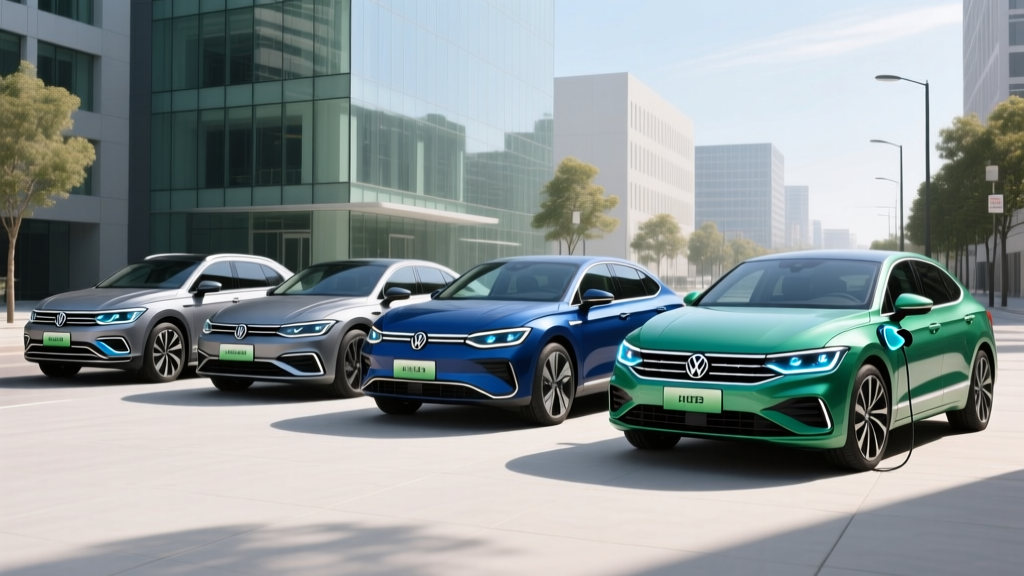
Volkswagen's plug-in hybrid strategy in 2026 centers on updated GTE and eHybrid models that bridge the gap between conventional gas cars and full battery-electric vehicles. If you're researching a VW hybrid plug in option, you're likely weighing whether a PHEV's electric-only commuting range and gas-engine road-trip flexibility make sense for your driving pattern — or whether a full EV or conventional hybrid would serve you better.
This guide breaks down Volkswagen's current plug-in hybrid offerings available in the US and global markets, with exact EPA-estimated MPG figures, electric-only range, battery specifications, charging times, and pricing. We'll also clarify how VW's PHEVs differ from conventional hybrids and full EVs so you can make a spec-driven decision.
VW Plug-In Hybrid vs Conventional Hybrid: What's the Difference?
Before diving into specific models, it's critical to understand the distinction between Volkswagen's two hybrid categories — because the ownership experience differs substantially.
| Feature | Conventional Hybrid (HEV) | Plug-In Hybrid (PHEV / GTE / eHybrid) |
|---|---|---|
| Battery size | ~1-2 kWh | 13-20+ kWh usable |
| Plug-in charging | No — charges via engine and regen | Yes — Level 2 AC plug required for full benefit |
| Electric-only range | None (electric assist only) | 25-55+ miles EPA |
| Fuel economy | Consistent MPG all the time | MPGe on battery + MPG after battery depletes |
| Best for | Drivers without home charging access | Drivers who can charge at home and commute <50 mi/day |
| Complexity / weight | Lower — smaller battery, simpler system | Higher — larger battery, onboard charger, dual powertrain |
The bottom line: a conventional hybrid (like Toyota's HEV system) never plugs in and delivers consistent fuel economy through regenerative braking and engine optimization. A plug-in hybrid (VW's GTE and eHybrid badges) has a much larger battery that you charge from a wall outlet or Level 2 charger, giving you genuine electric-only driving for daily commutes before the gas engine takes over.
2026 VW Plug-In Hybrid Models: Specs & Range Breakdown
Volkswagen's 2026 PHEV lineup varies by market. In Europe, VW offers a broader GTE/eHybrid range. US availability has historically been limited, and Volkswagen of America has signaled shifting priorities toward full BEVs (ID.4, ID.7). Below is what's available or announced for the 2026 model year.
| Specification | Golf GTE (EU/Global) | Passat GTE (EU) | Tiguan eHybrid (EU/Announced) |
|---|---|---|---|
| Powertrain | 1.5L TSI turbo + electric motor | 1.5L TSI turbo + electric motor | 1.5L TSI turbo + electric motor |
| Combined system output | 245 hp / 258 lb-ft | 245 hp / 258 lb-ft | 245 hp / 258 lb-ft |
| Battery (usable) | ~19.7 kWh (NMC) | ~19.7 kWh (NMC) | ~19.7 kWh (NMC) |
| Electric-only range (WLTP) | ~62 mi (100 km) | ~62 mi (100 km) | ~62 mi (100 km) |
| Est. EPA electric range | ~45-50 mi | ~45-50 mi | ~42-48 mi |
| AC charging (Level 2) | 3.6 kW onboard (~5.5 hr 0-100%) | 3.6 kW onboard (~5.5 hr 0-100%) | 3.6 kW onboard (~5.5 hr 0-100%) |
| DC fast charging | Not available | Not available | Not available |
| 0-60 mph (est.) | ~6.5 sec | ~7.0 sec | ~7.5 sec |
| Transmission | 6-speed DSG | 6-speed DSG | 6-speed DSG |
| Total combined range | ~500+ mi (gas + electric) | ~550+ mi (gas + electric) | ~480+ mi (gas + electric) |
Fuel Economy: EPA MPG and MPGe Explained
PHEV fuel economy is reported in two ways, and understanding both is essential for accurate comparison:
- MPGe (miles per gallon equivalent): Measures efficiency when driving on battery power. This number is high (often 100+ MPGe) but only applies while the battery has charge.
- Charge-depleted MPG: Once the battery is exhausted, the PHEV operates as a conventional hybrid. This is the number that matters for road trips or days you forget to plug in.
| Model | Combined MPGe (battery) | Combined MPG (gas only) | City MPG (gas) | Highway MPG (gas) |
|---|---|---|---|---|
| Golf GTE (est. EPA) | ~110-120 MPGe | ~40-44 MPG | ~44-48 | ~38-42 |
| Passat GTE (est. EPA) | ~105-115 MPGe | ~38-42 MPG | ~42-46 | ~36-40 |
| Tiguan eHybrid (est. EPA) | ~95-105 MPGe | ~34-38 MPG | ~36-40 | ~32-36 |
Real-world MPG insight: Hybrids and PHEVs in gas-only mode tend to exceed EPA city estimates because regenerative braking recovers more energy in stop-and-go traffic. Highway MPG is often slightly below EPA estimates due to aerodynamic drag. If your commute is mostly city driving, expect your gas-only MPG to land at or above the EPA city figure. On long highway trips, expect the combined or highway number.
For comparison, a conventional gas-only VW Tiguan returns approximately 25-28 MPG combined per fueleconomy.gov. The PHEV version's advantage is massive if you charge daily and commute within electric range — you might burn zero gasoline on weekdays.
Charging a VW PHEV: What You Need to Know
Volkswagen's current PHEV lineup uses a relatively modest 3.6 kW onboard AC charger. This means:
- Level 1 (120V household outlet): ~1.4 kW — full charge in approximately 13-14 hours. Suitable for overnight charging if you drive less than the full electric range daily.
- Level 2 (240V home charger): 3.6 kW — full charge in approximately 5-5.5 hours. Recommended for daily PHEV use; a basic Level 2 unit costs $300-$600 plus installation.
- DC fast charging: Not available on current VW PHEVs. The battery is too small to justify DC hardware, and the added cost/weight wouldn't meaningfully improve the ownership experience for a ~20 kWh pack.
One practical note: VW PHEVs use the Type 2 / J1772 connector in North America (CCS2/Type 2 in Europe). You do not need a Tesla NACS adapter for Level 2 PHEV charging, as standard J1772 Level 2 chargers are universally compatible.
Charging cost is minimal. At the US average electricity rate of ~$0.16/kWh (per EIA data), fully charging a 19.7 kWh VW PHEV battery costs roughly $3.15 — enough for 40-50 miles of electric driving, or about $0.06-$0.08 per mile. Compare that to $0.12-$0.15 per mile for a 30 MPG gas car at $3.50/gallon.
Pricing and Federal Tax Credit Eligibility
As of the 2026 model year, Volkswagen's US PHEV availability remains limited compared to the European market. Pricing for models available globally (or potentially returning to the US) falls in these ranges:
| Model | EU MSRP (approx.) | Est. US MSRP (if available) | §30D Federal Tax Credit |
|---|---|---|---|
| Golf GTE | €42,000-€48,000 | $38,000-$44,000 | Up to $3,750* |
| Passat GTE | €45,000-€52,000 | $42,000-$48,000 | Up to $3,750* |
| Tiguan eHybrid | €44,000-€50,000 | $40,000-$46,000 | Up to $3,750* |
*PHEV tax credit note: Under IRS §30D rules, plug-in hybrids with battery capacities of at least 7 kWh may qualify for a partial federal tax credit — typically up to $3,750, depending on critical mineral and battery component sourcing requirements. The full $7,500 credit generally requires meeting both the critical minerals AND battery component thresholds, which is more common in full BEVs. Always verify current-year eligibility at IRS.gov and consult a tax professional, as sourcing rules tighten annually and buyer income caps apply ($150K single / $300K joint for new vehicles).
Reliability, Battery Warranty, and Replacement Cost
Battery longevity is the top concern for hybrid buyers, and VW addresses this with warranty coverage that aligns with industry norms.
• High-voltage battery: 8 years / 100,000 miles (whichever comes first), covering capacity loss below 70% of original capacity.
• Powertrain (engine + electric motor + DSG): 5 years / 60,000 miles limited warranty.
• Hybrid system components: 8 years / 100,000 miles (includes inverter, electric motor, charging system).
Real-world degradation data: PHEV batteries experience less stress than full EV batteries because they operate in a narrower state-of-charge window (the system maintains a buffer and rarely allows full 0% or 100% use). Industry data from fleet PHEVs shows typical capacity retention of 85-92% after 8 years / 100,000 miles. Most PHEV batteries outlast their warranty periods without requiring replacement.
Replacement cost if out of warranty: A VW PHEV high-voltage battery pack replacement (parts + labor) typically ranges from $6,000 to $9,000 depending on the model and dealer. This is significantly less than a full EV battery replacement ($12,000-$20,000+) because the PHEV pack is smaller (~20 kWh vs 70-100 kWh). Third-party hybrid battery refurbishment services may offer lower-cost alternatives.
VW's DSG transmission in PHEV applications has shown improved reliability in the latest generation compared to earlier dry-clutch DSG units. The wet-clutch 6-speed DSG used in GTE models handles the combined torque of the engine and electric motor and has a generally solid track record in post-2020 models.
Who Should Choose a VW Plug-In Hybrid vs a Full EV or Gas Car?
The decision between a VW PHEV, a conventional hybrid, a full BEV, or a gas car depends on your specific driving pattern, charging access, and budget. Here's a concrete decision framework:
Choose a VW Plug-In Hybrid (PHEV) if:
- Your daily round-trip commute is under 40-45 miles and you can charge at home overnight
- You take road trips of 200+ miles several times per year and don't want to plan around charging stops
- You live in an apartment or area with limited public DC fast-charging infrastructure
- You want to reduce gasoline consumption by 60-80% without range compromise
Choose a Full EV (BEV) if:
- You have reliable Level 2 home charging and your daily driving is under 250 miles
- You want the lowest per-mile fuel cost and minimal maintenance (no oil changes, no gas engine)
- You qualify for the full $7,500 federal tax credit on a qualifying BEV
- You're comfortable with 15-30 minute DC fast-charge stops on road trips
Choose a Conventional Hybrid (HEV) if:
- You cannot charge at home (no garage, no outlet access, apartment living)
- You want improved MPG without any behavior change — just drive and refuel normally
- You want lower upfront cost and less mechanical complexity
Stick with a Gas Car if:
- You drive very few miles per year (<5,000) and fuel cost is negligible
- You need the lowest possible purchase price and plan to keep the car 3 years or less
Pros and Cons of VW Plug-In Hybrids
Pros
- 40-50 miles of electric-only range covers most daily commutes with zero gasoline
- 500+ mile total range eliminates road-trip charging anxiety
- 245 hp combined output provides genuinely quick acceleration (GTE badge)
- Significantly lower per-mile cost when charging at home (~$0.07/mi electric)
- Regenerative braking extends brake pad life
- 8-year/100,000-mile battery warranty provides long-term peace of mind
Cons
- 3.6 kW AC charging is slow — 5+ hours for a full charge (no DC fast charge)
- Heavier than gas or conventional hybrid counterparts, reducing handling agility
- Reduced cargo space vs gas models due to battery placement
- Limited US market availability — most GTE/eHybrid models are EU-only as of 2026
- Partial §30D tax credit ($3,750 max) vs full $7,500 for qualifying BEVs
- Maintenance complexity of two complete powertrains (engine + electric)
- Electric range drops significantly in cold weather (25-35% loss below freezing)
Frequently Asked Questions
How many MPG does a VW plug-in hybrid get?
In gas-only (charge-depleted) mode, VW PHEVs like the Golf GTE deliver an estimated 40-44 MPG combined, with city MPG often reaching 44-48 thanks to regenerative braking. On battery power, efficiency is rated around 110-120 MPGe. Your actual experience depends heavily on how often you charge — daily chargers who commute within electric range may use gasoline only on weekends or road trips.
How far can a VW PHEV go on electric only?
Current-generation VW plug-in hybrids with the ~19.7 kWh battery pack achieve approximately 45-50 miles of EPA-estimated electric-only range in mild conditions. WLTP figures (used in Europe) rate them at ~62 miles, but EPA testing is more conservative. In real-world winter driving, expect 30-38 miles of electric range due to battery chemistry and cabin heating demands.
Does a VW plug-in hybrid qualify for a federal tax credit?
Yes, but typically a partial credit. Under IRS §30D rules, PHEVs with at least 7 kWh of battery capacity may qualify for up to $3,750, depending on battery component and critical mineral sourcing requirements. The full $7,500 credit is harder for PHEVs to achieve because the battery sourcing thresholds favor larger BEV packs. Buyer income caps ($150K single / $300K joint) and MSRP caps ($55,000 for cars / $80,000 for SUVs/vans) also apply. Verify current eligibility at IRS.gov.
Is a VW plug-in hybrid reliable?
VW's latest-generation PHEV powertrain (post-2020) has shown solid reliability, particularly with the wet-clutch DSG transmission and updated battery management systems. The high-voltage battery is warranted for 8 years / 100,000 miles against capacity loss below 70%. PHEV batteries typically retain 85-92% capacity at the 8-year mark based on fleet data. The dual-powertrain design does mean more components that could theoretically require service, but VW's hybrid system has matured significantly since the first-generation Golf GTE.
What does it cost to replace a VW PHEV battery?
Out-of-warranty high-voltage battery replacement for a VW plug-in hybrid typically costs $6,000-$9,000 including parts and labor at a dealership. This is lower than full EV battery replacement due to the smaller ~20 kWh pack. Third-party hybrid battery specialists may offer refurbished replacements at lower cost. In practice, the majority of PHEV batteries last well beyond their warranty period without needing replacement.
Can I charge a VW PHEV at a Tesla Supercharger?
No. VW plug-in hybrids use the J1772 (North America) or Type 2 (Europe) AC charging connector and do not support DC fast charging. Tesla Superchargers provide DC fast charging via NACS or CCS connectors, which are incompatible with VW PHEVs. You can charge a VW PHEV at any Level 2 public charger with a J1772 connector (ChargePoint, EVgo Level 2 stations, etc.) or at home with a standard Level 2 wallbox.
Should I buy a VW PHEV or a full EV like the ID.4?
If you can charge at home, drive under 250 miles daily, and want the lowest operating cost, the VW ID.4 (EPA range ~275 miles, starting ~$40,000) is the stronger long-term choice with full $7,500 tax credit eligibility (subject to sourcing rules). Choose a VW PHEV instead if you regularly take trips exceeding 300 miles, lack access to reliable DC fast charging in your region, or want to transition gradually from gasoline without committing to a fully electric lifestyle.