Quick Verdict: The Best All-Around Civic You Can Buy
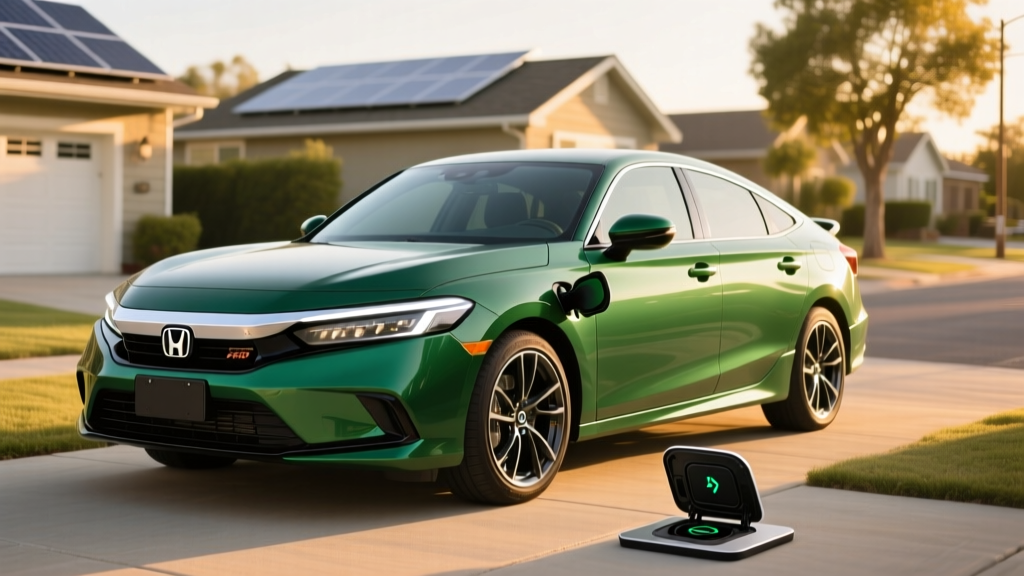
The 2025 Honda Civic Hybrid Sport Touring Sedan occupies a rare sweet spot in the compact car market: it pairs a two-motor hybrid system producing 200 combined horsepower with an EPA-estimated 49 MPG combined — and it does so without requiring you to plug in, change your driving habits, or pay a steep electrification premium. At a starting MSRP of $32,950 (including destination), the Sport Touring trim is the range-topper, bundling leather upholstery, a 9-inch touchscreen with wireless Apple CarPlay and Android Auto, a 12-speaker Bose audio system, and the full Honda Sensing suite of driver-assistance features.
For buyers weighing a hybrid against a plug-in hybrid (PHEV) or a full battery-electric vehicle (BEV), the Civic Hybrid makes a compelling case as a no-compromise entry point into electrified driving. Here is everything you need to know about specs, real-world efficiency, battery longevity, and whether any tax credits apply.
HEV vs. PHEV: What the Civic Hybrid Actually Is
Before diving into numbers, it is essential to clarify what the 2025 Civic Hybrid is — and what it is not. The Civic Hybrid is a conventional hybrid electric vehicle (HEV). It uses a small lithium-ion battery (approximately 1.1 kWh of usable capacity) that recharges exclusively through regenerative braking and the gasoline engine. You never plug it in. There is no electric-only driving range to manage, no charging cable to deploy, and no home charger to install.
HEV vs. PHEV vs. BEV — Where the Civic Hybrid Fits
| Feature | HEV (Civic Hybrid) | PHEV (e.g., Toyota Prius Prime) | BEV (e.g., Tesla Model 3) |
|---|---|---|---|
| Plug-in charging required? | No | Yes (optional but recommended) | Yes (mandatory) |
| Electric-only range | ~1 mi at low speed | 25–44 mi typical | 250–360+ mi |
| Battery size | ~1.1 kWh | 13–18 kWh | 50–82 kWh |
| Federal tax credit (§30D) | Not eligible | Up to $7,500 (if eligible) | Up to $7,500 (if eligible) |
| Fuel required? | Yes (regular unleaded) | Yes (when battery depleted) | No |
The Civic Hybrid sacrifices the electric-only commute of a PHEV and the zero-tailpipe-emission operation of a BEV in exchange for simplicity: no charging infrastructure, no range planning, just fill up with gas and drive.
Fuel Economy: EPA Ratings and Real-World MPG
The 2025 Honda Civic Hybrid Sport Touring Sedan carries EPA-estimated fuel economy ratings of 50 MPG city / 47 MPG highway / 49 MPG combined, according to fueleconomy.gov. These numbers apply to the Sport Touring trim specifically, which rides on 18-inch alloy wheels and carries slightly more weight than the lower Sport Hybrid trim (rated at 51/44/48 MPG).
| Metric | Sport Touring Hybrid | Sport Hybrid | Gas Civic Touring (2.0L) |
|---|---|---|---|
| City MPG | 50 | 51 | 31 |
| Highway MPG | 47 | 44 | 40 |
| Combined MPG | 49 | 48 | 34 |
| Fuel tank (gallons) | 12.4 | 12.4 | 12.4 |
| Est. total range (miles) | ~607 | ~595 | ~421 |
Real-World MPG: What Owners Actually See
Honda's two-motor hybrid system excels in stop-and-go city driving, where the electric motor handles most low-speed propulsion and the 2.0-liter Atkinson-cycle engine acts primarily as a generator. In real-world driving, many owners report exceeding the EPA city estimate, with 52–55 MPG achievable in warm-weather urban commuting. Highway fuel economy is more variable: sustained 75–80 MPH cruising can drop efficiency to 42–45 MPG, as aerodynamic drag rises and the engine engages directly via the lock-up clutch.
Cold weather reduces hybrid efficiency by roughly 5–10%, primarily because the engine must run more frequently to provide cabin heat (the Civic Hybrid lacks a heat pump, which is reserved for full EVs). Expect winter combined figures in the low-to-mid 40s in freezing climates.
Powertrain Specs: 200 HP from Honda's Two-Motor System
The 2025 Civic Hybrid uses Honda's fourth-generation two-motor hybrid system, which pairs a 2.0-liter direct-injected Atkinson-cycle four-cylinder engine with two electric motors and an e-CVT (continuously variable transmission with no traditional gears or belts).
| Specification | Detail |
|---|---|
| Engine | 2.0L DOHC Atkinson-cycle I-4, direct injection |
| Engine power | 146 hp @ 6,000 rpm / 134 lb-ft torque |
| Drive motor output | 184 hp / 232 lb-ft torque |
| Combined system output | 200 hp / 232 lb-ft torque |
| Transmission | e-CVT (direct drive with engine lock-up clutch) |
| Drivetrain | Front-wheel drive |
| 0–60 MPH (est.) | ~7.2 seconds |
| Hybrid battery | Lithium-ion, ~1.1 kWh usable |
| Curb weight (Sport Touring) | ~3,117 lbs |
What stands out is that this hybrid produces more power than the gas-only Civic (the turbocharged 1.5L makes 180 hp). The electric drive motor's 232 lb-ft of torque is available from near-zero RPM, giving the Civic Hybrid brisk off-the-line acceleration that feels more responsive than its 0–60 time suggests. The system seamlessly switches between EV Drive (motor only, at low speeds), Hybrid Drive (engine generates electricity for the motor), and Engine Drive (engine directly powers the wheels at highway cruising speeds).
Pricing, Trims, and Tax Credit Eligibility
The 2025 Civic Hybrid is offered in two trims. The Sport Touring Sedan is the fully loaded variant:
| Trim | MSRP (incl. destination) | Key Additions Over Base Hybrid |
|---|---|---|
| Sport Hybrid Sedan | $30,950 | Hybrid powertrain, 7-inch display, cloth seats |
| Sport Touring Hybrid Sedan | $32,950 | Leather, 9-inch touchscreen, Bose 12-speaker, wireless CarPlay/Android Auto, Honda Sensing full suite, 18-inch wheels |
Federal Tax Credit Status
The 2025 Honda Civic Hybrid does not qualify for the federal §30D Clean Vehicle Credit. Under current IRS rules, the §30D credit of up to $7,500 is available only for plug-in electric vehicles (PHEVs and BEVs) that meet battery capacity, critical-mineral sourcing, MSRP cap, and buyer income requirements. Conventional hybrids like the Civic Hybrid are excluded from this credit.
Some states offer their own incentives for hybrid vehicles, though these are far less common than EV incentives. Check your state's energy or environmental agency website for current programs. Honda does not currently offer a federal credit-equivalent rebate on the Civic Hybrid.
Battery Warranty, Longevity, and Replacement Cost
Hybrid battery anxiety is the single most common concern among first-time hybrid buyers. Here are the facts for the 2025 Civic Hybrid:
Honda Hybrid Battery Warranty
- Hybrid battery (IMA/lithium-ion): 8 years / 100,000 miles (10 years / 150,000 miles in CARB states including CA, NY, MA, and others)
- Hybrid system components: 8 years / 100,000 miles
- Powertrain warranty: 5 years / 60,000 miles
- Capacity retention threshold: Honda covers the battery if it fails to hold sufficient charge to operate the hybrid system normally — there is no published minimum SoH percentage as with BEVs
How Long Will the Battery Actually Last?
Honda's lithium-ion hybrid battery is small (~1.1 kWh) and operates within a narrow state-of-charge window — typically between 20% and 80% SoC. This shallow cycling is far less stressful on battery chemistry than the deep cycles a BEV undergoes, and it is the primary reason hybrid batteries routinely last 150,000–200,000+ miles before any significant degradation. Honda's earlier-generation hybrids (Insight, early Civic Hybrids with NiMH packs) demonstrated 150,000+ mile battery life as the norm, and the newer lithium-ion chemistry in the 2025 model is more durable still.
Replacement Cost If the Battery Fails
Out-of-warranty hybrid battery replacement for the current-generation Civic Hybrid runs approximately $2,000–$3,500 including parts and labor at a Honda dealership. Independent hybrid specialists may offer refurbished or remanufactured packs for $1,200–$2,000. Given the warranty coverage and the battery's small size and shallow-cycling design, premature failure is uncommon — but the replacement cost is a fraction of a BEV battery replacement ($8,000–$20,000+).
Driving Experience and Honda Sensing
The Sport Touring trim includes Honda's full Honda Sensing suite, which provides SAE Level 2 driver assistance:
- Adaptive Cruise Control (ACC) with Low-Speed Follow
- Lane Keeping Assist System (LKAS) with Road Departure Mitigation
- Collision Mitigation Braking System (CMBS)
- Traffic Sign Recognition
- Blind Spot Information with Cross Traffic Monitor (Sport Touring exclusive)
- Low-Speed Braking Control
On the road, the Civic Hybrid Sport Touring drives like a well-sorted compact sedan that happens to be a hybrid. The regenerative braking feels natural — there is a selectable regen level via paddle shifters, but it does not offer true one-pedal driving like a BEV. The cabin at highway speed is notably quiet for the segment, aided by acoustic glass and active noise cancellation on the Sport Touring trim. Ride quality is firm but controlled on the 18-inch wheels.
Who Should Buy the Civic Hybrid Sport Touring?
Pros
- 49 MPG combined EPA — class-leading efficiency
- 200 hp makes it the quickest Civic in the lineup
- No plug-in charging required — works with existing routine
- 607-mile estimated total range between fill-ups
- Premium Sport Touring features at ~$33K
- 8yr/100K-mi hybrid battery warranty
- Strong IIHS safety ratings
Cons
- No federal tax credit (HEV, not PHEV/BEV)
- FWD only — no AWD option unlike some rivals
- No electric-only commute capability
- 18-inch wheels reduce MPG slightly vs. Sport trim
- Not eligible for HOV lane access in most states
- Modest trunk space (14.8 cu ft) vs. some competitors
Decision Framework: Is This the Right Electrified Car for You?
Choose the Civic Hybrid Sport Touring if: You want maximum fuel savings with zero lifestyle changes — no home charger installation, no route planning, no range monitoring. You drive 12,000–20,000 miles per year in a mix of city and highway, and you want a premium compact sedan under $35K.
Choose a PHEV instead if: You have a short commute (under 30 miles each way), can install a Level 2 charger at home, and want to drive on electricity most days while keeping a gas engine for road trips. Consider the Toyota Prius Prime (44 mi electric range).
Choose a full BEV instead if: You have reliable home charging, your daily driving is under 250 miles, you want zero tailpipe emissions and minimal maintenance, and you qualify for the $7,500 federal tax credit that makes BEVs cost-competitive.
Ownership Costs: 5-Year Outlook
At 49 MPG combined and a national average gas price of approximately $3.30 per gallon (as of early 2026), the Civic Hybrid Sport Touring costs roughly $1,010 per year in fuel at 15,000 miles driven annually. A comparable gas-only compact sedan at 30 MPG combined would cost approximately $1,650 per year — a savings of around $640 annually, or $3,200 over five years, with the hybrid.
Maintenance costs are comparable to a gas Civic. The hybrid system adds no routine maintenance items — there are no spark plugs to change more frequently, no transmission fluid unique to the hybrid, and the regenerative braking system actually extends brake pad life. Honda's maintenance minder system covers oil changes (typically every 7,500–10,000 miles on 0W-20 synthetic).
Frequently Asked Questions
How many MPG does the 2025 Honda Civic Hybrid Sport Touring get?
The EPA rates it at 50 MPG city, 47 MPG highway, and 49 MPG combined. Real-world results typically range from 44 to 55 MPG depending on driving conditions, with city driving often exceeding the EPA estimate and sustained high-speed highway driving falling slightly below.
Does the 2025 Civic Hybrid need to be plugged in?
No. The Civic Hybrid is a conventional hybrid (HEV). Its small lithium-ion battery recharges through regenerative braking and the gasoline engine. You fuel it like any other gas car — there is no plug, no charging cable, and no home charger needed.
Does the Civic Hybrid qualify for any tax credit?
No. The federal §30D Clean Vehicle Credit applies only to plug-in vehicles (PHEVs and BEVs). The Civic Hybrid is not eligible. Some states may offer modest hybrid incentives, but these are uncommon and vary by jurisdiction. Check your state's energy office for current programs.
How long will the hybrid battery last and what does replacement cost?
Honda warrants the hybrid battery for 8 years/100,000 miles (10 years/150,000 miles in CARB states). Based on Honda's hybrid track record and the battery's shallow-cycling design, 150,000–200,000+ miles of service life is typical. Out-of-warranty replacement costs approximately $2,000–$3,500 at a dealership.
Is the Civic Hybrid faster than the gas Civic?
Yes. The hybrid system produces 200 combined horsepower and 232 lb-ft of torque, compared to 180 hp and 177 lb-ft for the turbocharged 1.5L gas engine. The electric motor's instant torque delivery makes the hybrid feel noticeably quicker in everyday driving, despite a similar 0–60 MPH time (~7.2 seconds hybrid vs. ~7.5 seconds gas).
Can I get all-wheel drive with the Civic Hybrid?
No. The 2025 Civic Hybrid is front-wheel drive only. If AWD is a priority in a hybrid compact, consider the Toyota Prius AWD (50 MPG combined, 196 hp) or the Subaru Crosstrek Hybrid (PHEV, limited availability).
Hybrid vs. PHEV vs. full EV — which should I choose?
A conventional hybrid like the Civic is ideal if you cannot charge at home or want zero disruption to your fueling routine. A PHEV suits drivers with short commutes and home charging who want electric daily driving with gas backup. A full BEV is best for drivers with reliable home charging, predictable daily mileage under the vehicle's range, and a desire to minimize operating costs and tailpipe emissions. See the EPA comparison tool to compare specific models.