Quick Verdict: A Hybrid That Actually Rewards City Drivers
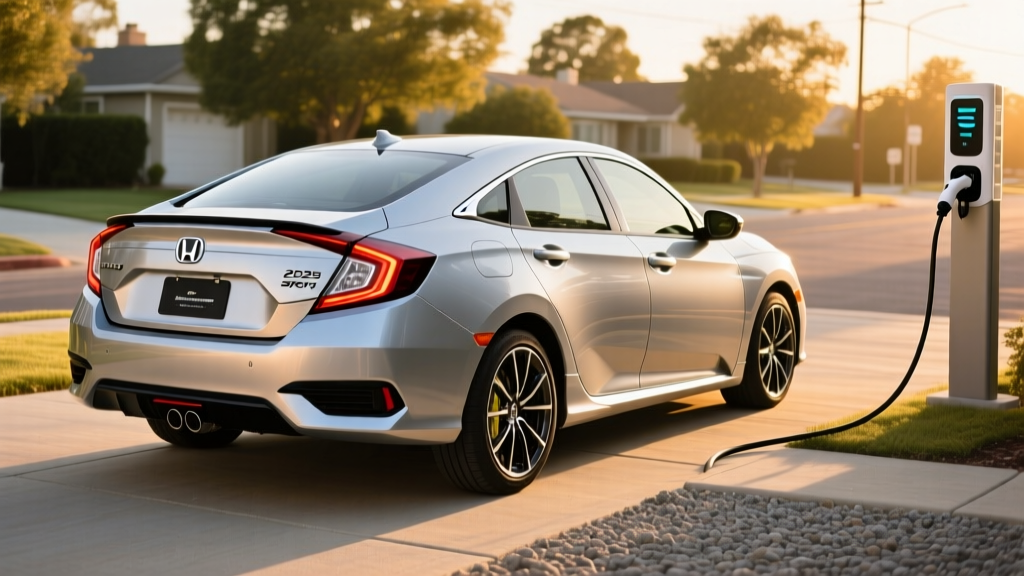
The 2025 Honda Civic Hybrid Sport Sedan occupies a specific niche: it's a conventional hybrid (HEV), not a plug-in. You never plug it in. The gasoline engine and regenerative braking handle all battery charging automatically. For buyers who want dramatically better fuel economy without changing their fueling habits or installing a home charger, this is one of the most compelling compact sedans available.
The Sport Hybrid trim pairs Honda's two-motor hybrid system with a 2.0-liter Atkinson-cycle engine for a combined 200 horsepower — making it genuinely quick while returning an EPA-estimated 49 MPG combined. At a starting MSRP around $29,845 (including destination), it undercuts many competitors on price while delivering more power than the Toyota Corolla Hybrid and better real-world efficiency than most turbocharged gas sedans.
| Specification | 2025 Civic Hybrid Sport Sedan |
|---|---|
| Powertrain | 2.0L Atkinson 4-cyl + two-motor hybrid system |
| Combined Horsepower | 200 HP |
| Combined Torque | 232 lb-ft (motor peak) |
| Transmission | e-CVT (direct drive) |
| EPA MPG (City / Hwy / Combined) | 50 / 47 / 49 |
| Fuel Tank Capacity | 10.6 gallons |
| Total Range | ~519 miles (EPA est.) |
| 0–60 mph | ~6.5 seconds (est.) |
| Drivetrain | FWD |
| Starting MSRP (Sport Hybrid) | $29,845 |
| Hybrid Battery Warranty | 8 years / 100,000 miles |
HEV vs. PHEV: Why the Civic Hybrid Is a Conventional Hybrid
Before digging into the numbers, it's essential to understand what this car is — and what it isn't. The Civic Hybrid is a conventional hybrid (HEV). It has a small lithium-ion battery pack (approximately 1.1 kWh usable) that you never plug in. The battery charges through regenerative braking and the gasoline engine. You refuel at a gas station exactly as you would with any other car.
| Feature | HEV (Civic Hybrid) | PHEV (e.g., Toyota Prius Prime) | BEV (e.g., Tesla Model 3) |
|---|---|---|---|
| Plug-in Required? | No | Yes (for EV range) | Yes (always) |
| Electric-Only Range | ~1 mile at low speed | 25–44 miles typical | 250–350+ miles |
| Total Range | ~519 miles | 400–600+ miles | 250–350+ miles |
| Battery Size | ~1.1 kWh | 10–14 kWh | 50–82 kWh |
| Home Charger Needed? | No | Recommended (Level 2) | Essential (Level 2) |
| Federal Tax Credit (§30D) | Not eligible | Up to $7,500 (if eligible) | Up to $7,500 (if eligible) |
| Best For | No home charging, long commutes | Short EV commute + road trips | Home charging, low daily miles |
The trade-off is straightforward: you sacrifice electric-only driving range (the Civic Hybrid can only creep at very low speeds on electric power for roughly a mile) in exchange for zero lifestyle changes. No charging cable, no range planning, no dependency on charging infrastructure. If you live in an apartment without charging access or regularly drive 300+ miles between fill-ups, the HEV approach makes practical sense.
Fuel Economy: EPA Ratings vs. Real-World MPG
The EPA rates the 2025 Civic Hybrid Sport Sedan at 50 MPG city, 47 MPG highway, and 49 MPG combined. These are strong numbers for a 200-HP sedan, but the real-world story is more nuanced — and often better than the sticker suggests.
| Driving Scenario | EPA Estimate | Real-World Expectation |
|---|---|---|
| City (stop-and-go, under 40 mph) | 50 MPG | 50–55 MPG (hybrids excel here) |
| Highway (steady 70–75 mph) | 47 MPG | 43–46 MPG (aero drag, less regen) |
| Combined (mixed driving) | 49 MPG | 47–51 MPG |
| Cold Weather (below 32°F) | — | 42–46 MPG (engine runs more for heat) |
Hybrid systems capture the most energy during deceleration and low-speed driving, which is why city MPG actually exceeds highway MPG — the opposite of a conventional gas car. Owners who do predominantly urban and suburban driving frequently report 50–55 MPG in warmer months. Highway-heavy commutes at 75+ mph will see the system lean more heavily on the gasoline engine, dropping efficiency closer to 43–46 MPG.
Cold weather impacts any hybrid. Below freezing, the engine runs more frequently to provide cabin heat (since there's no large traction battery to power a heat pump, as a BEV would), and the battery's charge/discharge efficiency drops. Expect a 5–10% MPG reduction in sustained winter conditions. This is normal hybrid behavior, not a defect.
Powertrain Deep Dive: How 200 HP and 49 MPG Coexist
Honda's fourth-generation two-motor hybrid system is the heart of this car. Here's how it works:
- 2.0-liter Atkinson-cycle 4-cylinder engine: Produces 146 HP on its own. The Atkinson cycle sacrifices some peak power for greater thermal efficiency — it's the same cycle used in nearly every modern hybrid.
- Drive motor: An electric motor rated at 184 HP and 232 lb-ft of torque handles most acceleration directly. This is what gives the Civic Hybrid its punchy, responsive feel off the line.
- Generator motor: A second motor acts as a generator, converting engine power to electricity or assisting with regenerative braking.
- Combined system output: 200 HP. The system blends engine and motor power intelligently — at low speeds, it operates mostly as a series hybrid (engine generates electricity, motor drives the wheels). At highway cruising speeds, a lock-up clutch connects the engine directly to the wheels for maximum efficiency.
The result is a car that accelerates to 60 mph in roughly 6.5 seconds — quicker than the base turbocharged Civic and significantly faster than the Toyota Corolla Hybrid (which produces 138 HP combined). The electric motor's instant torque makes passing maneuvers and highway merges confident, and the e-CVT avoids the rubber-band effect that older CVTs exhibited.
Pricing, Trims, and Tax Credit Eligibility
The 2025 Civic Hybrid is available in two trims:
- Sport Hybrid Sedan: Starting at $29,845 (including $1,095 destination)
- Sport Touring Hybrid Sedan: Starting at $32,845 (adds leather, Bose audio, wireless CarPlay/Android Auto, and additional driver-assist features)
Federal Tax Credit (§30D): The Civic Hybrid does not qualify for the federal plug-in vehicle tax credit. IRS §30D applies only to plug-in electric vehicles (PHEVs and BEVs) with a minimum battery capacity of 7 kWh. The Civic Hybrid's ~1.1 kWh battery falls well below this threshold. There is no federal tax credit for conventional hybrids in 2025.
Some states and local utilities offer rebates for hybrid purchases, but these vary widely by jurisdiction. Check your state energy office or utility provider for current programs. Consult a tax professional for eligibility specifics.
Even without a tax credit, the Civic Hybrid's value proposition rests on its fuel savings. At $3.50/gallon and 15,000 miles per year, a driver averaging 49 MPG spends roughly $1,071 annually on fuel. A comparable gas-only Civic (35 MPG combined) would cost about $1,500 per year — a savings of approximately $430 annually, or $2,150 over five years. That recoups a meaningful portion of the hybrid's price premium over the gas-only Sport trim.
Reliability and Hybrid Battery Longevity
Hybrid battery lifespan is consistently the top concern among first-time hybrid buyers. Here's what the data shows:
Honda Hybrid Battery Warranty: 8 years or 100,000 miles (whichever comes first) for the high-voltage battery pack. In states that follow California Air Resources Board (CARB) emissions standards — including CA, NY, NJ, MA, and others — the warranty extends to 10 years / 150,000 miles.
Expected Battery Lifespan: Honda's lithium-ion hybrid batteries in the current-generation system are designed to last the life of the vehicle under normal use. Real-world data from earlier Honda hybrid systems (Insight, Accord Hybrid) shows batteries routinely reaching 150,000–200,000+ miles before significant degradation.
Replacement Cost (out of warranty): A replacement hybrid battery pack for the Civic Hybrid is estimated at $2,000–$3,500 installed, based on current Honda hybrid parts pricing. This is substantially less than a BEV traction battery replacement ($5,000–$20,000+) because the pack is small (~1.1 kWh).
The Civic Hybrid's battery operates within a narrow state-of-charge window — it never fully charges or fully depletes, which dramatically reduces cell stress compared to a BEV battery. This "shallow cycling" is why hybrid batteries routinely outlast their warranty periods with minimal capacity loss. Honda's warranty documentation covers defects and capacity loss below a defined threshold during the coverage period.
Overall vehicle reliability expectations are strong. Honda's hybrid powertrains have proven durable across multiple model lines, and the e-CVT design (which has no traditional belt or pulleys — it's a direct-drive planetary gearset) eliminates the mechanical wear points of conventional automatic transmissions.
Who Should Choose the Civic Hybrid — And Who Shouldn't
Pros
- 49 MPG combined with no plug-in required
- 200 HP — genuinely quick for a hybrid sedan
- 519-mile total range between fill-ups
- No home charger installation needed
- Strong 8-year/100k-mile battery warranty (10/150k in CARB states)
- Competitive pricing under $30K
Cons
- No electric-only driving range (not a PHEV)
- No federal tax credit eligibility
- FWD only — no AWD option
- Highway MPG trails city MPG significantly
- Less cargo space than Civic Hatchback
Choose the Civic Hybrid if: You don't have access to home charging, your commute is mostly city/suburban, you want maximum MPG without changing your refueling routine, and you value a sporty driving experience with 200 HP on tap.
Choose a PHEV instead if: You can install a Level 2 charger at home, your daily commute is under 30 miles (so you'd rarely use gas), and you want the option of electric-only driving for short trips. Look at the Toyota Prius Prime or Hyundai Tucson PHEV.
Choose a full BEV instead if: You have reliable home charging, your daily driving is under 200 miles, you want zero tailpipe emissions, and you're eligible for the $7,500 federal tax credit. The Tesla Model 3, Hyundai Ioniq 6, or Chevy Equinox EV may be better fits.
Stick with the gas Civic if: You drive fewer than 8,000 miles per year (fuel savings won't justify the hybrid premium), or you want the lowest possible purchase price and AWD availability (gas Civic sedan doesn't offer AWD either, but the Civic Hatchback does not — consider a Subaru Impreza or Mazda3 AWD if all-wheel drive is a priority).
Frequently Asked Questions
How many MPG does the 2025 Honda Civic Hybrid get?
The EPA rates it at 50 MPG city, 47 MPG highway, and 49 MPG combined. In real-world city driving, many owners report 50–55 MPG. Highway-heavy driving at 75+ mph typically yields 43–46 MPG. Cold weather reduces efficiency by roughly 5–10%.
Does the Civic Hybrid need to be plugged in?
No. The Civic Hybrid is a conventional hybrid (HEV). Its small battery charges automatically through regenerative braking and the gasoline engine. You only refuel at a gas station — no plug, no charging cable, no home charger required.
Does the 2025 Civic Hybrid qualify for a federal tax credit?
No. The IRS §30D federal tax credit applies only to plug-in vehicles (PHEVs and BEVs) with batteries of at least 7 kWh. The Civic Hybrid's ~1.1 kWh battery does not meet this threshold. Some state or utility rebates may apply — check your local programs.
How long will the Civic Hybrid battery last, and what does replacement cost?
Honda warranties the hybrid battery for 8 years/100,000 miles (10 years/150,000 miles in CARB states). Real-world data from Honda's hybrid systems shows batteries routinely lasting 150,000–200,000+ miles. Out-of-warranty replacement is estimated at $2,000–$3,500 installed — significantly less than a BEV battery replacement due to the small pack size.
Is the Civic Hybrid faster than the regular gas Civic?
Yes. The Civic Hybrid produces 200 combined horsepower and 232 lb-ft of electric motor torque, reaching 0–60 mph in approximately 6.5 seconds. The base 2.0L gas Civic produces 158 HP and hits 60 mph in roughly 7.5–8.0 seconds. The hybrid's electric motor provides instant torque that makes acceleration feel notably quicker, especially at lower speeds.
Hybrid vs. PHEV vs. EV — which is right for me?
If you can't charge at home or regularly drive 300+ miles between stops, the Civic Hybrid (HEV) is ideal — zero lifestyle change, major fuel savings. If you can charge at home and your daily commute is under 30 miles, a PHEV lets you drive mostly on electricity while keeping a gas engine for road trips. If you have home charging, drive under 200 miles daily, and want maximum savings and zero tailpipe emissions, a full BEV is the best long-term choice. Your charging access and daily mileage determine the right answer.