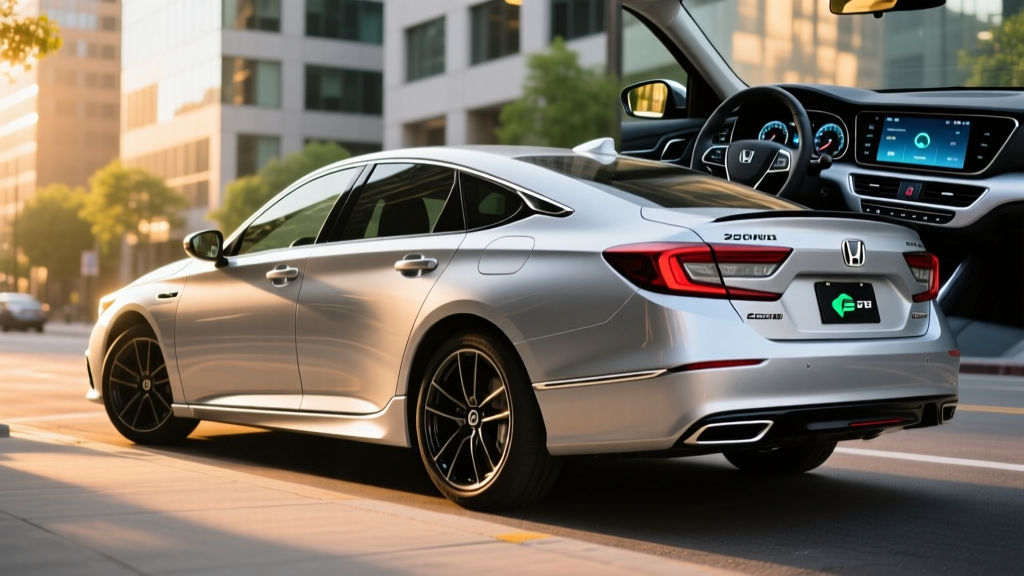
The midsize sedan segment hasn't surrendered to SUVs quietly, and the 2025 Honda Accord Sport Hybrid is a primary reason why. Slotting between the base LX and the upscale EX-L in Honda's hybrid-heavy Accord lineup, the Sport Hybrid targets buyers who want athletic styling, strong fuel economy, and zero plug-in obligation. Unlike a plug-in hybrid (PHEV) or a battery-electric vehicle (BEV), this is a conventional hybrid electric vehicle (HEV) — it generates all its electricity onboard through regenerative braking and its gasoline engine. You never plug it in.
For 2025, Honda continues to make the hybrid powertrain standard on all Accord trims above the base LX, meaning the Sport Hybrid isn't a niche variant — it's the volume play. Here's a data-driven look at what you're actually getting, what it costs, and how it stacks up against the PHEV and EV alternatives.
HEV vs PHEV: What the Accord Sport Hybrid Actually Is
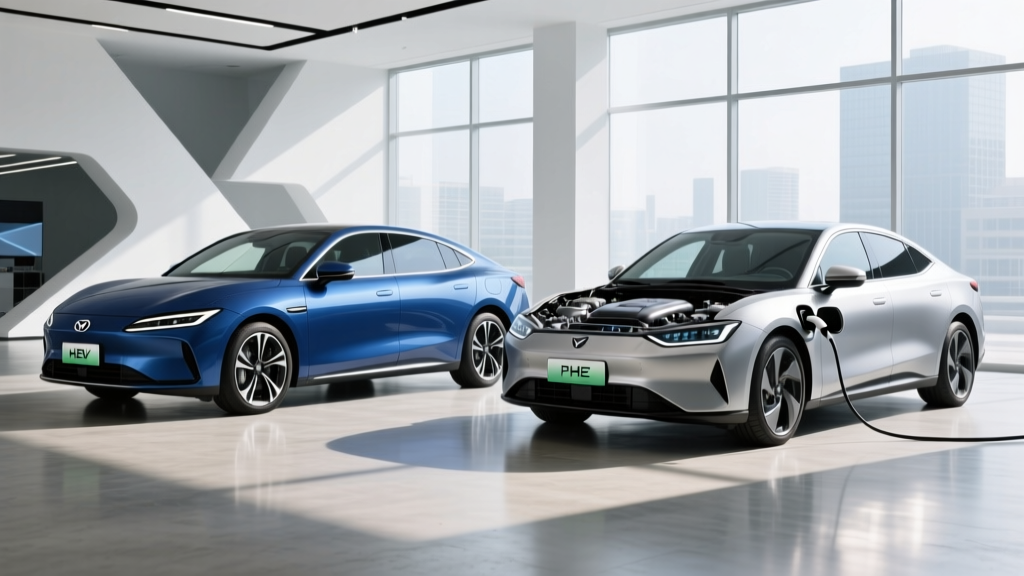
Before examining the numbers, it's critical to understand what this car is not. The Accord Sport Hybrid is a self-charging conventional hybrid (HEV). It pairs a 2.0-liter Atkinson-cycle four-cylinder engine with two electric motors and a small lithium-ion battery pack. The battery recharges through regenerative braking and the engine — there is no charging port, no electric-only driving mode of meaningful distance, and no plug.
| Feature | Accord Sport Hybrid (HEV) | Typical PHEV (e.g., Toyota Prius Prime) | Battery EV (e.g., Tesla Model 3) |
|---|---|---|---|
| Plug-in charging | No | Yes (Level 1/2) | Yes (Level 1/2/DC) |
| Electric-only range | ~1 mile at low speed | 25–44 miles | 250–360+ miles |
| Battery size | ~1.1 kWh | 13.6 kWh | 60–82 kWh |
| Gasoline required | Yes (always) | Yes (after EV range) | No |
| Federal tax credit (§30D) | Not eligible | Up to $7,500 (varies) | Up to $7,500 (varies) |
The Accord's hybrid system is designed for one thing: maximizing miles per gallon without changing your fueling habits. If you're looking for electric-only commuting, you'll need to look at a PHEV or a BEV instead.
Fuel Economy: EPA Ratings and Real-World MPG
The 2025 Accord Sport Hybrid carries the same EPA ratings as other hybrid Accord trims with 19-inch wheels. According to fueleconomy.gov, the official numbers are:
| Driving Condition | EPA MPG |
|---|---|
| City | 50 MPG |
| Highway | 45 MPG |
| Combined | 48 MPG |
Real-world expectations: Honda's two-motor hybrid system excels in stop-and-go traffic, where the electric motors handle most low-speed propulsion and the engine acts primarily as a generator. In real-world city driving, many owners report matching or slightly exceeding the 50 MPG city rating, especially in warm weather on flat terrain. Highway driving is a different story — at sustained speeds above 70 mph, aerodynamic drag and the engine's direct-drive mode typically yield 40–43 MPG. In cold weather (below 35°F), expect a 5–10% reduction across the board as the engine runs more frequently to provide cabin heat and maintain battery temperature.
With the Accord's 12.8-gallon fuel tank, combined real-world range typically falls between 550 and 620 miles per fill-up — one of the longest cruising ranges in the midsize sedan class.
Powertrain Specs: Horsepower, Torque, and Acceleration
The 2025 Accord Sport Hybrid uses Honda's fourth-generation two-motor hybrid system. Here are the exact figures:
| Specification | Value |
|---|---|
| Engine | 2.0L Atkinson-cycle 4-cylinder |
| Engine output | 146 hp / 134 lb-ft torque |
| Electric motor output | 181 hp / 247 lb-ft torque |
| Combined system output | 204 hp / 247 lb-ft torque |
| Transmission | e-CVT (direct-drive with lock-up clutch) |
| Drivetrain | Front-wheel drive |
| 0–60 mph (est.) | ~7.0 seconds |
| 12V battery | Lithium-ion (replaces traditional lead-acid) |
The electric motor's 247 lb-ft of torque is available from zero RPM, giving the Accord Sport Hybrid surprisingly responsive off-the-line acceleration. The e-CVT doesn't use a traditional belt-and-pulley design — instead, it manages power flow between the engine, generator motor, and drive motor through a planetary gearset. At highway speeds, a lock-up clutch connects the engine directly to the wheels for improved efficiency. The result is a powertrain that feels more like an EV around town and more like a conventional sedan on the open road.
Pricing, Trims, and Tax Credit Eligibility
The 2025 Honda Accord Sport Hybrid starts at an MSRP of $32,490 (including destination charge). It sits in the middle of the Accord lineup:
| Trim | MSRP | Powertrain |
|---|---|---|
| LX | $29,290 | 1.5L Turbo (gas only) |
| SE | $31,490 | 1.5L Turbo (gas only) |
| Sport Hybrid | $32,490 | 2.0L Hybrid |
| EX-L Hybrid | $35,290 | 2.0L Hybrid |
| Sport-L Hybrid | $36,290 | 2.0L Hybrid |
| Touring Hybrid | $39,890 | 2.0L Hybrid |
Federal tax credit: The Accord Sport Hybrid does not qualify for the IRS §30D Clean Vehicle Credit. That credit is reserved for plug-in vehicles (PHEVs and BEVs) with battery packs of at least 7 kWh that meet critical-mineral and battery-component sourcing requirements. The Accord's ~1.1 kWh battery is far below the threshold. No federal purchase incentive applies to conventional hybrids in 2025 or 2026. Some states may offer minor incentives for hybrids, but these vary widely — check your state energy office or the AFDC incentives database for local details.
Battery Warranty, Longevity, and Replacement Cost
Honda Hybrid Battery Warranty: 8 years / 100,000 miles (10 years / 150,000 miles in CARB states including California, New York, Massachusetts, and others adopting California emissions standards).
Coverage threshold: Honda warrants the hybrid battery against capacity loss below approximately 60% of original capacity, as well as defects in materials and workmanship.
The Accord Sport Hybrid's lithium-ion hybrid battery pack is small (~1.1 kWh) and operates within a narrow state-of-charge window — typically between 20% and 80%. This shallow cycling is far less stressful than the deep discharge cycles in a BEV or PHEV, which is why conventional hybrid batteries have an excellent longevity track record. Honda's hybrid systems in the Accord and Insight have demonstrated 150,000–200,000+ mile lifespans in real-world fleet data without battery replacement.
Replacement cost if out of warranty: A replacement hybrid battery pack for the Accord runs approximately $2,000–$3,500 for the part, with labor adding $300–$500. Total out-of-pocket replacement typically falls in the $2,500–$4,000 range at a Honda dealer. Independent hybrid specialists may offer refurbished packs for $1,500–$2,500 installed. Given the shallow-cycle design and robust warranty, battery replacement is a low-probability event for most original owners.
Reliability Ratings and Safety
Honda's hybrid powertrain has matured through multiple generations, and the 2025 Accord benefits from the fourth iteration of the two-motor system. The Accord has historically earned top marks from both the NHTSA and the IIHS. The 2025 model carries over the previous generation's strong crash-test performance, including the Honda Sensing suite of driver-assistance features as standard equipment (adaptive cruise control, lane-keeping assist, automatic emergency braking, and traffic-sign recognition).
From a mechanical reliability standpoint, the hybrid system actually reduces wear on several conventional components. The regenerative braking system significantly extends brake pad life — many Accord Hybrid owners report 80,000+ miles on original brake pads. The engine runs less frequently than in a gas-only car, reducing oil degradation and extending service intervals. There is no traditional starter motor or alternator to fail, as those functions are handled by the hybrid motors.
Who Should Choose the Accord Sport Hybrid?
Pros
- 48 MPG combined EPA — among the best in the midsize sedan class
- No plug-in charging required — works with existing gas-station infrastructure
- 600+ mile total range per tank eliminates range anxiety entirely
- Strong electric-motor torque for responsive city driving
- Lower brake wear from regenerative braking
- Comprehensive 8yr/100k-mile hybrid battery warranty (10yr/150k in CARB states)
- Honda Sensing ADAS suite standard on all trims
Cons
- No federal tax credit eligibility (unlike PHEVs and BEVs)
- No meaningful electric-only driving capability
- Highway MPG drops to ~40–43 at 75+ mph
- 19-inch wheels on Sport trim reduce MPG vs. 17-inch equipped trims
- FWD only — no all-wheel-drive option
- Higher MSRP than gas-only Accord LX (~$3,200 premium)
Choose the Accord Sport Hybrid if: You want maximum fuel economy without changing your fueling routine, you lack reliable access to home or workplace charging, you regularly drive more than 400 miles between stops, or you want the lowest-complexity path to 45+ MPG.
Choose a PHEV (e.g., Toyota Prius Prime, Hyundai Tucson PHEV) if: You have home Level 2 charging, your daily commute is under 40 miles round-trip, and you want to drive primarily on electricity while keeping a gas engine for longer trips.
Choose a BEV (e.g., Tesla Model 3, Hyundai Ioniq 6) if: You have reliable home charging, want zero tailpipe emissions, are eligible for the §30D tax credit (up to $7,500 depending on income, MSRP caps, and battery sourcing), and your typical trips fall within 250–300 miles or you're willing to plan DC fast-charging stops.
Frequently Asked Questions
How many MPG does the 2025 Honda Accord Sport Hybrid get?
The EPA rates the 2025 Accord Sport Hybrid at 50 MPG city, 45 MPG highway, and 48 MPG combined. In real-world driving, expect 40–43 MPG at sustained highway speeds above 70 mph and 48–52 MPG in city and suburban driving. Cold weather reduces these figures by roughly 5–10%.
Do I need to plug in the Accord Sport Hybrid?
No. The Accord Sport Hybrid is a conventional hybrid (HEV), not a plug-in hybrid (PHEV). It charges its small battery entirely through regenerative braking and the gasoline engine. There is no charging port on the vehicle.
Does the 2025 Accord Hybrid qualify for a federal tax credit?
No. The IRS §30D Clean Vehicle Credit applies only to plug-in electric vehicles (PHEVs and BEVs) with battery capacities of at least 7 kWh. The Accord Hybrid's ~1.1 kWh battery does not meet the threshold. Some states may offer separate incentives for hybrids — consult the AFDC state incentives database for local programs.
How long will the Accord Hybrid battery last, and what does replacement cost?
Honda warranties the hybrid battery for 8 years/100,000 miles (10 years/150,000 miles in CARB states). Real-world data from previous-generation Accord and Insight hybrids shows battery lifespans of 150,000–200,000+ miles. Out-of-warranty replacement costs approximately $2,500–$4,000 at a dealer, or $1,500–$2,500 through an independent hybrid specialist using a refurbished pack.
Is the Accord Sport Hybrid faster than the gas-only Accord?
Yes, in most real-world scenarios. The hybrid's electric motor delivers 247 lb-ft of torque from zero RPM, giving it stronger off-the-line acceleration than the 1.5L turbo gas model (which produces 192 hp and 192 lb-ft). The hybrid's 0–60 mph time of approximately 7.0 seconds edges out the gas model's ~7.3 seconds. The difference is most noticeable in city driving and merging situations.
Hybrid vs PHEV vs EV — which fits me?
If you can't charge at home, choose the HEV (Accord Hybrid). If you can charge at home and commute under 40 miles daily, a PHEV lets you drive mostly on electricity while keeping a gas backup. If you can charge at home, want the lowest operating cost, and qualify for the §30D credit, a BEV offers the strongest long-term economics but requires adaptation for road trips exceeding ~250 miles.