Quick Verdict: A Pioneer That Still Has Niche Appeal
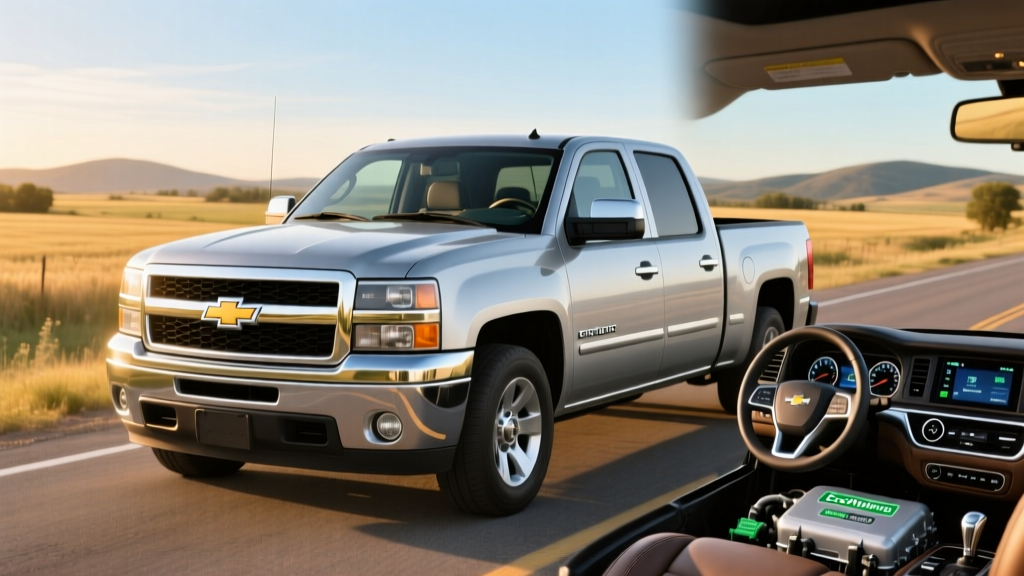
The 2011 Chevrolet Silverado 1500 Hybrid was one of the first full-size pickup trucks to pair a V8 engine with an electric motor system for meaningful fuel-economy gains. As a conventional hybrid (HEV) — not a plug-in — it requires no charging infrastructure and operates identically to a gas truck at the fuel pump, just with better mileage. Over a decade later, this truck occupies an unusual space in the used market: it delivers roughly 23 MPG combined in a body style that modern gas-only Silverados still struggle to match in real-world mixed driving.
If you're researching the 2011 Chevy Silverado 1500 Hybrid as a used purchase, this guide covers everything from its two-mode hybrid powertrain specs and EPA fuel economy to battery longevity, replacement costs, and how it compares to today's electrified trucks. We'll be direct about what this truck does well and where its age shows.
| Spec | Value |
|---|---|
| Powertrain | 6.0L V8 + Two-Mode Hybrid System |
| Combined Horsepower | 379 hp (332 hp engine + electric assist) |
| Engine Torque | 367 lb-ft |
| Transmission | Electronically Variable Transmission (EVT) |
| EPA MPG (City / Hwy / Combined) | 20 / 23 / 21 (2WD); 20 / 22 / 20 (4WD) |
| Hybrid Battery | ~1.8 kWh NiMH (sealed, not plug-in) |
| Towing Capacity | Up to 6,100 lbs (properly equipped) |
| Drivetrain | RWD (2WD) or 4WD available |
| Original MSRP (2011) | ~$41,140 (base Hybrid 2WD Crew Cab) |
| Typical Used Price (2026) | $8,000–$14,000 depending on mileage/condition |
Fuel Economy: Real-World MPG vs. EPA Sticker
The EPA rated the 2011 Silverado 1500 Hybrid at 21 MPG combined for two-wheel-drive models (20 city / 23 highway) and 20 MPG combined for four-wheel-drive versions (20 city / 22 highway). These numbers were remarkable for a full-size V8 truck in 2011, when the standard 5.3L V8 Silverado managed just 15 city / 21 highway.
| Model | City MPG | Highway MPG | Combined MPG |
|---|---|---|---|
| 2011 Silverado 1500 Hybrid (2WD) | 20 | 23 | 21 |
| 2011 Silverado 1500 Hybrid (4WD) | 20 | 22 | 20 |
| 2011 Silverado 1500 5.3L V8 (2WD) | 15 | 21 | 17 |
| 2026 Silverado 1500 2.7L Turbo (2WD) | 19 | 23 | 20 |
According to fueleconomy.gov, real-world owner reports for the 2011 Hybrid cluster around 19–22 MPG combined, which aligns closely with the EPA sticker. Unlike smaller hybrids that routinely beat their city estimates, the Silverado Hybrid's heavy curb weight (~5,700 lbs) limits the regenerative braking advantage. In city driving with frequent stops, owners report 20–22 MPG; on the highway at sustained speeds above 70 MPH, expect 21–23 MPG. Towing drops economy significantly — typically to 12–14 MPG under load.
The hybrid system's biggest efficiency advantage is in stop-and-go traffic, where the electric motors can propel the truck at low speeds (up to ~30 MPH) without engaging the V8. The engine also shuts off at idle, eliminating fuel burn at stoplights. If your daily drive involves suburban traffic and frequent stops, you'll see the best returns from this powertrain.
How the Two-Mode Hybrid Powertrain Works
GM's Two-Mode Hybrid system is fundamentally different from the simpler hybrid systems in a Toyota Prius or Honda Accord Hybrid. It uses two electric motors integrated into a specialized transmission (the EVT) that can operate in two distinct modes:
- Mode 1 (Low-speed / city): At low speeds and light loads, the truck can run on electric power alone. The V8 shuts down and restarts seamlessly as needed. One electric motor handles low-speed propulsion while the second manages regenerative braking.
- Mode 2 (High-speed / towing): At highway speeds or under heavy load, both electric motors work in concert with the 6.0L V8 to deliver full combined output. This mode provides the torque multiplication needed for towing and passing.
HEV vs. PHEV: What This Truck Is (and Isn't)
The 2011 Silverado 1500 Hybrid is a conventional hybrid (HEV). It does not plug in. Its ~1.8 kWh nickel-metal hydride (NiMH) battery charges exclusively through regenerative braking and engine power. You cannot charge it from a wall outlet, and it has no electric-only range beyond brief low-speed assists.
A plug-in hybrid (PHEV) like the 2026 Ford F-150 PowerBoost or the upcoming Ramcharger has a much larger battery (typically 12–40 kWh), charges from an outlet, and delivers 20–50 miles of pure electric driving before the engine engages. The 2011 Silverado Hybrid predates this technology by over a decade.
The 6.0L Vortec V8 itself produces 332 horsepower and 367 lb-ft of torque. Combined with the electric motor system, total output reaches 379 horsepower. The V8 uses Active Fuel Management (cylinder deactivation), allowing it to run on four cylinders during light-load cruising — a feature that works alongside the hybrid system to maximize efficiency. The truck runs on regular 87-octane gasoline.
Hybrid Battery Longevity, Warranty, and Replacement Cost
The hybrid battery pack in the 2011 Silverado is a nickel-metal hydride (NiMH) unit, a chemistry known for durability but also for gradual capacity loss over time. GM originally warranted the hybrid-specific components — including the battery pack, power electronics, and EVT transmission — for 8 years or 100,000 miles, whichever came first.
Battery Warranty Status in 2026
For any 2011 Silverado 1500 Hybrid on the used market today, the original 8-year/100,000-mile hybrid warranty has expired (the coverage window closed by 2019 at the latest). All hybrid system repairs are now out-of-pocket unless covered by an aftermarket extended warranty purchased before expiration.
Regarding longevity, GM's two-mode hybrid system proved reasonably durable. Many examples have surpassed 150,000–200,000 miles without battery replacement. However, NiMH batteries degrade over time regardless of mileage, and 15-year-old battery packs will have lost some capacity. Symptoms of a failing hybrid battery include:
- Noticeable drop in fuel economy (2–4 MPG below normal)
- More frequent engine engagement at low speeds
- Check Engine or "Service Hybrid System" warning light
- Reduced regenerative braking feel
Battery replacement cost: A remanufactured hybrid battery pack for the 2011 Silverado typically costs $2,000–$3,500 for the part alone, with labor adding $500–$1,000 at a qualified shop. Total replacement runs approximately $2,500–$4,500. Some specialist hybrid repair shops offer individual module replacement (the NiMH pack contains multiple modules) for $800–$1,500, which can extend battery life at lower cost. This is significantly less than the $10,000–$20,000+ replacement cost for modern large-battery EVs, but still a meaningful expense on a truck now worth $8,000–$14,000.
Driving Experience and Capability
The 2011 Silverado 1500 Hybrid drives much like its gas-only sibling — which is both a compliment and a criticism. The electric motor assist provides smooth, silent launches from a stop, and the V8 kicks in without the lurch you might expect from a hybrid system. The EVT transmission eliminates traditional shift points, delivering seamless acceleration. At cruising speed, the transition between four-cylinder and eight-cylinder modes (via Active Fuel Management) is imperceptible from the driver's seat.
Towing capacity maxes out at 6,100 pounds when properly equipped — adequate for a boat, small camper, or utility trailer, but below the 9,000–10,000+ pound ratings of the gas-only V8 Silverados with the Max Trailering package. If heavy towing is your primary need, this hybrid isn't the right tool.
The payload capacity is also slightly reduced compared to gas models due to the hybrid system's added weight. The truck sits on GM's GMT900 platform, which means interior quality, ride comfort, and technology reflect 2011 standards: a functional but plasticky dashboard, basic infotainment with Bluetooth (no Apple CarPlay or Android Auto), and cloth or leather seating depending on trim. The crew cab configuration offers generous rear-seat room.
Tax Credits and Ownership Economics in 2026
When new, the 2011 Silverado 1500 Hybrid qualified for a federal tax credit under the pre-2023 energy incentive rules — but that credit program for this specific model expired long ago. Under current IRS §30D rules, the federal clean vehicle credit applies only to new vehicles, and the used clean vehicle credit (§25E, up to $4,000) applies only to used EVs and PHEVs with at least 4 kWh of battery capacity from a qualified dealer. Because the 2011 Silverado Hybrid is a conventional HEV with a small NiMH pack, it does not qualify for any current federal tax credit.
Pros
- 21 MPG combined in a full-size V8 truck — still competitive in 2026
- No plug-in charging required; fuel it like any gas truck
- 379 combined HP with smooth, seamless power delivery
- Significant fuel savings vs. 2011 gas-only Silverado (~4 MPG combined advantage)
- Proven GMT900 platform with widely available non-hybrid parts
- Low used-market entry price ($8,000–$14,000)
Cons
- Original hybrid warranty expired; battery replacement is out-of-pocket
- Reduced towing capacity (6,100 lbs) vs. gas models
- 2011-era interior tech — no modern infotainment or driver assists
- No federal tax credit eligibility on used purchase
- Specialized EVT transmission requires hybrid-trained technician for repairs
- NiMH battery degradation inevitable at 15+ years old
Annual fuel cost estimate: At 21 MPG combined, driving 15,000 miles per year with gas at $3.20/gallon, you'll spend approximately $2,286 per year on fuel. For comparison, a 2011 gas-only Silverado 5.3L V8 at 17 MPG combined would cost about $2,824 per year — a savings of roughly $538 annually with the hybrid. Over five years, that's ~$2,700 in fuel savings, which may or may not offset a potential hybrid battery replacement depending on the truck's condition at purchase.
Who Should Buy This Truck — And Who Shouldn't
Choose the 2011 Silverado 1500 Hybrid If:
- You need a full-size truck for occasional hauling but mostly drive in suburban/city traffic
- You want V8 power and truck capability with better fuel economy than a standard V8
- You have no access to home charging and a PHEV or EV isn't practical
- Your budget is $8,000–$14,000 and you want the most fuel-efficient used full-size truck available
- You can budget $2,500–$4,500 for a potential hybrid battery replacement during ownership
Look Elsewhere If:
- You tow heavy loads regularly (over 6,000 lbs)
- You want modern safety tech (automatic emergency braking, lane-keeping, blind-spot monitoring)
- You want electric-only driving range — consider a PHEV like the F-150 PowerBoost or a full EV like the Ford F-150 Lightning
- You want federal tax credit eligibility — only new EVs/PHEVs and qualifying used EVs/PHEVs are eligible
- You plan to keep the truck 10+ years and want a warranty-backed powertrain
For buyers who want a modern electrified truck, the landscape has shifted dramatically. The 2026 Ford F-150 PowerBoost Hybrid delivers 430 hp, 7,700 lbs of towing, and around 24 MPG combined as a conventional HEV — all with a full new-vehicle warranty. The Ford F-150 Lightning (full EV) offers 230–320 miles of EPA range and qualifies for the $7,500 federal tax credit if you meet income and MSRP requirements. These cost significantly more upfront ($55,000–$75,000+) but represent the current state of electrified truck technology.
Frequently Asked Questions
How many MPG does the 2011 Chevy Silverado 1500 Hybrid get?
The EPA rates it at 20 city / 23 highway / 21 combined for 2WD models and 20 city / 22 highway / 20 combined for 4WD. Real-world reports from owners cluster around 19–22 MPG combined, with city driving yielding the best results thanks to regenerative braking and electric-only low-speed operation.
Is the 2011 Silverado Hybrid a plug-in? Do I need to charge it?
No. This is a conventional hybrid (HEV), not a plug-in hybrid (PHEV). You never plug it in. The battery charges through regenerative braking and the gasoline engine, just like a Toyota Prius. You fuel it exclusively at gas stations.
Is the hybrid system reliable, and what does battery replacement cost?
The two-mode hybrid system has proven generally reliable, with many examples exceeding 150,000+ miles. However, the NiMH battery will degrade over time, and at 15 years old, some capacity loss is expected. A full remanufactured battery replacement costs approximately $2,500–$4,500 including labor. The original 8-year/100,000-mile hybrid warranty has expired on all 2011 models.
Does the 2011 Silverado Hybrid qualify for any tax credit?
No. The original federal hybrid tax credit for this model expired years ago. Under current IRS rules, the §30D new clean vehicle credit and the §25E used clean vehicle credit apply only to EVs and PHEVs — not conventional hybrids. There is no federal tax credit available for purchasing this truck in 2026. Some states may offer separate incentives for fuel-efficient vehicles; check your state's energy office for details.
Hybrid vs. PHEV vs. EV — which truck type fits my needs?
A conventional hybrid (HEV) like this Silverado is best if you want better fuel economy with zero change to your fueling routine — no plugs, no charging, just gas up and go. A plug-in hybrid (PHEV) like the F-150 PowerBoost (when equipped with PHEV options in future model years) or the Ramcharger gives you 20–50 miles of electric-only range for daily commuting plus a gas engine for longer trips — but requires home charging access to realize the benefit. A full EV like the F-150 Lightning or Chevy Silverado EV delivers the lowest operating cost and best performance but requires reliable charging access and a higher upfront investment. For a budget-conscious buyer who needs a truck today without charging infrastructure, the HEV remains the simplest path to better fuel economy.
How does the 2011 Silverado Hybrid compare to modern hybrid trucks?
The 2026 Ford F-150 PowerBoost Hybrid delivers 430 hp, ~24 MPG combined, 7,700 lbs towing, and modern safety/tech features — a clear generational leap. The 2026 Toyota Tundra i-FORCE MAX hybrid offers 437 hp and around 22 MPG combined. However, these modern trucks start at $55,000–$65,000+. The 2011 Silverado Hybrid at $8,000–$14,000 used remains the most affordable entry point to a hybrid full-size truck, provided you accept its age and tech limitations.
Can the hybrid battery be repaired instead of replaced?
Yes, in some cases. The NiMH battery pack contains individual modules, and specialist hybrid repair shops can test and replace only the failed modules rather than the entire pack. This module-level repair typically costs $800–$1,500 and can restore hybrid system function for several more years. However, if the overall pack health is poor (most modules degraded), full replacement is the more reliable long-term fix.