Quick Verdict: The Maverick Hybrid XLT FWD at a Glance
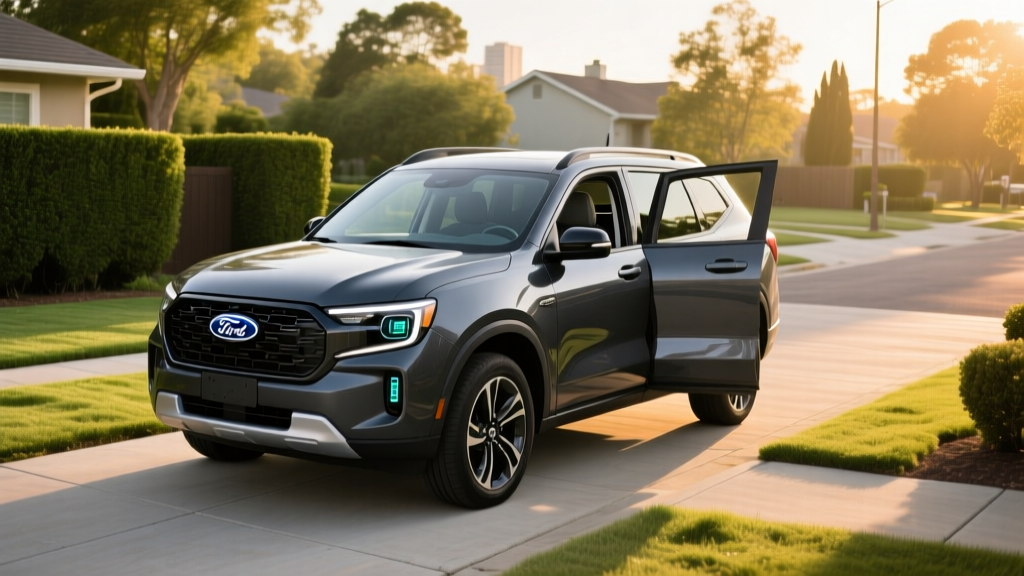
The 2025 Ford Maverick XLT Hybrid FWD occupies a rare sweet spot in the compact truck segment: genuine utility paired with sedan-rivaling fuel economy. With an EPA-estimated 42 mpg city and 33 mpg highway, this conventional hybrid (HEV) pickups up where fuel-sipping sedans leave off — but with a 4.5-foot bed and 1,500-pound payload capacity. For buyers who want truck capability without the fuel bill of a body-on-frame midsize pickup, the Maverick Hybrid XLT FWD is the most efficient truck you can buy in 2025.
Let's be precise about what this is: the Maverick Hybrid is a conventional hybrid electric vehicle (HEV), not a plug-in hybrid (PHEV). You never plug it in. The 1.1 kWh lithium-ion battery charges itself through regenerative braking and the gasoline engine. This matters because it eliminates any charging infrastructure concerns while still delivering substantial fuel savings over the gas-only Maverick.
A conventional hybrid (HEV) like the Maverick Hybrid uses a small battery (1.1 kWh) that recharges through regen braking and the engine. You never plug it in. A plug-in hybrid (PHEV) has a larger battery (typically 10-20 kWh) that you charge from a wall outlet or charger, giving 20-40 miles of electric-only driving before the gas engine kicks in. The Maverick is HEV only — Ford does not offer a PHEV Maverick.
EPA Fuel Economy and Real-World MPG
The EPA rates the 2025 Ford Maverick Hybrid FWD at 42 mpg city, 33 mpg highway, and 38 mpg combined. These numbers apply to the FWD Hybrid across all trims including the XLT. The AWD Hybrid variant drops to 38 city / 31 highway / 35 combined due to the added drivetrain losses.
| Configuration | City MPG | Highway MPG | Combined MPG |
|---|---|---|---|
| Hybrid FWD (XLT, Lariat) | 42 | 33 | 38 |
| Hybrid AWD (XLT, Lariat, Tremor) | 38 | 31 | 35 |
| 2.0L EcoBoost AWD (gas only) | 23 | 30 | 26 |
Real-World MPG: What Owners Actually See
Hybrids consistently outperform their EPA city estimates in stop-and-go driving because regenerative braking recovers energy that gas cars waste as heat. Many Maverick Hybrid owners report 44-48 mpg in urban and suburban driving. Highway fuel economy tends to land closer to the EPA sticker or slightly below — expect 31-34 mpg at 70-75 mph on the interstate, since aerodynamic drag dominates at speed and the hybrid system contributes less benefit.
In cold weather (below 30°F), expect a 5-10% fuel economy reduction. The engine runs more frequently to provide cabin heat and maintain battery temperature, reducing the time spent in electric-only mode at low speeds. This is normal hybrid behavior, not a defect.
On a 400-mile mixed highway and city road trip, a realistic expectation is 36-39 mpg combined — slightly above the EPA combined figure if your route includes any urban segments where regen braking shines.
Powertrain: Engine, Motor, and Combined Output
The 2025 Maverick Hybrid pairs a 2.5-liter Atkinson-cycle inline-four engine with a permanent-magnet electric motor, routed through an electronically controlled continuously variable transmission (eCVT). The combined system output is 191 horsepower.
| Specification | Value |
|---|---|
| Engine | 2.5L Atkinson-cycle I-4 |
| Engine Horsepower | 162 hp @ 5,600 rpm |
| Electric Motor | Permanent-magnet synchronous (96 kW / 129 hp) |
| Combined System Output | 191 hp |
| Transmission | eCVT (planetary gearset, not belt-driven) |
| Hybrid Battery | 1.1 kWh lithium-ion (air-cooled) |
| Drivetrain | FWD (AWD available with rear e-motor) |
| 0-60 mph (est.) | ~7.8 seconds (FWD) |
| Max Towing (with 4K Tow Package) | 2,000 lbs |
| Payload Capacity | 1,500 lbs |
| Fuel Tank | 13.8 gallons |
Important clarification: the Maverick Hybrid's eCVT is not a traditional belt-and-pulley CVT like those found in some Nissan or Subaru models. It uses a planetary gearset to seamlessly blend engine and motor power. This design has proven highly reliable — it's the same architecture Toyota has used in the Prius and RAV4 Hybrid for over two decades, and Ford has used in the Escape Hybrid since 2020.
The AWD Hybrid variant adds a rear-mounted electric motor (no mechanical driveshaft) that engages when additional traction is needed. This is why the AWD Hybrid still maintains strong fuel economy versus a traditional mechanical AWD system.
Pricing: XLT Hybrid FWD MSRP and Trim Breakdown
For the 2025 model year, Ford restructured Maverick pricing and trim availability. The Hybrid powertrain is now available on the XL (base), XLT, and Lariat trims, expanding access beyond the previous Lariat-only restriction.
| Trim | Starting MSRP | Key Standard Features |
|---|---|---|
| XL Hybrid FWD | ~$28,440 | 8" touchscreen, Apple CarPlay/Android Auto, 6 airbags, pre-collision assist |
| XLT Hybrid FWD | ~$30,455 | 17" aluminum wheels, power-lock tailgate, rear privacy glass, ambient lighting, overhead console |
| Lariat Hybrid FWD | ~$35,090 | Leather-trimmed seats, 10-way power driver seat, B&O audio, dual-zone climate, LED bed lighting |
Note: Prices reflect base MSRP including destination charge. Options packages (4K Tow Package, FX-4 Off-Road Package for AWD, Black Package) add $500-$2,000+. Verify current pricing at Ford's official configurator.
Tax Credit Eligibility
The 2025 Ford Maverick Hybrid does not qualify for the federal §30D new clean vehicle tax credit. That credit (up to $7,500) applies only to battery electric vehicles (BEVs) and plug-in hybrids (PHEVs) meeting battery sourcing, critical minerals, MSRP caps, and buyer income requirements under current IRS rules. Conventional hybrids like the Maverick HEV are excluded.
Some states offer their own incentives for hybrid purchases, but these vary widely by jurisdiction and change frequently. Check your state's energy or DMV website for current programs. The Maverick's value proposition rests on fuel savings and a competitive starting price rather than tax incentives.
Battery Warranty, Lifespan, and Replacement Cost
Ford covers the 2025 Maverick Hybrid battery with a 8-year / 100,000-mile warranty (whichever comes first), which meets the federal minimum for hybrid components. In California and states that follow CARB emissions standards, hybrid battery coverage extends to 10 years / 150,000 miles. The warranty covers defects and capacity loss that causes the battery to fall below a defined performance threshold.
How Long Will the Maverick Hybrid Battery Last?
The 1.1 kWh battery in the Maverick Hybrid is small and conservatively managed — it never fully charges or fully discharges during normal operation. This shallow cycling dramatically extends lifespan. Ford's Escape Hybrid, which uses a closely related powertrain, has demonstrated battery longevity exceeding 200,000 miles with minimal degradation in fleet and taxi service.
Realistic expectation: the Maverick Hybrid battery should last 150,000-200,000+ miles before any significant capacity loss, and many units will outlast the vehicle itself. The air-cooled battery design is simpler than liquid-cooled EV batteries, reducing potential failure points.
Battery Replacement Cost
If replacement is needed outside warranty, expect a Maverick Hybrid battery to cost approximately $2,000-$3,500 for the battery pack itself, plus $500-$1,000 in labor. This is significantly less than a full EV battery replacement ($5,000-$20,000+) because the hybrid battery is far smaller (1.1 kWh vs. 60-100 kWh in a BEV). Independent hybrid battery repair shops can often replace individual cells for $800-$1,500, extending the pack's life at lower cost.
Who Should Buy the Maverick Hybrid XLT FWD?
Pros
- 42 mpg city — best-in-class truck fuel economy
- 1,500-lb payload and 2,000-lb towing (with package)
- No plug-in charging required — works like a gas truck
- XLT trim balances features and price well
- Proven eCVT powertrain architecture
- Strong real-world city MPG (44-48 mpg common)
Cons
- Highway MPG (33) trails some compact crossovers
- FWD only — no AWD on base Hybrid XL/XLT at some configs
- 2,000-lb max tow (EcoBoost AWD tows 4,000 lbs)
- eCVT drone under hard acceleration
- No federal tax credit (HEV, not PHEV/BEV)
- Rear seat space is tight for taller adults
Hybrid vs PHEV vs Full EV: Which Truck Fits You?
Choose the Maverick Hybrid (HEV) if: You want maximum fuel savings with zero lifestyle change. No charging setup, no range planning, no plugging in. You drive a mix of city and highway miles and want a truck that works like a truck but sips fuel like a Corolla. Ideal for apartment dwellers, street parkers, and anyone without home charging access.
Choose a PHEV truck (e.g., Ford F-150 PowerBoost or upcoming PHEV midsize trucks) if: You have home charging access, a short commute (under 30 miles), and want electric-only daily driving with gas-engine backup for road trips. PHEVs offer 20-40 miles of EV range but are currently limited in the compact truck segment.
Choose a full EV truck (e.g., Ford F-150 Lightning, Rivian R1T, Chevy Silverado EV) if: You have reliable home Level 2 charging, want zero tailpipe emissions, and your daily driving falls within 200-300 miles. EV trucks offer instant torque, lower per-mile fueling cost, and minimal maintenance — but require charging infrastructure and a higher upfront investment.
Reliability and Long-Term Ownership
The Maverick Hybrid's powertrain is derived from Ford's fourth-generation hybrid system, which shares architecture with the Escape Hybrid and the Lincoln Corsair Grand Touring. The planetary eCVT has no belts, no clutches, and no traditional friction components to wear out. The 2.5L Atkinson-cycle engine operates under less thermal stress than a turbocharged engine, which bodes well for longevity.
Based on IIHS testing, the Maverick earns strong crash-test scores, which matters for a vehicle often used as a daily driver. Ford's overall brand reliability has improved in recent J.D. Power and Consumer Reports assessments, though the Maverick specifically has limited long-term data given its 2022 introduction.
Maintenance costs are lower than the gas-only Maverick: no turbocharger to service, regenerative braking extends brake pad life significantly (many hybrid owners report 80,000+ miles on original pads), and the simpler eCVT eliminates transmission fluid changes associated with conventional automatics. Expect routine maintenance to cost 15-25% less over 100,000 miles versus the 2.0L EcoBoost Maverick.
5-Year Fuel Cost Comparison
At 15,000 miles per year and $3.40/gallon regular unleaded:
- Maverick Hybrid FWD (38 mpg combined): ~$1,342/year → $6,710 over 5 years
- Maverick 2.0L EcoBoost AWD (26 mpg combined): ~$1,962/year → $9,808 over 5 years
- Fuel savings with Hybrid: ~$3,098 over 5 years
Those savings nearly cover the XLT Hybrid's price premium over the EcoBoost XLT, and they compound further if gas prices rise or your driving skews toward city routes where the hybrid excels.
Frequently Asked Questions
How many MPG does the 2025 Ford Maverick Hybrid get?
The EPA rates the Maverick Hybrid FWD at 42 city / 33 highway / 38 combined mpg. Real-world city driving often yields 44-48 mpg thanks to regenerative braking. Highway driving at 70+ mph typically returns 31-34 mpg. The AWD Hybrid variant is rated 38/31/35 mpg.
Does the Maverick Hybrid need to be plugged in?
No. The Maverick Hybrid is a conventional hybrid (HEV). The 1.1 kWh battery charges through regenerative braking and the gasoline engine. You fuel it like any other gas vehicle — there is no plug, no charging cable, and no electric-only range to manage.
How far can the Maverick Hybrid go on electric only?
Because the battery is only 1.1 kWh, the Maverick Hybrid can travel roughly 0.5-1 mile on electric power alone at low speeds (under 25 mph), such as creeping through a parking lot or in heavy stop-and-go traffic. This is not a PHEV — it does not offer meaningful electric-only range. The electric motor's primary role is to assist the gas engine and recapture braking energy, not to replace it.
Is the Maverick Hybrid reliable?
The hybrid powertrain uses Ford's proven planetary eCVT architecture shared with the Escape Hybrid. The eCVT has no belts or friction clutches, reducing wear points. The 2.5L naturally aspirated engine runs under less stress than the turbocharged 2.0L EcoBoost. The hybrid battery carries an 8-year/100,000-mile warranty (10 years/150,000 miles in CARB states). Long-term fleet data from the Escape Hybrid supports 200,000+ mile battery life.
What does it cost to replace the Maverick Hybrid battery?
Out-of-warranty replacement runs approximately $2,000-$3,500 for the battery pack plus $500-$1,000 in labor. Individual cell replacement at a hybrid specialist can cost $800-$1,500. Given the conservative battery management and shallow cycling, most owners will never need a replacement.
Does the 2025 Maverick Hybrid qualify for any tax credit?
No. The federal §30D clean vehicle credit applies only to battery electric vehicles (BEVs) and plug-in hybrids (PHEVs). The Maverick Hybrid is a conventional HEV and is not eligible. Check your state's energy office for any local hybrid incentives, as these vary by jurisdiction.
Can the Maverick Hybrid tow?
Yes. With the available 4K Tow Package ($745), the Maverick Hybrid can tow up to 2,000 lbs — sufficient for a small utility trailer, jet ski, or lightweight camper. Without the package, the rating is 1,500 lbs. Note: the 2.0L EcoBoost AWD with the same tow package is rated for 4,000 lbs, so if heavy towing is a priority, the gas model is the better choice.