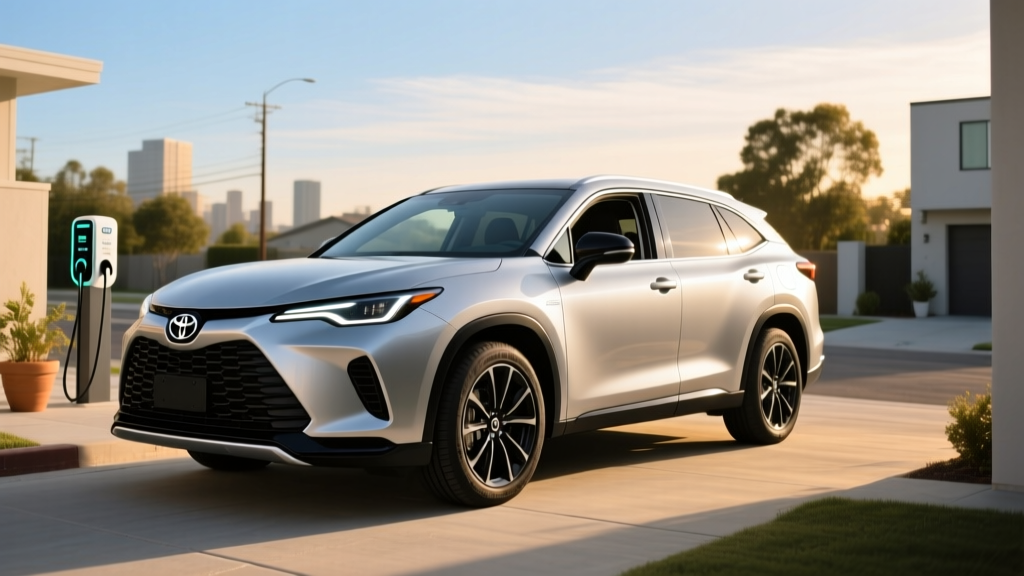
The 2024 Toyota Venza Hybrid occupies a specific niche: a midsize crossover that prioritizes fuel efficiency and standard all-wheel drive over raw performance or plug-in capability. As a conventional hybrid electric vehicle (HEV), it requires no plug, no charging routine, and no range math — you fuel it like any gasoline car and let Toyota's series-parallel hybrid system handle the rest. With the Venza now discontinued after the 2024 model year and replaced by the larger Highlander-based offerings in Toyota's lineup, this review covers everything current owners and used-market shoppers need to know about its powertrain, real-world efficiency, and long-term ownership profile.
HEV vs PHEV: Where the Venza Fits
Before examining the Venza's numbers, it's critical to distinguish what it is — and what it isn't. The Venza is a conventional hybrid (HEV), not a plug-in hybrid (PHEV). Here's what that means in practice:
| Feature | Conventional Hybrid (HEV) — Venza | Plug-In Hybrid (PHEV) — e.g., RAV4 Prime |
|---|---|---|
| Plug-in charging | No — charges via regenerative braking and engine | Yes — 120V or 240V outlet |
| Electric-only range | Less than 1 mile at low speeds | 20–42 miles typical |
| Battery capacity | ~1.6 kWh (small, buffered) | 13–18 kWh usable |
| Federal tax credit (§30D) | Not eligible | Up to $7,500 if sourcing/income rules met |
| Best for | Drivers without home charging access | Drivers with home charging who want short EV commutes |
If you're looking for electric-only commuting, the Toyota RAV4 Prime (42 miles EV range, PHEV) is the better fit. The Venza is engineered for drivers who want EV-like efficiency around town without ever plugging in.
Fuel Economy: EPA Ratings vs Real-World MPG
The EPA rates the 2024 Toyota Venza Hybrid at the following fuel economy figures across all trims (LE, XLE, Limited):
| Driving Cycle | EPA Rating |
|---|---|
| City | 40 MPG |
| Highway | 37 MPG |
| Combined | 39 MPG |
Source: fueleconomy.gov — 2024 Toyota Venza AWD
In mixed suburban driving, the Venza's hybrid system excels — expect 40–43 MPG in city-heavy commutes where regenerative braking and electric-motor assist do the heavy lifting. Sustained highway driving at 75+ MPH typically drops to 33–36 MPG due to aerodynamic drag and the engine running more frequently. In cold weather (below 30°F), expect a 5–10% efficiency reduction as the engine runs longer to heat the cabin and maintain battery temperature. Owners on fuel-tracking platforms consistently report lifetime averages between 36–41 MPG, validating the EPA combined figure as realistic for mixed use.
Powertrain and Performance Specs
The 2024 Venza pairs a 2.5-liter four-cylinder Atkinson-cycle engine with three electric motors (two front, one rear) for standard electronic all-wheel drive. Here's the complete breakdown:
| Specification | 2024 Toyota Venza Hybrid |
|---|---|
| Engine | 2.5L 4-cyl Atkinson-cycle |
| Engine output | 176 HP / 163 lb-ft torque |
| Front motors | 2 permanent-magnet synchronous (118 HP combined front axle) |
| Rear motor | 1 permanent-magnet synchronous (54 HP) |
| Net combined system HP | 219 HP |
| Transmission | eCVT (planetary gearset, no fixed gears) |
| Drivetrain | Electronic AWD (standard all trims) |
| 0–60 MPH | ~7.6 seconds (tested) |
| Hybrid battery | Lithium-ion, ~1.6 kWh gross (sealed, air-cooled) |
| Towing capacity | Not rated for towing |
| Cargo volume | 28.8 cu ft (rear seats up) / 55.1 cu ft (folded) |
The eCVT is not a belt-driven continuously variable transmission — it uses Toyota's Hybrid Synergy Drive planetary gearset to blend engine and motor power seamlessly. There are no rubber bands or slipping sensations; acceleration is linear and predictable, if not thrilling. The 219 HP figure is competitive for the segment, though the Venza prioritizes smoothness over the sharper throttle response you'll find in the RAV4 Hybrid's similar powertrain.
Pricing, Trims, and Tax Credit Eligibility
For the 2024 model year, Toyota offered the Venza in three trims. Original MSRP figures (before destination):
- LE: $35,070
- XLE: $38,470
- Limited: $43,270
Destination charge added $1,350 across all trims.
The 2024 Toyota Venza Hybrid does not qualify for the IRS §30D Clean Vehicle Credit. Under current IRS rules, only plug-in electric vehicles (BEVs and PHEVs) with sufficient battery capacity and qualifying battery-mineral sourcing are eligible for up to $7,500. Conventional hybrids like the Venza are excluded. Some states offer rebates for HEVs (check your state energy office), but there is no federal incentive. For a PHEV alternative in Toyota's lineup that may qualify, see the RAV4 Prime — though verify current IRS eligible model lists, as sourcing requirements change frequently.
Battery Warranty, Reliability, and Replacement Cost
Hybrid battery longevity is consistently the top concern among first-time hybrid buyers. Toyota addresses this with robust coverage:
- Hybrid battery warranty: 10 years / 150,000 miles (whichever comes first), transferable to subsequent owners
- Hybrid system components warranty: 8 years / 100,000 miles (covers inverter, transaxle, control module)
- Basic vehicle warranty: 3 years / 36,000 miles
- Powertrain warranty: 5 years / 60,000 miles
Toyota's hybrid battery packs have a strong track record. Data from long-term Prius and Camry Hybrid fleets shows most batteries retain over 85% capacity well past 150,000 miles. The Venza's lithium-ion pack is smaller and less stressed than a PHEV or BEV battery, further supporting longevity.
If replacement is needed out of warranty: A new OEM hybrid battery for the Venza costs approximately $3,000–$4,500 including labor at a Toyota dealer. Refurbished or aftermarket options from certified hybrid specialists typically run $1,800–$2,800. Individual cell-module replacement (repairing only degraded cells) can cost $800–$1,500 at specialty shops. Given the 10-year/150,000-mile warranty and Toyota's hybrid reliability history, unplanned replacement during typical ownership is uncommon.
Driving Experience and Daily Practicality
The Venza's cabin is quiet by hybrid standards — Toyota uses acoustic glass and additional sound deadening compared to the RAV4 Hybrid. The transition between electric-motor-only driving (at low speeds and light loads) and engine engagement is among the smoothest in the segment. You'll notice the engine most during hard acceleration or sustained highway climbs.
Regenerative braking offers moderate one-pedal-like behavior in "B" mode (engine braking position on the shift lever), though it won't bring the vehicle to a complete stop like a BEV. The braking feel is progressive and avoids the grabby sensation that plagued earlier Toyota hybrids.
Practical limitations to note: the Venza's sloping roofline cuts into rear cargo space compared to the boxier RAV4 Hybrid (28.8 vs 37.5 cu ft behind the rear seats). The rear seats don't slide or recline. There is no spare tire — only a tire inflator kit. And the Venza is not rated for towing, which matters if you need even light trailer capability.
Who Should Buy the Venza Hybrid?
Choose the 2024 Venza Hybrid if:
- You want 39+ MPG without changing your fueling habits (no plug, no charging)
- Standard AWD matters for snow or rain-belt climates
- You prioritize a quieter, more refined cabin over maximum cargo space
- You drive 12,000–15,000 miles/year and want to minimize fuel spend (~$1,500/yr at 39 MPG and $3.50/gal)
Look elsewhere if:
- You need electric-only commuting — consider the RAV4 Prime (PHEV) or a full BEV
- Cargo space is a priority — the RAV4 Hybrid offers 30% more room
- You tow anything — the Venza has no tow rating
- You want the federal tax credit — only PHEVs and BEVs qualify under §30D
- You want the latest model — the Venza was discontinued after 2024; consider the 2025+ RAV4 Hybrid or Highlander Hybrid as current alternatives
Ownership Cost Snapshot (5-Year Estimate)
| Category | 2024 Venza Hybrid (AWD LE) | Comparable Gas AWD SUV (25 MPG) |
|---|---|---|
| Fuel (75,000 mi @ $3.50/gal) | ~$6,730 | ~$10,500 |
| Maintenance (oil, filters, brakes) | ~$2,100 (less brake wear from regen) | ~$2,800 |
| Insurance (national avg) | ~$7,800 | ~$7,200 |
| Estimated depreciation | ~$14,500 | ~$13,000 |
| 5-year total (excl. purchase price) | ~$31,130 | ~$33,500 |
The Venza's fuel savings offset its slightly higher insurance and depreciation costs over a typical 5-year ownership period. The hybrid system's regenerative braking also reduces brake pad wear — many Toyota hybrid owners report original brake pads lasting 80,000+ miles.
Frequently Asked Questions
How many MPG does the 2024 Toyota Venza Hybrid get?
The EPA rates it at 40 MPG city, 37 MPG highway, and 39 MPG combined. Real-world owners report 36–43 MPG depending on driving mix, with city-heavy routes yielding the best results thanks to frequent regenerative braking and electric-motor assist.
Does the Venza Hybrid need to be plugged in?
No. The Venza is a conventional hybrid (HEV). Its small 1.6 kWh battery charges entirely through regenerative braking and the gasoline engine. You never plug it in — just fill up at any gas station.
Does the 2024 Venza Hybrid qualify for any federal tax credit?
No. The IRS §30D Clean Vehicle Credit applies only to plug-in vehicles (BEVs and PHEVs) that meet battery-sourcing and income requirements. Conventional hybrids are not eligible. Check your state's energy office for possible local rebates on HEVs.
How long will the Venza's hybrid battery last?
Toyota warranties the hybrid battery for 10 years or 150,000 miles. Based on data from Prius and Camry Hybrid fleets, most Toyota hybrid batteries retain strong capacity well beyond 150,000 miles. Replacement cost, if needed out of warranty, runs $3,000–$4,500 at a dealer or $1,800–$2,800 from certified refurbishers.
Is the Venza Hybrid reliable?
Toyota's hybrid powertrain is among the most proven in the industry, with over 25 years of production data from the Prius lineage. The Venza shares its core hybrid components with the RAV4 Hybrid and Camry Hybrid, both of which score well in long-term reliability surveys from Consumer Reports and J.D. Power. The eCVT planetary gearset has no belts or clutches to wear, contributing to durability.
Should I buy a Venza Hybrid, a PHEV, or a full EV?
If you lack home charging access and want maximum simplicity, the Venza HEV is the right call. If you can charge at home and want 30–40 miles of electric commuting with a gas backup, a PHEV like the RAV4 Prime saves more fuel and may qualify for tax credits. If you're ready to go fully electric with 250+ miles of range and lower running costs, a BEV like the Tesla Model Y or Hyundai Ioniq 5 eliminates gas entirely — but requires reliable charging access.