Quick Verdict: The RAV4 Hybrid's MPG Story
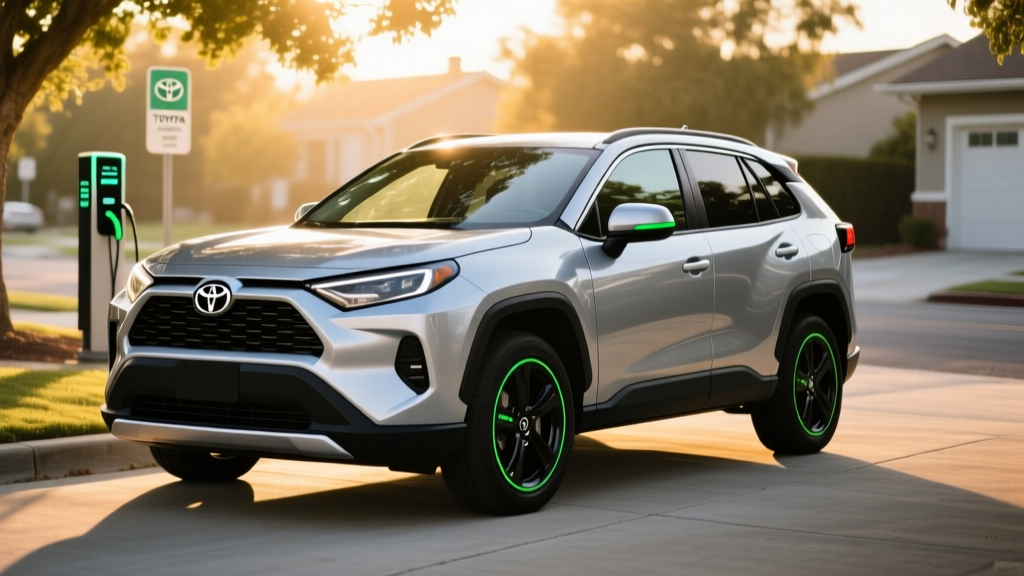
The 2024 Toyota RAV4 Hybrid remains one of the most fuel-efficient compact SUVs you can buy without plugging in. The EPA rates it at 41 mpg city / 38 mpg highway / 39 mpg combined across all trims — and in real-world city driving, many owners report exceeding those numbers thanks to Toyota's series-parallel hybrid system that leans heavily on electric motor assist at low speeds.
If you're searching for the 2024 Toyota RAV4 Hybrid MPG, the short answer is: expect 37–43 mpg in mixed driving depending on conditions, with city driving often beating highway numbers — the opposite of a conventional gas car. But there's a lot more to the ownership equation, including the RAV4 Prime PHEV alternative, battery longevity, and whether a full EV might serve you better.
| Spec | RAV4 Hybrid (HEV) | RAV4 Prime (PHEV) |
|---|---|---|
| EPA Combined MPG / MPGe | 39 mpg | 94 MPGe (electric+gas) / 38 mpg (gas only) |
| City / Highway MPG | 41 city / 38 highway | 40 city / 36 highway (charge-sustaining) |
| Electric-Only Range | N/A (no plug) | 42 miles EPA |
| Total Range | ~580 miles | ~600 miles (42 electric + 560 gas) |
| Combined Horsepower | 219 hp | 302 hp |
| Engine | 2.5L 4-cyl + 3 electric motors | 2.5L 4-cyl + 2 electric motors |
| Battery Capacity | 1.6 kWh (NiMH, self-charging) | 18.1 kWh (lithium-ion, plug-in) |
| Drivetrain | AWD (electronic rear motor) | AWD (electronic rear motor) |
| 0–60 mph | 7.4 seconds | 5.7 seconds |
| Base MSRP | $33,425 (LE) | $44,425 (SE) |
| Federal Tax Credit (§30D) | Not eligible | Not eligible (assembled in Japan) |
RAV4 Hybrid MPG: EPA vs. Real World
Toyota's hybrid synergy drive system is optimized for stop-and-go traffic. The 2.5-liter Atkinson-cycle engine shuts off frequently in the city, letting the front electric motor handle launches and low-speed cruising. That's why the city rating (41 mpg) actually exceeds the highway rating (38 mpg).
According to fueleconomy.gov, the 2024 RAV4 Hybrid AWD achieves 39 mpg combined. But owner-submitted data on Fuelly and real-world testing paint a more nuanced picture:
- City / suburban driving (under 45 mph): 40–44 mpg is typical. Short trips with warm weather and minimal HVAC load can push into the mid-40s.
- Highway cruising (70–80 mph): Expect 33–37 mpg. Aerodynamic drag dominates, and the hybrid system has less opportunity to recapture energy.
- Cold weather (below 30°F): MPG drops 10–15% as the engine runs more often to heat the cabin and warm the battery. Expect 33–36 mpg combined.
- Mountain / hilly terrain: Regenerative braking on descents partially offsets uphill consumption, but net economy typically falls to 34–37 mpg.
| Scenario | EPA Estimate | Real-World Expectation |
|---|---|---|
| City (stop-and-go, under 45 mph) | 41 mpg | 40–44 mpg |
| Highway (70–80 mph, flat) | 38 mpg | 33–37 mpg |
| Mixed / combined | 39 mpg | 37–40 mpg |
| Cold weather (under 30°F) | N/A | 33–36 mpg |
| Towing (max 1,750 lbs) | N/A | 24–28 mpg |
Key takeaway: If your commute is mostly city and suburban driving, you'll likely match or beat the EPA sticker. If it's mostly highway miles, plan on 35 mpg as a realistic baseline.
HEV vs. PHEV: RAV4 Hybrid vs. RAV4 Prime
This is where many buyers get confused. Toyota sells two electrified RAV4s, and they work very differently.
| Feature | RAV4 Hybrid (HEV) | RAV4 Prime (PHEV) |
|---|---|---|
| Plug-in charging? | No — charges via engine + regen braking | Yes — plug in for 42 mi electric range |
| Electric-only driving? | Very short distances at low speed | 42 miles at up to 84 mph |
| Home charging needed? | No | Recommended for full PHEV benefit |
| Battery size | 1.6 kWh (small, self-managing) | 18.1 kWh (usable ~14.5 kWh) |
| Charge time (Level 2, 240V) | N/A | ~2.5 hours (6.6 kW onboard charger) |
| DC fast charging? | N/A | No — AC charging only |
| Combined HP | 219 hp | 302 hp |
| Price premium over gas RAV4 | ~$1,500–$2,000 | ~$12,000–$14,000 |
The RAV4 Hybrid (HEV) is a conventional hybrid. You never plug it in. The gasoline engine and regenerative braking keep the small battery charged. It's the simplest electrified option — just drive it like a normal car and get better fuel economy.
The RAV4 Prime (PHEV) is a plug-in hybrid. With a full charge, it drives 42 miles on electricity alone — enough for most daily commutes without burning a drop of gas. Once the battery depletes, it operates as a conventional hybrid at 38 mpg combined. The trade-off: it costs roughly $11,000 more than the Hybrid, and you need access to a 120V or 240V outlet to realize its benefits.
Important note on the RAV4 Prime's charging: It uses a J1772 connector for Level 1 (120V, ~5.5 hours) and Level 2 (240V, ~2.5 hours) charging. It does not support DC fast charging — a limitation shared with most PHEVs. If you need rapid public charging, that's a BEV feature.
Powertrain Deep Dive: How the Hybrid System Works
The 2024 RAV4 Hybrid pairs a 2.5-liter four-cylinder Atkinson-cycle engine (176 hp, 163 lb-ft) with three electric motor-generators:
- MG1 (front): Acts as a starter, generator, and engine-speed controller within the planetary gearset.
- MG2 (front): The primary drive motor — 118 hp, 149 lb-ft — providing instant torque for acceleration and low-speed driving.
- Rear motor: A 54-hp independent motor powering the rear axle for electronic AWD (eAWD). No mechanical driveshaft connects front to rear.
Total system output is 219 horsepower. The continuously variable transmission (eCVT) isn't a belt-and-pulley CVT like you'd find in a Subaru — it's Toyota's planetary gearset that seamlessly blends engine and motor power. This design is proven, durable, and largely responsible for the RAV4 Hybrid's reputation for reliability.
The RAV4 Prime uses a similar architecture but with a more powerful front motor (180 hp) and a larger rear motor (54 hp), yielding 302 combined horsepower. The bigger battery enables sustained electric-only driving at highway speeds.
Battery Warranty, Longevity, and Replacement Cost
Toyota Hybrid Battery Warranty (2024 models):
- Duration: 10 years / 150,000 miles (whichever comes first)
- Coverage: Defects and capacity loss below a defined threshold
- Transferable: Yes, to subsequent owners
- Hybrid system components: Also covered under 8-year/100,000-mile hybrid system warranty
Source: Toyota's official warranty guide
The RAV4 Hybrid's 1.6 kWh nickel-metal hydride (NiMH) battery is small and conservatively managed — it never fully charges or fully depletes, which reduces stress. Toyota has been building hybrid batteries since the 1997 Prius, and real-world data shows these packs routinely last 150,000–200,000+ miles before significant degradation.
The RAV4 Prime's 18.1 kWh lithium-ion battery is larger and sees deeper cycles, but Toyota's thermal management and buffer zones (keeping the state of charge between roughly 15% and 85% during normal operation) protect long-term health.
Replacement cost if out of warranty:
- RAV4 Hybrid (HEV) battery: $2,000–$4,000 for the pack, plus ~$500–$800 labor. Third-party refurbished packs are available for $1,500–$2,500.
- RAV4 Prime (PHEV) battery: $6,000–$9,000 for the pack, plus labor. Significantly more expensive due to the larger lithium-ion pack.
For context, the HEV battery replacement cost is comparable to a transmission rebuild on a conventional car — a known but unlikely expense during typical ownership.
Pricing, Trims, and Tax Credit Eligibility
The 2024 RAV4 Hybrid is available in six trims, all with standard AWD:
- LE: $33,425
- XLE: $34,925
- XLE Premium: $36,825
- SE: $37,425
- Woodland Edition: $36,425
- Limited: $39,725
The 2024 RAV4 Prime (PHEV) starts at $44,425 (SE) and $48,425 (XSE). Due to high demand, dealer markups of $3,000–$8,000 on the Prime have been common, though this has moderated into 2025 and 2026.
Federal Tax Credit Status
Neither the RAV4 Hybrid nor the RAV4 Prime qualifies for the federal §30D tax credit. Here's why:
- The RAV4 Hybrid is a conventional HEV — the §30D credit applies only to plug-in vehicles (BEVs and PHEVs) with battery capacity ≥7 kWh.
- The RAV4 Prime is a PHEV with an 18.1 kWh battery (eligible on capacity), but it is assembled in Japan (at Toyota's Tahara plant). The Inflation Reduction Act requires final assembly in North America for §30D eligibility.
For current rules, see the IRS §30D clean vehicle credit page.
State incentives: Some states offer their own rebates or HOV lane access for PHEVs. California's CVRP, for example, has historically offered rebates for PHEVs, though program funding and eligibility change frequently. Check your state's energy office or AFDC's state incentive database for current programs.
RAV4 Hybrid vs. Full EV vs. Gas: Which Fits You?
The RAV4 Hybrid occupies a specific niche. Here's a decision framework to see where you land:
Choose the RAV4 Hybrid (HEV) if:
- You can't charge at home (apartment, street parking, no garage)
- You want better MPG without changing your habits
- You take frequent road trips and don't want to plan around chargers
- Your budget is $33,000–$40,000
- You want proven long-term reliability with minimal new technology risk
Choose the RAV4 Prime (PHEV) if:
- You can install a Level 2 (240V) charger at home
- Your daily commute is under 42 miles round-trip (you'll rarely use gas)
- You want EV-like daily driving with gas-engine backup for road trips
- You want 302 hp and don't mind the $11,000 premium
- You live in a state with PHEV incentives or HOV lane perks
Choose a full EV (like the Tesla Model Y, Hyundai Ioniq 5, or Ford Mustang Mach-E) if:
- You can charge at home AND your daily driving is under 250 miles
- You want zero tailpipe emissions and the lowest per-mile fuel cost
- You want to qualify for the $7,500 federal tax credit (many BEVs do; HEVs/PHEVs from Japan do not)
- You're willing to plan road-trip charging stops
- You want the lowest long-term maintenance cost (no oil changes, no engine)
Total Cost of Ownership: 5-Year Estimate
| Cost Category | RAV4 Hybrid (HEV) | RAV4 Gas (AWD) | RAV4 Prime (PHEV) |
|---|---|---|---|
| Purchase price (MSRP, LE/SE base) | $33,425 | $31,925 | $44,425 |
| Federal tax credit | $0 | $0 | $0 |
| Fuel cost (5 yrs) | $6,800 | $9,500 | $3,200 (est. 70% electric) |
| Maintenance (5 yrs) | $2,800 | $3,400 | $2,600 |
| Insurance (5 yrs, avg.) | $7,500 | $7,000 | $8,200 |
| Estimated 5-yr total | $50,525 | $51,825 | $58,425 |
The Hybrid saves roughly $1,300 over the gas model over five years, primarily through fuel savings. The Prime's higher purchase price isn't fully offset without a tax credit, but if you charge mostly at home with cheap electricity, your fuel cost drops dramatically. At $0.14/kWh national average, the Prime's electric-only driving costs roughly $0.04/mile vs. $0.14/mile for the Hybrid on gas.
Pros and Cons
Pros
- Class-leading real-world MPG — 39 combined EPA, often exceeded in city driving
- No charging required — works exactly like a gas car at the pump
- Standard AWD on every trim with no fuel-economy penalty
- Proven reliability — Toyota's hybrid system has a 25+ year track record
- 10-year/150,000-mile battery warranty — best in the hybrid segment
- Strong resale value — RAV4 Hybrids hold value exceptionally well
- Quiet, smooth electric-assisted acceleration from stoplight speeds
Cons
- No federal tax credit — conventional HEVs are ineligible for §30D
- Highway MPG drops to 33–37 real-world at sustained 75+ mph
- eCVT drone under hard acceleration — the engine holds high RPM
- Modest 219 hp — adequate but not quick; the Prime is much faster
- Cargo space slightly reduced vs. gas RAV4 (battery under rear seat)
- Towing limited to 1,750 lbs — less than some turbo-gas competitors
- No DC fast charging (Prime only) — Level 2 max
Frequently Asked Questions
How many MPG does the 2024 RAV4 Hybrid get?
The EPA rates it at 41 mpg city, 38 mpg highway, and 39 mpg combined. In real-world driving, expect 37–43 mpg depending on your driving mix. City-heavy commutes often beat the EPA sticker; highway-heavy driving falls 2–5 mpg below it.
Does the RAV4 Hybrid need to be plugged in?
No. The RAV4 Hybrid is a conventional hybrid (HEV). It charges its own small battery through the gasoline engine and regenerative braking. You simply fill it with gas like any other car. Only the RAV4 Prime (PHEV) requires plugging in to access its 42-mile electric range.
How far can the RAV4 Prime go on electric only?
The 2024 RAV4 Prime achieves 42 miles of EPA-rated electric-only range. In mild weather at moderate speeds, some owners report 45–48 miles. In cold weather or at highway speeds, expect 32–38 miles. Once the battery depletes, the Prime operates as a conventional hybrid at 38 mpg combined.
Is the RAV4 Hybrid reliable, and what does a battery replacement cost?
The RAV4 Hybrid is one of the most reliable compact SUVs on the market. Toyota's hybrid system has been refined over 25 years. The hybrid battery is covered for 10 years / 150,000 miles. Out-of-warranty replacement runs $2,000–$4,000 for the HEV pack, though many last 200,000+ miles. The Prime's larger lithium-ion battery costs $6,000–$9,000 to replace.
Does the RAV4 Hybrid qualify for any tax credit?
The RAV4 Hybrid (HEV) does not qualify for the federal §30D clean vehicle credit — it's only available for plug-in vehicles. The RAV4 Prime (PHEV) would qualify on battery capacity but is assembled in Japan, which disqualifies it under the Inflation Reduction Act's North American assembly requirement. Some state-level incentives may still apply to the Prime.
How does the RAV4 Hybrid compare to a full EV for daily driving?
If you can charge at home, a full EV (like the Tesla Model Y or Hyundai Ioniq 5) will cost less per mile to "fuel" ($0.04–$0.06/mi vs. $0.12–$0.15/mi for the hybrid) and requires less maintenance. But the RAV4 Hybrid wins if you can't charge at home, take long road trips frequently, or want a lower purchase price without worrying about charging infrastructure.
What's the difference between the RAV4 Hybrid's eCVT and a regular CVT?
Toyota's eCVT is not a belt-and-cone CVT like those in many non-hybrid cars. It's a planetary gearset that blends power from the engine and electric motors with no fixed gear ratios. It has no belt to wear out, and it's one of the most durable transmissions Toyota makes. The main complaint is a droning sound under hard acceleration, as the engine holds a constant RPM.