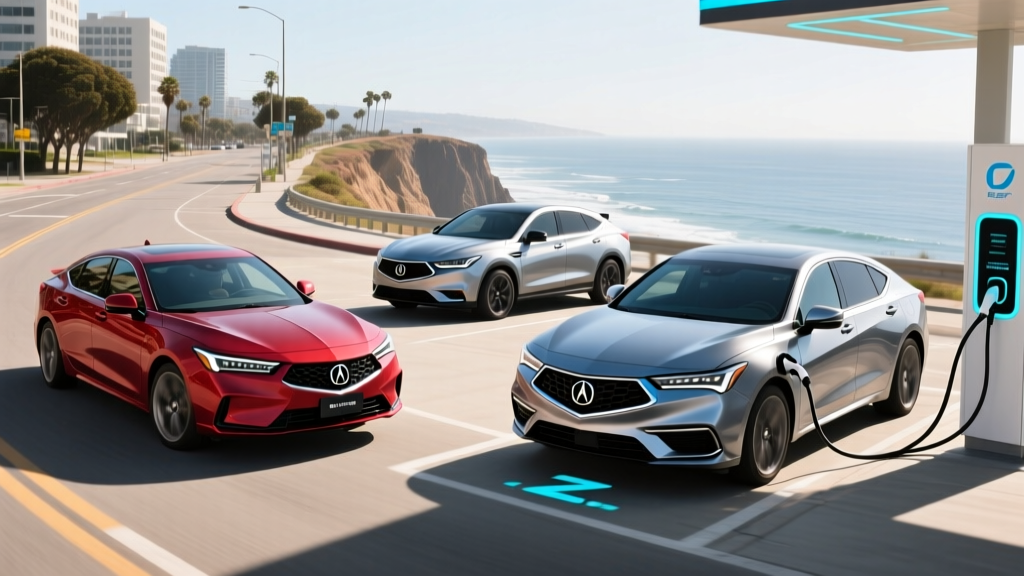
Acura's approach to electrification diverges sharply from its luxury rivals. Rather than rushing to full battery-electric sedans, Honda's premium division has doubled down on hybrid powertrains for its core sedan lineup. If you're researching an Acura hybrid sedan in 2026, you're looking at two primary options: the compact Integra Hybrid and the midsize TLX Hybrid—both conventional hybrids (HEVs) that require no plug. Meanwhile, Acura's PHEV strategy centers on the ZDX, which is an SUV, not a sedan.
This guide breaks down every Acura hybrid sedan available for the 2026 model year with exact EPA MPG figures, powertrain specs, real-world efficiency expectations, battery warranty coverage, and federal tax credit eligibility—so you can decide whether an Acura HEV, a PHEV from a competitor, or a full BEV fits your driving life.
HEV vs. PHEV: What Acura Sedan Buyers Need to Know
Before diving into specific models, it's critical to understand the distinction between the two hybrid architectures, because Acura's sedan lineup uses only one of them.
Conventional Hybrid (HEV) — Integra Hybrid, TLX Hybrid
- No plug required. The battery recharges through regenerative braking and the gasoline engine.
- No electric-only driving range beyond very low-speed, short-distance creeping (typically under 1 mile).
- Benefit: Improved fuel economy (typically 30-50% better than gas-only equivalents) with zero lifestyle change—fuel up at any gas station.
- No federal tax credit under current IRS §30D rules, which apply only to plug-in vehicles.
Plug-In Hybrid (PHEV) — Not Available in Acura Sedans (ZDX SUV Only)
- Plugs in to a Level 1 or Level 2 charger; larger battery (typically 15-25 kWh usable).
- Electric-only range of 25-40+ miles before the gas engine engages.
- May qualify for up to $7,500 in federal tax credits under §30D, subject to MSRP caps, income limits, and battery-sourcing requirements.
- Acura's only PHEV for 2026 is the ZDX SUV—not a sedan.
If you specifically need a plug-in Acura sedan, you won't find one in the 2026 lineup. You'd need to look at competitors like the BMW 330e, Mercedes-Benz C 300e, or cross-shop the fully electric Acura ZDX (SUV) or the upcoming Acura electric sedan concepts Honda has previewed for later this decade.
2026 Acura Integra Hybrid: Compact Sport Sedan Efficiency
The Integra Hybrid is Acura's entry-level electrified sedan, built on the same platform as the Honda Civic Hybrid but with Acura's premium interior, sport-tuned suspension, and the brand's signature Diamond Pentagon grille. For 2026, it continues with Honda's proven two-motor hybrid system.
| Specification | Value |
|---|---|
| Powertrain | 2.0L Atkinson-cycle 4-cyl + 2 electric motors (e:HEV system) |
| Combined Horsepower | 200 hp |
| Combined Torque | 232 lb-ft |
| Transmission | e-CVT (no traditional gears; fixed-ratio with lock-up clutch) |
| Drivetrain | Front-wheel drive |
| EPA MPG (City / Hwy / Combined) | 50 / 47 / 49 MPG |
| 0-60 mph | ~7.1 seconds |
| Fuel Tank | 12.4 gallons |
| Total Range (est.) | ~607 miles |
| Hybrid Battery | ~1.0 kWh lithium-ion (not plug-in) |
| Base MSRP (Integra Hybrid) | $36,900 |
| A-Spec w/Tech Trim MSRP | $40,500 |
| Federal Tax Credit | Not eligible (HEV, not PHEV/BEV) |
Real-World MPG: What to Actually Expect
The EPA rates the Integra Hybrid at 49 MPG combined, but real-world results depend heavily on your driving mix:
- City-dominant driving: Hybrids excel here. Expect 50-54 MPG in stop-and-go traffic where regenerative braking recaptures energy constantly and the engine shuts off at stops.
- Highway-dominant driving: The advantage narrows. Sustained 70-80 mph cruising yields 43-47 MPG because the engine runs more continuously and aerodynamic drag dominates.
- Cold weather (below 30°F): Expect a 5-10% reduction (roughly 44-46 MPG combined) as the engine runs longer to heat the cabin and the battery operates less efficiently at low temperatures.
According to fueleconomy.gov, the Integra Hybrid's combined rating places it among the most efficient luxury-badged sedans on the market, rivaling dedicated hybrid platforms.
2026 Acura TLX Hybrid: Midsize Executive Sedan
The TLX Hybrid represents Acura's midsize electrified offering, competing with the Lexus ES 300h and the now-discontinued BMW 530e sedan (BMW shifted PHEV focus to the 5 Series in other markets). For 2026, the TLX Hybrid pairs a turbocharged engine with Acura's Sport Hybrid SH-AWD system—a three-motor setup that provides both efficiency and genuine all-weather traction.
| Specification | Value |
|---|---|
| Powertrain | 2.0L turbo 4-cyl + 3 electric motors (Sport Hybrid SH-AWD) |
| Combined Horsepower | 302 hp |
| Combined Torque | 302 lb-ft (engine) + electric torque vectoring at rear |
| Transmission | 7-speed dual-clutch automatic with integrated motor |
| Drivetrain | SH-AWD (torque-vectoring all-wheel drive) |
| EPA MPG (City / Hwy / Combined) | 31 / 30 / 31 MPG |
| 0-60 mph | ~5.9 seconds |
| Fuel Tank | 15.9 gallons |
| Total Range (est.) | ~493 miles |
| Hybrid Battery | ~1.3 kWh lithium-ion (not plug-in) |
| Base MSRP (TLX Hybrid A-Spec) | $49,500 |
| Advance Trim MSRP | $55,200 |
| Federal Tax Credit | Not eligible (HEV, not PHEV/BEV) |
Real-World MPG for the TLX Hybrid
The TLX Hybrid's 31 MPG combined EPA rating is modest compared to the Integra, but context matters: this is a 302-hp all-wheel-drive sport sedan weighing over 4,000 lbs.
- City driving: Expect 31-34 MPG with frequent regen opportunities.
- Highway driving: Expect 28-30 MPG at sustained speeds—the turbo engine carries more of the load.
- Combined real-world: Most owners report 29-32 MPG in mixed driving, per owner forums and third-party tracking.
- Compared to the gas-only TLX 2.0T AWD (EPA 24 MPG combined), the hybrid delivers roughly 29% better fuel economy—saving approximately $400-$600 annually at current fuel prices for a 15,000-mile/year driver.
The SH-AWD system is the TLX Hybrid's ace. The twin rear electric motors can send up to 70% of available torque to the rear axle and distribute 100% of that rear torque to either individual wheel, giving this sedan genuine cornering agility that purely mechanical AWD systems can't match.
Battery Warranty, Lifespan, and Replacement Costs
Hybrid battery longevity is consistently the top concern among first-time hybrid buyers. Here's what Acura covers and what to expect.
Acura Hybrid Battery Warranty (2026 Models)
- Standard coverage: 8 years / 100,000 miles (whichever comes first)
- CARB-state coverage: 10 years / 150,000 miles in California and states that follow California Air Resources Board emissions standards (includes CT, CO, DE, ME, MD, MA, MN, NJ, NM, NY, OR, RI, VT, WA, and others adopting CARB rules)
- What's covered: Battery capacity loss below a defined threshold (typically 60-70% of original capacity), defects, and premature failure
- What's not covered: Normal gradual degradation within the threshold, damage from accidents or modifications
Real-World Battery Lifespan
Honda/Acura's hybrid systems have proven among the most durable in the industry. Data from long-term fleet usage of the Honda Accord Hybrid and Insight (which share architecture) shows:
- Typical lifespan: 150,000-200,000+ miles before significant capacity loss
- Degradation pattern: Gradual and linear—most owners never notice a meaningful efficiency drop within the first 100,000 miles
- Failure rate: Low; hybrid battery failures in Honda/Acura systems are uncommon within the warranty period
Replacement Cost If Out of Warranty
If your hybrid battery does require replacement after the warranty expires:
- Integra Hybrid: Approximately $2,000-$3,500 for a new OEM battery pack (installed)
- TLX Hybrid: Approximately $3,000-$4,500 for a new OEM battery pack (installed)
- Refurbished/remanufactured options: Available from third-party specialists for $1,200-$2,500 installed, offering 60-80% of original capacity
- Cell-level repair: Some hybrid specialists can replace individual failed cells for $500-$1,500, though this is less common
For context, a conventional automatic transmission replacement on a gas-only vehicle typically costs $3,500-$5,500—a comparable or higher expense that owners accept as routine. Hybrid batteries, in practice, are not the financial time bomb that early-2000s marketing fear suggested.
Federal and State Tax Credits: What Hybrid Buyers Qualify For
This is where the HEV vs. PHEV distinction has direct financial consequences.
Federal Tax Credit (IRS §30D)
Under current IRS §30D rules, the federal clean vehicle credit of up to $7,500 applies only to plug-in electric vehicles—battery-electric vehicles (BEVs) and plug-in hybrids (PHEVs) with at least 7 kWh of battery capacity. Conventional hybrids (HEVs) like the Integra Hybrid and TLX Hybrid do not qualify.
Since Acura does not currently offer a plug-in hybrid sedan, there is no Acura sedan eligible for the federal §30D credit in 2026.
State and Local Incentives
Some states offer rebates or tax incentives for conventional hybrids, though these are less common and less generous than EV incentives:
- Colorado: Previously offered hybrid incentives; check current state energy office for updates
- Some utility companies: Offer small rebates ($250-$500) for hybrid purchases—check with your local electric utility
- HOV lane access: A few states (e.g., Virginia, previously California) have offered carpool lane stickers for hybrids, though most programs have shifted to PHEVs and BEVs only
Always verify current incentive availability with your state's energy office or department of revenue before counting on a rebate in your purchase budget.
Acura Hybrid Sedan vs. Competitors vs. Full EVs
Where does an Acura hybrid sedan actually fit in the 2026 market? Here's a decision framework based on real ownership patterns.
Choose an Acura Hybrid Sedan (Integra or TLX) If:
- You lack reliable home charging access (apartment, street parking, no garage)
- You regularly take road trips exceeding 300+ miles and don't want to plan charging stops
- You want a luxury-badged sedan with 45+ MPG (Integra) or AWD sport performance with 30+ MPG (TLX)
- You want zero lifestyle adjustment—just fuel up at any station and go
- You live in an area with limited public charging infrastructure
Choose a Plug-In Hybrid Sedan (BMW 330e, Mercedes C 300e) If:
- You have home Level 2 charging and a commute under 30 miles round-trip
- You want electric-only daily driving but gas flexibility for long trips
- You want the up-to-$7,500 federal tax credit
- You're willing to pay a higher MSRP premium for PHEV powertrain complexity
Choose a Full Battery-Electric Sedan (Tesla Model 3, BMW i4, Hyundai Ioniq 6) If:
- You have reliable home charging (Level 2 strongly recommended)
- Your daily driving is under 250 miles and you can plan road-trip charging
- You want the lowest per-mile fuel cost (electricity vs. gasoline)
- You want zero tailpipe emissions and minimal drivetrain maintenance
- You qualify for the full $7,500 federal tax credit based on income, MSRP, and sourcing rules
Ownership Costs: 5-Year Comparison
Fuel savings are the primary financial argument for the Acura hybrid sedans. Here's a 5-year/75,000-mile cost estimate comparing the Integra Hybrid to the gas-only Integra 1.5T:
| Cost Factor | Integra Hybrid (49 MPG) | Integra 1.5T Gas (33 MPG) |
|---|---|---|
| Fuel Cost (@ $3.50/gal avg) | $5,357 | $7,955 |
| Estimated Maintenance | $2,800 | $3,200 |
| Insurance (est. avg) | $7,500 | $7,200 |
| Total Operating Cost | $15,657 | $18,355 |
| 5-Year Fuel Savings | ~$2,598 savings with Hybrid | |
The Integra Hybrid commands roughly a $2,000-$3,000 MSRP premium over its gas-only equivalent. The fuel savings recoup that premium within approximately 4-5 years of average driving, after which the hybrid becomes a net financial benefit. The TLX Hybrid's premium is higher, but so is the fuel savings gap versus the gas-only TLX V6 or 2.0T AWD.
Pros and Cons: Acura Hybrid Sedans at a Glance
Pros
- Integra Hybrid achieves 49 MPG combined—class-leading for a luxury compact sedan
- TLX Hybrid's SH-AWD provides genuine performance handling, not just traction
- No charging infrastructure needed—works with any existing lifestyle
- Proven Honda hybrid reliability with strong 8-10 year battery warranties
- Lower maintenance than gas-only (no traditional starter, reduced brake wear from regen)
- Total driving range exceeds 490-600+ miles per tank
Cons
- No Acura plug-in hybrid sedan exists—can't access $7,500 federal credit
- TLX Hybrid MPG (31 combined) is merely adequate, not exceptional
- Hybrid premium adds $2,000-$4,000 to MSRP vs. gas-only trims
- No electric-only driving capability for silent, zero-emission short trips
- Limited trim availability—hybrid not offered on every Integra/TLX configuration
- Resale value for hybrids still uncertain compared to established gas models
Frequently Asked Questions
How many MPG does the 2026 Acura Integra Hybrid get?
The EPA rates the 2026 Acura Integra Hybrid at 50 city / 47 highway / 49 combined MPG. In real-world city driving, many owners see 50-54 MPG thanks to regenerative braking. Highway-only driving at 75+ mph typically yields 43-47 MPG.
How many MPG does the 2026 Acura TLX Hybrid get?
The 2026 TLX Hybrid is EPA-rated at 31 city / 30 highway / 31 combined MPG. Real-world results cluster around 29-32 MPG in mixed driving—a significant improvement over the gas-only TLX AWD's 24 MPG combined.
Does any Acura sedan have electric-only range?
No. The Integra Hybrid and TLX Hybrid are conventional hybrids (HEVs) with very small batteries (~1.0-1.3 kWh). They cannot drive meaningful distances on electricity alone. Acura's only plug-in hybrid is the ZDX SUV, which offers electric-only range but is not a sedan.
Does the Acura Integra Hybrid or TLX Hybrid qualify for a federal tax credit?
No. Under current IRS §30D rules, only plug-in electric vehicles (PHEVs and BEVs) qualify for the federal clean vehicle credit. Conventional hybrids are not eligible. Some state or utility incentives may apply—check local programs.
How long will the Acura hybrid battery last, and what does replacement cost?
Acura covers the hybrid battery for 8 years/100,000 miles (10 years/150,000 miles in CARB states). Real-world data from Honda's hybrid platforms shows typical lifespans of 150,000-200,000+ miles with gradual degradation. Out-of-warranty replacement costs approximately $2,000-$4,500 depending on the model, with refurbished options available for less.
Is the Acura hybrid system reliable?
Yes. Honda's two-motor hybrid system (used in the Integra) and Sport Hybrid SH-AWD system (used in the TLX) have been in production across multiple models for over a decade. They consistently rank highly in long-term reliability surveys. The e-CVT design eliminates traditional transmission wear points, and regenerative braking reduces brake pad wear.
Should I buy an Acura hybrid sedan or a full electric vehicle?
Choose the Acura hybrid if you lack home charging, drive long distances regularly, or live in a charging-desert area. Choose a full EV (like a Tesla Model 3 or BMW i4) if you have reliable Level 2 home charging, commute under 250 miles daily, want the lowest per-mile fuel cost, and qualify for the $7,500 federal tax credit. The hybrid eliminates range anxiety entirely; the EV eliminates tailpipe emissions and most drivetrain maintenance.
Does the Acura TLX Hybrid have all-wheel drive?
Yes. The TLX Hybrid uses Acura's Sport Hybrid SH-AWD system with twin rear electric motors that provide torque-vectoring all-wheel drive. This is a performance-oriented AWD system that actively distributes torque between the rear wheels during cornering, not just a traction-aid system for snow.
Sources: EPA fuel economy data via fueleconomy.gov; IRS clean vehicle credit rules via irs.gov; Acura product specifications via Acura Newsroom. All specifications reflect 2026 model year data available at time of publication. Verify current pricing and incentive eligibility before purchase.