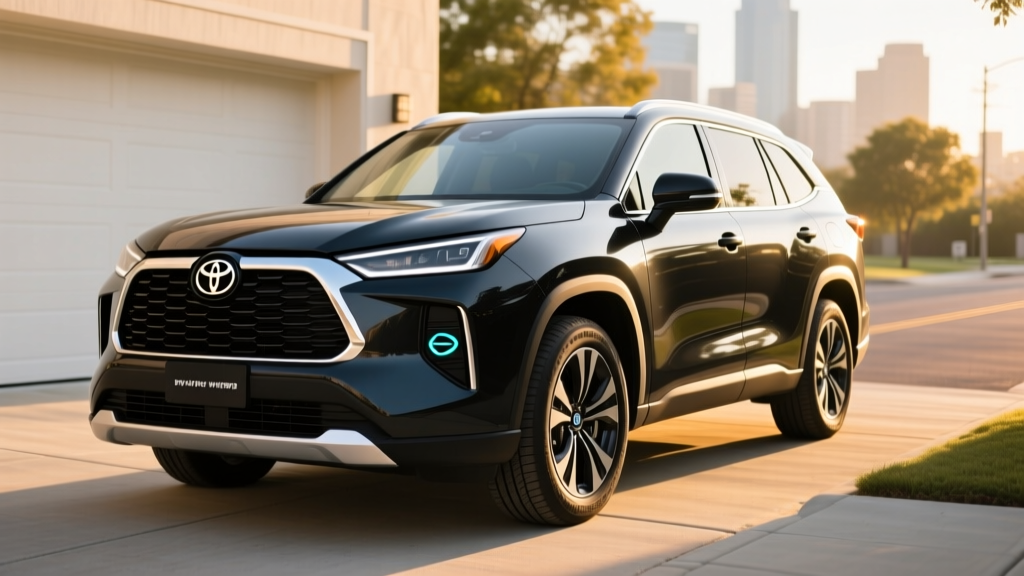
The three-row family hauler segment rarely rewards efficiency, but the 2024 Toyota Grand Highlander Hybrid makes a compelling case. With EPA ratings reaching 36 MPG combined in standard hybrid form, it undercuts nearly every gasoline rival in its class while offering genuine eight-passenger seating and usable cargo space. Below, we break down every powertrain variant, real-world fuel economy expectations, battery longevity data, and ownership economics to help you decide if this hybrid SUV fits your driveway.
HEV vs. PHEV: What Toyota Actually Offers
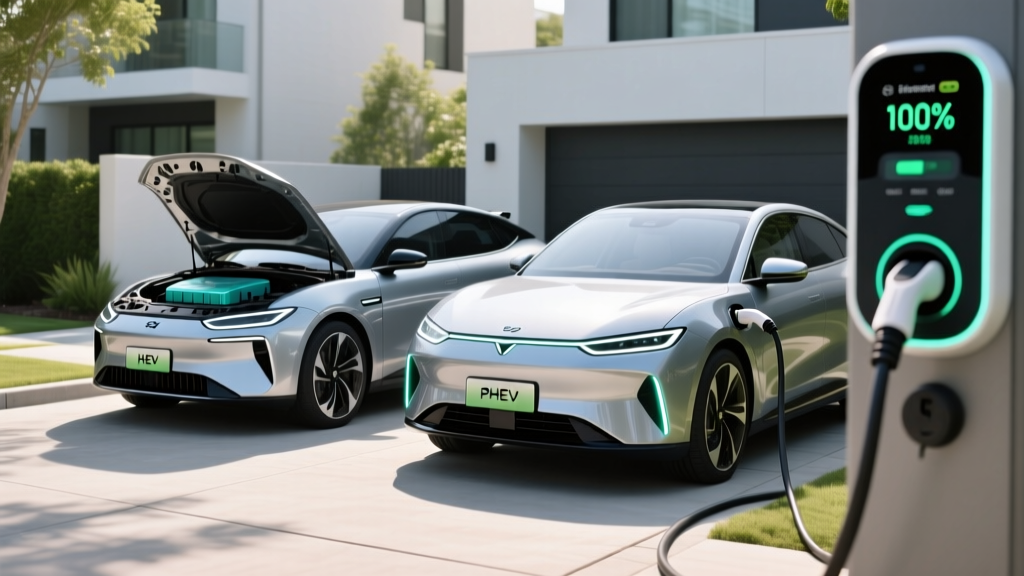
Before diving into fuel economy figures, it is critical to understand what the 2024 Grand Highlander lineup includes — and what it does not. Toyota offers two hybrid powertrains for this model, and neither is a plug-in hybrid.
Standard Hybrid (HEV)
- Self-charging via regenerative braking and the gasoline engine
- No plug, no charging cable, no electric-only driving range
- 2.5-liter four-cylinder engine paired with electric motors
- Available in FWD and AWD configurations
Hybrid Max (HEV — Performance Variant)
- Also self-charging — not a plug-in hybrid
- 2.4-liter turbocharged four-cylinder with a more powerful electric motor system
- AWD only (electronic on-demand rear motor)
- Significantly more horsepower, slightly lower MPG
Key clarification: The 2024 Grand Highlander does not come in a PHEV (plug-in hybrid) variant. If you need electric-only driving capability from Toyota in a three-row SUV, the current option is the smaller Highlander PHEV (available in select markets) or stepping up to a full EV like the bZ4X. The Grand Highlander is exclusively a conventional hybrid — you fuel it with gasoline and never plug it in.
2024 Toyota Grand Highlander Hybrid MPG: EPA Ratings Breakdown
| Powertrain | Drivetrain | City MPG | Highway MPG | Combined MPG |
|---|---|---|---|---|
| Standard Hybrid | FWD | 37 | 34 | 36 |
| Standard Hybrid | AWD (eAWD) | 36 | 32 | 34 |
| Hybrid Max | AWD | 27 | 28 | 27 |
Source: fueleconomy.gov (EPA estimates). Your actual mileage will vary based on driving conditions, terrain, climate control usage, and tire selection.
The standard hybrid FWD model's 36 MPG combined is exceptional for a vehicle of this size — over 200 inches long with seating for eight. For context, the non-hybrid 2024 Grand Highlander with its turbocharged 2.4L gas engine rates just 24 MPG combined (21 city / 28 highway), making the hybrid roughly 50% more efficient in city driving.
Real-World MPG: What Owners Actually Report
EPA sticker numbers are a starting point, not a guarantee. Toyota's hybrid system, like most HEVs, tends to perform close to or even slightly above EPA estimates in city driving because regenerative braking recaptures energy in stop-and-go traffic. Highway driving is where hybrids typically fall slightly short of their EPA highway number due to sustained high-speed demand on the gasoline engine.
Real-World MPG Expectations
Standard Hybrid AWD (EPA 34 combined):
- City commuting (stop-and-go): 35–38 MPG
- Highway cruising (70–75 mph): 30–33 MPG
- Mixed daily driving: 32–35 MPG
- Cold weather (below 32°F): 28–32 MPG (engine runs more for cabin heat)
Hybrid Max AWD (EPA 27 combined):
- City commuting: 25–28 MPG
- Highway cruising: 26–29 MPG
- Aggressive driving / towing: 20–24 MPG
The Hybrid Max's more even city/highway split (27/28) reflects its turbocharged engine, which operates less efficiently at low loads but benefits from the electric motor's torque assist during acceleration. If your commute is predominantly highway miles, the Hybrid Max penalty versus the standard hybrid narrows somewhat.
One factor that hurts all hybrids in winter: the gasoline engine must run to generate cabin heat, reducing the electric motor's contribution. Toyota does not offer a heat pump in the Grand Highlander Hybrid (heat pumps are more common in full EVs and PHEVs), so expect a 10–15% MPG drop in sustained sub-freezing temperatures.
Powertrain Specs: Standard Hybrid vs. Hybrid Max
| Specification | Standard Hybrid | Hybrid Max |
|---|---|---|
| Engine | 2.5L 4-cylinder | 2.4L turbocharged 4-cylinder |
| Combined System Horsepower | 245 hp | 362 hp |
| Combined System Torque | 173 lb-ft (engine) + electric motor torque | 400 lb-ft (combined) |
| Electric Motor(s) | Front (FWD) or Front + Rear (AWD) | Front + Rear (AWD standard) |
| Transmission | eCVT (planetary gearset) | 6-speed automatic |
| 0–60 mph (est.) | ~7.8 seconds | ~6.3 seconds |
| Towing Capacity | 3,500 lbs | 5,000 lbs |
| Fuel Tank | 17.1 gallons | 17.1 gallons |
| Estimated Total Range | ~580–615 miles | ~460 miles |
The standard hybrid's eCVT is Toyota's proven planetary gearset design — not a belt-driven CVT. It has no traditional gears or bands to wear, which is a significant reliability advantage. The Hybrid Max uses a conventional 6-speed automatic, chosen for its ability to handle the turbo engine's higher torque output and to deliver a more traditional driving feel under hard acceleration.
If towing is a priority — boats, campers, utility trailers — the Hybrid Max's 5,000-pound rating is a meaningful upgrade. The standard hybrid's 3,500-pound limit covers light-duty trailers and small boat setups but falls short for larger loads.
Pricing, Trims, and Tax Credit Eligibility
The 2024 Grand Highlander Hybrid starts at approximately $45,020 (including destination) for the LE trim with FWD and climbs to roughly $58,000+ for a fully loaded Hybrid Max Platinum. Key trim pricing:
- Hybrid LE (FWD): ~$45,020
- Hybrid XLE (AWD): ~$49,430
- Hybrid Limited (AWD): ~$53,405
- Hybrid Max XLE (AWD): ~$53,405
- Hybrid Max Limited (AWD): ~$56,480
- Hybrid Max Platinum (AWD): ~$58,775
Federal Tax Credit Status
Because the 2024 Grand Highlander Hybrid is a conventional HEV (not a plug-in hybrid or full EV), it does not qualify for the IRS §30D Clean Vehicle Credit. That credit applies exclusively to battery electric vehicles (BEVs) and plug-in hybrids (PHEVs) that meet battery sourcing, MSRP caps, and buyer income requirements.
However, some states offer rebates or incentives for conventional hybrids. Check your state energy office or department of environmental quality for current programs. These vary widely and change frequently.
From a total cost perspective, the hybrid's fuel savings partially offset its price premium over the gas-only Grand Highlander. At $3.50/gallon and 15,000 miles/year, the standard hybrid (34 MPG combined) uses roughly 441 gallons annually (~$1,544) versus the gas model (24 MPG combined) at 625 gallons (~$2,188). That is approximately $644 in annual fuel savings, meaning the hybrid premium pays for itself in roughly 3–5 years depending on trim and local fuel prices.
Battery Warranty, Lifespan, and Replacement Costs
Toyota Hybrid Battery Warranty
- Coverage: 10 years or 150,000 miles (whichever comes first)
- Applies to: Hybrid battery pack, hybrid control module, inverter
- Transferable: Yes, to subsequent owners
- Capacity threshold: Toyota does not publish a specific degradation percentage trigger, but warranty covers defects and failures that impair hybrid system operation
Toyota's hybrid battery track record is among the best in the industry. The nickel-metal hydride (NiMH) battery packs used in earlier Prius models routinely lasted 150,000–200,000 miles before needing replacement. The Grand Highlander Hybrid uses a more modern lithium-ion hybrid battery pack, which offers better energy density and charge/discharge efficiency.
Real-world data from Toyota's broader hybrid fleet (Camry Hybrid, RAV4 Hybrid, Highlander Hybrid) suggests that hybrid battery failure before 150,000 miles is uncommon when the vehicle receives regular maintenance. The hybrid battery is relatively small (approximately 1.3 kWh usable for the standard hybrid system — far smaller than a PHEV or BEV pack), so it experiences shallow charge/discharge cycles that are gentle on cell longevity.
Replacement cost: If the hybrid battery does need replacement out of warranty, expect $3,000–$5,000 for a new OEM pack including labor at a Toyota dealership. Third-party refurbished packs are available for $1,500–$3,000. This is significantly less than full EV battery replacements ($10,000–$20,000+) because the hybrid battery is a fraction of the size.
Grand Highlander Hybrid vs. Full EV vs. Gasoline: Which Fits You?
Choose the Grand Highlander Hybrid if:
- You want three rows and excellent fuel economy without changing your refueling habits
- You lack reliable access to home or workplace charging (apartment, street parking)
- You regularly take long road trips and cannot plan around charging stops
- You tow occasionally (3,500 lbs standard, 5,000 lbs Hybrid Max)
- You want Toyota's long-term reliability reputation and 10-year hybrid battery warranty
Choose a Plug-In Hybrid (like the Kia Sorento PHEV) if:
- You have home Level 2 charging and a commute under 30 miles
- You want some electric-only driving for daily errands
- You want partial eligibility for the §30D federal tax credit (up to $7,500 for qualifying PHEVs)
- You accept a smaller third row and less cargo space than the Grand Highlander
Choose a Full EV (like the Kia EV9 or Rivian R1S) if:
- You have reliable home charging (Level 2, 240V)
- Your daily driving is under 250 miles and you can plan road-trip charging
- You want to eliminate gasoline costs entirely and qualify for the full §30D credit
- You accept higher upfront cost and potential insurance premiums
Stick with the Gas Grand Highlander if:
- Budget is the absolute priority (gas LE starts ~$6,000 less than hybrid LE)
- You drive fewer than 8,000 miles per year (fuel savings won't offset hybrid premium)
- You plan to keep the vehicle under 4 years
Reliability, Safety, and Long-Term Ownership
Toyota's hybrid powertrains have earned a reputation for exceptional durability over two decades of Prius, Camry Hybrid, and RAV4 Hybrid production. The Grand Highlander is newer to the lineup (introduced for the 2024 model year), so long-term fleet data specific to this model is still accumulating. However, the underlying hybrid system architecture shares significant components with the proven Highlander Hybrid and RAV4 Hybrid platforms.
The 2024 Grand Highlander received strong safety marks, earning a Top Safety Pick+ designation from the IIHS (Insurance Institute for Highway Safety) with good ratings across crash test categories. Toyota Safety Sense 3.0 comes standard on all trims, including pre-collision braking, full-speed adaptive cruise control, lane tracing assist, and automatic high beams.
One ownership consideration: the Grand Highlander Hybrid's eCVT transmission has no conventional wear items like clutch packs or torque converters, reducing long-term maintenance costs versus a traditional automatic. Brake pad life is also extended thanks to regenerative braking — many Toyota hybrid owners report 60,000–80,000 miles on original brake pads.
Pros
- Best-in-class fuel economy for a three-row SUV (36 MPG combined FWD)
- 10-year/150,000-mile hybrid battery warranty
- Genuine adult-sized third row with usable cargo behind it
- No charging infrastructure needed — just fill up with gas
- Hybrid Max offers 5,000-lb towing with 362 hp
- Proven Toyota hybrid reliability track record
Cons
- No PHEV option — cannot drive on electric-only power
- No federal tax credit eligibility for conventional hybrid
- Hybrid Max MPG drops significantly (27 combined)
- Premium trims push past $58,000
- Third-row access is tighter than some minivan alternatives
- Standard hybrid acceleration is adequate but not quick (~7.8s to 60)
Frequently Asked Questions
How many MPG does the 2024 Toyota Grand Highlander Hybrid get?
The standard hybrid with front-wheel drive achieves an EPA-estimated 37 city / 34 highway / 36 combined MPG. The AWD version rates 36 city / 32 highway / 34 combined. The performance-oriented Hybrid Max AWD rates 27 city / 28 highway / 27 combined. In real-world mixed driving, most owners of the standard hybrid AWD report 32–35 MPG.
Is the Grand Highlander Hybrid a plug-in hybrid?
No. The 2024 Grand Highlander Hybrid is a conventional self-charging hybrid (HEV). It cannot be plugged in and has no electric-only driving range. The battery recharges through regenerative braking and the gasoline engine. Toyota does not currently offer a Grand Highlander PHEV.
How far can the Grand Highlander Hybrid go on a full tank?
With a 17.1-gallon fuel tank and 34 MPG combined (AWD standard hybrid), you can expect roughly 580 miles of total range under normal conditions. The FWD model at 36 MPG combined stretches that to approximately 615 miles. The Hybrid Max, at 27 MPG combined, delivers roughly 460 miles per tank.
Is the hybrid battery reliable and what does replacement cost?
Toyota's hybrid batteries have a strong reliability record, commonly lasting 150,000+ miles. The Grand Highlander Hybrid battery is covered by a 10-year/150,000-mile warranty. Out-of-warranty replacement costs approximately $3,000–$5,000 for an OEM pack, or $1,500–$3,000 for a refurbished unit — far less than full EV battery replacements due to the smaller pack size.
Does the 2024 Grand Highlander Hybrid qualify for any tax credit?
No. The federal §30D Clean Vehicle Credit applies only to plug-in hybrids (PHEVs) and battery electric vehicles (BEVs). As a conventional hybrid, the Grand Highlander Hybrid does not qualify. Some state-level programs may offer incentives for hybrids — check your state energy office for current availability.
How does the Grand Highlander Hybrid compare to the regular Highlander Hybrid?
The Grand Highlander is approximately 6.5 inches longer than the standard Highlander, providing significantly more third-row legroom and cargo space behind the third row. The standard Highlander Hybrid rates slightly higher in MPG (36 combined AWD) but cannot match the Grand Highlander's passenger and cargo utility. The powertrain is mechanically similar.
Is the Hybrid Max worth the MPG penalty?
It depends on your needs. The Hybrid Max's 362 hp, 6.3-second 0–60 time, and 5,000-pound towing capacity make it the choice for families who tow or want confident highway passing power. The 7 MPG combined penalty (27 vs. 34) costs roughly $400–$500 extra per year in fuel at 15,000 miles annually. If you rarely tow and prioritize efficiency, the standard hybrid is the more rational choice.
For the latest EPA ratings, visit fueleconomy.gov. For current federal tax credit rules, consult the IRS Clean Vehicle Credits page. Pricing reflects MSRP at launch and may vary by dealer and model year availability.