The 2026 Mazda Hybrid SUV Lineup at a Glance
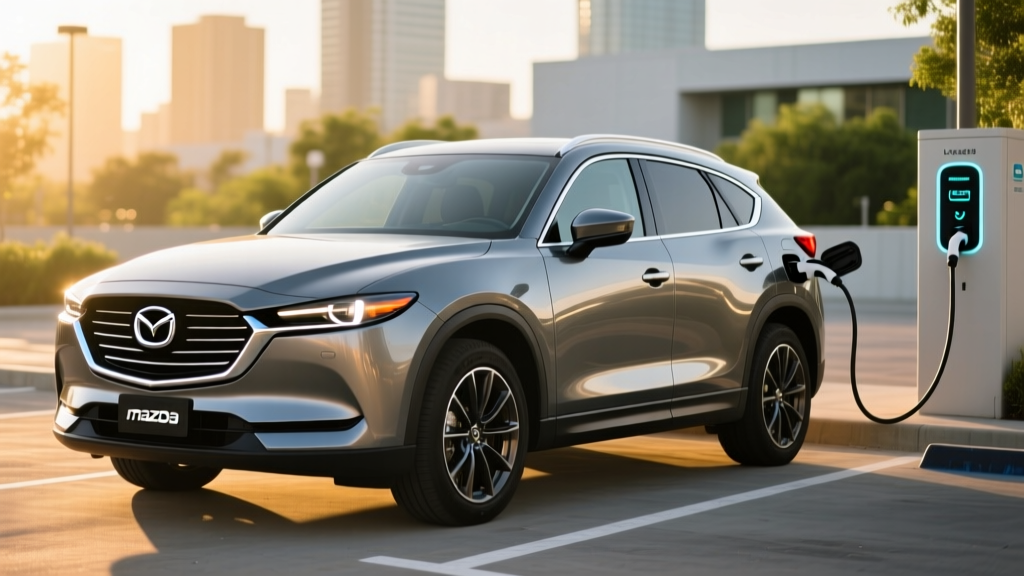
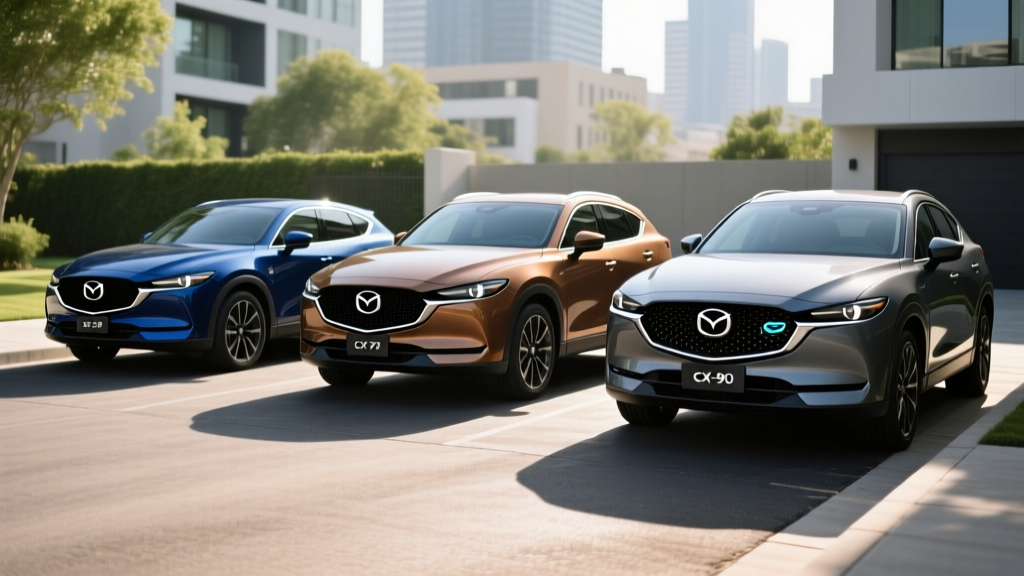
Mazda has steadily electrified its crossover portfolio, and for 2026 the brand offers three SUVs with hybrid powertrains spanning conventional hybrids (HEVs) and plug-in hybrids (PHEVs). If you're researching a Mazda hybrid SUV, the choices break down into the compact CX-50 Hybrid, the midsize two-row CX-70 (available as both HEV and PHEV), and the three-row CX-90 (also offered in HEV and PHEV forms). Each uses a distinct powertrain architecture, and the real-world efficiency you'll see depends heavily on whether you can plug in at home.
This guide walks through every current Mazda hybrid SUV with exact EPA figures, pricing, battery specs, and tax-credit eligibility so you can match the right model to your driving pattern.
HEV vs PHEV: What Mazda Actually Offers
Conventional Hybrid (HEV)
Mazda's HEV models — the CX-50 Hybrid, CX-70 HEV, and CX-90 HEV — pair a gasoline engine with an electric motor and a small battery (typically 1–2 kWh) that recharges through regenerative braking and the engine. You never plug them in. They deliver improved MPG over their gas-only counterparts, especially in stop-and-go city driving where the electric motor handles low-speed propulsion.
Plug-In Hybrid (PHEV)
The CX-70 PHEV and CX-90 PHEV use a much larger battery pack (17.8 kWh usable) and a more powerful electric motor, giving them an EPA-rated electric-only range before the gasoline engine engages. You plug these in at home (Level 1 or Level 2) to refill the battery. Once the electric range is depleted, they operate as conventional hybrids.
The distinction matters enormously for ownership cost: a PHEV owner who charges nightly and commutes under 26 miles may use almost no gasoline on weekdays, while an HEV owner saves fuel passively without any behavior change.
Fuel Economy and Electric Range: The Numbers
| Model | Powertrain | EPA City MPG | EPA Hwy MPG | EPA Combined MPG | EV-Only Range | Total Range |
|---|---|---|---|---|---|---|
| CX-50 Hybrid | HEV | 39 | 37 | 38 | N/A | ~480 mi |
| CX-70 HEV | HEV (turbo I-6) | 26 | 28 | 27 | N/A | ~500 mi |
| CX-70 PHEV | PHEV | 25 (gas) | 27 (gas) | 25 (gas) / 56 MPGe | 26 mi | ~490 mi |
| CX-90 HEV | HEV (turbo I-6) | 25 | 27 | 26 | N/A | ~490 mi |
| CX-90 PHEV | PHEV | 24 (gas) | 26 (gas) | 25 (gas) / 56 MPGe | 26 mi | ~480 mi |
Source: fueleconomy.gov (EPA estimates). MPGe reflects combined operation on electricity and gasoline.
Real-World MPG vs. EPA Stickers
What to expect in real driving: The CX-50 Hybrid's EPA 38 MPG combined is achievable and often beatable in city driving, where hybrids excel — owners report 40–42 MPG on urban commutes. Highway-only trips at 75+ mph tend to drop to 33–35 MPG, as the electric motor assists less at sustained high speeds. The CX-70 and CX-90 HEVs, built on Mazda's rear-biased inline-six platform, deliver more modest gains because the larger engines and heavier bodies reduce the hybrid system's proportional contribution. Expect real-world combined figures within 1–2 MPG of EPA for the HEVs.
For the PHEVs, the 26-mile electric-only range assumes moderate temperatures and mixed driving. In winter conditions (below 35°F), expect that range to drop to roughly 19–22 miles due to battery chemistry limitations and cabin heating demands. Once the battery is depleted, the PHEVs return gasoline MPG close to their HEV siblings — around 24–25 combined.
Powertrain Specs and Battery Details
| Model | Engine | Combined HP | Combined Torque | Battery (kWh) | 0-60 mph |
|---|---|---|---|---|---|
| CX-50 Hybrid | 2.5L I-4 + e-motor | 219 | 163 lb-ft | ~1.1 (NiMH) | 7.2 sec |
| CX-70 HEV | 2.5L turbo I-6 + mild-hybrid | 280 (340 w/ premium) | 332 lb-ft | ~0.5 (48V mild) | 6.5 sec |
| CX-70 PHEV | 2.5L I-4 + e-motor | 323 | 369 lb-ft | 17.8 usable (Li-ion) | 5.9 sec |
| CX-90 HEV | 3.3L turbo I-6 + mild-hybrid | 280 (340 w/ premium) | 332 lb-ft | ~0.5 (48V mild) | 6.8 sec |
| CX-90 PHEV | 2.5L I-4 + e-motor | 323 | 369 lb-ft | 17.8 usable (Li-ion) | 6.2 sec |
The CX-50 Hybrid uses Toyota's proven hybrid synergy drive system (a result of the Toyota-Mazda manufacturing partnership at the Alabama plant), which is why its fuel economy is substantially higher than the larger Mazda models. The CX-70 and CX-90 HEVs use a 48-volt mild-hybrid system bolted to Mazda's inline-six turbo — this provides smoother stop-start and minor torque fill but doesn't deliver the dramatic MPG gains of a full parallel hybrid.
The PHEV models use a completely different architecture: a naturally aspirated 2.5-liter four-cylinder paired with a powerful electric motor integrated into the 8-speed automatic transmission. The 17.8 kWh lithium-ion battery pack sits beneath the floor and supports Level 2 AC charging at up to 7.2 kW, refilling from empty in approximately 2.5 hours on a 240V home charger or roughly 6 hours on a standard 120V outlet. Neither PHEV supports DC fast charging — a common limitation in this class.
Pricing, Trims, and Tax Credit Eligibility
| Model | Starting MSRP (2026) | Federal §30D Credit | Key Eligibility Notes |
|---|---|---|---|
| CX-50 Hybrid | $35,450 | Not eligible | HEV — federal credit applies to PHEVs/EVs only |
| CX-70 HEV | $42,000 | Not eligible | HEV — no plug-in credit |
| CX-70 PHEV | $55,000 | Up to $7,500* | Subject to MSRP cap, income cap, battery sourcing |
| CX-90 HEV | $45,950 | Not eligible | HEV — no plug-in credit |
| CX-90 PHEV | $57,450 | Up to $7,500* | Subject to MSRP cap, income cap, battery sourcing |
*Federal §30D tax credit eligibility for PHEVs depends on multiple criteria current for 2026. See the IRS clean vehicle credits page for the latest rules.
§30D Credit Requirements for Mazda PHEVs (2026)
- MSRP cap: SUVs must be at or below $80,000 — both CX-70 PHEV and CX-90 PHEV qualify on sticker price.
- Buyer income cap: Modified AGI must not exceed $150,000 (single), $225,000 (head of household), or $300,000 (joint).
- Battery sourcing: A percentage of critical minerals and battery components must be sourced from the U.S. or free-trade-agreement partners. These thresholds tighten annually — verify the specific VIN's compliance on the DOE/IRS qualifying vehicle list before purchasing.
- Point-of-sale transfer: Buyers can elect to transfer the credit to the dealer at purchase, reducing the purchase price directly rather than waiting for a tax refund.
- Minimum battery capacity: PHEVs must have at least 7 kWh of battery capacity — Mazda's 17.8 kWh pack exceeds this easily.
Conventional HEVs (CX-50 Hybrid, CX-70 HEV, CX-90 HEV) do not qualify for the §30D new clean vehicle credit. Some states offer separate rebates for HEVs, but these vary widely by jurisdiction — check your state energy office or AFDC state incentive database for local programs.
Reliability, Battery Warranty, and Replacement Costs
Mazda Hybrid Battery Warranty
All Mazda hybrid and PHEV models carry a hybrid battery warranty of 8 years or 100,000 miles (whichever comes first). In California Air Resources Board (CARB) states — which include CA, CO, CT, ME, MD, MA, NJ, NY, OR, RI, VT, and WA — the warranty extends to 10 years or 150,000 miles on emissions-related components including the hybrid battery.
This coverage is competitive with Toyota's 10-year/150,000-mile national hybrid battery warranty, though Mazda's base 8-year/100,000-mile term in non-CARB states is slightly shorter.
Long-Term Reliability Outlook
The CX-50 Hybrid benefits from Toyota's hybrid system, which has decades of proven durability — taxi fleets have logged 300,000+ miles on original Prius-era batteries. The CX-70 and CX-90 PHEVs use Mazda's own engineering on a newer platform, so long-term data is still accumulating. Early reliability indicators from IIHS and owner surveys have been favorable, and Mazda's inline-six engines have shown robust performance in initial years.
Battery Replacement Cost Estimates
Out-of-warranty hybrid battery replacement costs vary significantly:
- CX-50 Hybrid: $2,500–$4,000 (small NiMH pack, proven Toyota-supplier design)
- CX-70/CX-90 PHEV: $8,000–$12,000 (larger 17.8 kWh lithium-ion pack)
- CX-70/CX-90 HEV (48V): $1,500–$2,500 (small 48V mild-hybrid battery)
Most hybrid batteries last well beyond their warranty period. Degradation in PHEVs typically results in reduced electric-only range (e.g., 26 miles dropping to 20–22 miles after 8–10 years) rather than total failure. The vehicle remains fully drivable on its gasoline engine even with a degraded PHEV battery.
Who Should Choose a Mazda Hybrid SUV?
Choose a Mazda HEV (CX-50, CX-70, CX-90) if:
- You cannot install a home charger (apartment, street parking, no garage outlet).
- You want fuel savings with zero behavior change — just drive normally.
- Your budget is under $46,000 and you want a compact-to-midsize SUV.
- The CX-50 Hybrid is especially compelling: 38 MPG combined in a rugged-styled compact crossover at $35,450.
Choose a Mazda PHEV (CX-70, CX-90) if:
- You can charge at home (Level 2 preferred) and your daily commute is under 26 miles round-trip.
- You want near-EV operating costs on weekdays with gasoline flexibility for road trips.
- You need three rows (CX-90 PHEV) or a sporty two-row midsize (CX-70 PHEV) with strong acceleration (323 hp).
- You're eligible for the §30D federal tax credit, which can bring the effective price of a CX-90 PHEV to roughly $49,950.
Consider a Full EV Instead if:
- Your daily driving rarely exceeds 200 miles and you have reliable home charging.
- You want to eliminate oil changes, transmission fluid, and spark plugs entirely.
- Models like the Hyundai Ioniq 5, Tesla Model Y, or Kia EV9 offer longer electric range (280–340 miles EPA) and DC fast charging for road trips.
Pros and Cons Across the Mazda Hybrid SUV Range
Pros
- CX-50 Hybrid achieves 38 MPG combined — best-in-class for a compact AWD crossover
- PHEV models offer 323 hp with seamless electric-to-gas transitions
- Premium interiors and driving dynamics consistent with Mazda's upmarket positioning
- Available three-row seating in CX-90 PHEV — rare in the PHEV SUV segment
- No range anxiety: gasoline backup on all models
- Point-of-sale credit transfer available on PHEVs
Cons
- PHEV electric-only range of 26 miles trails competitors (Toyota RAV4 Prime: 42 mi)
- No DC fast charging on PHEVs — limits road-trip electric top-ups
- CX-70/CX-90 HEVs offer modest MPG gains (26–27 combined) vs. gas models
- PHEV starting prices near $55,000–$57,000 before credits
- CX-50 Hybrid uses Toyota's system — proven but limits Mazda-specific powertrain differentiation
- 48V mild-hybrid in CX-70/CX-90 HEV provides minimal electric-only driving capability
Frequently Asked Questions
How many MPG does a Mazda hybrid SUV get?
The CX-50 Hybrid leads at 38 MPG combined (39 city / 37 highway). The larger CX-70 HEV returns 27 combined and the CX-90 HEV returns 26 combined. PHEV models, once the battery is depleted, return approximately 24–25 MPG combined on gasoline alone.
How far can a Mazda PHEV go on electric only?
Both the CX-70 PHEV and CX-90 PHEV carry an EPA-rated 26 miles of electric-only range. In real-world conditions, expect 22–26 miles in moderate weather and 19–22 miles in freezing temperatures. This covers most daily commutes but falls short of the Toyota RAV4 Prime's 42-mile rating.
Do Mazda hybrid SUVs need to be plugged in?
Only the PHEV models (CX-70 PHEV and CX-90 PHEV) benefit from plugging in. The HEV models (CX-50 Hybrid, CX-70 HEV, CX-90 HEV) recharge their batteries entirely through regenerative braking and the gasoline engine — no plug required and no charging cable included.
Does the Mazda CX-50 Hybrid qualify for a tax credit?
No. The federal §30D clean vehicle credit applies only to plug-in electric vehicles and PHEVs with at least 7 kWh of battery capacity. The CX-50 Hybrid is a conventional HEV and is not eligible. Check your state's incentive database for any local hybrid rebates.
Is the Mazda hybrid battery reliable and expensive to replace?
Mazda covers hybrid batteries for 8 years/100,000 miles nationally and 10 years/150,000 miles in CARB states. The CX-50 Hybrid's Toyota-sourced system has an exceptional reliability track record. Out-of-warranty replacement ranges from $2,500 (CX-50 small pack) to $12,000 (PHEV large pack), but most hybrid batteries outlast their warranty periods significantly.
How long does it take to charge a Mazda PHEV?
On a Level 2 (240V) home charger at 7.2 kW, the CX-70 and CX-90 PHEV batteries refill from empty in approximately 2.5 hours. On a standard 120V Level 1 outlet, expect roughly 6 hours. DC fast charging is not supported on any current Mazda PHEV.
Hybrid vs PHEV vs EV — which Mazda SUV is right for me?
If you lack home charging access, the CX-50 Hybrid is the most practical choice with its 38 MPG and no plug requirement. If you can charge at home and commute under 26 miles daily, a CX-70 or CX-90 PHEV lets you drive mostly on electricity while keeping gasoline for longer trips. If your driving is predictable, you have home charging, and you want zero gasoline use, a full EV from another brand may serve you better — Mazda does not currently offer a fully electric SUV in the U.S. market for 2026.