Quick Verdict: The Efficiency Benchmark Under $25,000
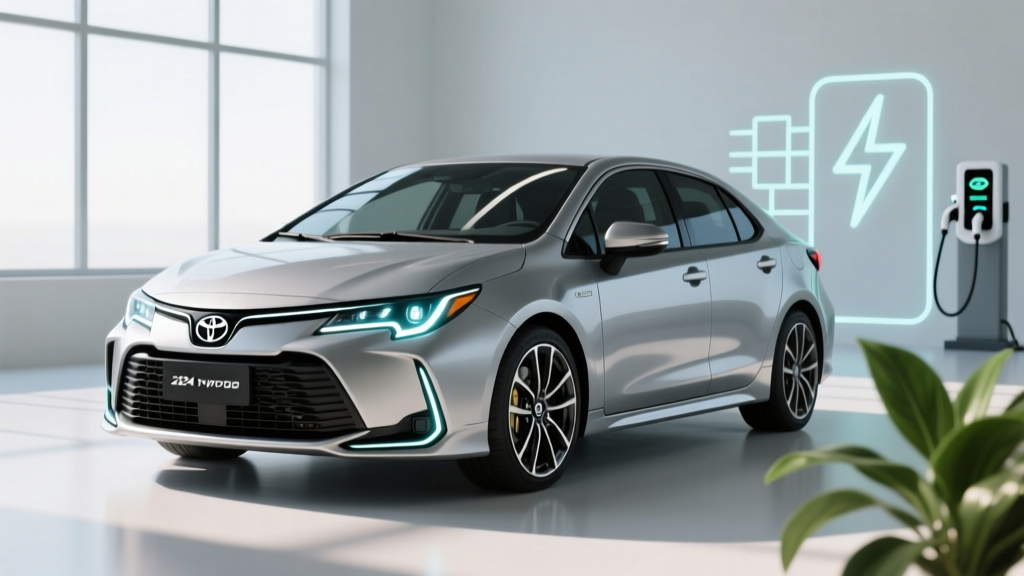
The 2024 Toyota Corolla Hybrid remains one of the most compelling arguments for electrified driving without lifestyle compromise. With an EPA-estimated 50 MPG combined in the LE trim, standard all-wheel drive on higher trims, and a starting MSRP that undercuts most competitors, it occupies a specific niche: buyers who want dramatically lower fuel costs without changing their refueling habits. No plugs, no range anxiety, no charging apps — just a car that sips fuel at roughly half the rate of its gasoline-only counterpart.
Before we break down the specs, let's clarify a critical distinction that trips up many shoppers.
HEV vs PHEV: What the Corolla Hybrid Actually Is
The 2024 Toyota Corolla Hybrid is a conventional hybrid electric vehicle (HEV), not a plug-in hybrid (PHEV). This means:
- No plug required. The 1.3 kWh nickel-metal hydride (NiMH) battery charges exclusively through regenerative braking and the gasoline engine. You never plug it in.
- No electric-only driving range to speak of. The battery assists the gas engine and enables brief low-speed electric-only operation (typically under 1 mile at very low speeds), but this is not a vehicle you can commute on electricity alone.
- No federal §30D tax credit. Because it cannot be plugged in and its battery falls well below the 7 kWh minimum threshold, the Corolla Hybrid does not qualify for the federal plug-in vehicle credit.
If you're looking for plug-in electric range, you'd want a PHEV like the Toyota Prius Prime or RAV4 Prime — or a full battery electric vehicle (BEV) like the Tesla Model 3 or Hyundai IONIQ 6. The Corolla Hybrid serves a different buyer: one who wants maximum simplicity with meaningful fuel savings.
EPA Fuel Economy and Real-World MPG
Fuel economy is the headline number, and the Corolla Hybrid delivers across the lineup. Here's the official EPA breakdown by trim, sourced from fueleconomy.gov:
| Trim | Drivetrain | City MPG | Highway MPG | Combined MPG |
|---|---|---|---|---|
| LE | AWD | 51 | 44 | 50 |
| SE | AWD | 47 | 41 | 44 |
| XLE | AWD | 47 | 41 | 44 |
Real-World MPG: What to Actually Expect
Hybrids often exceed their EPA city ratings in real-world stop-and-go driving because regenerative braking recaptures energy that a conventional car wastes as heat. The Corolla Hybrid's 51 MPG city estimate on the LE trim is conservative for urban commuters — owners frequently report 52–56 MPG in mixed city driving with moderate temperatures.
Highway driving tells a different story. At sustained speeds above 70 mph, aerodynamic drag dominates and the hybrid system's advantage shrinks. Expect 40–43 MPG on the highway in the LE, and roughly 37–40 MPG in the SE and XLE trims, which wear wider, stickier tires and carry sport-tuned suspensions that increase rolling resistance.
Cold weather impact: In sub-freezing temperatures, expect a 5–10% fuel economy reduction. The engine runs more frequently to maintain cabin heat and bring the catalytic converter to operating temperature. This is less severe than the 20–30% range loss a BEV experiences in cold weather, but it's measurable.
Powertrain: Engine, Motors, and Combined Output
The 2024 Corolla Hybrid pairs Toyota's fifth-generation hybrid system with a proven powertrain architecture:
| Engine | 2.0L 4-cylinder Atkinson-cycle (150 hp, 139 lb-ft) |
| Front Electric Motor | Permanent magnet synchronous (83 hp) |
| Rear Electric Motor (AWD) | Permanent magnet synchronous (40 hp) |
| Combined System Output | 196 horsepower |
| Transmission | Electronically controlled CVT (eCVT) |
| Drivetrain | Electronic On-Demand AWD (all trims) |
| Hybrid Battery | 1.3 kWh NiMH (bipolar) |
| 0–60 mph | ~7.1 seconds (estimated) |
| Fuel Tank | 11.4 gallons |
| Total Driving Range | ~570 miles (LE, combined) |
The 196 combined horsepower figure represents a meaningful upgrade from prior Corolla Hybrid model years. The 2.0L Dynamic Force engine operates on the Atkinson cycle for thermal efficiency, while the electric motors fill in torque at low RPMs where the engine is weakest. The result is responsive off-the-line acceleration that defies the car's efficiency focus.
The electronic on-demand AWD system uses the rear electric motor (no mechanical driveshaft) to power the rear wheels when slip is detected or during hard acceleration. It's not an off-road system, but it provides genuine traction benefits in rain and light snow — a feature that distinguishes the Corolla Hybrid from front-wheel-drive competitors like the Honda Civic hybrid.
Pricing and Tax Credit Eligibility
The 2024 Corolla Hybrid is positioned as an accessible entry point into electrified driving:
| LE | $23,500 |
| SE | $25,940 |
| XLE | $27,990 |
Does the 2024 Corolla Hybrid Qualify for a Federal Tax Credit?
No. The federal §30D Clean Vehicle Credit applies only to plug-in electric vehicles — battery electric vehicles (BEVs) and plug-in hybrids (PHEVs) — with a battery capacity of at least 7 kWh. The Corolla Hybrid's 1.3 kWh NiMH battery is far below this threshold, and the vehicle has no plug-in capability. It does not qualify for the $7,500 federal credit, the $4,000 used-EV credit, or the commercial clean vehicle credit.
Some states and utilities offer rebates for conventional hybrids, but these are typically modest ($250–$500) and vary by jurisdiction. Check your state energy office or utility provider for current programs. Always verify eligibility with a tax professional before making purchase decisions based on incentive assumptions. Current rules are published at IRS.gov.
Battery Longevity, Warranty, and Replacement Cost
Battery durability is consistently the top concern among first-time hybrid buyers. Here's what the data shows:
| Battery Chemistry | Nickel-Metal Hydride (NiMH), bipolar design |
| Federal Emissions Warranty | 10 years / 150,000 miles (hybrid battery + components) |
| Powertrain Warranty | 5 years / 60,000 miles |
| Basic Vehicle Warranty | 3 years / 36,000 miles |
| Expected Battery Lifespan | 150,000–200,000+ miles (based on fleet data) |
| Battery Replacement Cost (if needed) | $2,000–$3,500 (OEM), $1,000–$2,000 (remanufactured) |
Toyota's NiMH hybrid batteries have an exceptional longevity track record. Unlike the lithium-ion batteries in BEVs and PHEVs, which face degradation from high state-of-charge cycling and thermal stress, the Corolla Hybrid's small NiMH pack operates within a narrow state-of-charge window — typically between 40% and 80%. This shallow cycling dramatically reduces wear.
Real-world evidence supports this: Toyota Prius taxis routinely exceed 300,000 miles on original hybrid batteries. The Corolla Hybrid uses the same fundamental architecture. Battery failure before 150,000 miles is uncommon, and the 10-year/150,000-mile warranty (mandated by federal emissions regulations in CARB states, and offered nationally by Toyota) provides substantial coverage.
If replacement is eventually needed, the cost is far lower than a BEV traction battery. A new OEM NiMH pack runs $2,000–$3,500 installed, and remanufactured units are available for $1,000–$2,000. Compare this to $8,000–$20,000+ for a BEV battery replacement, and the hybrid's long-term risk profile becomes clear.
Corolla Hybrid vs Prius vs PHEV vs BEV: Which Fits You?
The Corolla Hybrid doesn't exist in a vacuum. Here's how it compares to adjacent options for a buyer weighing electrified choices:
Choose the Corolla Hybrid If:
- You have no access to home or workplace charging (apartment, street parking)
- Your budget is firmly under $25,000 and you want a new car
- You drive 12,000–15,000 miles/year and want to cut fuel costs by ~50% vs a gas Corolla
- You want AWD for inclement weather without the complexity of a plug-in system
- You plan to own the car 10+ years and value proven reliability above technology novelty
Choose a PHEV (Prius Prime, RAV4 Prime) If:
- You can charge at home (Level 1 or Level 2) and your commute is under 40 miles round-trip
- You want to drive on electricity daily but take road trips without range anxiety
- You qualify for the $7,500 federal §30D tax credit (income and sourcing rules apply)
- You're willing to pay a $5,000–$8,000 premium over the Corolla Hybrid for plug-in capability
Choose a Full BEV (Model 3, IONIQ 6, Equinox EV) If:
- You have reliable home Level 2 charging and access to DC fast chargers for road trips
- You want zero tailpipe emissions and the lowest per-mile fuel cost (electricity vs gas)
- You qualify for the $7,500 federal credit and/or state EV rebates
- You're comfortable with 250–350 miles of range and trip planning for longer drives
Ownership Economics: 5-Year Fuel Savings
The Corolla Hybrid's financial case rests on fuel savings, not tax incentives. Here's a realistic comparison assuming 15,000 miles/year, $3.50/gallon regular unleaded, and a 50/50 city-highway driving mix:
| Vehicle | Combined MPG | Annual Fuel Cost | 5-Year Fuel Cost |
| Corolla Hybrid LE (AWD) | 50 MPG | $1,050 | $5,250 |
| Corolla LE (Gas, FWD) | 35 MPG | $1,500 | $7,500 |
| 5-Year Savings with Hybrid | $2,250 | ||
That $2,250 in fuel savings over five years nearly covers the hybrid premium over the gas Corolla (roughly $1,500–$2,000 depending on trim and dealer pricing). Factor in the hybrid's stronger resale value — hybrids consistently retain value better than their gas counterparts according to Kelley Blue Book data — and the total cost of ownership tilts further in the hybrid's favor.
Insurance costs are comparable between the hybrid and gas Corolla. Some insurers offer minor discounts for hybrid vehicles, but the difference is typically negligible. Always get quotes before purchasing.
Pros and Cons
Pros
- 50 MPG combined (LE) — among the highest of any non-plug-in vehicle sold in the US
- Standard electronic AWD on all trims — rare at this price point
- 196 hp provides confident merging and passing power
- No plug-in requirement — zero lifestyle change from a gas car
- 10-year/150,000-mile hybrid battery warranty
- Proven Toyota reliability and strong resale value
- Starting MSRP under $24,000 with destination
Cons
- No federal tax credit eligibility
- SE and XLE trims drop to 44 MPG combined (sport tuning trade-off)
- Modest 11.4-gallon fuel tank limits total range vs some competitors
- CVT drone under hard acceleration (common to all eCVTs)
- Rear seat and cargo space are adequate but not generous (13.1 cu ft trunk)
- Infotainment is functional but dated compared to Hyundai/Kia rivals
- Only available as a sedan — no hatchback or wagon variant
Frequently Asked Questions
How many MPG does the 2024 Toyota Corolla Hybrid get?
The Corolla Hybrid LE achieves an EPA-estimated 51 city / 44 highway / 50 combined MPG. The SE and XLE trims, which feature sport-tuned suspensions and wider tires, are rated at 47 city / 41 highway / 44 combined. In real-world city driving, many owners exceed the EPA city estimate thanks to aggressive regenerative braking in stop-and-go traffic. Highway driving at 75+ mph will yield lower numbers than the EPA highway rating.
Can the Corolla Hybrid drive on electric power alone?
Only in very limited circumstances. The 1.3 kWh NiMH battery can power the car at low speeds (under ~25 mph) for roughly a half-mile or less on flat ground. This is not a meaningful electric-only driving range — the Corolla Hybrid is designed to use its electric motors to assist the gasoline engine, reduce fuel consumption, and enable regenerative braking, not to serve as an electric vehicle. If electric-only commuting is your goal, look at a PHEV or BEV.
Is the 2024 Corolla Hybrid reliable?
Toyota's hybrid powertrains are among the most reliable in the automotive industry. The 2.0L Dynamic Force engine and fifth-generation hybrid transaxle have been proven across millions of Toyota vehicles globally. The NiMH hybrid battery operates within a conservative state-of-charge window that minimizes degradation. Toyota covers the hybrid battery for 10 years or 150,000 miles, and real-world data from Prius fleets shows batteries routinely lasting 200,000+ miles. The Corolla Hybrid received strong reliability scores from Consumer Reports and a Top Safety Pick+ rating from the IIHS when equipped with specific headlights.
How much does it cost to replace the Corolla Hybrid battery?
If the hybrid battery fails outside warranty coverage, expect to pay $2,000–$3,500 for a new OEM replacement at a Toyota dealer, or $1,000–$2,000 for a quality remanufactured unit from an independent hybrid specialist. This is substantially less than a BEV battery replacement ($8,000–$20,000+). Given the 10-year/150,000-mile warranty and the battery's proven longevity, most original owners will never face this cost.
Does the 2024 Corolla Hybrid qualify for any tax credit?
No. The federal §30D Clean Vehicle Credit requires a vehicle to be a plug-in electric vehicle with at least 7 kWh of battery capacity. The Corolla Hybrid has a 1.3 kWh NiMH battery and no plug-in capability. It does not qualify for the federal credit, the used-EV credit, or most state EV incentives. A small number of states or utilities may offer modest hybrid rebates ($250–$500), but these are not guaranteed. Consult IRS.gov and your state energy office for current incentive details.
Is the Corolla Hybrid AWD system good in snow?
The electronic on-demand AWD system provides genuine traction benefits in light snow, rain, and icy intersections. The rear electric motor engages automatically when front-wheel slip is detected, with no driver input required. However, this is not a substitute for dedicated winter tires in heavy snow or severe ice conditions. For moderate winter climates (think Nashville, Kansas City, or Portland), the Corolla Hybrid's AWD with all-season tires is adequate. For severe winter regions, pair it with dedicated winter tires for best results.
How does the Corolla Hybrid compare to the Prius?
The redesigned Prius (2023+) offers more power (194 hp FWD / 196 hp AWD), slightly better fuel economy (up to 57 MPG combined on the LE FWD), and a more modern interior — but starts at a higher price (~$27,450 for the base LE). The Corolla Hybrid LE at $23,500 delivers 50 MPG combined for roughly $4,000 less. If budget is the primary driver, the Corolla Hybrid wins on value. If you want the latest design, more cargo versatility (hatchback), or the Prius Prime PHEV option with 44 miles of electric range, the Prius family is worth the premium.