Quick Verdict: A Style-Forward Hybrid That Delivers at the Pump
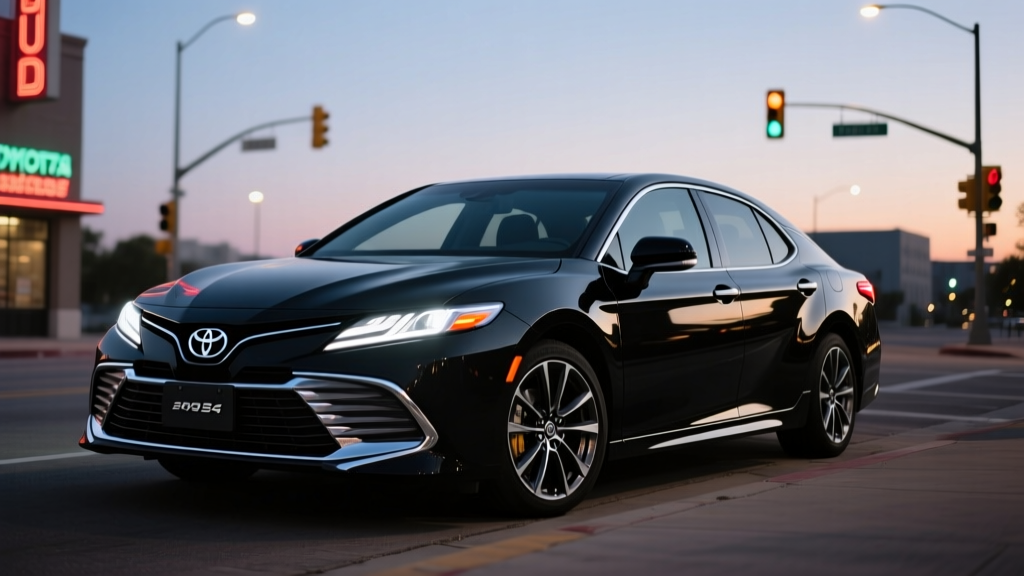
The 2024 Toyota Camry Hybrid SE Nightshade occupies a narrow but appealing lane: it's a midsize sedan with genuine sport-sedan aesthetics — blacked-out trim, 19-inch gloss-black alloy wheels, and a rear spoiler — wrapped around Toyota's proven fourth-generation hybrid powertrain. With an EPA-rated 46 MPG combined (44 city / 47 highway for the FWD model), this isn't just a looker; it's one of the most fuel-efficient non-plug-in midsize sedans you can buy. For 2026 buyers shopping the used or certified pre-owned market, the Nightshade edition remains a standout value proposition: strong efficiency, Toyota's legendary hybrid reliability, and zero need for plug-in charging infrastructure.
This guide covers everything a prospective buyer needs to know — from exact fuel economy figures and powertrain specs to battery longevity, warranty coverage, tax-credit eligibility, and how this conventional hybrid (HEV) stacks up against plug-in hybrids and full battery-electric vehicles.
HEV vs. PHEV vs. EV: Where Does the Camry Hybrid Fit?
Conventional Hybrid (HEV) — like the 2024 Camry Hybrid — uses a gasoline engine paired with electric motor(s) and a small battery (1.6 kWh in this case). The battery recharges through regenerative braking and the engine. You never plug it in. It simply drives like a normal car but uses significantly less fuel, especially in city traffic where the electric motor handles low-speed propulsion.
Plug-in Hybrid (PHEV) — such as the Toyota RAV4 Prime or Prius Prime — carries a larger battery (typically 13–22 kWh) that you can charge from a wall outlet or public charger. It offers 25–44 miles of electric-only driving before the gas engine engages. PHEVs suit drivers with home charging who want short-commute electric capability plus gas-engine range for road trips.
Battery Electric Vehicle (BEV) — like the Tesla Model 3 or Hyundai Ioniq 6 — runs entirely on electricity with no gas engine. It requires reliable access to charging (home or public) and offers zero tailpipe emissions but demands more planning for long trips.
The 2024 Camry Hybrid SE Nightshade is a conventional hybrid (HEV). There is no plug, no electric-only range to manage, and no charging infrastructure required. If you want a Camry with plug-in capability, Toyota does not currently offer a Camry PHEV in the U.S. market — the Prius Prime fills that role in Toyota's lineup.
Fuel Economy: EPA Ratings and Real-World MPG
| Drivetrain | City MPG | Highway MPG | Combined MPG |
|---|---|---|---|
| FWD (SE Nightshade) | 44 | 47 | 46 |
| AWD (SE Nightshade) | 44 | 47 | 44 |
Source: EPA Fuel Economy
Real-World MPG Expectations: Toyota's hybrid system excels in stop-and-go city driving, where the electric motor shoulders the load and regenerative braking recaptures energy. Many Camry Hybrid owners report 48–52 MPG in city-heavy commutes, exceeding the EPA city estimate. Highway-only driving at 75+ MPH typically yields 40–43 MPG, as aerodynamic drag and sustained engine load reduce the hybrid advantage. In cold weather (below 30°F), expect a 5–8% efficiency dip as the engine runs more frequently to provide cabin heat and maintain battery temperature. Overall, a realistic year-round average for mixed driving is 43–47 MPG.
With a 13.2-gallon fuel tank, the FWD SE Nightshade delivers approximately 607 miles of total range at the EPA combined figure — enough to drive from Los Angeles to San Francisco and nearly back on a single tank.
Powertrain Specs: What Powers the Nightshade
| Specification | Detail |
|---|---|
| Engine | 2.5L 4-cylinder Dynamic Force (A25A-FXS) |
| Engine Output | 176 hp @ 5,700 rpm / 163 lb-ft torque |
| Electric Motor (FWD) | 88 kW (118 hp) front motor |
| Net System Horsepower | 208 hp |
| AWD System | Independent 40 kW (54 hp) rear motor (AWD-e) |
| Transmission | Electronically controlled CVT (eCVT) |
| Hybrid Battery | Lithium-ion, 1.6 kWh (gross) |
| 0–60 MPH | ~7.2 seconds (FWD, estimated) |
| Drivetrain | FWD standard; AWD-e available |
The Camry Hybrid uses Toyota's series-parallel hybrid architecture, which seamlessly blends engine and motor power. Unlike a traditional CVT that uses belts or pulleys, Toyota's eCVT is a planetary gearset — a mechanically simple and extremely durable design with no belts to wear out. The SE Nightshade's 208 combined horsepower provides confident highway merging and passing, and the AWD-e system adds a dedicated rear electric motor that engages automatically during acceleration from stops or when front-wheel slip is detected — with no mechanical driveshaft connecting front to rear.
Pricing, Trims, and Tax Credit Eligibility
| Trim / Configuration | 2024 MSRP (at launch) | 2026 Used/CPO Range (est.) |
|---|---|---|
| Camry Hybrid SE Nightshade FWD | $33,490 | $27,000–$31,000 |
| Camry Hybrid SE Nightshade AWD | $34,890 | $28,500–$32,500 |
Source: Toyota Motor Sales, U.S.A.
Federal Tax Credit (§30D): The 2024 Toyota Camry Hybrid does not qualify for the federal §30D new clean vehicle credit. That credit requires a vehicle with a battery capacity of at least 7 kWh and plug-in charging capability — criteria that apply only to PHEVs and BEVs. As a conventional hybrid with a 1.6 kWh battery and no plug, the Camry Hybrid is ineligible.
Used Clean Vehicle Credit (§25E): If you purchase a qualifying pre-owned Camry Hybrid from a dealer for $25,000 or less, you may be eligible for the used clean vehicle credit — up to $4,000 or 30% of the sale price, whichever is lower. Income caps apply ($75,000 single / $150,000 joint filers), and the vehicle must be at least two model years old. Check current eligibility at IRS.gov and confirm with a tax professional.
- ❌ Battery capacity ≥ 7 kWh — Camry Hybrid has 1.6 kWh
- ❌ Plug-in capability required — Camry Hybrid is not a plug-in
- ❌ Not eligible for $7,500 federal credit
- ✅ Purchase price ≤ $25,000
- ✅ Vehicle ≥ 2 model years old (2024 model qualifies in 2026)
- ⚠️ Buyer income caps: $75K single / $150K joint
- ⚠️ Must purchase from a licensed dealer
Battery Longevity, Warranty, and Replacement Cost
Toyota Hybrid Battery Warranty:
- Coverage: 10 years / 150,000 miles (whichever comes first)
- Applies to: Hybrid battery pack, hybrid control module, inverter
- Capacity retention threshold: Toyota warrants against defects and abnormal degradation; there is no published minimum SoH percentage, but coverage applies if the battery fails to function properly
- Transferable: Yes — warranty transfers to subsequent owners, which supports strong resale value
Real-World Battery Lifespan: Toyota's hybrid batteries have an exceptional longevity track record. The Prius, which uses a similar architecture, routinely sees original hybrid batteries lasting 200,000+ miles. The Camry Hybrid's lithium-ion pack is smaller and less stressed than a PHEV or BEV battery because it operates within a narrow state-of-charge window (roughly 40–80%) managed by the hybrid control system — this shallow cycling dramatically reduces degradation.
Replacement Cost (if needed out of warranty): A new OEM hybrid battery pack for the Camry Hybrid runs approximately $2,500–$4,000 installed at a Toyota dealer. Refurbished or aftermarket packs are available for $1,500–$2,500. Individual battery modules can sometimes be replaced for under $500 if only one cell group has degraded. Compared to BEV battery replacements ($8,000–$20,000+), hybrid battery costs are modest — and the failure rate is low.
Nightshade-Specific Features and What You Get
The SE Nightshade edition layers visual and equipment upgrades over the standard Camry Hybrid SE. For the 2024 model year, the Nightshade package includes:
- 19-inch gloss-black alloy wheels
- Black exterior badging, mirror caps, door handles, and rear spoiler
- Dark-tinted rear privacy glass
- Black shark-fin antenna
- Choice of exterior colors: Wind Chill Pearl, Celestial Silver Metallic, Midnight Black Metallic, Supersonic Red, Reservoir Blue, and Underground (gray)
Standard technology on the SE Nightshade includes a 9-inch touchscreen with wireless Apple CarPlay and Android Auto, Toyota Safety Sense 2.5+ (pre-collision system, full-speed dynamic radar cruise control, lane departure alert with steering assist, lane tracing assist, and automatic high beams), a 7-inch digital driver display, dual-zone automatic climate control, and a smart key system with push-button start.
Notable omissions compared to higher trims (XSE, XLE): no ventilated seats, no panoramic sunroof, no JBL premium audio, no head-up display, and no 360-degree camera. The SE Nightshade is positioned as a sport-appearance package, not a luxury upgrade.
Who Should Buy This Hybrid — And Who Shouldn't
Choose the 2024 Camry Hybrid SE Nightshade if:
- You want 45+ MPG without changing your driving or fueling habits
- You lack access to home or workplace EV charging
- You take regular road trips and don't want to plan around charging stations
- You value Toyota's hybrid reliability record and strong resale value
- You want sport-sedan styling without the fuel cost penalty
- Your annual mileage is high (15,000+ miles/year) — the fuel savings compound
Look at a PHEV or BEV instead if:
- You have reliable home Level 2 charging and a short commute (PHEV gives you electric-only daily driving)
- You want to minimize or eliminate gasoline use entirely (BEV)
- You want access to HOV lane stickers (available in some states for PHEVs/BEVs, not conventional hybrids)
- You want to qualify for the $7,500 federal new-vehicle tax credit (PHEVs/BEVs only)
- Your local electricity rates make EV charging significantly cheaper per mile than gasoline
Pros
- 46 MPG combined EPA; often exceeds 50 MPG in city driving
- No plug-in charging required — zero infrastructure dependency
- 10-year/150,000-mile hybrid battery warranty
- Strong resale value; proven long-term reliability
- 208 hp provides adequate acceleration for highway merging
- Distinctive Nightshade styling with premium visual touches
- Comprehensive Toyota Safety Sense 2.5+ suite standard
Cons
- No federal §30D tax credit eligibility (HEV, not PHEV/BEV)
- No plug-in electric-only mode — always uses some gasoline
- SE trim lacks luxury features found on XSE/XLE (no ventilated seats, no JBL audio)
- 19-inch wheels and sport tuning produce a firmer ride than LE/XLE trims
- Rear-seat headroom slightly compromised by sloping roofline vs. some competitors
- AWD-e adds weight and reduces combined MPG to 44
Frequently Asked Questions
How many MPG does the 2024 Camry Hybrid SE Nightshade get?
The FWD model is EPA-rated at 44 city / 47 highway / 46 combined MPG. The AWD-e version rates at 44 city / 47 highway / 44 combined. Real-world results frequently exceed EPA city estimates, with many owners reporting 48–52 MPG in urban driving. Highway-only trips at 75+ MPH typically return 40–43 MPG.
Does the Camry Hybrid SE Nightshade need to be plugged in?
No. The 2024 Camry Hybrid is a conventional hybrid (HEV). Its 1.6 kWh lithium-ion battery recharges entirely through regenerative braking and the gasoline engine. You fuel it exactly like any other car — at a gas station. There is no plug, no charging cable, and no electric-only driving mode.
How far can the Camry Hybrid go on electric only?
The conventional Camry Hybrid does not have a meaningful electric-only range. The electric motor assists at low speeds and during light-load cruising, but the gas engine engages almost immediately under any significant acceleration or above roughly 25–30 MPH. If electric-only commuting is a priority, look at a PHEV like the Toyota Prius Prime (44 miles EV range) or a full BEV.
Is the Camry Hybrid reliable, and what does battery replacement cost?
Toyota's hybrid systems are among the most proven in the automotive industry, with decades of real-world data from millions of Prius and Camry Hybrid vehicles on the road. The hybrid battery is warranted for 10 years / 150,000 miles. Out-of-warranty replacement costs approximately $2,500–$4,000 at a dealer, with refurbished options available for less. Failure rates are low, and many original batteries exceed 200,000 miles.
Does the 2024 Camry Hybrid qualify for any tax credit?
It does not qualify for the $7,500 federal new clean vehicle credit (§30D), which requires plug-in capability and a battery of at least 7 kWh. However, if purchased used from a dealer for $25,000 or less (and the buyer meets income requirements), the used clean vehicle credit (§25E) of up to $4,000 may apply. Some states also offer their own hybrid or clean-vehicle incentives — check your state's energy office or DMV for current programs.
How does the SE Nightshade ride compare to other Camry Hybrid trims?
The SE Nightshade shares the SE trim's sport-tuned suspension and 19-inch wheels, which produce a firmer, more controlled ride than the comfort-oriented LE and XLE trims. Road imperfections are more noticeable, but body roll is reduced during cornering. If ride comfort is your top priority, the LE or XLE Hybrid with smaller wheels and softer tuning is a better fit. If you prefer a more engaged driving feel, the SE Nightshade strikes a reasonable balance.
Is AWD worth it on the Camry Hybrid SE Nightshade?
The AWD-e system adds a 54 hp rear electric motor that engages automatically during hard acceleration, wet-road starts, and low-traction conditions. It adds roughly 165 pounds and costs about $1,400 more than FWD. The trade-off is a 2 MPG combined penalty (44 vs. 46). If you live in a region with frequent rain, snow, or icy roads, AWD-e provides meaningful traction benefits without the mechanical complexity of a traditional AWD system. For dry-climate drivers, FWD is the more efficient choice.