Quick Verdict: The 2024 RAV4 Hybrid XLE Premium at a Glance
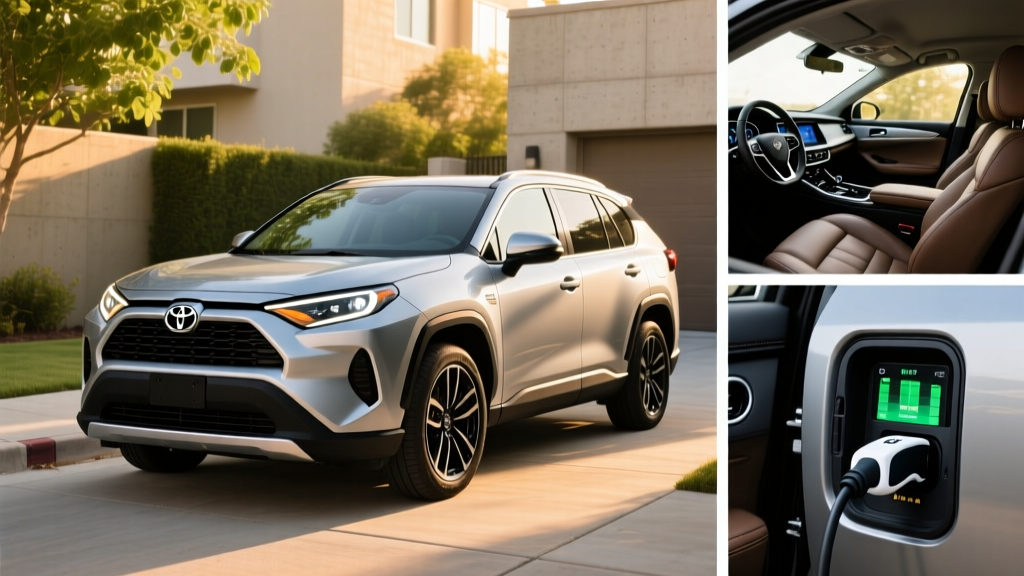
The 2024 RAV4 Hybrid XLE Premium occupies a sweet spot in Toyota's compact SUV lineup. It pairs the fuel-sipping efficiency of a conventional hybrid electric vehicle (HEV) with the premium touches buyers want — SofTex synthetic leather, a power moonroof, heated front seats, and a 10-way power-adjustable driver's seat — without stepping into the RAV4 Prime plug-in territory. At an MSRP starting around $35,725 (including destination), it undercuts the RAV4 Prime by more than $10,000 while delivering an EPA-estimated 39 MPG combined.
This is a conventional hybrid. It does not plug in. It recovers energy through regenerative braking and its gasoline engine, meaning zero lifestyle change from a gas car — you just stop at the pump less often. For buyers not ready to commit to a full battery-electric vehicle (BEV) or manage the charging logistics of a plug-in hybrid (PHEV), the XLE Premium trim delivers practicality, proven reliability, and real-world fuel savings.
| Specification | Value |
|---|---|
| EPA Fuel Economy (City / Hwy / Combined) | 41 / 38 / 39 MPG |
| Powertrain | 2.5L 4-cyl + 3 electric motors (AWD) |
| Combined Horsepower | 219 hp |
| Drivetrain | Electronic On-Demand AWD (eAWD) |
| Hybrid Battery | 1.6 kWh (sealed NiMH), self-charging |
| Plug-In Required? | No — conventional HEV |
| 0–60 mph | ~7.4 seconds |
| Cargo Volume (rear seats up / down) | 37.6 / 69.8 cu ft |
| Towing Capacity | 1,750 lbs |
| Base MSRP (incl. destination) | ~$35,725 |
| Federal EV Tax Credit (§30D) | Not eligible (HEV, not PHEV/BEV) |
| Hybrid Battery Warranty | 10 years / 150,000 miles |
HEV vs PHEV: Why the RAV4 Hybrid Is Not a Plug-In
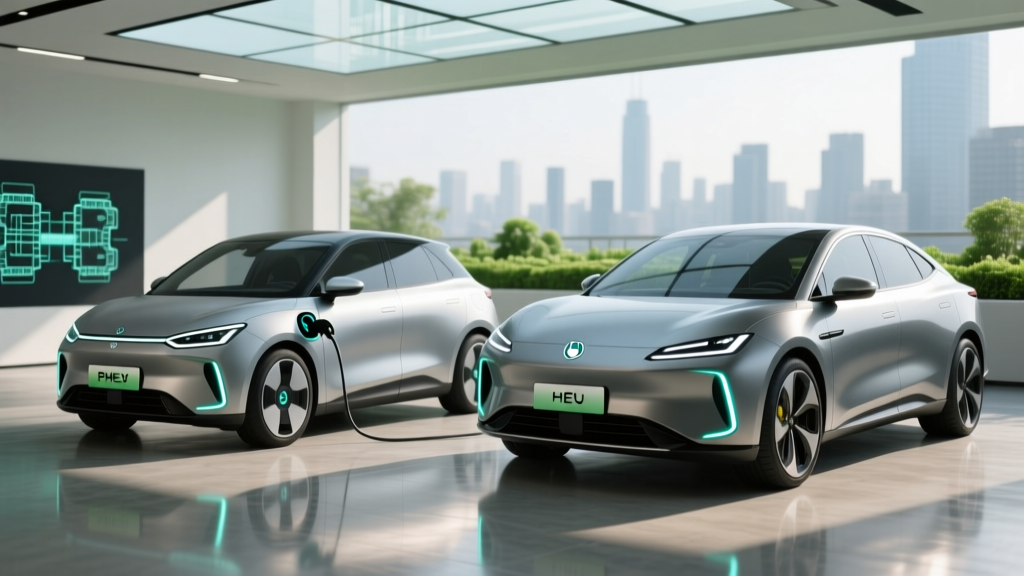
A common source of confusion in Toyota's lineup is the difference between the RAV4 Hybrid (HEV) and the RAV4 Prime (PHEV). They share a nameplate and similar body styling, but their powertrains serve very different use cases.
| Attribute | RAV4 Hybrid (HEV) | RAV4 Prime (PHEV) |
|---|---|---|
| Plug-In Charging | No — self-charging | Yes — Level 1 or Level 2 |
| Battery Capacity | ~1.6 kWh (NiMH) | 18.1 kWh (Li-ion) |
| Electric-Only Range | N/A (EV assist only) | 42 miles (EPA) |
| Combined Horsepower | 219 hp | 302 hp |
| EPA Combined MPG / MPGe | 39 MPG | 94 MPGe (elec) / 38 MPG (gas) |
| Starting MSRP | ~$31,075 (LE) | ~$43,690 (SE) |
| Federal Tax Credit (§30D) | Not eligible | Up to $7,500 (eligibility varies) |
| DC Fast Charging | N/A | Not available (Level 2 max) |
The RAV4 Hybrid uses a small battery that charges itself via the engine and regenerative braking. You never plug it in. The RAV4 Prime carries a much larger 18.1 kWh lithium-ion pack that enables 42 miles of pure electric driving before the gas engine kicks in — but it requires access to a plug (120V household outlet or 240V Level 2 charger) to realize that benefit. The Prime also qualifies for federal tax credits under IRS §30D, subject to income limits, MSRP caps, and battery-sourcing requirements, which can narrow the price gap significantly.
If you have reliable home charging and a commute under 40 miles, the RAV4 Prime is worth the premium. If you park on the street, live in an apartment, or simply don't want to think about plugging in, the RAV4 Hybrid is the pragmatic choice.
Fuel Economy: EPA Ratings vs Real-World MPG
The EPA rates the 2024 RAV4 Hybrid (all AWD trims, including the XLE Premium) at 41 MPG city / 38 MPG highway / 39 MPG combined, per fueleconomy.gov. These are strong numbers for a compact AWD SUV, but real-world results depend heavily on driving patterns.
| Driving Scenario | Expected MPG | Notes |
|---|---|---|
| EPA City (sticker) | 41 MPG | Hybrids excel in stop-and-go |
| Real-World City / Suburban | 40–44 MPG | Many owners exceed EPA city |
| EPA Highway (sticker) | 38 MPG | Less regen benefit at steady speed |
| Real-World Highway (70–75 mph) | 33–36 MPG | Aero drag and limited regen |
| Cold Weather (below 32°F) | 32–36 MPG combined | Engine runs more for cabin heat |
| EPA Combined (sticker) | 39 MPG | 55% city / 45% highway mix |
The key insight with any Toyota hybrid: city driving is where you shine. The electric motors handle low-speed acceleration, the engine shuts off at stops, and regenerative braking recaptures energy constantly. On the highway, the gas engine does most of the work, and fuel economy drops closer to what a conventional turbocharged compact SUV might deliver.
In cold weather, expect a 10–15% hit to combined MPG. The engine must run more frequently to generate cabin heat and maintain battery temperature. This is inherent to all hybrids and is not a defect — it's thermodynamics.
Powertrain and Performance
The 2024 RAV4 Hybrid uses Toyota's fifth-generation hybrid system, pairing a 2.5-liter Dynamic Force four-cylinder engine with three electric motor-generators — two on the front axle and one on the rear, enabling electronic on-demand all-wheel drive without a mechanical driveshaft.
Combined system output is 219 horsepower. The front electric motors contribute 134 hp and 199 lb-ft of torque, giving the RAV4 Hybrid strong off-the-line acceleration despite the engine's modest 176 hp on its own. The 54-hp rear motor activates when the system detects front-wheel slip or during hard acceleration.
The 0–60 mph time of approximately 7.4 seconds places the RAV4 Hybrid ahead of most non-turbo compact SUV competitors and makes highway merging effortless. The eCVT (electronically controlled continuously variable transmission) is smooth but can produce the characteristic "rubber-band" drone under heavy acceleration — a common trait of Toyota's hybrid system.
The eAWD system is not designed for off-roading but handles rain, snow, and light gravel with confidence. The rear motor engages automatically and disengages when not needed to preserve fuel economy.
Battery Longevity, Warranty, and Replacement Costs
Hybrid battery anxiety is the single most common concern we hear from prospective buyers. Here's the data:
2024 RAV4 Hybrid Battery Warranty
Hybrid Battery: 10 years / 150,000 miles (whichever comes first), transferable to subsequent owners.
Hybrid System Components (inverter, transaxle, control modules): 8 years / 100,000 miles.
Capacity Threshold: Toyota warrants the battery against defects and abnormal capacity loss. There is no published minimum State of Health (SoH) percentage, but real-world degradation on Toyota's NiMH hybrid packs is typically 10–15% over 150,000 miles.
The RAV4 Hybrid uses a nickel-metal hydride (NiMH) battery pack rated at approximately 1.6 kWh. Unlike the large lithium-ion packs in BEVs and PHEVs, this small battery is never deeply discharged or fully charged — the hybrid system keeps it in a narrow State of Charge window (roughly 40–80%), which dramatically extends cycle life.
Toyota's hybrid batteries have an exceptional longevity track record. Data from fleet operators and long-term owners suggests these packs routinely last 150,000–200,000+ miles before needing replacement. The Prius, which uses a similar NiMH architecture, has documented cases of original batteries exceeding 300,000 miles.
If replacement is eventually needed out of warranty, a new OEM hybrid battery for the RAV4 Hybrid typically costs between $2,500 and $4,000 including labor. Refurbished or reconditioned packs are available from third-party suppliers for $1,500–$2,500. Individual cell modules can sometimes be replaced for under $500 by specialized hybrid repair shops.
For context, this is a fraction of the $10,000–$20,000+ replacement cost associated with large BEV traction batteries. The small pack size and mature NiMH chemistry keep costs manageable.
Pricing, Tax Credits, and Total Cost of Ownership
The 2024 RAV4 Hybrid XLE Premium starts at approximately $35,725 (MSRP including destination). Popular add-ons — such as the Technology Package (panoramic view monitor, front and rear parking assist with automatic braking) — can push the as-tested price toward $37,000–$38,000.
Federal Tax Credit Eligibility
The RAV4 Hybrid is a conventional HEV and does not qualify for the federal §30D Clean Vehicle Credit, which is reserved for plug-in electric vehicles (BEVs and PHEVs) meeting battery capacity, critical-mineral sourcing, MSRP, and buyer-income requirements. No federal tax credit is available for non-plug-in hybrids as of current IRS guidelines.
Some states and local utilities offer rebates for hybrid purchases, but these vary widely by jurisdiction. Check your state energy office or utility provider for current programs.
Five-Year Fuel Cost Comparison
Where the RAV4 Hybrid earns its keep is at the pump. Assuming 15,000 miles/year and $3.50/gallon regular unleaded:
| Vehicle | Combined MPG | Annual Fuel Cost | 5-Year Fuel Cost |
|---|---|---|---|
| 2024 RAV4 Hybrid AWD | 39 MPG | ~$1,346 | ~$6,730 |
| 2024 RAV4 Gas AWD (2.5L) | 30 MPG | ~$1,750 | ~$8,750 |
| Compact SUV Avg (gas AWD) | 27 MPG | ~$1,944 | ~$9,720 |
Over five years, the RAV4 Hybrid saves approximately $2,000–$3,000 in fuel compared to the gas-only RAV4 AWD, and more against less efficient competitors. Factor in Toyota's strong resale value — the RAV4 Hybrid consistently retains 60–65% of its value at five years, per industry depreciation data — and the total cost of ownership is among the lowest in the compact SUV segment.
Who Should Buy the RAV4 Hybrid XLE Premium?
Choose the 2024 RAV4 Hybrid XLE Premium If:
- You want maximum fuel efficiency without changing your refueling habits
- You don't have access to home or workplace charging (apartment, street parking)
- You prioritize long-term reliability and low maintenance costs
- Your daily driving is a mix of city and highway with heavy stop-and-go
- You want AWD capability for snow/rain without a fuel-economy penalty
- You want premium features (SofTex, moonroof, heated seats) without the $43K+ RAV4 Prime price
Consider the RAV4 Prime (PHEV) Instead If:
- You have reliable Level 2 home charging and a commute under 42 miles
- You want to drive mostly electric on weekdays and take gas-powered road trips on weekends
- You qualify for the full $7,500 federal tax credit, narrowing the price gap
- You want the 302-hp performance upgrade
Consider a Full EV (BEV) Instead If:
- You have home charging and want zero tailpipe emissions
- Your daily driving is under 250 miles and you rarely road-trip beyond charging-network range
- You want the lowest per-mile "fuel" cost (electricity at ~$0.04–$0.06/mile vs gas at ~$0.09–$0.12/mile)
- You're eligible for federal and state EV incentives
Pros
- 39 MPG combined — real-world city often exceeds 40 MPG
- No plug-in required — zero lifestyle change from gas cars
- 10-year / 150,000-mile hybrid battery warranty
- Standard eAWD across all Hybrid trims
- Strong resale value and Toyota reliability reputation
- XLE Premium adds luxury features at a reasonable price
Cons
- Highway MPG drops to mid-30s at 70+ mph
- No federal tax credit (HEV, not PHEV/BEV)
- eCVT drone under hard acceleration
- Towing limited to 1,750 lbs
- Infotainment system is functional but not class-leading
- Cold weather reduces MPG by 10–15%
Frequently Asked Questions
How many MPG does the 2024 RAV4 Hybrid XLE Premium get?
The EPA rates it at 41 MPG city, 38 MPG highway, and 39 MPG combined. In real-world driving, expect 40–44 MPG in city and suburban conditions, 33–36 MPG on sustained highway drives at 70–75 mph, and 32–36 MPG combined in cold weather below freezing.
Does the RAV4 Hybrid need to be plugged in?
No. The RAV4 Hybrid is a conventional HEV (hybrid electric vehicle). Its battery charges through regenerative braking and the gasoline engine. You never plug it in — you simply refuel at a gas station as normal.
What is the difference between the RAV4 Hybrid and the RAV4 Prime?
The RAV4 Hybrid (HEV) is self-charging with no plug, a 1.6 kWh NiMH battery, 219 hp, and 39 MPG combined. The RAV4 Prime (PHEV) is a plug-in hybrid with an 18.1 kWh lithium-ion battery, 42 miles of electric-only range, 302 hp, and a starting price roughly $10,000 higher — though federal tax credits may offset some of that difference for eligible buyers.
Is the RAV4 Hybrid reliable, and what does a battery replacement cost?
Toyota's hybrid system is among the most proven in the industry, with NiMH packs routinely lasting 150,000–200,000+ miles. The hybrid battery is warrantied for 10 years / 150,000 miles. Out-of-warranty replacement costs range from $2,500–$4,000 for a new OEM pack, or $1,500–$2,500 for a refurbished unit.
Does the 2024 RAV4 Hybrid qualify for any federal tax credit?
No. The federal §30D Clean Vehicle Credit applies only to plug-in electric vehicles (BEVs and PHEVs). The RAV4 Hybrid is a conventional HEV and is not eligible. The RAV4 Prime (PHEV) may qualify for up to $7,500, subject to IRS income caps, MSRP limits, and battery-sourcing requirements. Check current rules at irs.gov.
How does the RAV4 Hybrid compare to a full EV for daily driving?
If you can charge at home, a BEV like the Tesla Model Y or Hyundai Ioniq 5 offers lower per-mile energy costs and zero tailpipe emissions. But if you lack charging access, regularly drive beyond 250 miles, or want the simplicity of gas-station refueling, the RAV4 Hybrid delivers excellent efficiency with zero infrastructure requirements.
Does the XLE Premium trim include AWD?
Yes. All 2024 RAV4 Hybrid trims come standard with electronic on-demand AWD (eAWD), which uses a dedicated rear-axle electric motor. There is no FWD-only RAV4 Hybrid in the US market for the 2024 model year.