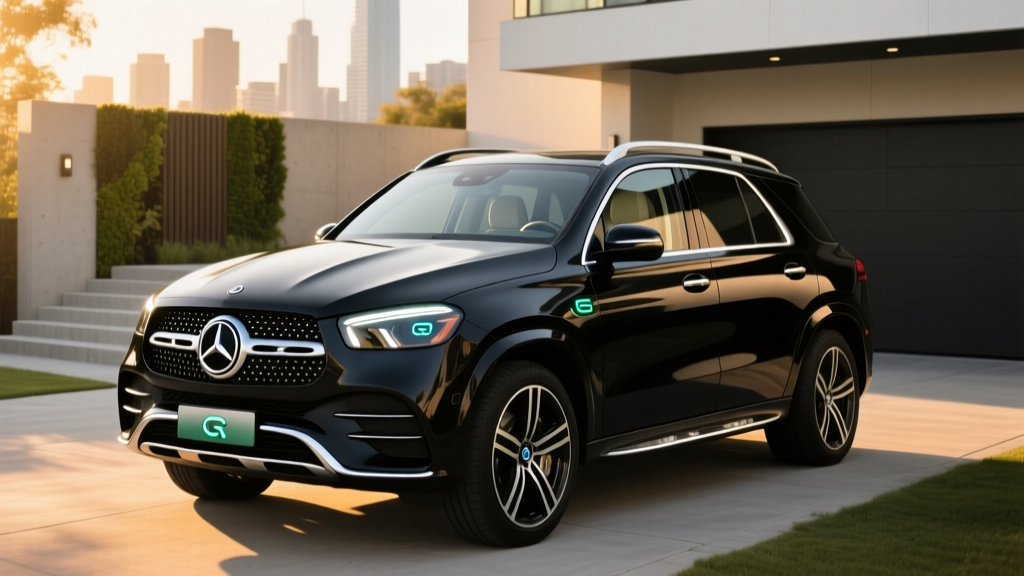
The Mercedes-Benz GLE has long been a benchmark midsize luxury SUV, but the electrified variant — the 2025 GLE 450e plug-in hybrid 4MATIC SUV — asks a compelling question: can you keep the three-pointed star's refinement while shaving your fuel bill and tailpipe emissions? With 48 miles of EPA-rated electric-only range and a combined 375 horsepower, this PHEV threads the needle between a conventional hybrid and a full battery-electric vehicle. Here's everything you need to know before signing the lease or purchase agreement.
HEV vs PHEV: Where the GLE 450e Fits
Before diving into specs, it's worth clarifying the distinction, because Mercedes sells the GLE in multiple powertrain flavors and the terminology trips up many shoppers.
| Feature | Conventional Hybrid (HEV) | Plug-In Hybrid (PHEV) | Full EV (BEV) |
|---|---|---|---|
| Plugs in? | No | Yes | Yes |
| Electric-only range | 0–2 mi at low speed | 20–50+ mi | 200–400+ mi |
| Battery size | 1–2 kWh | 15–30 kWh | 60–120+ kWh |
| Gas engine? | Yes (primary) | Yes (backup) | No |
| Tax credit eligible? | No | Possibly (§30D) | Possibly (§30D) |
The GLE 450e is a PHEV. That means it has a meaningfully larger battery than a conventional hybrid, can be plugged in to recharge, and delivers genuine electric-only driving for most daily commutes. When the battery depletes, the turbocharged inline-six kicks in and it operates like a traditional hybrid. You never have to plug it in — but if you don't, you're paying premium-SUV fuel prices for nothing.
Powertrain and Performance Specs
The 2025 GLE 450e pairs a 3.0-liter turbocharged inline-six engine with a permanently excited synchronous electric motor integrated into the 9G-TRONIC automatic transmission. Here's the full breakdown:
| Specification | 2025 GLE 450e 4MATIC |
|---|---|
| Engine | 3.0L turbocharged inline-6 |
| Electric Motor | 100 kW (134 hp) synchronous |
| Combined System Output | 375 hp / 479 lb-ft torque |
| Transmission | 9-speed automatic (9G-TRONIC) |
| Drivetrain | 4MATIC all-wheel drive |
| 0–60 mph | 5.6 seconds (manufacturer est.) |
| Battery (gross / usable) | 23.1 kWh / ~19.5 kWh usable |
| Battery Chemistry | NMC (nickel manganese cobalt) |
| EPA Electric-Only Range | 48 miles |
| Total Combined Range | |
| EPA MPGe (electric + gas) | 56 MPGe combined |
| EPA MPG (gas-only, battery depleted) | 23 city / 26 hwy / 24 combined |
| Max AC Charge Rate (Level 2) | 7.4 kW |
| DC Fast Charging | Not available |
| Level 2 Charge Time (0–100%) | ~3.25 hours at 7.4 kW |
| Level 1 Charge Time (120V) | ~18–20 hours |
| Towing Capacity | Up to 7,700 lbs (properly equipped) |
A few things stand out. The 375 combined horsepower makes this the punchy, effortless cruiser you'd expect from a GLE — the electric motor fills in torque at low RPM before the turbo spools, so around-town acceleration is immediate. The 5.6-second 0–60 time puts it ahead of the gas-only GLE 350 and not far behind the mild-hybrid GLE 450.
The critical limitation: no DC fast charging. The GLE 450e accepts only AC power (Level 1 and Level 2). On a road trip, you cannot top up the battery at a highway fast-charger in 20 minutes. This is common among European luxury PHEVs — BMW's X5 xDrive50e similarly lacks DCFC — but it means the 48-mile electric range is best exploited through consistent home or workplace Level 2 charging.
Electric Range and Real-World Efficiency
Real-World Expectation: 38–45 miles in mixed driving; as low as 32–35 miles at sustained 75+ mph highway speeds or in sub-freezing temperatures. Climate control use (especially heat without preconditioning) pulls from the traction battery and reduces range.
Forty-eight miles of electric range is among the best in the luxury PHEV segment. The EPA-rated 56 MPGe reflects the blended efficiency when you're using both electric and gas miles. Once the battery depletes, the inline-six and hybrid system deliver an EPA-estimated 24 MPG combined — respectable for a 5,300-pound AWD SUV, though not class-leading.
| Driving Mode | City | Highway | Combined |
|---|---|---|---|
| Charge-depleted (gas hybrid mode) | 23 MPG | 26 MPG | 24 MPG |
| Blended (MPGe, with charge) | — | — | 56 MPGe |
| Electric-only | ~2.1 kWh/mile (approx. 48 mi from ~19.5 usable kWh) | ||
Real-world MPG context: PHEVs reward consistent charging habits. If you plug in nightly and your commute is under 40 miles round-trip, you may burn gas only on weekend road trips — effectively achieving 80–100+ MPGe over a month. Neglect to charge and you're driving a heavy luxury SUV at 23–25 MPG, which is worse than a dedicated HEV like the Toyota Highlander Hybrid (35 MPG combined). The GLE 450e's efficiency is entirely in the driver's hands.
According to fueleconomy.gov, the 2025 GLE 450e achieves its 56 MPGe combined rating with a 48-mile all-electric range figure. These are laboratory-derived EPA numbers; real-world results vary with temperature, terrain, and driving style.
Charging Setup: What You Need at Home
Because the GLE 450e lacks DC fast charging, your home Level 2 setup is where this PHEV lives or dies. Here's the practical charging picture:
| Charge Level | Voltage | Max kW | Time (0–100%) | Miles of Range Added/Hr |
|---|---|---|---|---|
| Level 1 (standard outlet) | 120V | ~1.4 kW | ~18–20 hours | ~3–4 mi/hr |
| Level 2 (home/public AC) | 240V | 7.4 kW | ~3.25 hours | ~15–18 mi/hr |
| DC Fast Charge | — | N/A | N/A | N/A |
A 240-volt Level 2 home charger is essentially mandatory for this vehicle. At 7.4 kW, a full charge takes about 3.25 hours — plug in when you get home at 6 PM, and you're fully charged by 9:15 PM. That's ample time for daily use. A standard 120V outlet technically works but adds only 3–4 miles of electric range per hour, meaning an overnight session recovers barely 30 miles — not enough to fully replenish the battery.
Home charger installation cost for a Level 2 unit (like a ChargePoint Home Flex or Mercedes-Benz Wallbox) typically runs $800–$2,000 including equipment, electrician labor, and permitting, assuming your electrical panel has capacity. A panel upgrade (200A service) can add $1,500–$3,000. Consult a licensed electrician for your specific situation.
Pricing, Trims, and Federal Tax Credit Eligibility
The 2025 GLE 450e 4MATIC starts at an MSRP of approximately $80,850 (including destination). Options packages — AMG Line exterior, Driver Assistance Plus, MBUX premium tiers, 21-inch wheels — can push a well-equipped example past $95,000.
Now for the tax credit question every PHEV buyer asks:
- Maximum credit: Up to $7,500 (split: $3,750 for battery components + $3,750 for critical minerals)
- MSRP cap: SUVs/vans/pickups must have MSRP ≤ $80,000
- Buyer income cap: MAGI ≤ $150,000 (single) / $225,000 (head of household) / $300,000 (joint)
- Battery sourcing: Battery components must be manufactured or assembled in North America; critical minerals must be sourced from the US or FTA partners
- Point-of-sale transfer: Eligible buyers can transfer the credit to the dealer for an upfront price reduction
- Foreign entity of concern (FEOC): Vehicles with battery components from FEOC entities are disqualified
The GLE 450e's situation is nuanced. At an $80,850 starting MSRP, it sits right at the edge of the $80,000 SUV cap. Some model configurations with specific option packages may exceed the cap and become ineligible. Additionally, Mercedes-Benz's battery supply chain must satisfy the critical minerals and component sourcing requirements, which have tightened significantly through 2025. Always verify current eligibility with your dealer and a tax professional before purchase. The IRS maintains a list of qualifying vehicles, and eligibility can change mid-year as supply chains shift.
Battery Warranty, Reliability, and Replacement Costs
6 years or 62,000 miles (whichever comes first) — covers battery capacity below 70% of original capacity.
Hybrid Component Warranty:
Powertrain-related hybrid components (electric motor, power electronics) covered under the standard 4-year/50,000-mile new vehicle limited warranty.
Note: Mercedes-Benz's PHEV battery warranty is shorter than the 8-year/100,000-mile coverage typical of many competitors (Toyota, Hyundai, Ford). This is a meaningful consideration for long-term ownership.
Battery replacement cost for the GLE 450e's 23.1 kWh pack is estimated between $12,000 and $18,000 including labor, based on current Mercedes-Benz parts pricing and independent service data. However, PHEV batteries are smaller and less stressed than full EV packs — they're buffered more conservatively and rarely see the deep discharge cycles that accelerate degradation. Most PHEV batteries outlast their warranty periods with minimal capacity loss (typically 5–10% over 8–10 years based on fleet data from similar NMC packs).
Regarding overall reliability: the GLE platform has earned mixed reliability scores from Consumer Reports and J.D. Power in recent model years, with most complaints centered on MBUX infotainment glitches and minor electrical issues rather than powertrain failures. The plug-in hybrid system adds complexity (two power sources, additional cooling circuits, high-voltage components), but Mercedes has been deploying this architecture across multiple models since 2020. The NHTSA vehicle page should be checked for any active recalls or technical service bulletins.
Who Should Choose the GLE 450e vs a Full EV or Gas SUV?
- You can install a Level 2 charger at home and your daily commute is under 45 miles round-trip
- You want a luxury midsize SUV with genuine towing capability (7,700 lbs) that a comparable EV like the BMW iX cannot match
- You take regular road trips and don't want to plan around charging infrastructure
- You want to reduce fuel consumption without committing to full electrification
- You have reliable home and/or workplace charging and rarely tow
- You want the lowest per-mile energy cost and minimal maintenance
- Your daily driving is predictable and under 250 miles
- You cannot charge at home or work
- You view the PHEV price premium (~$5,000–$7,000 over GLE 450) as not worth the fuel savings
- You prefer simpler mechanicals with fewer systems to maintain
The GLE 450e makes the most financial sense for drivers who can exploit its electric range daily. If you charge at home and drive 35 miles per day, you'll use roughly 0.5 gallons of gas on weekdays — a massive reduction from the 1.5+ gallons a gas GLE 350 would consume. Over a year at 12,000 miles with 70% electric driving, you could save $1,200–$1,800 in fuel costs depending on local electricity and gas prices. The payback period on the PHEV premium is roughly 3–5 years for high-electric-use drivers.
Pros and Cons
- 48-mile EPA electric range — best in luxury PHEV SUV class
- 375 hp combined delivers effortless acceleration
- 7,700-lb towing capacity (rare for electrified SUVs)
- Quiet, refined electric-only driving around town
- Genuinely usable back seat and cargo space (battery under floor)
- Potential §30D tax credit up to $7,500
- No DC fast charging — road trips run on gas only
- Battery warranty (6 yr/62k mi) shorter than many competitors
- MSRP near $80K cap may limit tax credit eligibility on optioned models
- Level 1 charging impractically slow for full replenishment
- Heavy vehicle — 5,300+ lbs affects braking feel and tire wear
- 24 MPG gas-only is unimpressive vs dedicated HEV SUVs
Frequently Asked Questions
How many MPG does the 2025 GLE 450e get?
In charge-depleted (gas-only hybrid) mode, the EPA rates it at 23 city / 26 highway / 24 combined MPG. In blended use with regular charging, it achieves 56 MPGe combined. Real-world results depend heavily on how often you plug in — daily chargers with short commutes may burn only a few gallons per week.
How far can the GLE 450e go on electric only?
The EPA rates it at 48 miles electric-only. In real-world conditions — highway speeds, cold weather, climate control use — expect 35–45 miles. This covers most daily commutes comfortably if you charge nightly.
Does the GLE 450e qualify for the federal EV tax credit?
It may qualify for up to $7,500 under IRS §30D, but eligibility depends on MSRP (must be ≤ $80,000 for SUVs), buyer income, and battery sourcing requirements. The base MSRP of ~$80,850 is borderline, and optioned models may exceed the cap. Verify current eligibility on fueleconomy.gov's tax credit page and with a tax professional.
Is the GLE 450e reliable, and what does a battery replacement cost?
The PHEV powertrain has been in Mercedes-Benz's lineup since 2020 with no widespread failure reports. The high-voltage battery is warrantied for 6 years/62,000 miles (shorter than some rivals). Replacement cost is estimated at $12,000–$18,000, though most PHEV batteries retain 90%+ capacity well beyond warranty periods with normal use.
Can the GLE 450e DC fast charge?
No. The GLE 450e supports only AC charging — Level 1 (120V) and Level 2 (240V, up to 7.4 kW). A full Level 2 charge takes about 3.25 hours. This is a notable limitation for road-trip scenarios where you cannot recharge the battery quickly at highway rest stops.
Hybrid vs PHEV vs EV — which is right for me?
A conventional hybrid (HEV) like the Toyota Highlander Hybrid needs no plug and delivers consistent MPG savings. A PHEV like the GLE 450e gives you electric-only daily driving with a gas backup for long trips — ideal if you can charge at home. A full EV (BEV) eliminates gas entirely with the lowest running costs but requires reliable charging access and trip planning for longer drives. The PHEV is the compromise play: maximum flexibility, moderate complexity.