Quick Verdict: The Only Plug-In Hybrid SUV With DC Fast Charging
The 2024 Mitsubishi Outlander PHEV occupies a unique position in the plug-in hybrid market. It's one of the few PHEVs that supports DC fast charging, it offers three rows of seating, and its all-wheel-drive system is genuinely capable in adverse weather. With an EPA-rated 38 miles of electric-only range and a total combined range exceeding 400 miles, it bridges the gap between battery-electric daily commuting and gas-powered road-trip freedom. But at a starting MSRP of $41,640 (before any incentives), buyers need to know exactly what they're getting — and what they're giving up — compared to rivals like the Toyota RAV4 Prime or a full EV like the Hyundai Ioniq 5.
| Specification | 2024 Outlander PHEV |
|---|---|
| Base MSRP | $41,640 (ES trim) |
| EPA Electric Range | 38 miles |
| EPA Combined MPGe | 64 MPGe |
| EPA Gas-Only MPG (Combined) | 26 MPG |
| Battery Capacity | 20.0 kWh (usable) |
| Combined System Horsepower | 248 hp |
| 0–60 mph | ~7.0 seconds |
| DC Fast Charge (10–80%) | ~38 minutes (CHAdeMO) |
| Level 2 Charge (0–100%) | ~6.5 hours |
| Drivetrain | Standard S-AWC (AWD) |
| Seating | 3 rows / 7 passengers |
| Battery Warranty | 10 years / 100,000 miles |
HEV vs. PHEV: What the Outlander Actually Is
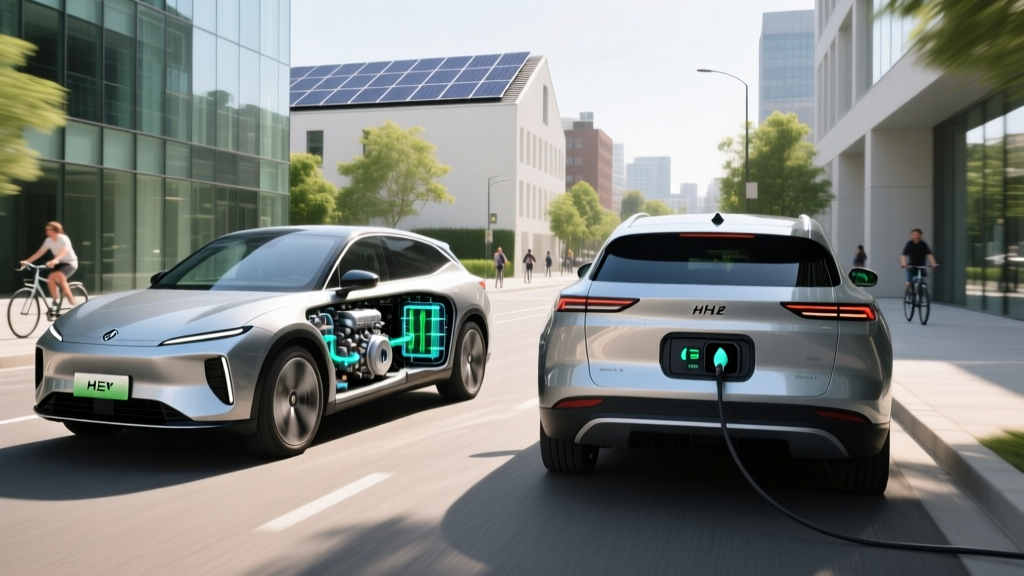
Before evaluating the Outlander PHEV, it's worth clarifying the distinction between a conventional hybrid (HEV) and a plug-in hybrid (PHEV), since Mitsubishi also sells a gas-only Outlander and buyers sometimes confuse the two.
| Feature | Conventional Hybrid (HEV) | Plug-In Hybrid (PHEV) |
|---|---|---|
| Battery Size | 1–2 kWh | 10–25 kWh |
| Plug In to Charge? | No — charges via regen and engine | Yes — plug in for full electric range |
| Electric-Only Range | 0–1 mile at low speed | 20–50 miles at highway speed |
| After Battery Depletes | Operates as hybrid always | Operates as hybrid (engine + regen) |
| Federal Tax Credit | None (new vehicles) | Up to $7,500 if eligible (§30D) |
The 2024 Outlander PHEV is firmly in the plug-in category. Its 20.0 kWh battery pack is large enough to power the vehicle for 38 EPA-rated miles without the gasoline engine starting. Once that battery is depleted, the 2.4-liter four-cylinder engine kicks in and the vehicle operates as a conventional series-parallel hybrid, achieving 26 MPG combined on gas alone. If you never plug it in, you're carrying around 600+ pounds of battery you're not using — making the gas-only Outlander (27 MPG combined) a more sensible choice.
Electric Range, MPGe, and Real-World Fuel Economy
How Far Can the 2024 Outlander PHEV Go on Electric Only?
The EPA rates the Outlander PHEV at 38 miles of electric-only range. In real-world testing, that number is achievable in mild weather (55–75°F) with moderate city and suburban driving. However, expect the following variations:
- City driving (mild weather): 36–40 miles — regenerative braking in stop-and-go traffic helps extend range
- Highway driving (70 mph, mild): 30–34 miles — higher speeds drain the battery faster
- Cold weather (below 32°F): 25–30 miles — battery chemistry is less efficient, and cabin heating draws significant power (the Outlander PHEV uses a resistive heater, not a heat pump, which increases winter energy consumption)
- Hot weather with A/C: 33–37 miles — less impact than cold, but still noticeable
Total combined range (electric + gasoline) is approximately 420 miles, according to Mitsubishi. That's a genuine advantage for road trips where charging infrastructure is sparse.
How Many MPG Does the Outlander PHEV Get?
Once the battery is depleted, the Outlander PHEV operates as a hybrid. Here's the full EPA breakdown:
| Driving Mode | City | Highway | Combined |
|---|---|---|---|
| Electric + Gas (MPGe) | — | — | 64 MPGe |
| Gas Only (charge-depleted) | 25 MPG | 27 MPG | 26 MPG |
The 26 MPG gas-only figure is respectable for a 4,600-pound, three-row AWD SUV, but it's not class-leading. The Toyota RAV4 Prime achieves 38 MPG combined once its electric range is used up, and the Hyundai Tucson PHEV manages 35 MPG. The Outlander trades efficiency for size: it's noticeably larger and offers a third row that neither rival provides.
In practice, owners who charge nightly and drive fewer than 35 miles per day may go weeks without buying gas. Mitsubishi reports that the average Outlander PHEV owner drives roughly 70% of their miles on electricity when charging regularly.
Powertrain, Battery, and Charging Details
Combined Horsepower and Drivetrain
The 2024 Outlander PHEV uses a series-parallel plug-in hybrid system with two electric motors and a 2.4-liter Atkinson-cycle four-cylinder engine:
- Front electric motor: 114 hp / 188 lb-ft
- Rear electric motor: 134 hp / 144 lb-ft
- Gasoline engine: 126 hp / 146 lb-ft
- Combined system output: 248 hp
- Drivetrain: Mitsubishi's S-AWC (Super All-Wheel Control) is standard on every trim — there is no front-wheel-drive version
The result is a 0–60 mph time of approximately 7.0 seconds. That's not sports-car territory, but it's adequate for merging and passing. More importantly, the electric motors deliver instant torque from a stop, making the Outlander PHEV feel quicker around town than the number suggests.
Battery Chemistry and Capacity
The Outlander PHEV uses a 20.0 kWh (usable) lithium-ion battery pack with NMC (nickel-manganese-cobalt) chemistry. This is mounted beneath the floor, which preserves cargo space but does slightly reduce ground clearance compared to the gas-only Outlander. The pack is liquid-cooled, which helps manage thermal stress during DC fast charging and in hot climates.
Charging Speeds: The DC Fast-Charging Advantage
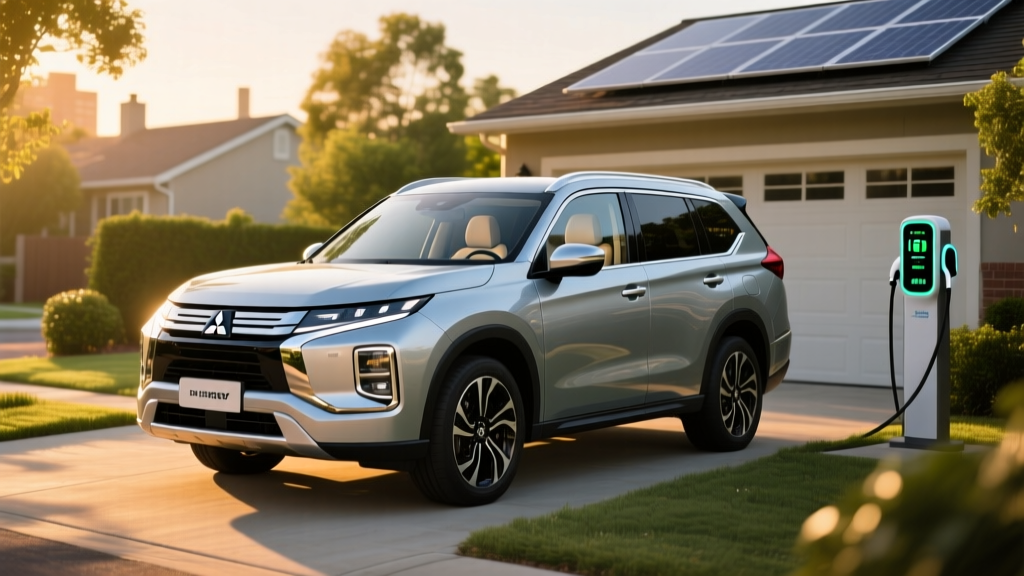
This is where the Outlander PHEV genuinely stands apart. It is one of very few plug-in hybrids that support DC fast charging — and the only one in its price class. Here's the charging breakdown:
| Charging Level | Power | Time (0–100% or 10–80%) | Connector |
|---|---|---|---|
| Level 1 (120V household) | ~1.4 kW | ~14 hours (0–100%) | J1772 |
| Level 2 (240V home/public) | ~3.3 kW | ~6.5 hours (0–100%) | J1772 |
| DC Fast Charge | Up to 22 kW | ~38 min (10–80%) | CHAdeMO |
A few important notes on the charging system:
- CHAdeMO connector: The Outlander PHEV uses CHAdeMO for DC fast charging, not CCS or NACS. CHAdeMO infrastructure is declining in the U.S. as most networks have standardized on CCS and Tesla's NACS. Before relying on DC fast charging, verify that CHAdeMO stations exist along your routes. According to the Alternative Fuels Data Center, CHAdeMO ports are becoming less common at new installations.
- Level 2 rate is 3.3 kW: This is relatively slow for a PHEV. Competitors like the RAV4 Prime accept up to 6.6 kW on Level 2, cutting charge time in half. Plan on overnight charging rather than topping up during a quick errand.
- DC fast charge caps at ~22 kW: While it's genuinely useful for a 30-minute top-up on a road trip, don't expect the 150+ kW speeds of a full EV. The smaller battery limits peak charge rate.
Pricing, Trims, and Federal Tax Credit Eligibility
The 2024 Mitsubishi Outlander PHEV is offered in five trims. Here's the MSRP breakdown (destination charge included):
| Trim | MSRP |
|---|---|
| ES | $41,640 |
| SE | $44,140 |
| SEL | $46,840 |
| SEL Platinum Edition | $48,540 |
| SEL Black Edition | $48,940 |
| GT | $50,340 |
| GT Premium | $52,440 |
Does the 2024 Outlander PHEV Qualify for the Federal Tax Credit?
Under the current IRS §30D Clean Vehicle Credit rules, the 2024 Outlander PHEV may qualify for a partial credit of $3,750, depending on battery component and critical mineral sourcing requirements that the IRS updates periodically. The full $7,500 credit requires meeting both the critical minerals threshold and the battery components threshold. Mitsubishi has confirmed the Outlander PHEV qualifies for at least the $3,750 half-credit as of early 2024, but buyers should verify current eligibility on fueleconomy.gov before purchasing, as sourcing rules tighten annually.
Additional eligibility requirements include:
- MSRP cap: The vehicle must have an MSRP below $80,000 for SUVs — all Outlander PHEV trims qualify.
- Buyer income cap: Adjusted gross income must not exceed $150,000 (single), $225,000 (head of household), or $300,000 (joint filers).
- Point-of-sale transfer: As of 2024, buyers can transfer the credit to the dealer at purchase, reducing the purchase price directly rather than waiting for a tax refund. This requires the dealer to be registered with the IRS Energy Credits Online system.
Some states offer additional PHEV incentives. California's CVRP program, for example, has historically offered rebates for PHEVs, though funding varies. Check your state energy office for current programs.
Reliability, Battery Warranty, and Long-Term Ownership
Mitsubishi PHEV Battery Warranty: 10 years / 100,000 miles (whichever comes first), covering defects and capacity loss below 70% of original capacity. The powertrain warranty covers 10 years / 100,000 miles as well. The basic vehicle warranty is 5 years / 60,000 miles — longer than most competitors.
Is the Outlander PHEV Reliable?
Mitsubishi's PHEV system has been in production since 2013 (the original Outlander PHEV launched in Japan that year), giving it over a decade of real-world refinement. The current generation, introduced for the 2023 model year, uses an updated version of that proven architecture.
Common owner-reported concerns include:
- Infotainment system lag: The touchscreen interface can be slow to respond, particularly on lower trims without the upgraded system.
- Third-row space: The third row is best suited for children. Adults will find it cramped on longer trips — this is a compromise of the battery packaging.
- Engine noise under hard acceleration: The 2.4-liter engine is audible when the battery is depleted and you demand full power, though it's not objectionable in normal driving.
Battery Replacement Cost
If the battery pack requires replacement outside of warranty, expect a cost in the range of $8,000–$12,000 including parts and labor, based on current Mitsubishi dealer pricing. However, PHEV battery packs experience less stress than full EV packs because they operate in a narrower state-of-charge window (typically 15%–85%), which significantly reduces degradation. Most PHEV batteries outlast the vehicle itself. Mitsubishi's 10-year/100,000-mile battery warranty provides substantial protection, and the warranty threshold (below 70% capacity) is in line with industry standards.
Outlander PHEV vs. Full EV vs. Gas SUV: Which Fits You?
The Outlander PHEV makes sense for a specific buyer profile. Here's a decision framework:
Choose the Outlander PHEV if:
- You can charge at home (Level 1 or Level 2) and your daily commute is under 35 miles
- You need three rows of seating but don't want a minivan
- You take road trips where DC fast charging (or gas stations) are more practical than relying solely on EV infrastructure
- You live in a region with harsh winters and want standard AWD with electric traction
- You want to reduce fuel consumption significantly without committing to a full EV
Choose a full EV (e.g., Kia EV9, Hyundai Ioniq 5) if:
- You have reliable home charging and your daily driving is under 250 miles
- You want zero tailpipe emissions and lower maintenance costs (no oil changes, no engine)
- You want access to the full $7,500 federal tax credit (more EVs qualify than PHEVs)
- You don't need a third row, or you're willing to pay $55,000+ for a three-row EV like the EV9
Choose the gas-only Outlander if:
- You cannot charge at home (apartment, no garage, street parking only)
- Your daily driving regularly exceeds 40 miles, making the PHEV premium harder to recoup
- You want a lower purchase price — the gas Outlander ES starts around $29,000, a $12,600 savings over the PHEV
Pros
- 38-mile electric range covers most daily commutes
- Standard AWD on every trim
- Three-row seating (rare in the PHEV segment)
- DC fast charging capability (CHAdeMO)
- Industry-leading 10-year/100,000-mile warranty
- Partial federal tax credit eligibility ($3,750)
Cons
- 26 MPG gas-only is below PHEV rivals (RAV4 Prime: 38 MPG)
- CHAdeMO connector is becoming less common at U.S. charging stations
- 3.3 kW Level 2 charging is slow for the battery size
- Third row is tight — children only for longer trips
- No heat pump — cold-weather electric range drops noticeably
- Partial tax credit only, not the full $7,500
Frequently Asked Questions
How many MPG does the 2024 Mitsubishi Outlander PHEV get?
The Outlander PHEV achieves 64 MPGe combined when operating on both electric and gas power. Once the battery is depleted, it gets 26 MPG combined (25 city / 27 highway) on gasoline alone. In real-world driving, owners who charge daily and drive under 35 miles report using very little gasoline — some going 1,000+ miles between fill-ups.
How far can the Outlander PHEV go on electric only?
The EPA rates it at 38 miles of electric-only range. Expect 36–40 miles in mild city driving, 30–34 miles at highway speeds, and 25–30 miles in freezing temperatures. The vehicle does not have a heat pump, so cold-weather range loss is more pronounced than in some competitors.
Does the 2024 Outlander PHEV qualify for the $7,500 federal tax credit?
It qualifies for a partial credit of $3,750 under current IRS §30D rules, meeting one of the two sourcing thresholds (critical minerals or battery components). Eligibility also depends on your income (capped at $150K single / $300K joint) and the vehicle's MSRP (must be under $80K for SUVs — all trims qualify). The credit can be transferred to the dealer at point of sale. Always verify current eligibility at fueleconomy.gov and consult a tax professional.
Is the Outlander PHEV reliable, and what does battery replacement cost?
Mitsubishi's PHEV system has been in production since 2013 and is well-proven. The battery is covered by a 10-year/100,000-mile warranty (capacity below 70%). Out-of-warranty battery replacement costs approximately $8,000–$12,000. In practice, PHEV batteries degrade slowly due to their narrower operating window, and most outlast the vehicle.
Can I charge the Outlander PHEV at a Tesla Supercharger?
No. The Outlander PHEV uses a J1772 connector for Level 1/Level 2 charging and a CHAdeMO connector for DC fast charging. Tesla Superchargers use the NACS connector, and there is currently no adapter available for CHAdeMO-to-NACS. You'll use networks like Electrify America, EVgo, or ChargePoint — but verify they still have CHAdeMO connectors, as many stations are phasing them out.
Should I buy the Outlander PHEV or a full EV?
If you can charge at home, drive under 35 miles daily, and regularly take trips beyond 250 miles, the Outlander PHEV offers an excellent compromise — electric commuting with gas-powered road-trip range. If your daily driving is longer, or you want maximum fuel savings and lower maintenance, a full EV with 250+ miles of range is a better fit. The Outlander PHEV is ideal for households transitioning to electric that aren't ready to commit fully.