The 2024 Mazda CX-90 PHEV occupies a specific niche: a three-row luxury plug-in hybrid for buyers who want electric commuting without sacrificing road-trip flexibility. With 26 miles of EPA-rated electric-only range, a combined 327 horsepower, and a starting MSRP around $50,000, it competes directly against the Toyota Grand Highlander Hybrid and Jeep Grand Cherokee 4xe. But does the real-world efficiency match the sticker? This guide breaks down every number that matters.
HEV vs PHEV: Where the CX-90 Fits
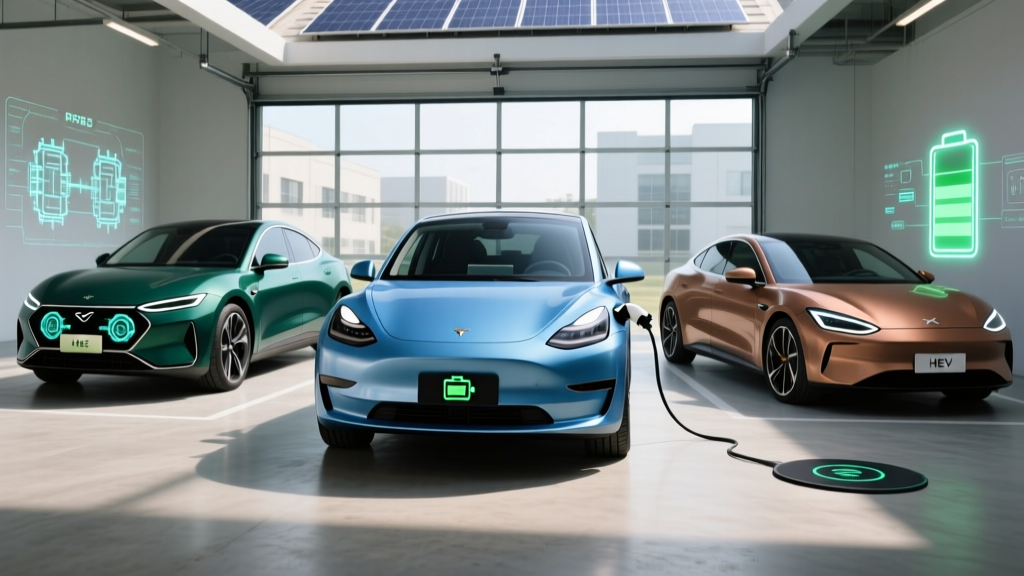
Before evaluating the CX-90 PHEV specifically, it's worth clarifying what separates a conventional hybrid from a plug-in hybrid — because Mazda only offers the plug-in version for the CX-90 (the smaller CX-70 and CX-50 offer conventional hybrid options).
| Feature | Conventional Hybrid (HEV) | Plug-In Hybrid (PHEV) |
|---|---|---|
| Battery Size | 1-2 kWh | 17.8 kWh (CX-90 PHEV) |
| Electric-Only Range | 0-1 mile at low speed | 26 miles (EPA) |
| Plug-In Required? | No — self-charging via regen | Yes — for electric range benefit |
| DC Fast Charging | N/A | No (Level 2 AC only) |
| Federal Tax Credit | None | Up to $3,750 (§30D, if eligible) |
| Best For | No home charging access | Home chargers with short commutes |
The CX-90 PHEV's 17.8 kWh battery is large enough to handle most daily commutes on electricity alone, but small enough that you're never stranded — the 2.5-liter four-cylinder engine kicks in seamlessly once the battery depletes, functioning as a conventional hybrid from that point forward.
EPA Fuel Economy and Electric Range
The EPA rates the 2024 CX-90 PHEV at 25 MPG combined when operating in hybrid mode (gasoline engine + motor), with a breakdown of 24 MPG city and 27 MPG highway. In electric-only mode, it achieves 56 MPGe combined.
| Mode | City | Highway | Combined |
|---|---|---|---|
| Electric Only (MPGe) | 58 | 54 | 56 |
| Hybrid (Gas + Motor, MPG) | 24 | 27 | 25 |
Electric-only range is rated at 26 miles. Total combined range (electric + gasoline) reaches approximately 490 miles with a full tank and full battery.
Real-World MPG vs. EPA Sticker
Plug-in hybrids are notoriously sensitive to driving habits. If you charge nightly and your commute is under 26 miles, you may use almost no gasoline for weeks — effectively achieving 100+ MPGe in practice. However, on a 400-mile highway road trip with no charging stops, expect the CX-90 PHEV to deliver 24-26 MPG once the battery is depleted, consistent with the EPA highway rating. Cold weather (below 32°F) reduces electric-only range by roughly 20-30%, bringing real-world EV range down to 18-21 miles in winter conditions. The gasoline engine also runs more frequently in cold weather to provide cabin heat, further reducing electric utilization.
Powertrain: 327 HP from Engine + Motor
The CX-90 PHEV pairs a 2.5-liter inline-four cylinder engine with a single electric motor integrated into an 8-speed automatic transmission (no traditional torque converter — Mazda uses a clutch-based system). Combined output is 327 horsepower and 369 lb-ft of torque, making it the most powerful CX-90 variant.
| Specification | 2024 CX-90 PHEV |
|---|---|
| Engine | 2.5L inline-4 + electric motor |
| Combined Horsepower | 327 HP |
| Combined Torque | 369 lb-ft |
| Transmission | 8-speed automatic (no torque converter) |
| Drivetrain | AWD (standard) |
| 0-60 mph | ~6.3 seconds (est.) |
| Battery Capacity | 17.8 kWh (lithium-ion) |
| Electric-Only Range | 26 miles (EPA) |
| Towing Capacity | 3,500 lbs |
The AWD system is standard and uses the electric motor to drive the rear axle in EV mode, providing responsive torque vectoring. When the gasoline engine engages, a mechanical connection drives all four wheels through the transmission.
Charging: Level 2 Only, No DC Fast Charge
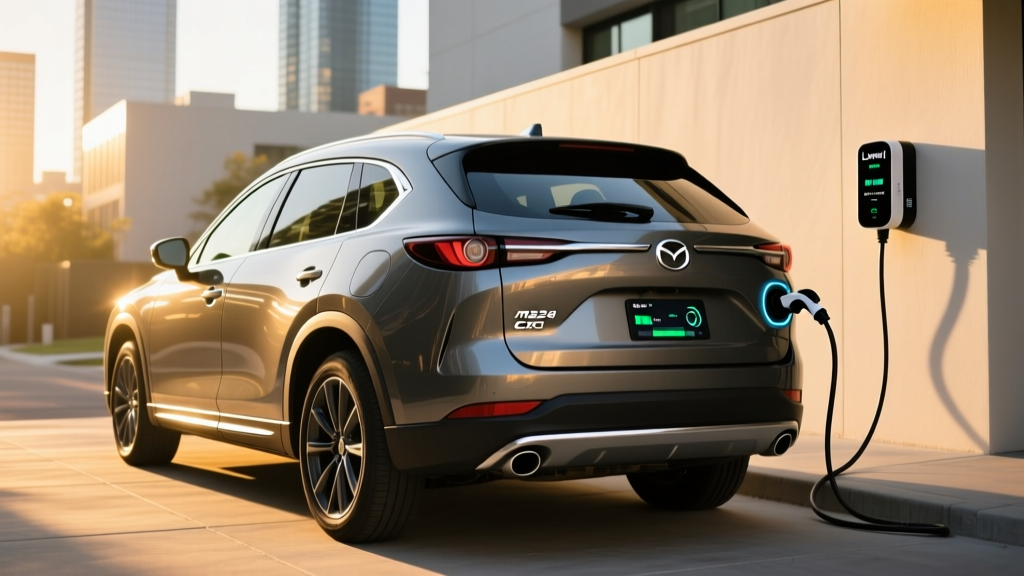
The CX-90 PHEV uses a J1772 connector for AC charging. It accepts up to 7.2 kW on Level 2 (240V), which replenishes the 17.8 kWh battery from empty to full in approximately 2 hours and 20 minutes. On a standard 120V household outlet (Level 1 at ~1.4 kW), a full charge takes roughly 11-12 hours — feasible for overnight charging but slow for same-day turnaround.
Critically, the CX-90 PHEV does not support DC fast charging. This is typical for PHEVs in this class (the Grand Cherokee 4xe also lacks DC fast charge capability). For a vehicle with 26 miles of electric range, DC fast charging is less essential — the battery is small enough to refill quickly on Level 2 — but it does mean you cannot top up at highway rest stops during road trips.
| Charging Level | Power (kW) | Time (0-100%) | Connector |
|---|---|---|---|
| Level 1 (120V) | ~1.4 kW | ~11-12 hours | J1772 / NEMA 5-15 |
| Level 2 (240V) | 7.2 kW | ~2 hours 20 min | J1772 |
| DC Fast Charge | Not supported | N/A | N/A |
Pricing, Trims, and Tax Credit Eligibility
The 2024 CX-90 PHEV starts at approximately $50,445 (including destination) for the Preferred Plus trim and climbs to around $60,000 for the Premium Plus. All trims include AWD, leatherette or Nappa leather seating, a 10.25-inch or 12.3-inch infotainment display, and Mazda's i-Activsense safety suite.
Federal Tax Credit (§30D)
Under current IRS §30D rules, the 2024 CX-90 PHEV may qualify for up to $3,750 in federal tax credits — not the full $7,500. The reduced amount reflects battery component and critical mineral sourcing requirements. However, eligibility depends on several factors:
- MSRP Cap: SUVs must have an MSRP at or below $80,000 — the CX-90 PHEV qualifies across all trims.
- Buyer Income Cap: Modified adjusted gross income must not exceed $150,000 (single), $225,000 (head of household), or $300,000 (joint filers).
- Battery Sourcing: Critical minerals and battery components must meet phased-in domestic sourcing thresholds. Mazda has confirmed partial compliance, yielding the $3,750 partial credit for eligible buyers.
- Point-of-Sale Transfer: As of 2024, eligible buyers can transfer the credit to the dealer at purchase, reducing the purchase price directly rather than waiting for tax filing.
Always verify current eligibility with your tax professional and the IRS, as sourcing requirements tighten annually and manufacturer compliance can shift.
Battery Warranty, Reliability, and Replacement Cost
Mazda backs the CX-90 PHEV's high-voltage battery with an 8-year/100,000-mile warranty (10 years/150,000 miles in CARB states including California, New York, and others adopting California emissions standards). The warranty covers battery capacity degradation below a specified threshold — typically 70% of original capacity, though Mazda's exact retention guarantee should be confirmed in your purchase documentation.
Warranty Summary:
- High-Voltage Battery: 8 yr / 100,000 mi (10 yr / 150,000 mi in CARB states)
- Powertrain: 5 yr / 60,000 mi
- Bumper-to-Bumper: 3 yr / 36,000 mi
As a relatively new nameplate (the CX-90 debuted for 2024), long-term reliability data is limited. However, Mazda's 2.5-liter four-cylinder engine family has a strong track record, and the PHEV system is derived from technology Mazda has deployed in other markets. Battery replacement cost, should it be needed outside warranty, is estimated at $8,000-$12,000 based on comparable PHEV battery packs — though this figure is speculative until real-world replacements occur. Most PHEV batteries from Japanese manufacturers retain 85-90% capacity after 100,000 miles, suggesting replacement is rarely needed within typical ownership periods.
Who Should Buy the CX-90 PHEV (and Who Shouldn't)
Pros
- 26-mile EV range covers most daily commutes
- 327 HP provides strong acceleration for a three-row SUV
- Premium interior with available Nappa leather and open-pore wood
- Standard AWD with electric rear axle in EV mode
- No range anxiety — gas engine for road trips
- Eligible for partial $3,750 federal tax credit
Cons
- No DC fast charging capability
- Third-row seat is tight for adults on long trips
- 25 MPG hybrid mode is average, not class-leading
- Infotainment lacks a touchscreen (rotary controller only)
- Limited long-term reliability data (new platform)
Decision Framework: CX-90 PHEV vs. Alternatives
Choose the CX-90 PHEV if: You have home Level 2 charging, your commute is under 30 miles, you need three rows occasionally, and you want a premium interior without paying BMW or Volvo prices.
Choose a full EV (e.g., Kia EV9, Tesla Model X) if: You have reliable home and destination charging, your road trips are under 300 miles (or you're comfortable with charging stops), and you want zero gasoline maintenance.
Choose a conventional hybrid (e.g., Toyota Grand Highlander Hybrid) if: You lack home charging access, you drive over 40 miles daily, or you want simpler ownership with no plug-in routine. The Grand Highlander Hybrid achieves 36 MPG combined — significantly better than the CX-90's 25 MPG in hybrid mode.
Choose a gas-only SUV if: You drive fewer than 8,000 miles per year, you prioritize lowest upfront cost, and you have no interest in charging infrastructure.
Frequently Asked Questions
How many MPG does the 2024 CX-90 PHEV get?
The EPA rates it at 25 MPG combined (24 city / 27 highway) in hybrid mode after the battery is depleted. In electric-only mode, it achieves 56 MPGe. Real-world highway driving at 70+ mph typically yields 24-26 MPG, consistent with the EPA sticker.
How far can the CX-90 PHEV go on electric only?
The EPA rates it at 26 miles of electric-only range. In real-world conditions — moderate temperatures, mixed city/highway driving — expect 22-26 miles. In cold weather (below freezing), range drops to approximately 18-21 miles due to battery chemistry limitations and cabin heating demands.
Does the CX-90 PHEV qualify for a federal tax credit?
It may qualify for up to $3,750 under IRS §30D, depending on your income, the vehicle's battery sourcing compliance, and MSRP (all trims fall under the $80,000 SUV cap). The credit can be transferred to the dealer at point of sale. Verify current eligibility with a tax professional, as sourcing rules tighten annually.
Is the CX-90 PHEV reliable?
Long-term data is limited (the model debuted in 2024), but Mazda's 2.5L engine family has a strong reliability record. The PHEV battery is warrantied for 8 years/100,000 miles (10 years/150,000 miles in CARB states). Most Japanese PHEV batteries retain 85-90% capacity after 100,000 miles.
What does a CX-90 PHEV battery replacement cost?
Estimated at $8,000-$12,000 outside warranty, though this is speculative until real-world replacements occur. Given typical PHEV battery longevity, most owners will not need a replacement within the first 150,000 miles.
Can the CX-90 PHEV DC fast charge?
No. It supports Level 1 (120V, ~1.4 kW) and Level 2 (240V, up to 7.2 kW) AC charging only. A full Level 2 charge takes approximately 2 hours and 20 minutes.
Hybrid vs PHEV vs EV — which is right for me?
A PHEV like the CX-90 is ideal if you have home charging and a short commute but need gas-engine flexibility for road trips. A conventional hybrid (no plug) suits those without charging access. A full EV (no gas engine) works best for drivers with reliable charging infrastructure and predictable routes under 300 miles.