The Kia Optima Hybrid Is Gone — But the K5 Hybrid Carries On
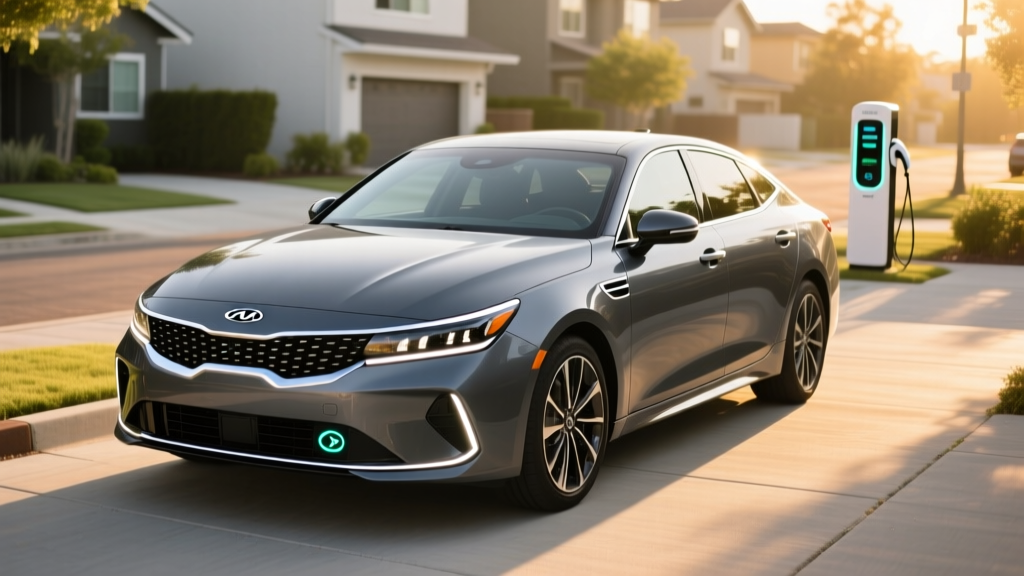
If you're searching for a 2024 Kia Optima Hybrid, here's the critical detail: Kia retired the Optima nameplate after the 2020 model year. The midsize sedan was rebadged as the Kia K5 starting in 2021, and the hybrid variant followed suit. For the 2024 model year, Kia offered the K5 exclusively with turbocharged gasoline engines — no hybrid or plug-in hybrid option was available in the US market. The K5 Hybrid was last sold in the US for the 2022 model year.
That means buyers targeting a "2024 Kia Optima Hybrid" are actually looking at one of three scenarios: a used 2020 Kia Optima Hybrid (the final model year under that name), a used 2021–2022 Kia K5 Hybrid (the direct successor), or they may be cross-shopping against current hybrid sedans like the Toyota Camry Hybrid or Hyundai Sonata Hybrid. This guide covers what you need to know about the Optima Hybrid's final generation, the K5 Hybrid that replaced it, and how these vehicles stack up for buyers shopping in 2026.
HEV vs PHEV: What the Optima Hybrid Actually Is
Conventional Hybrid (HEV): The Kia Optima Hybrid and K5 Hybrid are conventional hybrids. They pair a gasoline engine with a small electric motor and a battery that recharges through regenerative braking and the engine. You never plug them in. They improve fuel economy but cannot drive on electricity alone for meaningful distances.
Plug-In Hybrid (PHEV): Kia offered the Optima PHEV through 2020, featuring a larger 9.8 kWh battery and roughly 27 miles of electric-only range. The K5 PHEV was not offered in the US market. If you want a Kia PHEV today, you're looking at the Niro PHEV or Sorento PHEV.
Battery Electric (BEV): Fully electric vehicles like the Kia EV6 have no gasoline engine and rely entirely on plug-in charging. They offer 200+ miles of range but require access to home or public charging infrastructure.
The Optima Hybrid and K5 Hybrid fall firmly in the HEV category. They're designed for drivers who want better fuel economy without changing their refueling habits.
EPA Fuel Economy and Real-World MPG
Fuel economy is the primary reason buyers choose a hybrid sedan. Here's how the Optima Hybrid and its K5 Hybrid successor compare on paper and in practice.
| Model | City MPG | Highway MPG | Combined MPG |
|---|---|---|---|
| 2020 Kia Optima Hybrid (EX) | 40 | 39 | 40 |
| 2020 Kia Optima PHEV (HEV mode) | 38 | 39 | 38 |
| 2022 Kia K5 Hybrid (EX) | 44 | 39 | 42 |
| 2024 Toyota Camry Hybrid (LE, baseline) | 51 | 53 | 52 |
Source: fueleconomy.gov (US EPA)
Real-world MPG expectations: Hyundai-Kia's hybrid systems tend to deliver numbers close to their EPA ratings in mixed driving. Owners on forums and fuel-tracking sites like Fuelly report 38–43 MPG combined for the K5 Hybrid, with city driving often pushing toward the upper end thanks to regenerative braking at lower speeds. Highway-heavy commutes at 75+ MPH tend to drop to 36–38 MPG — a common pattern for hybrids, which benefit more from stop-and-go driving than sustained high-speed cruising.
The 2020 Optima Hybrid's 40 MPG combined rating was competitive at launch, but Toyota's current Camry Hybrid has moved the goalposts significantly with its fifth-generation hybrid system delivering 52 MPG combined. If fuel economy is your top priority, the Camry Hybrid is the segment benchmark in 2026.
Powertrain Specs: Engine, Motor, and Battery
| Specification | 2020 Optima Hybrid | 2022 K5 Hybrid |
|---|---|---|
| Engine | 2.0L I4 GDI | 2.0L I4 GDI |
| Engine HP | 154 hp | 150 hp |
| Electric Motor | 38 kW (51 hp) | 44 kW (59 hp) |
| Combined System HP | 192 hp | 202 hp (estimated) |
| Hybrid Battery | 1.62 kWh (Li-ion) | 1.76 kWh (Li-ion) |
| Transmission | 6-speed automatic | 6-speed automatic |
| 0-60 MPH | ~7.8 sec | ~7.5 sec |
| Plug-In Required? | No | No |
Kia's hybrid powertrain uses a parallel hybrid architecture — the electric motor sits between the engine and transmission, allowing the car to run on the engine alone, the motor alone (at low speeds for short distances), or both together for maximum acceleration. The 6-speed automatic is a conventional torque-converter unit, unlike Toyota's planetary e-CVT, which gives the Kia a more natural acceleration feel that some drivers prefer, though it sacrifices a small amount of efficiency.
The K5 Hybrid's slight power bump and revised tuning gave it marginally better acceleration and a more refined engine-start/stop transition compared to the outgoing Optima Hybrid.
Battery Warranty, Lifespan, and Replacement Cost
Kia Hybrid Battery Warranty: Kia covers the hybrid battery assembly for 10 years or 100,000 miles (whichever comes first) on the original owner. For subsequent owners (relevant if you're buying used in 2026), the warranty typically transfers as 10 years/100,000 miles from the original in-service date in most states, though California and states adopting CARB emissions rules may offer extended coverage. Always verify with a Kia dealer using the VIN.
How long do Kia hybrid batteries actually last? Real-world data suggests Hyundai-Kia hybrid batteries routinely exceed 150,000 miles before significant degradation. The 1.62–1.76 kWh battery in these vehicles is small and operates within a narrow state-of-charge window (roughly 40–80%), which dramatically reduces stress on the lithium-ion cells compared to a full EV battery that cycles through a wider range.
Replacement cost if out of warranty: A replacement hybrid battery pack for the Optima Hybrid or K5 Hybrid typically runs $2,500–$4,000 including labor at a dealership, based on parts pricing and labor times. Independent hybrid specialists may offer refurbished packs for $1,500–$2,500. This is far less than EV traction battery replacement, which can exceed $10,000, because the hybrid battery is much smaller.
For a 2020 Optima Hybrid purchased in 2026, the factory battery warranty should still have roughly 4 years or significant mileage remaining — but confirm this with the VIN before purchase.
Pricing and Tax Credit Eligibility
Since the Optima Hybrid and K5 Hybrid are no longer sold new, pricing in 2026 is entirely in the used market.
| Model | Original MSRP (New) | Estimated Used Price (2026) |
|---|---|---|
| 2020 Kia Optima Hybrid EX | ~$30,500 | $16,000–$20,000 |
| 2020 Kia Optima PHEV EX | ~$37,000 | $18,000–$23,000 |
| 2022 Kia K5 Hybrid EX | ~$31,000 | $20,000–$25,000 |
Federal tax credits: The IRS §30D clean vehicle credit applies only to new plug-in vehicles (BEVs and PHEVs with at least 7 kWh of battery capacity). The Optima Hybrid and K5 Hybrid, as conventional HEVs, have never qualified for the federal EV tax credit.
The used clean vehicle credit (up to $4,000 or 30% of sale price) applies only to used BEVs and PHEVs — not conventional hybrids. So the used Optima Hybrid and K5 Hybrid do not qualify for this credit either.
However, if you find a used 2020 Optima PHEV, it may qualify for the used clean vehicle credit, provided: the sale price is $25,000 or less, your income falls below IRS thresholds ($75,000 single / $150,000 joint), and the vehicle is purchased through a licensed dealer. The Optima PHEV's 9.8 kWh battery meets the minimum capacity requirement. Check current eligibility on fueleconomy.gov.
Who Should Buy This Hybrid (And Who Shouldn't)
Reasons to Choose the Optima/K5 Hybrid
- No charging required: Ideal if you live in an apartment, lack garage access, or simply don't want to deal with plug-in infrastructure.
- Strong city MPG: 40–44 MPG combined beats most gasoline midsize sedans by 10–15 MPG, especially in urban driving.
- Conventional driving experience: The 6-speed automatic feels familiar; no CVT drone or range-anxiety calculus.
- Lower used pricing: A 2020 Optima Hybrid at $16,000–$20,000 represents solid value for a fuel-efficient midsize sedan.
- Kia's warranty: Remaining factory hybrid battery coverage provides peace of mind on used purchases.
Reasons to Look Elsewhere
- Toyota Camry Hybrid is more efficient: At 52 MPG combined, the current Camry Hybrid significantly outperforms the Kia's 40–42 MPG.
- No electric-only driving: If you want to do short commutes on electricity alone, you need a PHEV or BEV — not this HEV.
- Discontinued model: Parts availability should remain fine (shared platform with Sonata Hybrid), but resale values may soften as the model ages.
- No tax credit: Conventional hybrids don't qualify for federal purchase incentives.
- Modest acceleration: 192–202 hp is adequate but not quick; turbocharged K5 gas models feel more responsive.
Choose the Optima/K5 Hybrid if: You want a used midsize sedan with strong fuel economy, no plug-in requirement, and Kia's remaining hybrid battery warranty — and you're priced out of a new Camry Hybrid.
Choose a new Toyota Camry Hybrid if: You want a warranty-complete new car with best-in-class 52 MPG and can absorb the higher new-car price (~$30,000+).
Choose a PHEV (e.g., Toyota Prius Prime) if: You have home charging access and want 35–44 miles of electric-only commuting with a gas backup for longer trips.
Choose a full EV (e.g., Kia EV6, Hyundai Ioniq 6) if: You have reliable home charging, drive under 250 miles daily, and want to eliminate gasoline entirely.
Frequently Asked Questions
How many MPG does the Kia Optima Hybrid get?
The 2020 Kia Optima Hybrid is EPA-rated at 40 MPG city, 39 MPG highway, and 40 MPG combined. The successor 2022 K5 Hybrid improved slightly to 44 city / 39 highway / 42 combined. Real-world driving typically falls within 2–3 MPG of these figures in mixed use, with city driving sometimes exceeding EPA estimates thanks to regenerative braking.
Does the Kia Optima Hybrid need to be plugged in?
No. The Optima Hybrid is a conventional hybrid (HEV). Its small 1.62 kWh battery recharges through regenerative braking and the gasoline engine. You refuel it exactly like a normal gas car. Only the Optima PHEV variant (a separate model) required plug-in charging.
How far can the Optima PHEV go on electric only?
The 2020 Kia Optima PHEV has an EPA-rated 27 miles of electric-only range from its 9.8 kWh battery. After the battery is depleted, it operates as a conventional hybrid at 38 MPG combined. Total driving range exceeds 400 miles when combining electric and gasoline operation.
Is the Kia Optima Hybrid reliable?
Kia's hybrid powertrain has proven reliable in owner surveys. The 2.0L engine and 6-speed automatic are conventional, proven components. The hybrid battery carries a 10-year/100,000-mile warranty, and failures before 150,000 miles are uncommon. J.D. Power and Consumer Reports have rated the Optima/K5 Hybrid at or above average for the midsize sedan segment. As with any used vehicle, a pre-purchase inspection is recommended.
What does it cost to replace the hybrid battery?
Out-of-warranty replacement for the Optima Hybrid or K5 Hybrid battery pack typically costs $2,500–$4,000 at a Kia dealership, including parts and labor. Refurbished packs from independent hybrid specialists may cost $1,500–$2,500. Given the 10-year/100,000-mile warranty and the battery's typical longevity beyond 150,000 miles, most owners will never face this expense.
Does the Optima Hybrid qualify for any tax credit?
No. Conventional hybrids (HEVs) do not qualify for the federal §30D clean vehicle credit, which requires plug-in capability and a minimum battery capacity of 7 kWh for new vehicles. The used clean vehicle credit also excludes conventional hybrids. Only the Optima PHEV variant may qualify for the used EV credit (up to $4,000) if purchased under $25,000 from a dealer and the buyer meets IRS income thresholds.
Should I buy a used Optima Hybrid or a new Camry Hybrid?
It depends on budget and priorities. A used 2020 Optima Hybrid at $16,000–$20,000 saves $10,000–$15,000 versus a new Camry Hybrid, and still delivers 40 MPG with remaining battery warranty. But the new Camry Hybrid gives you 52 MPG, a full new-car warranty, updated safety tech, and better long-term resale certainty. If you plan to keep the car 8+ years and drive 15,000+ miles annually, the Camry Hybrid's 12 MPG advantage saves roughly $400–$600 per year in fuel — enough to offset the price premium over time.