Quick Verdict: The 2024 Hyundai Tucson Hybrid at a Glance
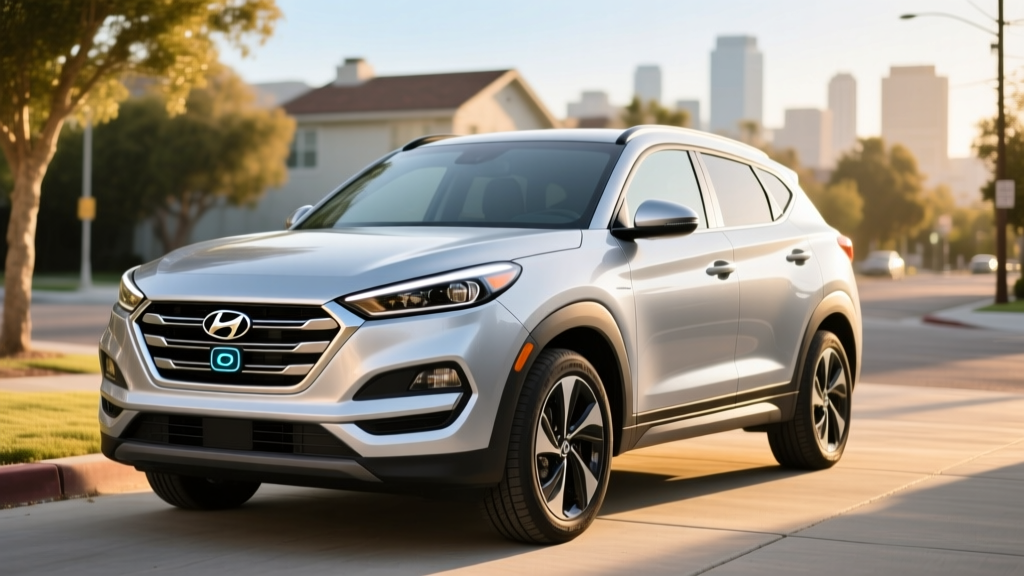
The 2024 Hyundai Tucson Hybrid occupies a compelling middle ground for compact SUV buyers who want electric-motor efficiency without the lifestyle changes of a plug-in or full battery-electric vehicle. With an EPA-estimated 38 MPG combined, a 226-horsepower turbocharged powertrain, and a starting MSRP near $32,550, it undercuts many rivals on price while delivering top-tier fuel economy. For buyers weighing whether to go HEV, PHEV, or full BEV, the Tucson lineup offers all three — but the conventional hybrid is the volume play for good reason.
| Spec | Tucson Hybrid (HEV) | Tucson Plug-In Hybrid (PHEV) |
|---|---|---|
| Powertrain | 1.6L Turbo + Electric Motor | 1.6L Turbo + Larger Electric Motor |
| Combined Horsepower | 226 hp | 261 hp |
| EPA Combined MPG | 38 MPG | 35 MPG (gas-only mode) |
| Electric-Only Range | N/A | 33 miles |
| Battery Capacity | 1.49 kWh | 13.8 kWh |
| Drivetrain | AWD (standard) | AWD (standard) |
| 0-60 mph | ~7.1 sec | ~6.3 sec |
| Starting MSRP | $32,550 | $38,825 |
| Federal Tax Credit | Not eligible | Not eligible (§30D sourcing) |
| Battery Warranty | 10 yr / 100,000 mi | 10 yr / 100,000 mi |
HEV vs PHEV: What's the Difference and Which Tucson Do You Need?
Hyundai sells the Tucson in three flavors: gas-only, conventional hybrid (HEV), and plug-in hybrid (PHEV). Understanding the distinction is critical before you step onto a dealer lot.
Conventional Hybrid (HEV)
The Tucson Hybrid uses a 1.6-liter turbocharged four-cylinder engine paired with a 47.7 kW electric motor and a small 1.49 kWh lithium-ion battery. You never plug it in. The battery charges through regenerative braking and the engine itself. The electric motor assists during acceleration and can propel the vehicle at low speeds for brief distances, but the engine does the heavy lifting. Think of it as a gas car that's dramatically more efficient, especially in stop-and-go traffic.
Plug-In Hybrid (PHEV)
The Tucson PHEV pairs the same 1.6L turbo with a more powerful 98 kW electric motor and a much larger 13.8 kWh battery. You plug it in (Level 2, 7.2 kW onboard charger — full charge in roughly 1 hour 45 minutes). It delivers 33 miles of EPA-rated electric-only driving before the engine kicks in. No DC fast charging capability on the PHEV. For commutes under 33 miles round-trip with home charging access, the PHEV operates as an EV most days.
Fuel Economy: Real-World MPG vs. EPA Sticker Numbers
The EPA rates the 2024 Tucson Hybrid at 37 city / 38 highway / 38 combined MPG for the Blue and SEL Convenience trims. The range-topping Limited trim drops slightly to 37 combined due to added weight from premium features. Per fueleconomy.gov, these figures place the Tucson Hybrid near the top of the compact hybrid SUV segment — only the Honda CR-V Hybrid (40 combined) and Toyota RAV4 Hybrid (39-41 combined) edge it out.
| Trim | City MPG | Highway MPG | Combined MPG |
|---|---|---|---|
| Blue | 38 | 38 | 38 |
| SEL Convenience | 37 | 38 | 38 |
| Limited | 37 | 37 | 37 |
Real-World MPG: What Owners Actually See
Hybrids have a well-documented tendency to outperform their EPA city ratings in actual stop-and-go driving, where regenerative braking and electric-motor assist shine. Many Tucson Hybrid owners report 39-42 MPG in urban commuting during mild weather. Highway driving at sustained 75+ mph speeds tends to return 34-36 MPG — slightly below the sticker, since aerodynamic drag dominates and the electric motor contributes less at high speed.
In cold weather (below 30°F), expect a 3-5 MPG reduction due to the engine running more frequently for cabin heat and reduced battery efficiency. This is normal hybrid behavior, not a defect. A 38-MPG combined vehicle dropping to 33-35 MPG in winter still outperforms most gas-only compact SUVs year-round.
Powertrain Deep Dive: 226 Horsepower with Turbo + Electric Assist
The Tucson Hybrid's powertrain is a 1.6-liter turbocharged direct-injection four-cylinder producing 178 hp and 195 lb-ft of torque on its own. The integrated electric motor adds 47.7 kW (roughly 64 hp) and 195 lb-ft of torque. Combined system output is 226 hp and 258 lb-ft of torque.
Power routes through a 6-speed automatic transmission (not a CVT, which some competitors use) to standard HTRAC all-wheel drive. The conventional automatic gives the Tucson Hybrid a more natural acceleration feel compared to the rubber-band effect of CVT-equipped rivals like the RAV4 Hybrid. The 0-60 mph time of approximately 7.1 seconds is adequate for merging and passing — not sporty, but quicker than the gas-only Tucson's 8.5-second run.
The PHEV variant bumps the electric motor to 98 kW (131 hp) for a combined 261 hp, dropping the 0-60 time to roughly 6.3 seconds. If acceleration matters to you, the PHEV has a meaningful edge.
Battery Warranty, Longevity, and Replacement Cost
Battery anxiety is the number one concern for first-time hybrid buyers. Here's the reality: hybrid batteries are not the same as phone or laptop batteries. They're engineered for shallow charge-discharge cycles and robust thermal management.
Hyundai Hybrid Battery Warranty
- Hybrid/EV Battery: 10 years / 100,000 miles (whichever comes first)
- Hybrid System Components: 10 years / 100,000 miles
- Capacity Retention Threshold: Hyundai covers the battery if it fails to hold a minimum charge level as determined by diagnostic testing
- Transferability: Warranty transfers to second owner (a strong resale-value signal)
The 1.49 kWh battery in the HEV is small, and because the system never fully charges or fully depletes it (the computer maintains a buffer), degradation is minimal. Most Hyundai/Kia hybrid batteries from the 2011-2016 Sonata Hybrid era are still in service with well over 150,000 miles. If replacement is needed outside warranty, a Tucson Hybrid battery pack typically costs $2,000-$3,500 including labor — significantly less than a full EV battery replacement. The PHEV's larger 13.8 kWh pack would run $5,000-$7,500 if replaced out of warranty.
For context, the official Hyundai spec page lists the same 10-year/100,000-mile hybrid battery coverage across both HEV and PHEV trims.
Pricing, Trims, and Tax Credit Eligibility
The 2024 Tucson Hybrid is offered in three trims. Pricing below includes destination charge:
| Trim | MSRP | Key Features |
|---|---|---|
| Blue | $32,550 | 18" wheels, 10.25" touchscreen, wireless CarPlay/Android Auto, HTRAC AWD, SmartSense safety suite |
| SEL Convenience | $36,210 | Power liftgate, panoramic sunroof, leather seats, digital key, heated/ventilated front seats |
| Limited | $40,260 | 19" wheels, Bose premium audio, surround-view monitor, highway driving assist, remote smart parking |
Federal Tax Credit: What You Need to Know
The conventional Tucson Hybrid (HEV) does not qualify for the federal §30D clean vehicle tax credit — that credit applies only to plug-in hybrids and full battery-electric vehicles with a minimum battery capacity of 7 kWh.
The Tucson PHEV's 13.8 kWh battery technically meets the capacity threshold. However, as of the current IRS rules under the Inflation Reduction Act, the Tucson PHEV does not qualify for the $7,500 federal credit due to battery component and critical mineral sourcing requirements it does not meet. Always verify current eligibility on fueleconomy.gov's tax credit page before purchasing, as sourcing rules are subject to change.
Some states offer their own hybrid or PHEV rebates (California, Colorado, and New York have programs that may apply). Check your state's energy office for current incentives.
Who Should Buy the Tucson Hybrid vs. PHEV vs. Full EV?
Pros
- 38 MPG combined with no plug-in requirement — fill up and go
- Standard AWD across all trims (many competitors charge extra)
- Conventional 6-speed automatic avoids CVT drone
- 226 hp is strong for the segment
- 10-year/100,000-mile hybrid battery warranty
- Competitive pricing starting under $33K
- Strong cargo space (38.7 cu ft behind rear seats)
Cons
- Highway MPG falls slightly below EPA in real-world driving
- No federal tax credit for either HEV or PHEV
- PHEV lacks DC fast charging
- Limited trim pushes price past $40K
- 33-mile PHEV electric range is shorter than the Toyota RAV4 Prime's 42 miles
Choose the Tucson Hybrid (HEV) If:
- You don't have reliable access to home or workplace charging
- Your commute is long or unpredictable (no range limitation)
- You want maximum MPG with zero behavior change
- Budget is a priority — the Blue trim at $32,550 is a strong value
Choose the Tucson PHEV If:
- You can install a Level 2 charger at home
- Your daily round-trip commute is under 33 miles
- You want EV-like daily driving with gas-engine flexibility for road trips
- You value the extra 35 hp and quicker acceleration
Choose a Full EV (e.g., Ioniq 5, EV6) If:
- You have home charging and a predictable routine
- You want zero tailpipe emissions and minimal maintenance
- You qualify for the $7,500 federal tax credit on an eligible BEV
- You're ready to plan around DC fast charging for road trips
Frequently Asked Questions
How many MPG does the 2024 Hyundai Tucson Hybrid get?
The EPA rates the Tucson Hybrid Blue trim at 38 city / 38 highway / 38 combined MPG. Higher trims (SEL Convenience, Limited) rate at 37-38 combined. Real-world city driving often exceeds the EPA number, while sustained highway speeds above 75 mph typically return 34-36 MPG.
How far can the Tucson PHEV go on electric only?
The 2024 Tucson Plug-In Hybrid achieves 33 miles of EPA-rated electric-only range. This covers most daily commutes. Once the battery depletes, it operates as a conventional hybrid at 35 MPG combined. Total range (electric + gas) exceeds 400 miles.
Does the Tucson Hybrid need to be plugged in?
No. The conventional Tucson Hybrid (HEV) never plugs in. Its small battery recharges through regenerative braking and the gasoline engine. Only the Tucson PHEV requires plugging in to achieve its electric-only range.
Is the Tucson Hybrid reliable? What about battery replacement cost?
Hyundai's hybrid system has proven durable, with the hybrid battery covered by a 10-year/100,000-mile warranty. The HEV battery replacement cost outside warranty is typically $2,000-$3,500. Most hybrid batteries outlast the vehicle's ownership cycle. Hyundai's overall reliability ratings have improved significantly in recent model years.
Does the 2024 Tucson Hybrid qualify for a tax credit?
The conventional HEV does not qualify for the federal §30D tax credit (it applies only to plug-in vehicles). The Tucson PHEV meets the battery capacity requirement but does not currently qualify for the $7,500 credit due to battery sourcing restrictions under the Inflation Reduction Act. Check fueleconomy.gov for the latest eligibility before purchasing. State-level incentives may still apply.
How does the Tucson Hybrid compare to the RAV4 Hybrid?
The Toyota RAV4 Hybrid rates 39-41 MPG combined (slightly better) and starts around $31,725 (slightly less). However, the Tucson Hybrid offers standard AWD at a comparable price, a more powerful turbocharged engine (226 hp vs. 219 hp), a conventional automatic instead of a CVT, and Hyundai's longer 10-year powertrain warranty vs. Toyota's 8-year hybrid battery coverage. Both are excellent choices — the RAV4 edges on efficiency, the Tucson on power and warranty.