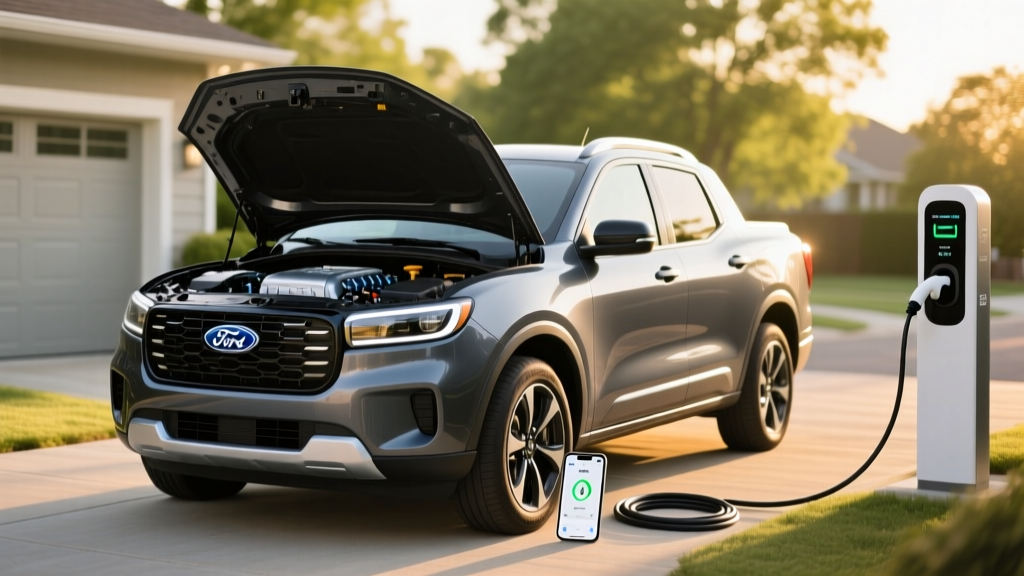
The compact truck segment exploded in the early 2020s, and Ford's unibody Maverick carved out a unique niche by offering a standard hybrid powertrain at an entry price that undercut nearly every gas-only competitor. For buyers researching 2024 Ford Maverick Hybrid MPG figures, the headline number is compelling: 42 MPG city. But the real story involves how this hybrid system behaves under real-world driving conditions, what it costs to own long-term, and whether a conventional hybrid (HEV) is the right electrification step for your lifestyle.
This guide covers the 2024 model year Maverick Hybrid — which remains widely available on dealer lots and the used market as of 2026 — with exact EPA figures, real-world fuel economy data, powertrain specifications, warranty coverage, and total cost of ownership analysis.
EPA Fuel Economy: 2024 Ford Maverick Hybrid MPG Breakdown
The 2024 Ford Maverick Hybrid is rated by the EPA at 42 MPG city / 33 MPG highway / 37 MPG combined. These figures apply to the front-wheel-drive (FWD) hybrid configuration, which is the only drivetrain available with the hybrid powertrain. All-wheel drive (AWD) is not offered on the hybrid — if you need AWD, you're looking at the 2.0L EcoBoost gas model instead.
| Driving Cycle | EPA MPG | Real-World Expectation |
|---|---|---|
| City | 42 MPG | 40–45 MPG (hybrids excel here) |
| Highway | 33 MPG | 30–34 MPG (aerodynamic drag at 70+ mph) |
| Combined | 37 MPG | 35–39 MPG depending on driving mix |
Source: EPA Fuel Economy Guide — 2024 Ford Maverick FWD Hybrid
Powertrain Specs: Engine, Motor, and Combined Output
The 2024 Maverick Hybrid uses Ford's fourth-generation 2.5-liter Atkinson-cycle inline-4 engine paired with a permanent-magnet electric motor and an electronically controlled continuously variable transmission (eCVT). This is the same hybrid architecture found in the Ford Escape Hybrid and Bronco Sport Hybrid, adapted for the Maverick's truck duties.
| Specification | 2024 Maverick Hybrid |
|---|---|
| Engine | 2.5L Atkinson-cycle I-4 |
| Engine Power | 162 hp @ 5,600 rpm / 155 lb-ft torque |
| Electric Motor | Permanent-magnet synchronous (integrated in eCVT) |
| Combined System Output | 191 hp |
| Transmission | eCVT (planetary gearset, not belt-driven) |
| Drivetrain | Front-wheel drive (FWD only) |
| Battery Pack | 1.1 kWh lithium-ion (self-charging HEV) |
| 0–60 mph | ~7.5 seconds (estimated) |
| Towing Capacity | 2,000 lbs (standard) / 4,000 lbs (with 4K Tow Package) |
| Payload Capacity | 1,500 lbs |
| Fuel Tank | 16.5 gallons |
| Total Driving Range | ~610 miles (EPA combined) |
The 1.1 kWh battery pack is small by EV standards — and that's intentional. This is a conventional hybrid (HEV), not a plug-in. The battery charges exclusively through regenerative braking and the gasoline engine. You never plug it in. The battery's role is to enable electric-only motoring at low speeds, assist during acceleration, and capture braking energy — not to provide standalone electric range.
HEV vs PHEV vs EV: Which Powertrain Fits Your Life?
The Maverick Hybrid is an HEV — a self-charging hybrid with no plug. If you're cross-shopping electrified trucks or considering whether to wait for a plug-in variant, here's how the three electrification levels compare in practical terms:
HEV (Maverick Hybrid)
- No plug required
- 37 MPG combined
- No electric-only range
- No federal tax credit
- Lowest upfront cost
- Best for: drivers without home charging access who want better fuel economy
PHEV (e.g., Ford Escape PHEV)
- Plug in for ~37 mi electric range
- ~40 MPG after battery depletes
- Requires Level 1/2 charging for benefit
- May qualify for §30D credit (if eligible)
- Higher upfront cost
- Best for: drivers with home charging and short commutes
BEV (e.g., Ford F-150 Lightning)
- Plug in for 230–320 mi range
- Zero gasoline use
- Requires reliable charging access
- Up to $7,500 §30D credit (if eligible)
- Highest upfront cost, lowest fuel cost
- Best for: drivers with home L2 charging who drive within range
Ford does not currently offer a Maverick PHEV. If a plug-in Maverick arrives in future model years, it would likely use a larger battery (14–18 kWh) with 30–40 miles of electric-only range, similar to the Escape PHEV's architecture. Until then, the HEV is the only electrified Maverick option.
Pricing, Trims, and Tax Credit Eligibility
The 2024 Ford Maverick Hybrid was available across three trim levels, with the hybrid powertrain as a no-cost option on XLT and Lariat trims (standard on the base XL in prior years, but limited for 2024). Here's the original MSRP breakdown:
| Trim | 2024 MSRP (Hybrid FWD) | Key Features |
|---|---|---|
| XL Hybrid | $23,815 | Base truck, 8" touchscreen, Ford Co-Pilot360 |
| XLT Hybrid | $26,215 | Alloy wheels, power-lock tailgate, upgraded interior |
| Lariat Hybrid | $30,175 | Leatherette seats, 8-way power driver seat, ambient lighting |
Source: Ford.com 2024 Maverick Specifications
Battery Warranty, Reliability, and Replacement Costs
Hybrid battery longevity is consistently the top concern for first-time hybrid buyers. Ford backs the 2024 Maverick Hybrid's battery pack with a robust warranty that aligns with industry standards:
Hybrid Battery & Component Warranty
- Hybrid Battery: 8 years / 100,000 miles (whichever comes first)
- Hybrid System Components (eCVT, motor, inverter): 8 years / 100,000 miles
- Powertrain Warranty (engine): 5 years / 60,000 miles
- Bumper-to-Bumper: 3 years / 36,000 miles
Ford's warranty covers battery capacity loss below a defined threshold (typically 70% of original capacity) and all hybrid-specific components. In states that follow California Air Resources Board (CARB) standards — including CA, NY, MA, and others — hybrid battery coverage may extend to 10 years / 150,000 miles.
The 2.5L Atkinson-cycle engine in the Maverick Hybrid is one of Ford's most proven powerplants, shared across the Escape Hybrid lineup since 2020 and the Fusion Hybrid before that. The eCVT uses a planetary gearset rather than a belt or chain, which eliminates a common failure point found in traditional CVTs. Owner-reported reliability on platforms like CarComplaints and RepairPal shows fewer drivetrain issues for the hybrid powertrain than for the 2.0L EcoBoost alternative.
Battery replacement cost: If the hybrid battery fails outside warranty coverage, expect a dealer replacement to cost between $2,000 and $4,000 (parts and labor) based on current pricing for Ford's 1.1 kWh hybrid pack. Independent hybrid specialists may offer refurbished packs for $1,500–$2,500. However, real-world data from Toyota and Ford hybrid fleets suggests these packs routinely last 150,000–200,000+ miles with minimal degradation, since the battery operates within a narrow state-of-charge window (typically 40–80%) that minimizes stress.
Real-World Ownership: What Maverick Hybrid Drivers Report
EPA ratings are a starting point, but ownership data reveals how the Maverick Hybrid performs across seasons, driving styles, and cargo loads. Here's what real-world testing and owner reports consistently show:
- City commuting (under 45 mph): 40–47 MPG. The hybrid system shines here, frequently running the electric motor alone at low speeds and recapturing energy at every stoplight. Drivers with stop-heavy urban routes regularly beat the EPA city rating.
- Highway cruising (70–80 mph): 29–33 MPG. The Maverick's upright truck profile creates significant aerodynamic drag, and the hybrid system offers minimal assistance at steady speed. This is where the gap between EPA and real-world is most noticeable.
- Cold weather impact: Expect a 5–10% fuel economy reduction in sub-40°F conditions. The engine runs more frequently to provide cabin heat and maintain battery temperature, reducing electric-motor utilization.
- Loaded/towing: With a full bed or trailer near the 2,000-lb standard limit, fuel economy drops to 25–30 MPG. The 4,000-lb tow package is available, but heavy towing significantly erodes the hybrid's efficiency advantage.
- Annual fuel cost: At 15,000 miles/year and $3.30/gallon regular unleaded, the Maverick Hybrid costs approximately $1,340/year in fuel — roughly $600–$800 less per year than a comparable gas-only compact truck getting 23 MPG combined.
Who Should Buy the Maverick Hybrid — And Who Shouldn't
Choose the Maverick Hybrid If:
- Your daily driving is primarily city/suburban with frequent stops
- You don't have access to home or workplace EV charging
- You want a truck bed but prioritize fuel economy over towing capacity
- You want electrification benefits with zero behavior change (no plugging in)
- Your budget is under $30,000 for a new or lightly used vehicle
Look at a Full EV or PHEV Instead If:
- You have Level 2 home charging and a commute under 40 miles (consider a PHEV for electric-only commuting)
- You want zero tailpipe emissions and have reliable charging access (consider the F-150 Lightning or Rivian R1T)
- You need AWD for snow/off-road use (the Maverick Hybrid is FWD only — the EcoBoost offers AWD)
- You regularly tow over 2,000 lbs without the tow package
Pros
- 42 MPG city — best-in-class for any truck
- Low starting price (~$24K base)
- Proven, reliable hybrid powertrain
- No plug-in required — zero lifestyle change
- 610+ mile total range per tank
- Practical 4.5-ft bed with clever storage
Cons
- FWD only — no AWD hybrid option
- Highway MPG drops to ~30 at 75+ mph
- 2,000-lb base towing (4,000 with package)
- No federal tax credit for HEVs
- Long dealer wait times (high demand)
- eCVT drone under hard acceleration
Frequently Asked Questions
How many MPG does the 2024 Ford Maverick Hybrid actually get?
The EPA rates the 2024 Maverick Hybrid at 42 MPG city, 33 MPG highway, and 37 MPG combined. In real-world driving, owners report 40–45 MPG in city conditions and 29–33 MPG on the highway. Your results depend heavily on driving style, speed, temperature, and cargo load.
Does the Ford Maverick Hybrid need to be plugged in?
No. The Maverick Hybrid is a conventional hybrid (HEV), not a plug-in hybrid (PHEV). The 1.1 kWh battery charges entirely through regenerative braking and the gasoline engine. You fuel it like any other gas vehicle — there is no charging port and no electric-only driving range to manage.
Is the Maverick Hybrid reliable, and what does battery replacement cost?
The 2.5L hybrid powertrain has a strong reliability record, shared across multiple Ford models since 2020. The hybrid battery is warranted for 8 years/100,000 miles (10 years/150,000 in CARB states). Out-of-warranty battery replacement runs $2,000–$4,000 at a dealer, but these packs typically last 150,000–200,000+ miles based on fleet data.
Does the 2024 Maverick Hybrid qualify for a federal tax credit?
No. Under IRS §30D rules, only plug-in electric vehicles (BEVs and PHEVs) qualify for the federal clean vehicle credit. The Maverick Hybrid is a self-charging HEV with no plug, so it is ineligible. Some states offer separate incentives for high-efficiency vehicles — check your state's energy office for details.
Can I get AWD with the Maverick Hybrid?
No. The 2024 Maverick Hybrid is available exclusively with front-wheel drive. If you need all-wheel drive, you must choose the 2.0L EcoBoost gasoline engine, which is rated at 23 MPG combined (AWD). Ford has not announced a hybrid AWD Maverick as of early 2026.
How does the Maverick Hybrid compare to the gas model on fuel costs?
At 15,000 miles per year and $3.30/gallon, the Hybrid (37 MPG combined) costs approximately $1,340 annually in fuel. The 2.0L EcoBoost FWD (26 MPG combined) costs about $1,900. That's roughly $560 in annual savings with the hybrid — adding up to $2,800 over five years, not including potential maintenance differences.
Sources consulted: EPA Fuel Economy Guide (fueleconomy.gov), Ford Motor Company 2024 Maverick Specifications, IRS Clean Vehicle Credits (§30D).