Quick Verdict: The Highlander Hybrid Platinum at a Glance
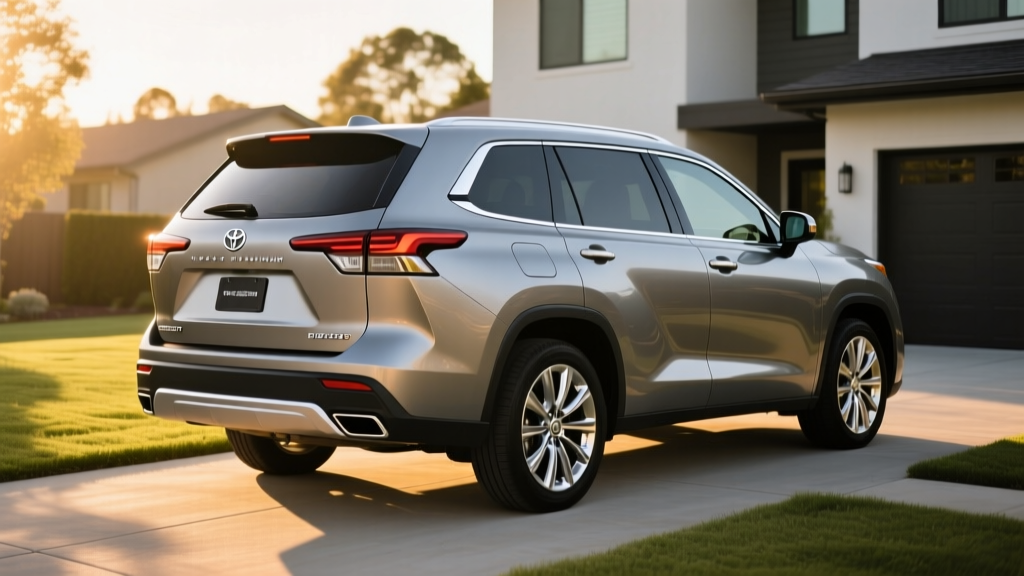
The 2023 Toyota Highlander Hybrid Platinum sits at the top of Toyota's three-row hybrid SUV lineup, pairing a 2.5-liter four-cylinder engine with two electric motors for a combined 243 horsepower. With an EPA-estimated 35 MPG combined, it delivers midsize-SUV space without the fuel bill of a V6. For buyers who need three rows, all-wheel drive, and don't have reliable access to plug-in charging, it remains one of the most practical electrified family haulers on the market — even as we evaluate it from a 2026 ownership perspective.
| Spec | Value |
|---|---|
| Powertrain | 2.5L I4 + 2 electric motors (AWD-i) |
| Combined Horsepower | 243 HP |
| EPA MPG (City / Highway / Combined) | 35 / 35 / 35 |
| Fuel Tank Capacity | 17.9 gallons |
| Total Driving Range | ~626 miles |
| 0–60 MPH | ~7.8 seconds |
| Drivetrain | Electronic On-Demand AWD |
| Seating | 7 passengers (captain's chairs, 2nd row) |
| Cargo Volume (behind 3rd / 2nd / 1st row) | 16.1 / 48.4 / 84.3 cu ft |
| Towing Capacity | 3,500 lbs |
| Base MSRP (Platinum AWD) | $50,765 |
| Hybrid Battery Warranty | 10 years / 150,000 miles |
This is a conventional hybrid (HEV), not a plug-in hybrid (PHEV). You never plug it in — the 1.6 kWh nickel-metal hydride (NiMH) traction battery recharges through regenerative braking and the gasoline engine. If you're looking for electric-only driving, you'd need to look at the now-discontinued RAV4 Prime or the Sienna, which is hybrid-only. Toyota does not offer a plug-in Highlander in the U.S. market.
HEV vs. PHEV: Where the Highlander Hybrid Fits
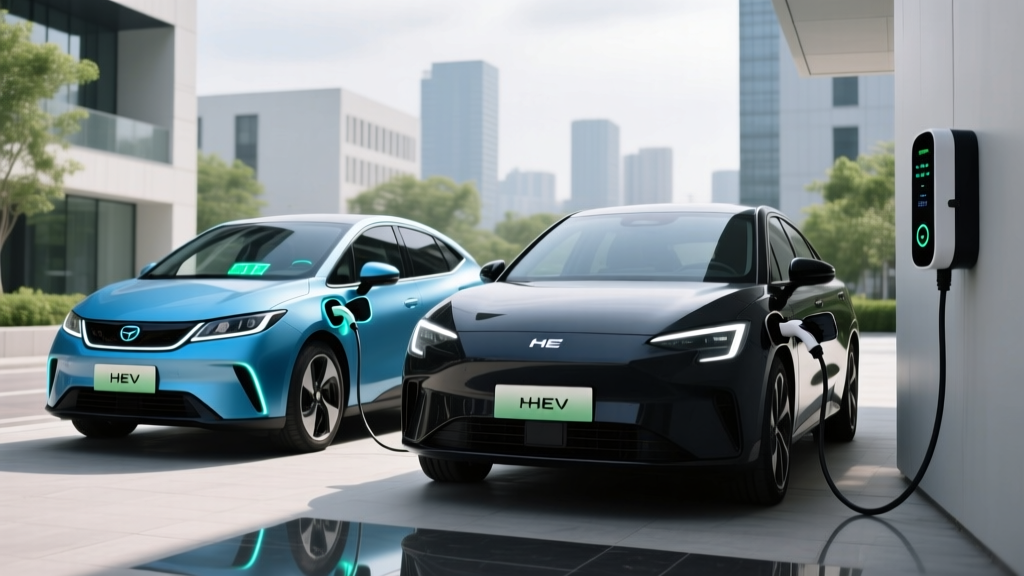
Before diving into fuel economy, it's worth clarifying the hybrid landscape, because confusion between conventional hybrids and plug-in hybrids remains one of the most common buyer mistakes.
| Feature | HEV (Highlander Hybrid) | PHEV (e.g., RAV4 Prime) | BEV (e.g., Tesla Model X) |
|---|---|---|---|
| Plug-in Required? | No | Yes (Level 1 or 2) | Yes (Level 2 or DC fast) |
| Battery Size | ~1.6 kWh (NiMH) | ~18.1 kWh (Li-ion) | 75–100+ kWh (Li-ion) |
| Electric-Only Range | None (EV assist only) | 25–42 miles | 250–350+ miles |
| Gas Engine | Yes — primary power | Yes — backup + highway | None |
| Fuel Economy | 35 MPG combined | 38 MPG + 94 MPGe | N/A (kWh/100mi) |
| Tax Credit Eligibility | None (§30D excludes HEVs) | Up to $7,500 (if eligible) | Up to $7,500 (if eligible) |
| Best For | No home charging access | Short commutes + road trips | Home charging + lower TCO |
The Highlander Hybrid is an HEV. Its electric motors assist the gas engine during acceleration and enable brief low-speed electric-only crawling (typically under 1 mile at very low speeds), but it cannot sustain electric-only driving at highway speeds or for meaningful distances. The trade-off is simplicity: no plug, no charging anxiety, no electrical panel upgrades. You fuel it like any conventional vehicle and the hybrid system handles the rest.
Fuel Economy: EPA Ratings vs. Real-World MPG
| Driving Condition | EPA MPG |
|---|---|
| City | 35 MPG |
| Highway | 35 MPG |
| Combined | 35 MPG |
Source: EPA Fuel Economy — 2023 Toyota Highlander Hybrid AWD
The equal city/highway rating is characteristic of Toyota's hybrid synergy drive: regenerative braking recovers energy in stop-and-go traffic, offsetting the city penalty that conventional gas SUVs suffer. The FWD-only Highlander Hybrid LE bumps the combined figure to 36 MPG, but the Platinum trim is AWD-only.
Real-World MPG Expectations
Owner-reported data on Fuelly and Edmunds forums consistently shows the Highlander Hybrid delivering 30–34 MPG in mixed driving. Several factors pull real-world numbers below the EPA sticker:
- Highway-heavy driving at 75–80 MPH: Hybrids lose their city advantage at sustained high speeds. Expect 30–32 MPG on long interstate trips.
- Cold weather: The gas engine runs more frequently in winter to provide cabin heat and maintain battery temperature. Owners in northern climates report 28–31 MPG during winter months.
- Mountain driving and towing: Climbing grades with the 3,500-lb tow rating engaged can drop instantaneous economy into the low 20s.
- City-dominant commutes: This is where the hybrid shines — some owners report 36–38 MPG on low-speed urban routes with frequent stops.
Bottom line: plan for 31–33 MPG in real-world mixed driving. That still translates to roughly 555–590 miles per tank — a meaningful advantage over the non-hybrid Highlander's 24 MPG combined (roughly 430 miles per tank).
Powertrain and Performance
The Highlander Hybrid uses Toyota's fourth-generation hybrid system. The 2.5-liter Atkinson-cycle inline-four produces 186 HP and 175 lb-ft of torque on its own. Two front-mounted electric motors add supplemental power, with a third motor on the rear axle providing electronic on-demand AWD. Combined system output is 243 HP.
The rear motor is relatively modest — it engages during acceleration from a stop and when the front wheels slip, but it doesn't provide continuous rear-wheel drive. This is a front-biased AWD system designed for traction, not performance driving.
The 0–60 MPH time of approximately 7.8 seconds is adequate for a 4,500-lb family SUV but not quick by modern standards. The CVT (continuously variable transmission) keeps the engine in its most efficient rpm band, which means noticeable engine drone under hard acceleration. Around town, the electric motors provide smooth, quiet low-speed motoring that masks the four-cylinder's coarseness.
Platinum Trim: What You Get for $50,765
The Platinum is the top-tier Highlander Hybrid trim for the 2023 model year. Key equipment includes:
- Panoramic glass roof with power sunshade
- 12.3-inch touchscreen with navigation, wireless Apple CarPlay and Android Auto
- 11-speaker JBL premium audio system
- Heated and ventilated front seats; heated second-row seats
- Head-up display (HUD)
- 360-degree surround-view camera
- Toyota Safety Sense 2.5+ (adaptive cruise, lane tracing, pre-collision with pedestrian detection)
- 20-inch alloy wheels
- Panoramic view monitor with curb-side camera
- Captain's chairs in the second row (7-passenger configuration)
At $50,765 MSRP (before destination), the Platinum Hybrid commands a roughly $7,500 premium over the LE Hybrid base. The LE starts at approximately $40,265 and delivers the same 35 MPG powertrain, making it the value pick if you can forgo the luxury features. XLE and Limited trims fill the gap between.
Tax Credit Eligibility
The Highlander Hybrid does not qualify for the federal §30D clean vehicle tax credit. Under current IRS rules, the §30D credit applies exclusively to plug-in electric vehicles (BEVs and PHEVs) with a minimum battery capacity of 7 kWh. The Highlander Hybrid's 1.6 kWh NiMH battery falls well below this threshold, and as a conventional HEV, it is categorically ineligible regardless of battery size.
Some states offer separate incentives for hybrid purchases, but these vary widely by jurisdiction and change frequently. Check your state's energy office or department of environmental quality for current programs. No federal incentive applies to this vehicle.
Hybrid Battery Warranty, Reliability, and Replacement Cost
Hybrid Battery Coverage
Warranty: 10 years or 150,000 miles (whichever comes first), transferable to subsequent owners.
Battery Type: Nickel-metal hydride (NiMH), ~1.6 kWh
What's Covered: Capacity loss below a manufacturer-defined threshold, cell failure, and associated hybrid system components (inverter, control module, electric motors).
Toyota extended its hybrid battery warranty from 8 years/100,000 miles to 10 years/150,000 miles starting with 2020 model-year vehicles, which covers the 2023 Highlander Hybrid. This is one of the strongest hybrid battery warranties in the industry.
Reliability Track Record
Toyota's hybrid system has accumulated over 25 years of real-world data since the 1997 Prius. The NiMH battery chemistry used in the Highlander Hybrid is less energy-dense than lithium-ion but is exceptionally durable — it tolerates the shallow charge-discharge cycles that characterize hybrid operation without significant degradation. Failure before 150,000 miles is uncommon based on owner reports and reliability surveys.
Battery Replacement Cost
If the hybrid battery does fail outside warranty, replacement costs for the Highlander Hybrid typically range from $3,000 to $5,000 for a new OEM battery pack installed at a dealership. Independent hybrid specialists and refurbished battery options can reduce this to $2,000–$3,500. Given the 10-year/150,000-mile warranty, most original owners will never face this cost.
Separately, the 12-volt auxiliary battery (which powers electronics, not the drivetrain) should be replaced every 4–6 years at roughly $200–$350 — standard maintenance identical to any conventional vehicle.
Who Should Choose the Highlander Hybrid?
Reasons to Buy
- 35 MPG in a 7-passenger AWD SUV — no plug required
- 626-mile total range eliminates fuel stops on long trips
- 10-year/150,000-mile hybrid battery warranty
- Strong resale value (Toyota hybrids hold premium)
- No charging infrastructure needed — works for apartment dwellers
- Toyota Safety Sense 2.5+ standard across all trims
Reasons to Look Elsewhere
- No federal tax credit eligibility (HEV exclusion)
- Sluggish acceleration (7.8 sec 0–60) vs. turbocharged competitors
- CVT drone under hard acceleration
- Third row is tight for adults on long trips
- Platinum trim at $50,765 approaches luxury-SUV territory
- No electric-only driving capability
Decision Framework
Choose the Highlander Hybrid if: You need three rows and AWD, drive 15,000+ miles per year (where the MPG savings compound), lack home charging access for a PHEV or BEV, and plan to keep the vehicle 7–10 years to maximize the warranty and reliability advantage.
Choose a PHEV (like the Kia Sorento PHEV) if: You have a short commute (under 30 miles), can install a Level 2 charger at home, and want electric-only daily driving with gas backup for road trips. You may also qualify for the §30D tax credit.
Choose a full BEV (like the Kia EV9 or Tesla Model X) if: You have reliable home charging, rarely tow, want the lowest cost-per-mile, and are ready to plan around DC fast charging on road trips.
Choose the gas-only Highlander if: You drive fewer than 10,000 miles per year, where the hybrid's $2,000–$3,000 price premium won't pay back in fuel savings within your ownership window.
Annual Fuel Cost Savings vs. Gas-Only Highlander
At 15,000 miles per year and $3.50/gallon regular unleaded:
| Model | Combined MPG | Gallons/Year | Annual Cost |
|---|---|---|---|
| Highlander Hybrid AWD | 35 MPG | 429 | $1,501 |
| Highlander Gas AWD (2.4T) | 24 MPG | 625 | $2,188 |
| Annual Savings | — | — | $687 |
Over a 7-year ownership period, that's approximately $4,800 in fuel savings — enough to offset the hybrid powertrain premium on most trims. At higher mileage or higher fuel prices, the payback accelerates.
Frequently Asked Questions
How many MPG does the 2023 Toyota Highlander Hybrid Platinum get?
The EPA rates it at 35 MPG city, 35 MPG highway, and 35 MPG combined. Real-world mixed driving typically yields 31–33 MPG, with city-heavy routes occasionally exceeding the EPA estimate and highway-heavy or cold-weather driving falling to 28–31 MPG.
Does the Highlander Hybrid need to be plugged in?
No. It is a conventional hybrid (HEV), not a plug-in hybrid (PHEV). The battery charges through regenerative braking and the gasoline engine. You never plug it in — just fill it with regular unleaded gasoline.
Is there a plug-in (PHEV) version of the Highlander?
No. Toyota does not offer a plug-in hybrid Highlander in the U.S. market. If you want a Toyota PHEV with similar space, the Sienna minivan (hybrid-only, 36 MPG) or the now-discontinued RAV4 Prime (42 miles electric-only) are the closest alternatives, though neither matches the Highlander's three-row SUV configuration with a plug.
Does the 2023 Highlander Hybrid qualify for any federal tax credit?
No. The federal §30D clean vehicle credit requires a plug-in electric vehicle with at least 7 kWh of battery capacity. The Highlander Hybrid's 1.6 kWh NiMH battery and conventional hybrid powertrain make it ineligible. Check your state for any local hybrid incentives, as these vary by jurisdiction.
How long will the hybrid battery last?
Toyota's NiMH hybrid batteries are designed to last the life of the vehicle with normal use. The battery is warranted for 10 years or 150,000 miles. Real-world data from Toyota's hybrid lineup shows most batteries lasting well beyond 200,000 miles before requiring replacement. If replacement is needed out of warranty, expect $3,000–$5,000 for a new OEM pack.
Is the Highlander Hybrid reliable?
Yes. Toyota's hybrid powertrain has one of the strongest reliability records in the industry, with over 25 years of continuous refinement. The Atkinson-cycle engine runs under less stress than a conventional engine (lower peak RPM, less heat cycling), and the eCVT transmission has no traditional gears or clutch packs to wear out. The hybrid-specific components are covered under the 10-year/150,000-mile warranty.
How does the Highlander Hybrid compare to the Kia Sorento Hybrid?
The 2023 Kia Sorento Hybrid AWD is rated at 34 MPG combined (vs. 35 for the Highlander), offers similar three-row seating, and starts at a lower MSRP. However, the Highlander Hybrid has a longer track record for hybrid reliability, higher predicted resale value, and more cargo volume behind the third row (16.1 vs. 12.6 cu ft). The Sorento does offer a PHEV variant (32 miles electric-only) if you want plug-in capability.