Quick Verdict: The Sporty Hybrid Sedan That Actually Delivers
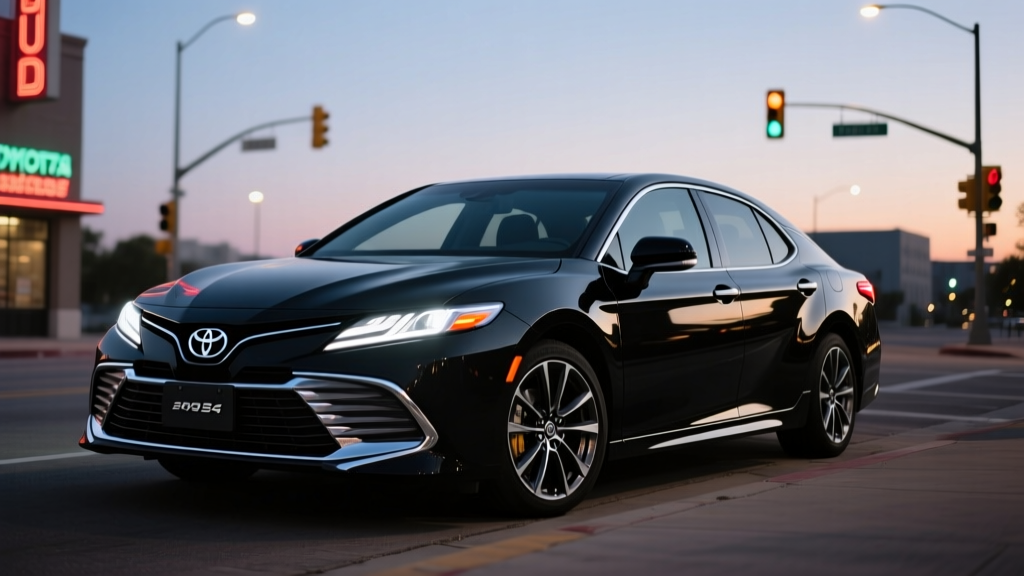
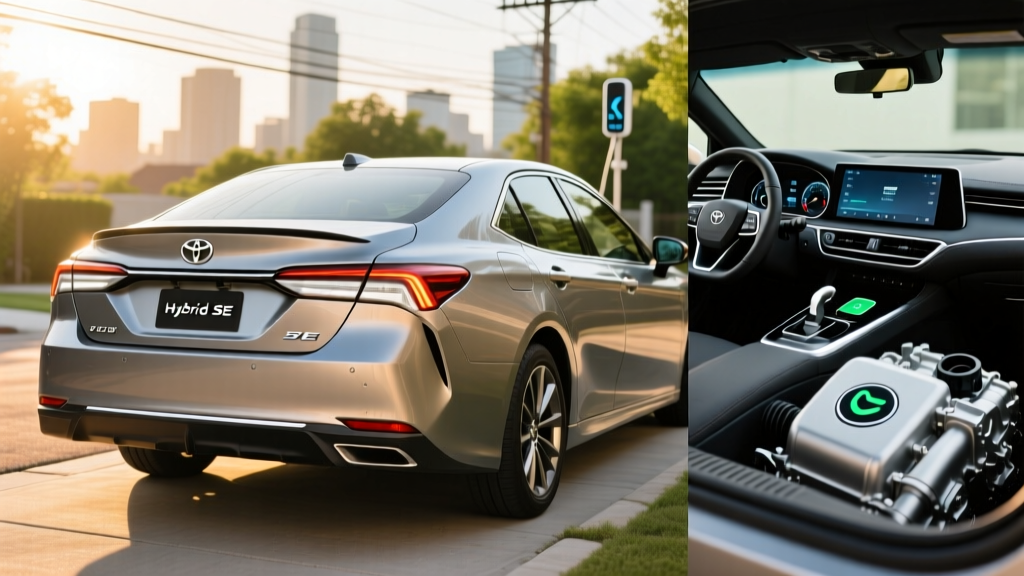
The 2023 Toyota Camry Hybrid SE occupies a narrow but compelling lane: a midsize sedan that returns mid-40s MPG without looking like an eco-compromise. The SE trim adds sport-tuned suspension, 18-inch alloy wheels, and a leather-trimmed steering wheel over the base LE hybrid, trading a single EPA city mile per gallon for sharper handling. With 208 combined horsepower and a proven fourth-generation Toyota Hybrid System, this is a low-risk electrified choice for buyers who aren't ready to plug in but want meaningful fuel savings.
As of 2026, the 2023 Camry Hybrid SE remains widely available on the used market and as certified pre-owned inventory, typically priced between $24,000 and $29,000 depending on mileage and condition. It does not qualify for the federal §30D new-EV tax credit (it's a conventional hybrid, not a plug-in), but certain buyers may benefit from state-level hybrid incentives or the used clean-vehicle credit if purchasing from a dealer as a qualifying pre-owned unit.
HEV vs. PHEV: Why the Camry Hybrid Is a Conventional Hybrid
Before diving into specs, it's critical to understand what the 2023 Camry Hybrid SE is—and isn't.
| Feature | Conventional Hybrid (HEV) | Plug-in Hybrid (PHEV) |
|---|---|---|
| Plug-in charging required? | No — gasoline only | Yes — plug in for electric-only miles |
| Electric-only range | None (motor assists at low speed) | Typically 20–45 miles |
| Battery size | Small (~1.0–1.6 kWh) | Larger (~13–20 kWh) |
| Federal tax credit (§30D new) | Not eligible | Up to $7,500 if eligible |
| Camry Hybrid SE? | Yes — this model | No — Camry has no PHEV variant |
The 2023 Camry Hybrid SE is a conventional hybrid electric vehicle (HEV). You never plug it in. The 1.6 kWh nickel-metal hydride (NiMH) traction battery charges through regenerative braking and the gasoline engine. Toyota does not offer a plug-in hybrid version of the Camry; buyers seeking electric-only commuting in a Toyota should look at the RAV4 Prime (a PHEV SUV) or the Prius Prime.
Fuel Economy: EPA Ratings and Real-World MPG
The 2023 Camry Hybrid SE is rated by the EPA at 44 MPG city, 47 MPG highway, and 46 MPG combined. The slightly lower city rating versus the LE hybrid (51/53/52) stems from the SE's larger 18-inch wheels, sport-tuned suspension, and stickier tires, which add rolling resistance.
| Trim | City MPG | Highway MPG | Combined MPG | Annual Fuel Cost* |
|---|---|---|---|---|
| Camry Hybrid LE | 51 | 53 | 52 | ~$1,150 |
| Camry Hybrid SE | 44 | 47 | 46 | ~$1,300 |
| Camry Hybrid XLE | 44 | 47 | 46 | ~$1,300 |
| Camry Gas SE (4-cyl) | 27 | 38 | 31 | ~$1,950 |
*Based on 15,000 miles/year at $3.50/gallon. Source: fueleconomy.gov estimates.
Real-World MPG: What Owners Actually See
Toyota hybrids are among the few vehicles that routinely meet or exceed EPA city estimates in real-world driving. The hybrid system recovers energy during braking, making stop-and-go traffic more efficient than steady highway cruising. Based on owner-reported data from Fuelly and independent testing:
- City driving: 44–50 MPG (many owners report beating the EPA city estimate)
- Highway cruising (70–75 mph): 40–44 MPG (hybrids lose their regen advantage at sustained speed)
- Mixed commute: 44–48 MPG
- Cold weather (below 30°F): Expect a 5–10% reduction (38–43 MPG combined) as the engine runs more frequently for cabin heat
Over a 15,000-mile year, the Hybrid SE saves roughly $650 in fuel compared to the gas-only Camry SE, assuming $3.50/gallon regular unleaded.
Powertrain: 208 Horsepower, Smooth and Proven
| Specification | 2023 Camry Hybrid SE |
|---|---|
| Engine | 2.5L 4-cylinder Dynamic Force (A25A-FXS) |
| Engine output | 176 hp / 163 lb-ft torque |
| Electric motor | Permanent-magnet synchronous (front) |
| Motor output | 118 hp / 149 lb-ft torque |
| Combined net horsepower | 208 hp |
| Transmission | eCVT (planetary gearset, not a belt CVT) |
| Drivetrain | Front-wheel drive (AWD-e available on LE only) |
| 0–60 mph | ~7.2 seconds |
| Traction battery | 1.6 kWh NiMH (sealed, no plug) |
| Fuel tank | 13.2 gallons |
| Total range | ~607 miles (EPA combined) |
Toyota's eCVT uses a planetary gearset to blend engine and motor power—it's not a traditional belt-driven CVT and doesn't suffer from the rubber-band effect common in Nissan or Subaru CVTs. Acceleration is linear and confident for merging, and the 208 combined horsepower puts the Camry Hybrid SE ahead of the Honda Accord Hybrid (204 hp) and Hyundai Sonata Hybrid (192 hp).
Note: The AWD-e option (a small rear electric motor for low-traction starts) is available only on the Hybrid LE trim for the 2023 model year. The SE is front-wheel drive exclusively.
Battery Warranty, Lifespan, and Replacement Cost
Toyota Hybrid Battery Warranty
- Coverage: 10 years / 150,000 miles (whichever comes first)
- Applies to: 2020+ model years, all 50 states
- What's covered: Traction battery capacity below a defined threshold, defects
- Transferable: Yes, to subsequent owners
Battery longevity is the top concern for hybrid buyers, and Toyota's track record here is among the best in the industry. The Camry Hybrid's 1.6 kWh NiMH battery is far less stressed than a full EV's lithium-ion pack—it operates in a narrow state-of-charge window (roughly 40–80%), which dramatically reduces degradation.
How Long Do Camry Hybrid Batteries Actually Last?
Based on long-term fleet data, taxi usage reports, and owner forums:
- Typical lifespan: 150,000–200,000+ miles before significant capacity loss
- Failure rate under 100k miles: Very low (<2% based on extended warranty claim data)
- Real-world evidence: Prius taxis routinely exceed 300,000 miles on original hybrid batteries
Battery Replacement Cost
If the battery does eventually need replacement outside warranty:
- New OEM battery (Toyota dealer): $2,500–$4,000 installed
- Refurbished/remanufactured battery: $1,500–$2,500 installed
- Individual module replacement: $500–$1,200 (a specialist can replace only the failed cells)
For a 2023 model, the 10-year/150,000-mile warranty means coverage extends through at least 2033, making premature replacement cost a non-issue for most original and second owners.
Pricing, Tax Credits, and Ownership Economics
Original MSRP (2023 Model Year)
- Camry Hybrid SE (FWD): $30,765 (including destination)
- Camry Hybrid SE Nightshade Edition: $31,465
- Fully loaded SE (navigation, JBL audio, panoramic roof): ~$35,500
Does the Camry Hybrid Qualify for Tax Credits?
No federal new-vehicle tax credit. The IRS §30D Clean Vehicle Credit applies only to plug-in electric vehicles (BEVs and PHEVs) with sufficient battery capacity. The Camry Hybrid SE is a conventional HEV with a 1.6 kWh battery—well below the 7 kWh minimum threshold for plug-in credit eligibility.
However, there are potential savings to explore:
- Used Clean Vehicle Credit (§25E): If you purchase a qualifying pre-owned 2023 Camry Hybrid from a licensed dealer for $25,000 or less, you may be eligible for a credit equal to 30% of the sale price, up to $4,000. Income caps apply ($75,000 single / $150,000 joint). Verify eligibility on IRS.gov.
- State incentives: A handful of states (e.g., California, Colorado, Oregon) have offered rebates or HOV lane access for hybrids, though many have shifted incentives toward full EVs. Check your state's energy office for current programs.
- Insurance: Hybrid sedans typically carry insurance premiums comparable to their gas counterparts—no significant EV surcharge applies.
5-Year Cost of Ownership Snapshot
| Cost Factor | Camry Hybrid SE | Camry Gas SE (4-cyl) |
|---|---|---|
| Purchase price (avg. used 2026) | $26,500 | $23,000 |
| Fuel (5 yrs, 15k mi/yr) | $6,500 | $9,750 |
| Maintenance (5 yrs) | $2,200 | $2,800 |
| Insurance (5 yrs avg.) | $7,500 | $7,200 |
| 5-Year Total | $42,700 | $42,750 |
The hybrid's fuel savings effectively offset its higher purchase price within 5 years. At higher annual mileage, the hybrid pulls further ahead.
Who Should Choose the Camry Hybrid SE?
Choose the 2023 Camry Hybrid SE If:
- You drive 12,000–20,000+ miles per year and want meaningful fuel savings without changing your refueling habits
- You live in an apartment or lack access to home/work charging (no plug required)
- You want a sport-tuned ride with real acceleration (208 hp, 0–60 in 7.2s) alongside 46 MPG
- You plan to own the car 8–10+ years and value Toyota's hybrid reliability record
- You frequently take long road trips where charging infrastructure is sparse
Consider a Full EV Instead If:
- You have reliable Level 2 home charging and a commute under 50 miles
- You want to eliminate gasoline entirely and reduce maintenance (no oil changes, fewer brake replacements)
- You qualify for the full $7,500 federal EV tax credit on a new BEV
- You're drawn to models like the Tesla Model 3, Hyundai Ioniq 6, or Chevrolet Equinox EV
Consider the Camry Hybrid LE Instead If:
- Maximum MPG is your priority (52 combined vs. 46 on the SE)
- You want the AWD-e option for snow-belt climates
- You prefer a softer ride over sport-tuned suspension
Pros and Cons
Pros
- 46 MPG combined (real-world often matches or exceeds in city driving)
- 208 hp is genuinely quick for a hybrid sedan
- No plug-in charging required—fills up at any gas station in 3 minutes
- 10-year/150,000-mile hybrid battery warranty
- Sport-tuned suspension and 18-inch wheels give it real cornering composure
- Strong resale value and certified pre-owned availability
- Toyota Safety Sense 2.5+ standard (adaptive cruise, lane tracing, auto emergency braking)
Cons
- 6 MPG less combined than the Hybrid LE due to larger wheels and sport tires
- No AWD-e option on the SE trim (LE only)
- No federal new-vehicle tax credit eligibility
- eCVT drone under hard acceleration (though less pronounced than belt CVTs)
- Rear seat is tighter than the Honda Accord Hybrid
- Infotainment (2023 model) uses Toyota's older interface—upgraded for 2025+ models
Frequently Asked Questions
How many MPG does the 2023 Toyota Camry Hybrid SE get?
The EPA rates it at 44 MPG city, 47 MPG highway, and 46 MPG combined. In real-world city driving with frequent stops, many owners report 46–50 MPG thanks to regenerative braking. Highway-only driving at 75 mph typically yields 40–44 MPG.
Does the Camry Hybrid SE need to be plugged in?
No. The Camry Hybrid SE is a conventional hybrid (HEV), not a plug-in hybrid (PHEV). The small 1.6 kWh battery charges through regenerative braking and the gasoline engine. You fuel it exclusively at gas stations.
Is the 2023 Camry Hybrid reliable, and what does battery replacement cost?
Toyota's hybrid system is one of the most proven electrified powertrains on the road, with decades of data from Prius and Camry fleets. The hybrid battery is warranted for 10 years/150,000 miles. Out-of-warranty replacement runs $2,500–$4,000 for a new OEM unit, though refurbished options are available for $1,500–$2,500. Most batteries last 150,000–200,000+ miles.
Does the 2023 Camry Hybrid qualify for any tax credit?
It does not qualify for the federal §30D new clean vehicle credit, which requires a plug-in vehicle with at least 7 kWh of battery capacity. However, if purchased as a qualifying used vehicle from a dealer for $25,000 or less, you may be eligible for the §25E Used Clean Vehicle Credit (30% of sale price, up to $4,000), subject to income limits. Check current rules at IRS.gov.
Hybrid vs. PHEV vs. EV — which is right for me?
Choose the Camry Hybrid (HEV) if you can't charge at home, drive long distances frequently, or want zero change to your refueling routine. Choose a PHEV (like the RAV4 Prime or Prius Prime) if you have home charging and a short commute but want gas backup for road trips. Choose a full EV (BEV) if you have reliable home charging, want minimal maintenance, and your daily driving stays within 250–300 miles.
Is the Camry Hybrid SE available with all-wheel drive?
No. For the 2023 model year, the AWD-e system (a rear-mounted electric motor) is available only on the Hybrid LE trim. The SE, XLE, and XSE hybrid trims are front-wheel drive only.
What's the difference between the Camry Hybrid SE and the Hybrid XSE?
The XSE adds a more aggressive exterior styling package, quad-LED headlights, ambient interior lighting, and additional driver-assist features. Both share the same 208 hp powertrain, 46 MPG combined rating, and sport-tuned suspension. The XSE typically commands a $1,500–$2,000 premium.