The Short Answer: Yes, Every Toyota Sequoia Is a Hybrid
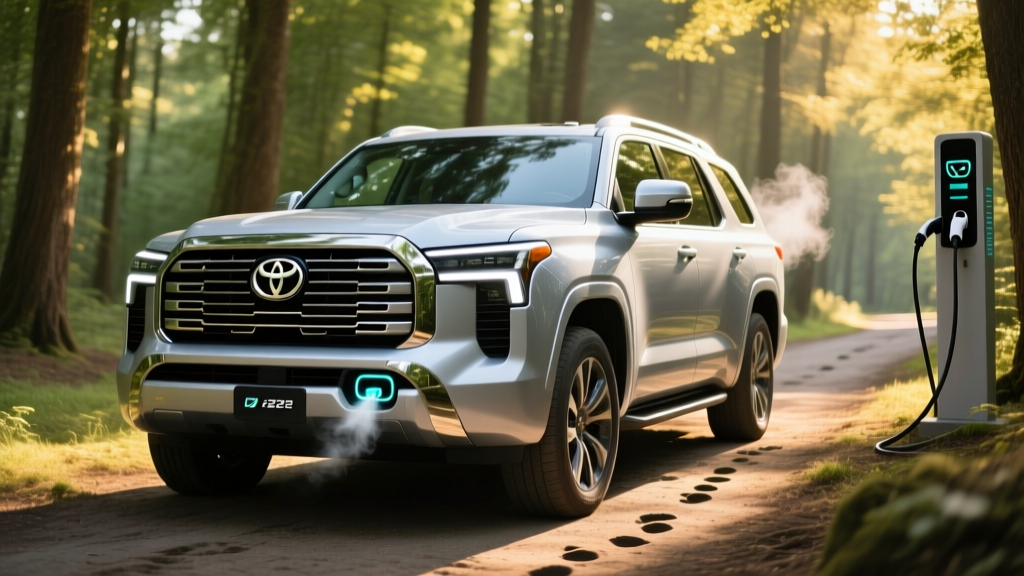
If you're shopping for a full-size three-row SUV and wondering whether all Sequoias are hybrid, the answer is straightforward: every Toyota Sequoia sold since the 2023 model year comes exclusively with the i-FORCE MAX hybrid powertrain. There is no gas-only Sequoia in Toyota's current lineup, and the 2026 model year continues this hybrid-only strategy.
Toyota retired the old V8 Sequoia after 2022 and rebuilt the nameplate on the Tundra platform with a twin-turbo V6 paired with an electric motor sandwiched between the engine and transmission. The result is a full-size SUV that produces more power and gets dramatically better fuel economy than its predecessor — without requiring you to plug it in.
HEV vs. PHEV: What Kind of Hybrid Is the Sequoia?
The Sequoia is a conventional hybrid (HEV), not a plug-in hybrid (PHEV). That means:
- No plug, no charging cable required. The small battery recharges through regenerative braking and the gasoline engine.
- No electric-only driving range beyond very low-speed, short-distance creeping (under ~1 mile at parking-lot speeds).
- No federal §30D tax credit eligibility — that credit applies only to plug-in vehicles with batteries ≥7 kWh.
- You fuel it like a normal gas vehicle and simply benefit from the hybrid system's efficiency gains.
If you want a Toyota SUV with plug-in capability and electric-only range, the closest option is the RAV4 Prime (PHEV) or the Grand Highlander Hybrid (also an HEV, but with better MPG due to smaller size). Toyota does not currently offer a Sequoia PHEV variant.
2026 Toyota Sequoia Powertrain Specs
| Specification | 2026 Toyota Sequoia |
|---|---|
| Powertrain | i-FORCE MAX 3.5L twin-turbo V6 + electric motor (HEV) |
| Combined Horsepower | 437 hp |
| Combined Torque | 583 lb-ft |
| Transmission | 10-speed automatic |
| Drivetrain | RWD standard; 4WD available (part-time with low range) |
| Hybrid Battery | ~1.87 kWh nickel-metal hydride (NiMH) |
| 0–60 mph | ~5.6 seconds (4WD) |
| Towing Capacity | Up to 9,520 lbs (RWD, properly equipped) |
| Seating | 7 or 8 passengers (trim-dependent) |
| Base MSRP | ~$62,175 (SR5 RWD) to ~$83,460 (Capstone 4WD) |
The i-FORCE MAX system uses a 48-horsepower electric motor integrated into the bell housing of the 10-speed transmission. Unlike Toyota's older Synergy Drive system found in the Prius, this setup prioritizes torque fill and smooth power delivery over maximum electric-only operation. The electric motor eliminates turbo lag and provides instant low-end thrust — useful when towing or accelerating from a stop.
Sequoia EPA Fuel Economy: MPG by Trim and Drivetrain
| Configuration | City | Highway | Combined |
|---|---|---|---|
| RWD (SR5, Limited) | 21 | 24 | 22 |
| 4WD (SR5, Limited, Platinum) | 19 | 22 | 20 |
| TRD Pro 4WD | 19 | 22 | 20 |
| Capstone 4WD | 19 | 22 | 20 |
Source: EPA Fuel Economy
Real-World MPG vs. EPA Estimates
Hybrid systems tend to outperform their EPA city estimates because regenerative braking recovers energy in stop-and-go traffic. Based on owner reports and third-party testing, the Sequoia hybrid delivers:
- City driving: 22–24 MPG observed (RWD) — the hybrid system shines here, frequently exceeding the EPA city number by 1–3 MPG.
- Highway driving: 19–21 MPG observed (4WD) — at sustained 70+ mph speeds, the aerodynamic drag of a 6,000-lb SUV works against the hybrid advantage. Expect to fall slightly below the EPA highway estimate on long flat-road trips.
- Towing: 10–13 MPG is realistic when pulling a 5,000–8,000 lb trailer. The hybrid system provides marginal towing efficiency gains over a conventional V6, but physics dominates at this weight.
- Cold weather penalty: Expect a 1–2 MPG drop in sub-40°F conditions as the engine runs more frequently to provide cabin heat and maintain battery temperature.
For context, the previous-generation V8 Sequoia (2008–2022) rated just 13 city / 17 highway / 14 combined with 4WD. The i-FORCE MAX hybrid delivers roughly 40–45% better combined fuel economy while producing significantly more power.
Hybrid vs. Plug-In Hybrid vs. Full EV: Which Fits Your Garage?
The Sequoia's hybrid-only status raises a practical question: is an HEV the right choice, or should you consider a PHEV or full battery-electric vehicle (BEV) for your three-row needs?
| Factor | HEV (Sequoia) | PHEV | Full BEV |
|---|---|---|---|
| Plug-in charging required? | No | Yes (for EV range) | Yes (always) |
| Electric-only range | ~0 mi | 25–45 mi typical | 250–400 mi |
| Home charger needed? | No | Recommended (Level 2) | Essential (Level 2) |
| Federal tax credit (§30D) | Not eligible | Up to $7,500* | Up to $7,500* |
| Towing (3-row SUV) | Up to 9,520 lbs | Limited options | Range drops sharply |
| Fuel cost per mile | ~$0.17 (at $3.50/gal) | ~$0.04–0.17 | ~$0.04–0.06 |
*§30D credit eligibility depends on MSRP caps ($80,000 for SUVs), buyer income limits, and battery component/critical mineral sourcing requirements per IRS guidelines. Consult a tax professional.
Choose the Sequoia HEV If:
- You need serious towing capacity (7,000–9,500 lbs) with three rows of seating
- You don't have access to home Level 2 charging (apartment, street parking, no garage)
- You regularly take long road trips where charging infrastructure is uncertain
- You want hybrid efficiency gains without changing your fueling habits at all
Consider a PHEV or BEV If:
- You have home charging and most daily trips are under 35 miles (a PHEV covers those on electricity alone)
- Towing is rare or under 5,000 lbs (opening up BEV options like the Rivian R1S or Kia EV9)
- You want to qualify for the §30D federal tax credit to offset a higher purchase price
- Reducing tailpipe emissions is a top priority for your household
Pricing, Trims, and Tax Credit Reality for the Sequoia
The 2026 Toyota Sequoia is available across six trims, with MSRPs spanning roughly $62,000 to $83,500:
- SR5 (RWD/4WD): ~$62,175–$64,175 — the volume seller with Toyota Safety Sense 3.0, 14-inch touchscreen, wireless CarPlay/Android Auto
- Limited (RWD/4WD): ~$68,675–$70,675 — adds leatherette, power-folding third row, 20-inch wheels
- Platinum (4WD): ~$74,375 — panoramic roof, adaptive variable suspension, premium audio
- TRD Pro (4WD): ~$78,310 — off-road-tuned suspension, skid plates, TRD exhaust, locking rear differential
- Capstone (4WD): ~$83,460 — semi-aniline leather, power running boards, head-up display, 22-inch wheels
Does the Sequoia Qualify for Any Tax Credit?
No. The Sequoia does not qualify for the federal §30D Clean Vehicle Credit because it is a conventional hybrid (HEV), not a plug-in vehicle. The §30D credit requires a battery capacity of at least 7 kWh and plug-in charging capability — the Sequoia's ~1.87 kWh NiMH battery does not meet this threshold.
Some states offer modest rebates or HOV-lane access for conventional hybrids, but these programs have largely wound down in favor of PHEV and BEV incentives. Check your state's energy office or DMV for current programs.
Sequoia Hybrid Battery: Warranty, Longevity, and Replacement Cost
Toyota Hybrid Battery Warranty
Coverage: 10 years / 150,000 miles (whichever comes first) for all 2020-and-newer Toyota hybrids, including the Sequoia.
What's covered: Defects in the hybrid battery pack and related hybrid system components (inverter, electric motor, control electronics).
Capacity threshold: Toyota warrants the battery against abnormal degradation — typically defined as falling below ~60–70% of original capacity, though exact thresholds are assessed case-by-case by Toyota dealers.
Source: Toyota Warranty Guide
How Long Will the Sequoia Hybrid Battery Last?
Toyota's hybrid battery track record is among the best in the industry. The Prius, which has used a similar NiMH-based hybrid system for over two decades, routinely sees original batteries lasting 200,000+ miles. Key factors for the Sequoia:
- NiMH chemistry: The Sequoia uses a nickel-metal hydride pack — a proven, thermally stable chemistry that degrades more gracefully than early lithium-ion packs. It sacrifices energy density (irrelevant for a small HEV battery) for long cycle life.
- Shallow cycling: Toyota's hybrid system never fully charges or fully depletes the battery. It operates in a roughly 40–80% state-of-charge window, dramatically reducing wear. The usable buffer is only a fraction of the 1.87 kWh total.
- Real-world data: Toyota fleet data and owner surveys suggest fewer than 5% of Toyota hybrid batteries require replacement within the warranty period. Most failures occur due to physical damage or extreme heat exposure, not normal degradation.
Sequoia Hybrid Battery Replacement Cost
If your Sequoia's hybrid battery fails outside the warranty window, here's what to budget:
- New OEM battery from Toyota: $3,000–$4,500 (parts + labor at a dealership)
- Remanufactured/reconditioned battery: $1,500–$2,500 (aftermarket suppliers, installed by an independent hybrid specialist)
- Individual module replacement: $300–$800 if only specific cells within the pack have failed (a hybrid specialist can test and swap individual modules rather than the entire pack)
For comparison, a full BEV battery replacement (e.g., a 100 kWh pack in a large electric SUV) runs $15,000–$25,000. The Sequoia's small HEV battery is a fraction of that cost, and the 10-year/150,000-mile warranty provides substantial protection.
Reliability and Ownership Costs
The Sequoia's i-FORCE MAX powertrain shares its core architecture with the Tundra and Land Cruiser 300 Series (sold globally), giving Toyota a broad reliability dataset. Key ownership considerations:
- Hybrid system reliability: Toyota has built over 20 million hybrids globally. The electric motor and power electronics in the i-FORCE MAX are simpler and less stressed than a turbo-only setup because the motor handles low-RPM torque, reducing turbo cycling.
- Turbo engine maintenance: The 3.5L twin-turbo V6 requires synthetic oil changes every 10,000 miles. Long-term turbo reliability data on this specific engine is still maturing (introduced 2022), but early indicators are positive.
- Brake pad life: Regenerative braking significantly reduces wear on the friction brakes. Many Toyota hybrid owners report original brake pads lasting 80,000–100,000 miles under normal driving conditions.
- Insurance: Expect premiums comparable to a gas V8 full-size SUV. The hybrid system does not carry a significant insurance surcharge, unlike some BEVs.
Pros
- 437 hp / 583 lb-ft — more power than any rival V6 in the segment
- ~40% better fuel economy than the old V8 Sequoia
- 9,520-lb towing capacity (class-competitive)
- No plug, no charging hassle — fuel it like any gas SUV
- 10-year/150,000-mile hybrid battery warranty
- Standard Toyota Safety Sense 3.0 (adaptive cruise, lane-keep, auto emergency braking)
- Strong resale value — Toyota full-size SUVs hold value well
Cons
- No PHEV variant — can't drive on electricity alone for daily commutes
- No federal tax credit eligibility
- Highway MPG disappoints vs. EPA (aerodynamic drag at speed)
- Third row is tight for adults on long trips (a minivan or Grand Highlander offers more room)
- TRD Pro and Capstone trims push past $80,000 with no §30D offset
- No spare tire on some trims (run-flat or tire-inflator kit)
- Infotainment is improved but still trails Hyundai/Kia in responsiveness
Sequoia vs. the Competition: Hybrid Full-Size SUV Landscape
The Sequoia is not the only hybrid option in the full-size SUV segment, but its hybrid-only approach is unique. Here's how it compares:
| Vehicle | Powertrain | Combined MPG | HP | Starting MSRP |
|---|---|---|---|---|
| Toyota Sequoia | HEV (standard) | 20–22 | 437 | ~$62,175 |
| Ford Expedition | Gas V6 (no hybrid) | 18–19 | 400 | ~$58,000 |
| Chevrolet Tahoe (Duramax) | Diesel I6 | 22–24 | 305 | ~$60,000 |
| Jeep Wagoneer (Hurricane) | Gas I6 turbo | 17–19 | 420 | ~$63,000 |
| Rivian R1S (Dual-Motor) | BEV | ~69 MPGe | 533–800+ | ~$79,900 |
The Sequoia occupies a distinct niche: the only full-size, body-on-frame SUV that comes exclusively as a hybrid. The diesel Tahoe matches or beats its MPG but sacrifices horsepower. The Expedition and Wagoneer remain gas-only. The Rivian R1S is fully electric and vastly more efficient, but costs significantly more and requires charging infrastructure.
Frequently Asked Questions
Are all Sequoias hybrid, or can I still buy a gas-only model?
Every 2026 Toyota Sequoia is a hybrid (HEV). Toyota discontinued the V8 Sequoia after 2022 and has not offered a non-hybrid variant since the redesign. If you want a gas-only full-size Toyota SUV, you'd need to look at the used market for a pre-2023 model or consider the 4Runner (which also moved to a turbo-four hybrid for 2025+).
How many MPG does the Sequoia hybrid get in real-world driving?
Expect 21–23 MPG combined in mixed driving with the RWD model, and 19–21 MPG with 4WD. City driving often exceeds EPA estimates by 1–3 MPG thanks to regenerative braking. Highway driving at 75+ mph tends to fall 1–2 MPG below the EPA highway number due to aerodynamic drag. Towing drops economy to roughly 10–13 MPG.
Does the Sequoia hybrid need to be plugged in?
No. The Sequoia is a conventional hybrid (HEV), not a plug-in hybrid (PHEV). Its small battery charges through regenerative braking and the gasoline engine. You simply fill up at a gas station as you would with any conventional vehicle.
Can the Sequoia drive on electric power alone?
Only at very low speeds for very short distances — think creeping through a parking lot or in heavy stop-and-go traffic for a few hundred feet. It does not have a meaningful electric-only range like a PHEV (e.g., the RAV4 Prime, which offers 42 miles on electricity). The Sequoia's electric motor primarily assists the gas engine rather than replacing it.
Is the Sequoia hybrid reliable, and what does a battery replacement cost?
Toyota's hybrid systems are among the most reliable in the industry, backed by over 20 million hybrid vehicles produced globally. The Sequoia's hybrid battery is covered by a 10-year/150,000-mile warranty. Out-of-warranty replacement costs range from $1,500 (remanufactured) to $4,500 (new OEM at a dealer). Most Toyota hybrid batteries outlast 200,000 miles under normal conditions.
Does the Sequoia qualify for the federal EV tax credit?
No. The §30D Clean Vehicle Credit applies only to plug-in electric vehicles (PHEVs and BEVs) with battery capacities of at least 7 kWh. The Sequoia's ~1.87 kWh hybrid battery does not qualify. Some states may offer minor hybrid incentives, but there is no federal tax benefit for purchasing a conventional HEV. Check IRS §30D guidelines for current credit rules.
Should I buy the Sequoia hybrid or wait for a plug-in version?
Toyota has not announced a Sequoia PHEV or BEV variant. Given Toyota's gradual approach to electrification for body-on-frame trucks and SUVs, a plug-in Sequoia is unlikely before the next major redesign (estimated 2028–2030). If you need plug-in capability now in a three-row SUV, consider the Kia Sorento PHEV, Chrysler Pacifica PHEV (minivan), or a full BEV like the Kia EV9 or Rivian R1S — though none match the Sequoia's body-on-frame towing capacity.
How does the Sequoia hybrid compare to the Grand Highlander Hybrid?
The Grand Highlander Hybrid uses a different hybrid system (2.4L turbo four-cylinder hybrid, 362 hp) on a unibody car platform. It achieves 27–28 MPG combined — significantly better than the Sequoia — but tops out at around 5,000 lbs of towing capacity. If you prioritize fuel economy and third-row space over towing and off-road capability, the Grand Highlander Hybrid is the more efficient choice. If you need 9,000+ lb towing and body-on-frame durability, the Sequoia is the answer.