The Hyundai Sonata Hybrid occupies a specific niche in the electrified sedan market: it's a conventional hybrid (HEV) that requires no plug, no behavior change, and no range anxiety — yet delivers fuel economy that rivals some plug-in vehicles in city driving. With the 2023 model year now available on the used market and Hyundai having refreshed the Sonata lineup for 2024-2025 with a redesigned exterior, buyers are asking whether the 2023 Sonata Hybrid still holds up as a smart purchase in 2026. This guide breaks down the exact numbers — EPA MPG, powertrain specs, battery warranty, and real-world ownership economics — to help you decide.
2023 Sonata Hybrid: EPA MPG and Real-World Fuel Economy
The 2023 Hyundai Sonata Hybrid comes in three trims — Blue, SEL, and Limited — and fuel economy varies meaningfully between them due to wheel size, weight, and equipment differences. Here's the official EPA data from fueleconomy.gov:
| Trim | City MPG | Highway MPG | Combined MPG | Annual Fuel Cost* |
|---|---|---|---|---|
| Blue | 50 | 54 | 52 | ~$1,050 |
| SEL | 44 | 51 | 47 | ~$1,150 |
| Limited | 44 | 51 | 47 | ~$1,150 |
*Based on 15,000 miles/year, 55% city driving, and $3.30/gallon regular unleaded. Your actual cost depends on local fuel prices and driving mix.
The Blue trim's 52 MPG combined is exceptional — it's one of the highest EPA ratings of any midsize hybrid sedan, trailing only the Toyota Camry Hybrid LE (52 combined) and edging out the Honda Accord Hybrid (48 combined). The SEL and Limited trims drop to 47 combined, primarily because of larger 18-inch alloy wheels and additional weight from features like the panoramic sunroof on the Limited.
Hybrids typically exceed their EPA city rating in stop-and-go traffic because regenerative braking recovers energy that a gas car wastes as heat. In our experience and owner reports, the Sonata Hybrid Blue routinely achieves 52-56 MPG in city driving. Highway mileage tends to land closer to or slightly below the EPA estimate — expect 48-52 MPG at 70-75 mph on flat terrain. In cold weather (below 30°F), expect a 5-10% reduction as the engine runs more frequently for cabin heat and the battery's chemical efficiency drops. Overall real-world combined: 47-53 MPG for Blue, 43-48 for SEL/Limited.
Hybrid (HEV) vs. Plug-In Hybrid (PHEV): Which Sonata Is Which?
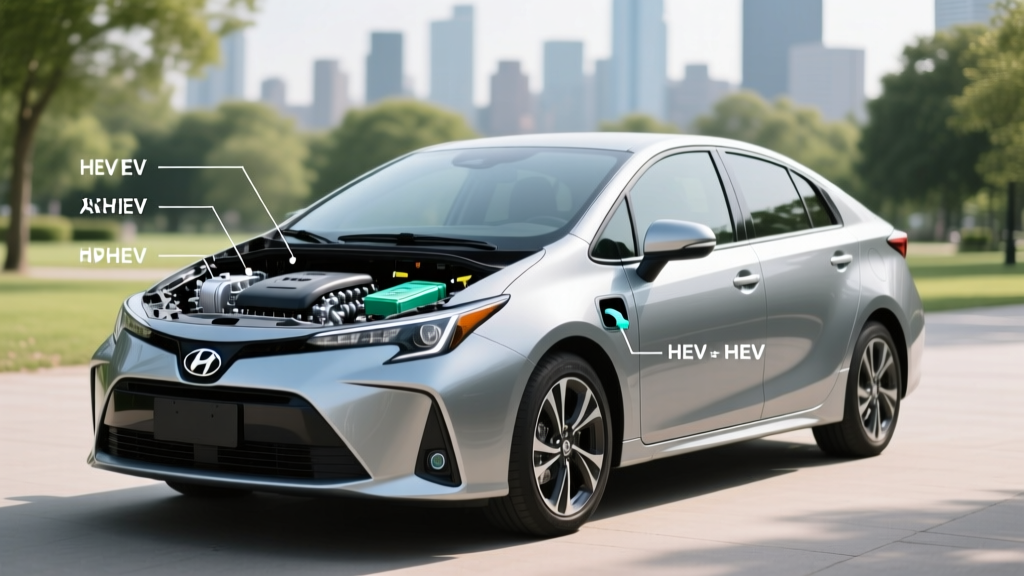
This is a critical distinction that trips up many shoppers. The 2023 Sonata Hybrid is a conventional hybrid (HEV). It has a small 1.62 kWh lithium-ion battery that charges solely through regenerative braking and the gasoline engine. You never plug it in. There is no electric-only driving range to speak of — the electric motor assists the gas engine and enables brief low-speed electric creep, but the car always needs gasoline to operate.
Hyundai previously sold a Sonata Plug-In Hybrid in earlier generations (through the 2019 model year), which offered approximately 27 miles of electric-only range from a 9.8 kWh battery. For the 2023 model year, Hyundai does not offer a Sonata PHEV in the United States. If you want a Hyundai plug-in hybrid sedan in 2026, you'd need to look at the used market for older Sonata PHEV models, or cross-shop the Hyundai Tucson PHEV (33 miles electric-only) or Hyundai Ioniq 5 (full EV).
| Feature | HEV (2023 Sonata Hybrid) | PHEV (e.g., Tucson PHEV) | BEV (e.g., Ioniq 6) |
|---|---|---|---|
| Plugs in? | No | Yes (Level 1/2) | Yes (Level 1/2/DC) |
| Electric-only range | ~0 miles | 33 miles | 305-361 miles (EPA) |
| Battery size | 1.62 kWh | 13.8 kWh | 77.4 kWh |
| Uses gasoline? | Yes, always | Yes, after battery depletes | No |
| Federal tax credit (§30D) | Not eligible | Up to $7,500 (if eligible) | Up to $7,500 (if eligible) |
| Behavior change needed? | None — fill up at gas stations | Plug in nightly for best value | Home charging strongly recommended |
Powertrain Specs: What's Under the Hood
| Engine | 2.0L inline-4 GDI (Smartstream) |
|---|---|
| Engine horsepower | 150 hp @ 6,000 rpm |
| Engine torque | 139 lb-ft @ 1,500 rpm |
| Electric motor | 39 kW (52 hp) permanent-magnet synchronous |
| Combined system output | 192 hp |
| Transmission | 6-speed automatic with Active Shift Control |
| Hybrid battery | 1.62 kWh lithium-ion polymer |
| Drivetrain | Front-wheel drive |
| 0-60 mph | ~7.5 seconds (est.) |
| Fuel tank | 13.2 gallons |
| Total driving range | ~620-686 miles (Blue: ~686 mi at 52 MPG) |
The Sonata Hybrid pairs Hyundai's 2.0L Smartstream engine with a 39 kW electric motor integrated into the transmission housing. The combined 192 hp is adequate for highway merging and passing — it won't feel sporty, but it's never strained. The 6-speed automatic is a deliberate choice over the CVT transmissions used by Toyota and Honda in their hybrids; some drivers prefer the natural shift feel, though CVTs typically extract marginally better city fuel economy. Hyundai's Active Shift Control software reduces shift time by synchronizing motor and engine speed, smoothing transitions that would otherwise feel jerky.
Pricing, Trims, and Tax Credit Eligibility
The 2023 Sonata Hybrid launched with the following MSRP figures (including destination charge):
- Blue: $29,290
- SEL: $30,840
- Limited: $36,590
On the used market in 2026, expect to find 2023 Sonata Hybrids priced between approximately $21,000 (Blue, higher mileage) and $30,000 (Limited, low mileage/CPO), depending on condition, mileage, and region.
The 2023 Sonata Hybrid is a conventional HEV, not a plug-in vehicle. Under IRS §30D rules, the federal clean vehicle credit applies only to plug-in electric vehicles (BEVs and PHEVs) that meet battery sourcing, critical minerals, MSRP cap, and buyer income requirements. The Sonata Hybrid does not qualify for the federal EV tax credit. Some states offer separate incentives for hybrids — check your state's energy office or the AFDC state incentive database for current local programs. Always consult a tax professional for eligibility advice.
Battery Warranty, Reliability, and Replacement Cost
Hybrid battery longevity is consistently the top concern for hybrid shoppers — and it's an area where Hyundai's coverage stands out.
| Hybrid battery warranty | 10 years / 100,000 miles |
|---|---|
| Hybrid system components | 10 years / 100,000 miles |
| Powertrain warranty | 10 years / 100,000 miles |
| New vehicle limited | 5 years / 60,000 miles |
| Capacity retention threshold | Below 70% of original capacity (typical Hyundai standard) |
Hyundai's 10-year/100,000-mile hybrid battery warranty is among the longest in the industry, matching the coverage Toyota provides on its newer hybrid models. The 1.62 kWh battery in the Sonata Hybrid is small and operates within a conservative state-of-charge window — it rarely charges above ~80% or below ~20% — which significantly reduces degradation stress compared to a full EV battery that regularly cycles through a wider range.
Reliability data: The Sonata Hybrid's powertrain has been in production since the 2020 model year refresh, and the 2.0L Smartstream engine with the 6-speed hybrid automatic has proven durable in fleet and owner data. IIHS rated the 2023 Sonata a Top Safety Pick+ (with specific headlights), and the hybrid shares the same structural platform. Common complaints on owner forums are minor — typically related to infotainment software quirks rather than powertrain issues.
Battery replacement cost: If the hybrid battery fails outside of warranty, expect a replacement cost of approximately $2,000-$3,500 (parts and labor) at a Hyundai dealer. This is considerably less than a full EV battery replacement because the 1.62 kWh pack is small. Third-party hybrid battery rebuilders may offer lower-cost options in the $1,200-$2,000 range. Given the 10-year warranty and the conservative charge management, out-of-pocket battery replacement for a 2023 model is unlikely before 2033 or 100,000 miles.
Who Should Choose the 2023 Sonata Hybrid?
Pros
- 52 MPG combined (Blue) — best-in-class midsize hybrid efficiency
- 686-mile total range — fewer fill-ups than any gas sedan
- No plug required — zero behavior change from a gas car
- 10-year/100,000-mile hybrid battery warranty
- Comfortable ride, spacious rear seat, large trunk (15.1 cu ft)
- Strong safety ratings (IIHS Top Safety Pick+)
- Lower purchase price than comparable PHEVs or EVs
Cons
- No electric-only driving — always burns gasoline
- Not eligible for the federal §30D tax credit
- SEL/Limited trims lose 5 MPG vs. Blue (47 vs. 52 combined)
- Modest 192 hp — not a performance sedan
- No AWD option (unlike Toyota Camry Hybrid)
- Infotainment can lag; no wireless CarPlay on Limited's 10.25" screen
- Discontinued design — 2024+ Sonata has a full exterior refresh
Choose the 2023 Sonata Hybrid If:
- You want maximum MPG without ever plugging in
- You live in an apartment or lack home charging access
- Your commute is mostly city/suburban stop-and-go (where hybrids shine)
- You want a midsize sedan with a big back seat and trunk
- You want to spend $21,000-$30,000 on a used hybrid with warranty remaining
Look at a PHEV or Full EV Instead If:
- You have home charging and a short commute (a PHEV like the Tucson PHEV covers 33 mi on electricity alone)
- You want federal tax credit eligibility (up to $7,500 on qualifying PHEVs/EVs)
- You want zero tailpipe emissions for daily driving
- You want AWD (Toyota Camry Hybrid offers it; Sonata Hybrid does not)
Ownership Economics: Sonata Hybrid vs. Gas Sonata vs. EV
| Cost Factor | 2023 Sonata Hybrid Blue | 2023 Sonata 2.5L Gas | 2023 Ioniq 6 SE (EV) |
|---|---|---|---|
| Purchase price (est. used 2026) | $24,000 | $20,000 | $28,000 |
| Fuel/energy (5 years) | $5,250 | $8,750 | $3,400 |
| Maintenance (5 years) | $2,200 | $2,800 | $1,500 |
| Federal tax credit | $0 | $0 | Up to $7,500* |
| Estimated insurance (5 yr) | $7,500 | $7,000 | $8,500 |
| 5-year net cost | ~$38,950 | ~$38,550 | ~$33,900 |
*EV tax credit subject to IRS §30D eligibility: buyer income caps ($150K single/$300K joint), vehicle MSRP caps, and battery sourcing requirements. Consult IRS.gov and a tax professional. Fuel costs based on $3.30/gal gas and $0.14/kWh electricity. Actual costs vary by region and driving habits.
The Sonata Hybrid's 5-year economics land very close to the gas Sonata — you save roughly $3,500 on fuel but pay roughly $4,000 more upfront. The real economic win for the hybrid comes if gas prices rise above $4/gallon or if you drive more than 15,000 miles per year. Against the Ioniq 6 EV, the Sonata Hybrid costs more over 5 years primarily because of higher fuel and maintenance costs, though the EV's higher insurance premiums and dependence on home charging access are real trade-offs.
Frequently Asked Questions
How many MPG does the 2023 Sonata Hybrid get?
The EPA rates the Blue trim at 50 city / 54 highway / 52 combined MPG. The SEL and Limited trims are rated at 44 city / 51 highway / 47 combined. In real-world city driving, many owners report exceeding the EPA city estimate by 2-4 MPG thanks to aggressive regenerative braking. Highway mileage at sustained 75+ mph speeds tends to run 2-4 MPG below the EPA highway figure.
Does the 2023 Sonata Hybrid need to be plugged in?
No. The 2023 Sonata Hybrid is a conventional hybrid (HEV). Its 1.62 kWh battery charges entirely through regenerative braking and the gasoline engine. You fuel it at any gas station like a normal car. Hyundai discontinued the plug-in Sonata Hybrid after the 2019 model year.
How far can the Sonata Hybrid drive on electric power alone?
Effectively zero miles in sustained electric-only mode. The electric motor assists the gas engine during acceleration, enables very brief low-speed electric creeping (under ~1 mile in stop-and-go traffic), and powers accessories — but the car cannot operate without the gasoline engine running. If electric-only commuting is your goal, you need a PHEV or a full BEV.
Is the 2023 Sonata Hybrid reliable?
The 2023 Sonata Hybrid uses a proven powertrain that has been in production since 2020 with no major recalls related to the hybrid system. Hyundai backs the hybrid battery and all hybrid-specific components with a 10-year/100,000-mile warranty. The platform earned IIHS Top Safety Pick+ status. Long-term reliability data on the 2.0L Smartstream hybrid system has been favorable in owner surveys and fleet usage.
What does it cost to replace the hybrid battery?
Out of warranty, a dealer replacement runs approximately $2,000-$3,500 for parts and labor. Independent hybrid specialists may offer rebuilds for $1,200-$2,000. However, the 10-year/100,000-mile warranty means a 2023 model is covered until at least 2033, and the conservative charge management of the small 1.62 kWh pack makes premature failure uncommon.
Does the 2023 Sonata Hybrid qualify for any tax credit?
Not the federal §30D clean vehicle credit, which requires a plug-in vehicle (BEV or PHEV) meeting specific battery sourcing, MSRP, and buyer income criteria. Some states and municipalities offer separate incentives for hybrid purchases — check the Alternative Fuels Data Center for your state's current programs. Always verify eligibility with a tax professional before making purchase decisions based on incentives.
Should I buy the Sonata Hybrid or the Toyota Camry Hybrid instead?
The 2023 Camry Hybrid LE matches the Sonata Blue at 52 MPG combined, offers available AWD (the Sonata does not), and has a longer track record of hybrid reliability. The Sonata Hybrid counters with a more spacious rear seat, a larger trunk (15.1 vs. 15.1 cu ft — essentially tied), Hyundai's 10-year warranty vs. Toyota's 10-year/150,000-mile hybrid battery warranty, and often slightly lower used-market pricing. If AWD matters (snow-belt states), the Camry Hybrid wins. If back-seat comfort and value are priorities, the Sonata Hybrid is a strong choice.