Quick Verdict: The Rugged Hybrid That Doesn't Need a Plug
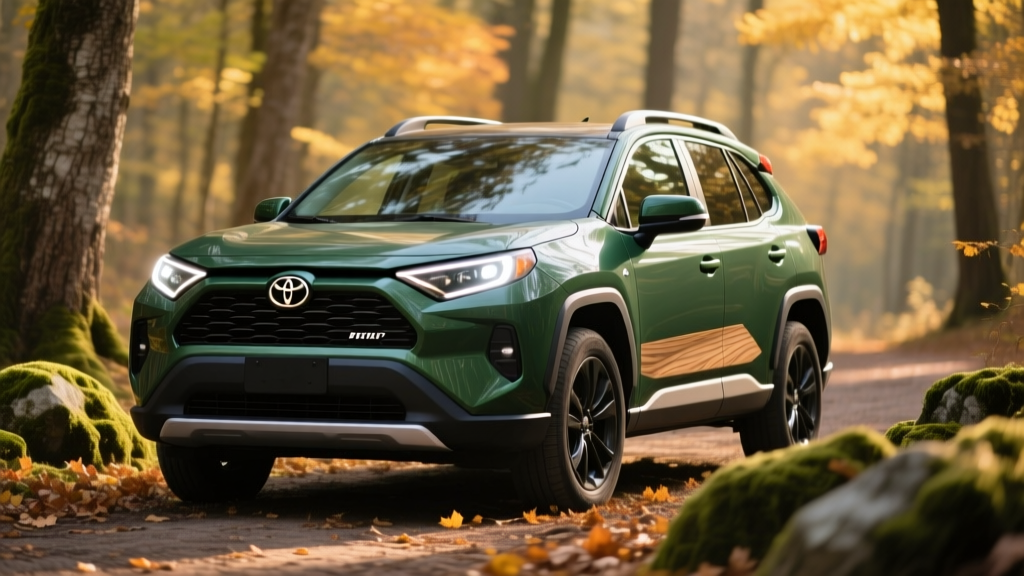
The 2023 Toyota RAV4 Hybrid Woodland Edition occupies a narrow but compelling lane: it's the most off-road-capable trim in the RAV4 Hybrid lineup, wrapped in utilitarian styling, without sacrificing the fuel economy that makes Toyota's hybrid system a segment benchmark. With an EPA-estimated 39 MPG combined, standard electronic all-wheel drive, and a starting MSRP around $34,355 (before destination), it undercuts most rivals on fuel cost while offering genuine trail credibility. But if you're hoping to plug in for electric-only commuting, this isn't that vehicle — you'll want the RAV4 Prime PHEV instead.
This guide breaks down everything a buyer or current owner needs to know about the 2023 RAV4 Hybrid Woodland Edition: real-world MPG behavior, the HEV vs. PHEV distinction, powertrain specs, battery longevity, and whether any tax credits apply. We're writing from a 2026 perspective, so we'll also note how this model year holds up on the used market.
| Spec | Value |
|---|---|
| EPA Fuel Economy (City / Hwy / Combined) | 38 / 35 / 39 MPG |
| Powertrain | 2.5L 4-cyl + 3 electric motors (eAWD) |
| Combined Net Horsepower | 219 hp |
| Drivetrain | Electronic On-Demand AWD |
| Hybrid Battery | 1.6 kWh (sealed NiMH), self-charging HEV |
| Towing Capacity | 1,750 lbs |
| Ground Clearance | 8.6 inches |
| Cargo Volume (behind 2nd row) | 37.6 cu ft |
| 0–60 mph (est.) | ~7.4 seconds |
| Base MSRP (2023, before destination) | $34,355 |
| Hybrid Battery Warranty | 10 years / 150,000 miles |
| Federal Tax Credit (§30D) | Not eligible (HEV, not plug-in) |
How Many MPG Does the RAV4 Hybrid Woodland Edition Actually Get?
The EPA rates the 2023 RAV4 Hybrid Woodland Edition at 38 city / 35 highway / 39 combined MPG per fueleconomy.gov. The city number exceeds the highway figure — a hallmark of Toyota's Hybrid Synergy Drive, which recovers energy through regenerative braking and leans heavily on the electric motors at low speeds.
| Driving Scenario | Expected MPG | Notes |
|---|---|---|
| EPA Combined (sticker) | 39 MPG | 55% city / 45% highway mix |
| City / stop-and-go commuting | 40–44 MPG | Regen braking maximizes electric assist |
| Highway cruising (70–80 mph) | 32–36 MPG | Aero drag reduces hybrid advantage |
| Cold weather (below 32°F) | 33–36 MPG combined | Engine runs longer for cabin heat; battery less efficient |
| Loaded / towing (1,750 lbs max) | 25–30 MPG | Significant load penalty |
Real-world honesty: Owners who drive predominantly in the city routinely report 40+ MPG in warmer months. Highway-heavy commuters should budget for 33–36 MPG, especially with the Woodland Edition's all-terrain tires and slightly lifted ride height, which add rolling resistance and aerodynamic drag compared to the lower trims. In sub-freezing temperatures, expect a 10–15% drop as the gasoline engine runs more frequently to provide cabin heat and maintain battery temperature.
HEV vs. PHEV: Understanding What the Woodland Edition Is (and Isn't)
This is the single most important distinction for buyers cross-shopping the RAV4 lineup. The Woodland Edition is a conventional hybrid (HEV) — it has a small 1.6 kWh nickel-metal hydride battery that charges exclusively through regenerative braking and the gasoline engine. You never plug it in. There is no electric-only driving range to speak of; the electric motors assist the engine but cannot propel the vehicle independently for meaningful distances.
| Attribute | RAV4 Hybrid Woodland (HEV) | RAV4 Prime (PHEV) |
|---|---|---|
| Plug-in charging required? | No — self-charging | Yes — Level 1 or Level 2 |
| Battery capacity | 1.6 kWh (NiMH) | 18.1 kWh (lithium-ion) |
| Electric-only range | N/A (motor assist only) | 42 miles (EPA) |
| Combined horsepower | 219 hp | 302 hp |
| Combined MPG / MPGe | 39 MPG | 38 MPG (gas) / 94 MPGe (electric) |
| Total range | ~580 miles | ~600 miles (gas + electric) |
| DC fast charging | N/A | No (Level 2 max) |
| Federal tax credit (§30D) | Not eligible | Up to $7,500 (subject to sourcing & income rules) |
| Base MSRP (2023) | ~$34,355 | ~$43,090 |
If you have home charging access and a commute under 42 miles, the RAV4 Prime PHEV can eliminate most gasoline use on weekdays while retaining the gas engine for road trips. If you lack plug-in access — apartment dwellers, street parkers, or those who simply don't want to manage charging — the HEV Woodland Edition delivers excellent fuel economy with zero behavioral change.
Powertrain Deep Dive: 219 Horsepower with Electronic AWD
The 2023 RAV4 Hybrid Woodland Edition uses Toyota's fourth-generation Hybrid Synergy Drive, pairing a 2.5-liter Dynamic Force 4-cylinder engine (176 hp, 163 lb-ft on its own) with three electric motor-generators:
- MG1: Front-mounted, functions as a generator and engine starter
- MG2: Front-mounted, primary drive motor (118 hp / 149 lb-ft)
- MG3 (rear): Dedicated rear-axle motor providing electronic on-demand AWD (54 hp / 89 lb-ft)
The combined net system output is 219 horsepower. Unlike mechanical AWD systems with a driveshaft, the rear motor engages only when front-wheel slip is detected or during hard acceleration, reducing parasitic losses. The Woodland Edition adds a TRD-tuned suspension and all-terrain tires for improved trail capability, though this comes at a slight fuel-economy cost versus the XLE or Limited Hybrid trims (which achieve up to 41 MPG combined).
The eCVT (electronically controlled continuously variable transmission) is smooth and efficient, though it produces the characteristic "rubber-band" drone under hard acceleration. For a vehicle prioritizing fuel economy over sportiness, the powertrain is well-matched to its mission.
Battery Longevity, Warranty, and Replacement Cost
Hybrid battery anxiety is the top concern for first-time hybrid buyers. Here's the data:
Toyota Hybrid Battery Coverage
- Warranty: 10 years or 150,000 miles (whichever comes first), transferable to subsequent owners
- Chemistry: Nickel-metal hydride (NiMH) — proven, stable, less energy-dense than lithium-ion but highly durable
- Capacity retention: Toyota's NiMH packs typically retain 85–90%+ capacity at 150,000 miles based on fleet data from Prius and RAV4 Hybrid owners
- Real-world lifespan: Many Toyota hybrid batteries exceed 200,000 miles before significant degradation; failures before 150,000 miles are uncommon
Replacement cost if out of warranty: A new OEM hybrid battery pack for the RAV4 Hybrid typically costs $3,000–$4,500 installed at a dealership (2026 pricing). Independent hybrid specialists and refurbished packs can reduce this to $1,500–$2,500. Individual module replacement is sometimes possible for partial failures, further reducing cost.
The 1.6 kWh NiMH pack in the HEV is far smaller and less expensive to replace than the 18.1 kWh lithium-ion pack in the RAV4 Prime PHEV (which runs $6,000–$8,000+ out of warranty). For context, the HEV battery is also less stressed — it never deep-cycles like a PHEV or BEV battery, operating in a narrow state-of-charge window that maximizes longevity.
Pricing, Tax Credits, and Total Cost of Ownership
The 2023 RAV4 Hybrid Woodland Edition carried a base MSRP of approximately $34,355 (excluding the $1,395 destination charge). Well-equipped examples with options landed in the $36,000–$38,000 range. On the used market in 2026, expect to pay roughly $27,000–$33,000 depending on mileage and condition.
Federal Tax Credit Status
The RAV4 Hybrid Woodland Edition does not qualify for the federal §30D Clean Vehicle Credit. That credit applies only to plug-in electric vehicles (BEVs and PHEVs) with sufficient battery capacity and compliant critical-mineral/battery-component sourcing. Conventional hybrids are excluded entirely. Per IRS guidelines, only vehicles capable of plug-in charging with at least 7 kWh of battery capacity are eligible.
Some states offer their own hybrid incentives, but these are increasingly rare as programs shift toward BEVs and PHEVs. Check your state's energy or DMV website for current programs.
| Cost Category | RAV4 Hybrid Woodland (HEV) | RAV4 Gas AWD (LE) | RAV4 Prime (PHEV)* |
|---|---|---|---|
| Purchase price (avg. transaction) | $35,750 | $31,500 | $44,500 |
| Federal tax credit | $0 | $0 | Up to $7,500** |
| Fuel cost (5 yrs @ $3.50/gal avg.) | $6,730 | $9,060 | $3,900 (gas + electricity) |
| Estimated insurance (5 yrs) | $8,500 | $7,800 | $9,200 |
| Maintenance (5 yrs) | $2,800 | $3,400 | $2,600 |
| Net 5-year cost | ~$53,780 | ~$51,760 | ~$52,700 |
*RAV4 Prime assumes home Level 2 charging and 30 mi/day electric commute. **Tax credit subject to income caps, MSRP caps, and battery-sourcing rules per IRS §30D. Consult a tax professional.
The hybrid saves roughly $2,300 in fuel over five years compared to the gas-only RAV4 AWD, largely offsetting the higher purchase price. The RAV4 Prime can save more if you charge at home daily, but the upfront premium is substantial even after the tax credit.
Reliability and Safety: What the Data Shows
Toyota's hybrid powertrain is among the most proven in the industry, with over 25 years of continuous production since the original Prius. The RAV4 Hybrid specifically has accumulated millions of vehicle-miles across global fleets. IIHS awarded the 2023 RAV4 its Top Safety Pick designation when equipped with specific headlights.
Toyota Safety Sense 2.5+ comes standard on the Woodland Edition, including:
- Pre-Collision System with Pedestrian Detection
- Full-Speed Range Dynamic Radar Cruise Control
- Lane Departure Alert with Steering Assist
- Lane Tracing Assist
- Automatic High Beams
- Road Sign Assist
Important: These are SAE Level 1–2 driver-assistance features. They do not make the vehicle self-driving. The driver must remain fully engaged with hands on the wheel and eyes on the road at all times.
Pros
- 39 MPG combined EPA; 40+ achievable in real-world city driving
- No plug-in charging required — zero lifestyle change vs. gas car
- Standard electronic AWD with 8.6" ground clearance
- Proven 10-year/150,000-mile hybrid battery warranty
- Strong resale value; Toyota reliability track record
- Lower 5-year fuel cost vs. gas-only RAV4 AWD
Cons
- No federal tax credit (HEV, not PHEV/BEV)
- Highway MPG drops to 32–36 at sustained 70+ mph
- eCVT drone under hard acceleration
- All-terrain tires add road noise vs. standard Hybrid trims
- 1,750-lb towing capacity limits utility vs. body-on-frame SUVs
- Woodland trim lacks premium interior features (no ventilated seats, basic infotainment)
Who Should Choose the RAV4 Hybrid Woodland Edition?
Choose the RAV4 Hybrid Woodland Edition (HEV) if:
- You want 38–44 MPG without ever plugging in
- You live in an apartment or lack home charging access
- You want light off-road capability (forest roads, snow, gravel) without a dedicated off-roader
- You prioritize proven reliability and low maintenance over cutting-edge EV tech
- Your budget is under $40K and you don't qualify for or want to navigate PHEV tax credits
Choose the RAV4 Prime (PHEV) instead if:
- You have home Level 2 charging and a commute under 42 miles
- You want to eliminate most weekday gasoline use
- You want 302 hp and can absorb the higher MSRP (offset by up to $7,500 credit)
Choose a full EV (e.g., Tesla Model Y, Hyundai Ioniq 5) instead if:
- You want zero tailpipe emissions and lowest per-mile "fuel" cost
- You have reliable home and/or workplace charging
- You're comfortable with 250–330 miles of range and DC fast-charging on road trips
Stick with the gas RAV4 AWD if:
- Your budget is strictly under $32K and you drive fewer than 10,000 miles/year (fuel savings won't justify hybrid premium)
- You tow regularly above 1,750 lbs
Frequently Asked Questions
How many MPG does the 2023 RAV4 Hybrid Woodland Edition get?
The EPA rates it at 38 city / 35 highway / 39 combined MPG. In real-world city driving, many owners report 40–44 MPG. Highway-heavy driving at 70+ mph typically yields 32–36 MPG. Cold weather reduces combined economy by roughly 10–15%.
Does the RAV4 Hybrid Woodland Edition need to be plugged in?
No. It is a conventional hybrid (HEV), not a plug-in hybrid (PHEV). The 1.6 kWh battery charges through regenerative braking and the gasoline engine. You fuel it like any other car — just with better MPG.
How far can it go on electric only?
It cannot. The electric motors assist the gasoline engine but cannot independently drive the vehicle for meaningful distances. If electric-only driving matters to you, look at the RAV4 Prime PHEV (42 miles electric-only) or a full BEV.
Is the hybrid battery reliable and what does replacement cost?
Toyota's NiMH hybrid batteries are among the most durable in the industry, routinely lasting 200,000+ miles. The battery is covered by a 10-year / 150,000-mile warranty. Out-of-warranty replacement runs $3,000–$4,500 at a dealership, or $1,500–$2,500 through independent specialists with refurbished packs.
Does the RAV4 Hybrid qualify for any tax credit?
No. The federal §30D Clean Vehicle Credit applies only to plug-in vehicles (BEVs and PHEVs). The RAV4 Hybrid is a conventional HEV and is ineligible. Some states may offer minor hybrid incentives — check your state energy office. The RAV4 Prime PHEV may qualify for up to $7,500 depending on your income, the vehicle's MSRP, and battery-sourcing compliance per current IRS rules.
How does the Woodland Edition differ from other RAV4 Hybrid trims?
The Woodland Edition adds TRD-tuned suspension, all-terrain tires, a unique front fascia, roof rails with cross bars, and WeatherTech-style all-weather floor liners. It sacrifices roughly 2 MPG combined versus the XLE Hybrid (41 MPG) due to the aggressive tires, but gains trail credibility and a more rugged appearance. It does not add horsepower or towing capacity over other Hybrid trims.
Is the 2023 RAV4 Hybrid Woodland Edition still available new?
As of 2026, the 2023 model year is no longer produced new. Toyota continues to offer the RAV4 Hybrid in current model years with updated trims. On the used market, expect to pay $27,000–$33,000 for a 2023 Woodland Edition depending on mileage and condition. The hybrid battery warranty transfers to subsequent owners.