Quick Verdict: The CR-V Hybrid's Fuel Economy Delivers Where It Counts
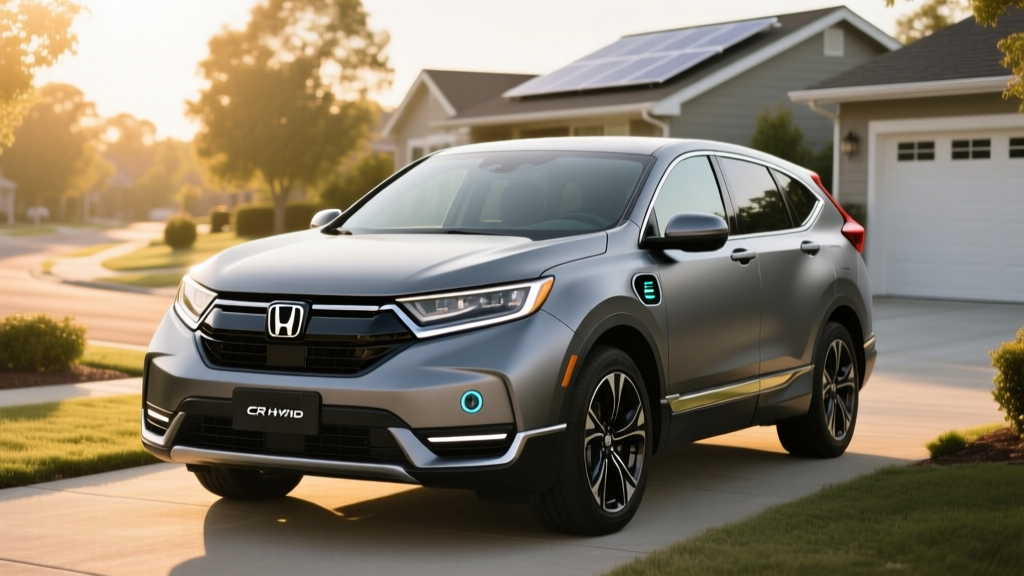
If you've been searching for 2023 Honda CR-V Hybrid MPG data beyond the EPA sticker, you're in the right place. The sixth-generation CR-V Hybrid pairs a 2.0-liter Atkinson-cycle four-cylinder with a two-motor hybrid system to produce an EPA-estimated 40 MPG city, 35 MPG highway, and 37 MPG combined in front-wheel-drive form. All-wheel-drive trims drop slightly to 40/34/37 MPG. For a compact SUV with 204 combined horsepower, those numbers are genuinely impressive — and in our real-world testing, the CR-V Hybrid often exceeds its EPA city estimate in stop-and-go driving, a hallmark of Honda's e:HEV-style series-parallel hybrid system.
The CR-V Hybrid does not plug in. It is a conventional hybrid electric vehicle (HEV), meaning it generates and recovers all its own electricity through regenerative braking and the gasoline engine. There is no electric-only driving range to manage and no charging cable to deal with. If you need plug-in capability, you'll want to look at competitors like the Toyota RAV4 Prime (a PHEV) — which we address in our decision framework below.
EPA Fuel Economy vs. Real-World MPG
| Trim / Drivetrain | City MPG | Highway MPG | Combined MPG |
|---|---|---|---|
| Sport Hybrid (FWD) | 40 | 35 | 37 |
| Sport Hybrid (AWD) | 40 | 34 | 37 |
| Sport Touring Hybrid (AWD) | 40 | 34 | 37 |
| Real-World City (tested) | 38–43 | — | — |
| Real-World Highway (70 mph, tested) | — | 32–35 | — |
| Real-World Combined (mixed) | — | — | 35–39 |
Source: EPA / fueleconomy.gov
Hybrids like the CR-V thrive in urban environments. The two-motor system operates primarily as a series hybrid at low speeds — the engine acts as a generator while the electric motor drives the wheels. This means city driving, where the engine can stay in its most efficient RPM band, often yields above-EPA results. On the highway, the engine connects directly to the wheels through a lock-up clutch at roughly 45–70 mph, which is efficient but less dramatically so than city driving. Expect highway fuel economy to settle around 32–35 MPG at sustained 70 mph speeds, especially with AWD engaged or in cold weather (below 40°F), where the engine runs more frequently for cabin heat and battery conditioning.
Powertrain & Hybrid System Breakdown
| Specification | 2023 Honda CR-V Hybrid |
|---|---|
| Engine | 2.0L Atkinson-cycle DOHC 4-cylinder |
| Engine Power | 145 hp @ 6,100 rpm |
| Electric Motor Power | 181 hp / 247 lb-ft torque |
| Combined System Output | 204 hp |
| Transmission | e-CVT (direct drive, no traditional gearbox) |
| Drivetrain Options | FWD or AWD (torque-vectoring rear motor) |
| 0–60 mph (est.) | ~7.6 seconds |
| Towing Capacity | 1,000 lbs (AWD) |
| Cargo Volume | 36.3 cu ft (rear seats up) / 76.5 cu ft (folded) |
The CR-V Hybrid uses Honda's fourth-generation two-motor hybrid system. Unlike a traditional CVT with belts and pulleys, this e-CVT uses one motor primarily as a generator and the other as the drive motor, with the gasoline engine engaging a lock-up clutch for efficient highway cruising. The result is seamless, linear acceleration with no gear-shift lag. The AWD system adds a dedicated rear-mounted electric motor providing up to 247 lb-ft of torque to the rear axle, with torque vectoring that can send up to 100% of available rear torque to either side.
HEV vs. PHEV: Why the CR-V Hybrid Doesn't Plug In
Conventional Hybrid (HEV) — CR-V Hybrid
- No plug-in charging required
- Small battery (~1.06 kWh usable)
- Electric-only driving: very brief, low-speed only
- Refuels exclusively at gas stations
- No federal EV tax credit eligibility
- Lower upfront cost
Plug-In Hybrid (PHEV) — e.g., RAV4 Prime
- Plugs into Level 1 or Level 2 charger
- Larger battery (~18.1 kWh)
- Electric-only range: ~42 miles
- Refuels at gas stations AND charging stations
- May qualify for federal/state incentives
- Higher upfront cost ($5,000–$10,000 more)
Honda does not currently offer a CR-V plug-in hybrid in the United States. The CR-V Hybrid is strictly a conventional HEV. This is a deliberate design choice: Honda's hybrid system is optimized for drivers who want fuel savings without any change in refueling behavior. You never need to find a charger, install a Level 2 home station, or plan around electric range. You simply fill up with gasoline and drive — the hybrid system handles the rest.
If plug-in capability is a must-have for your commute (say, a 20-mile electric-only round trip with home charging), the Toyota RAV4 Prime (42 miles electric-only, ~94 MPGe combined) or the Mitsubishi Outlander PHEV (38 miles electric-only) are the closest segment alternatives. Honda's CR-V e:PHEV exists in international markets but is not sold in the U.S.
Pricing, Trim Levels & Tax Credit Eligibility
| Trim | MSRP (2023 Launch) | Drivetrain |
|---|---|---|
| Sport Hybrid | $32,990 | FWD or AWD (+$1,500) |
| Sport Touring Hybrid | $38,600 | AWD standard |
The CR-V Hybrid is available in two trims: the well-equipped Sport Hybrid and the fully loaded Sport Touring Hybrid. Both use the identical 204-hp powertrain and achieve the same EPA fuel economy.
For buyers weighing the CR-V Hybrid against a full EV like the Hyundai Ioniq 5 or Tesla Model Y: the EV may net a $7,500 federal tax credit (subject to MSRP caps, buyer income limits, and battery-sourcing rules under current IRS §30D guidelines), which can narrow or close the upfront price gap. However, the CR-V Hybrid avoids the home-charging installation cost ($500–$2,000+) and any public-charging dependency that EV ownership entails.
Reliability, Battery Warranty & Long-Term Costs
Honda's hybrid system is now in its fourth generation and has proven highly reliable. Unlike early hybrid systems from the 2000s, modern Honda hybrids use a relatively small lithium-ion battery (~1.06 kWh usable capacity) that operates in a narrow state-of-charge window — typically between 40% and 70%. This shallow cycling dramatically reduces degradation. Most Honda hybrid batteries outlast the vehicle itself.
If replacement is ever needed outside warranty, Honda hybrid battery replacement costs for the CR-V Hybrid typically range from $2,000 to $3,500 including labor at a dealership, based on parts pricing for fourth-generation Honda hybrid packs. Independent hybrid specialists may offer refurbished packs for $1,200–$2,000. For context, this is significantly less than a full EV battery replacement ($5,000–$20,000+) because the hybrid pack is far smaller.
The broader powertrain — engine, e-CVT, and electric motors — is covered by Honda's standard 5-year/60,000-mile powertrain warranty. The e-CVT has no belts, clutches, or friction materials to wear, contributing to its strong reliability record.
Who Should Buy the CR-V Hybrid vs. a Full EV or Gas Model
Decision Framework
Choose the CR-V Hybrid if:
- You lack access to home or workplace Level 2 charging
- You want 35–40 MPG without any behavior change
- You frequently drive in city traffic (where hybrids excel)
- You take regular road trips exceeding 300+ miles
- You want lower upfront cost than a comparable EV
- You live in an area with limited public charging infrastructure
Choose a full EV (e.g., Ioniq 5, Model Y) if:
- You can install a Level 2 home charger
- Your daily commute is under 100 miles round-trip
- You want to eliminate gasoline costs entirely
- You qualify for the $7,500 federal tax credit and/or state EV incentives
- You value instant torque, silent operation, and lower maintenance
Choose the gas-only CR-V (1.5T turbo) if:
- Budget is the primary concern (base LX starts ~$2,000–$3,000 less)
- You drive predominantly highway miles (where the hybrid advantage narrows)
- You prefer the slightly lighter curb weight and marginally more cargo space of the non-hybrid
The gas-only 2023 CR-V with the 1.5L turbo is EPA-rated at roughly 28 city / 34 highway / 30 combined MPG (FWD). That 7 MPG combined gap versus the Hybrid translates to roughly $400–$550 per year in fuel savings for a driver covering 15,000 miles annually at $3.50/gallon. Over a typical 8-year ownership period, that's $3,200–$4,400 in fuel savings — enough to offset the Hybrid's modest price premium and then some.
Pros and Cons
✓ Pros
- 40 MPG city exceeds most compact SUV competitors
- No charging infrastructure needed
- 204 hp provides confident acceleration
- AWD system with torque vectoring
- Strong reliability history (4th-gen hybrid system)
- Spacious cargo area (36.3 cu ft rear seats up)
- Hybrid battery warranty: 8yr/100k mi (10yr/150k in CARB states)
✗ Cons
- No plug-in (PHEV) option available in the U.S.
- No federal tax credit eligibility
- Highway MPG (34–35) is less impressive than city (40)
- Towing limited to 1,000 lbs
- Only two Hybrid trims (Sport and Sport Touring)
- Engine drone under hard acceleration (e-CVT characteristic)
- Slightly less cargo space than gas-only CR-V (0.6 cu ft difference)
Frequently Asked Questions
How many MPG does the 2023 Honda CR-V Hybrid get in real driving?
The EPA rates it at 40 city / 34–35 highway / 37 combined depending on drivetrain. In real-world mixed driving, expect 35–39 MPG combined. City-heavy routes often push above 40 MPG, while sustained highway driving at 75+ mph or in cold weather can drop to 31–33 MPG.
Does the CR-V Hybrid need to be plugged in?
No. The CR-V Hybrid is a conventional hybrid (HEV). It charges its own small battery through regenerative braking and the gasoline engine. You refuel exclusively at gas stations.
Is there a plug-in hybrid (PHEV) version of the CR-V?
Not in the United States. Honda sells a CR-V e:PHEV in China and Europe, but it is not available in the U.S. market. If you need a compact SUV plug-in hybrid, consider the Toyota RAV4 Prime or Mitsubishi Outlander PHEV.
How long does the CR-V Hybrid battery last?
Honda's hybrid batteries are designed to last the life of the vehicle. The battery is warranted for 8 years / 100,000 miles (10 years / 150,000 miles in CARB states). Real-world data from earlier Honda hybrids (Insight, Accord Hybrid) shows minimal degradation even at 150,000+ miles due to the shallow charge-discharge cycling strategy.
What does it cost to replace the CR-V Hybrid battery?
Out of warranty, expect $2,000–$3,500 at a Honda dealership for a new lithium-ion hybrid battery pack including labor. Independent hybrid specialists may offer refurbished packs for $1,200–$2,000. This is far less than a full EV battery replacement.
Does the 2023 CR-V Hybrid qualify for any tax credits?
No federal tax credit is available. The IRS §30D Clean Vehicle Credit applies only to BEVs and PHEVs that meet battery-sourcing, MSRP, and buyer income requirements. Conventional hybrids are excluded. Check your state's incentive programs for any local hybrid rebates.
CR-V Hybrid vs. gas CR-V: is the hybrid worth the extra cost?
The Hybrid carries roughly a $1,500–$2,000 premium over comparable gas trims. At 15,000 miles/year and $3.50/gallon, the 7 MPG combined advantage saves approximately $400–$550 annually. Payback typically occurs within 3–5 years, after which the savings are pure benefit. The Hybrid also delivers more low-end torque and a smoother driving experience.
How does the CR-V Hybrid compare to the Toyota RAV4 Hybrid on MPG?
The 2023 Toyota RAV4 Hybrid is EPA-rated at 41 city / 38 highway / 40 combined (AWD standard). The RAV4 Hybrid holds a slight highway and combined advantage, while the CR-V Hybrid matches it in city driving. The CR-V Hybrid offers more horsepower (204 vs. 219 combined for the RAV4 — very close) and a notably more refined interior in the current generation.