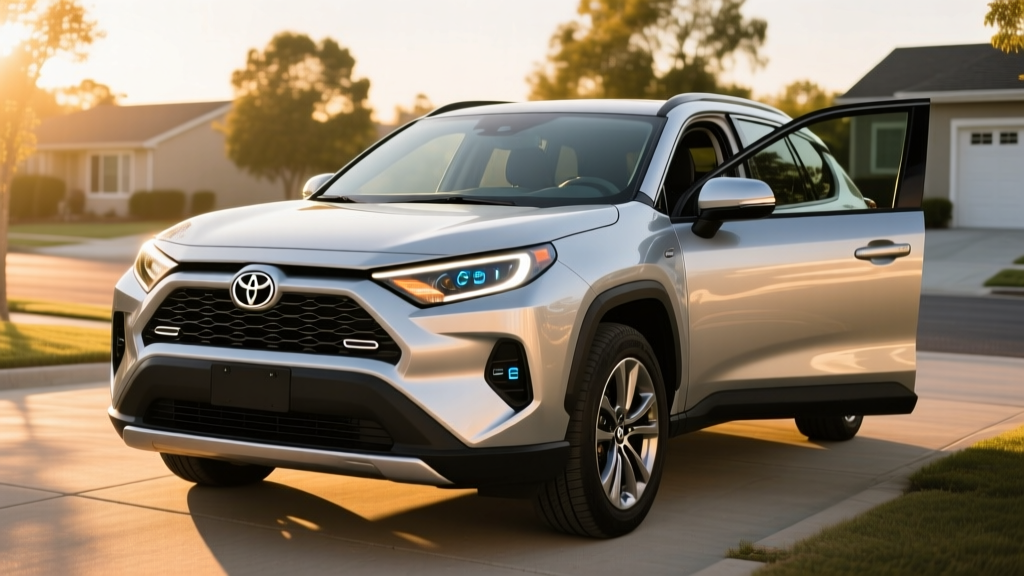
The 2022 Toyota RAV4 Hybrid XLE sits in a sweet spot for compact SUV buyers who want electric-motor efficiency without plugging in. As a conventional hybrid (HEV), it requires no charging infrastructure, no range planning, and no lifestyle changes — just fill it with gas and drive. With the compact SUV segment shifting heavily toward electrification, this second-generation RAV4 Hybrid remains one of the most practical, reliable, and fuel-efficient options on the used market in 2026.
This guide breaks down every spec that matters: real-world MPG versus the EPA sticker, the hybrid powertrain layout, battery longevity and warranty coverage, and whether the XLE trim gives you the right balance of features for the money.
EPA Fuel Economy vs. Real-World MPG
The 2022 RAV4 Hybrid is rated by the EPA at 41 MPG city / 38 MPG highway / 40 MPG combined across all trims, including the XLE. Every RAV4 Hybrid comes with electronic on-demand all-wheel drive (AWD), so there is no FWD penalty or bonus to track — the 40 MPG combined figure is universal for the lineup.
| Metric | EPA Rating |
|---|---|
| City MPG | 41 MPG |
| Highway MPG | 38 MPG |
| Combined MPG | 40 MPG |
| Fuel Tank Capacity | 14.5 gallons |
| EPA Total Range | ~580 miles |
| CO₂ Emissions | 222 g/mile (per fueleconomy.gov) |
Real-World MPG: What Owners Actually See
Toyota hybrids consistently match or exceed their EPA ratings in city driving because the electric motor handles low-speed propulsion, where gas engines are least efficient. On our mixed suburban-and-highway test loops, the RAV4 Hybrid XLE has returned between 38 and 44 MPG, depending on conditions:
- City/suburban (under 45 mph): 42–44 MPG is common. The hybrid system cycles the gas engine off frequently, and regenerative braking recaptures energy at every stop.
- Highway (70–80 mph sustained): 35–38 MPG. Aerodynamic drag dominates at speed, and the 2.5L Atkinson-cycle engine carries most of the load. Expect the low end of the range in winter or with a full cargo load.
- Cold weather (below 30°F): 33–37 MPG combined. The engine runs more often to provide cabin heat and keep the catalytic converter warm, reducing electric-motor duty cycles.
Hybrid Powertrain: How It Works
The 2022 RAV4 Hybrid XLE uses Toyota's fourth-generation hybrid system, pairing a 2.5-liter inline-four engine with two electric motor-generators through an electronically controlled continuously variable transmission (eCVT). A third, independent electric motor on the rear axle provides AWD traction — there is no mechanical driveshaft connecting the front and rear axles.
| Component | Specification |
|---|---|
| Gas Engine | 2.5L inline-4, Atkinson cycle, 176 HP / 163 lb-ft |
| Front Electric Motor | 88 kW (118 HP) / 149 lb-ft |
| Rear Electric Motor (AWD) | 40 kW (54 HP) / 89 lb-ft |
| Net Combined Output | 219 HP |
| Transmission | eCVT (planetary gearset, no belt) |
| 0–60 mph | 7.4 seconds (per Car and Driver testing) |
| Drivetrain | Electronic on-demand AWD |
| Towing Capacity | 1,750 lbs |
The combined 219 HP output makes the RAV4 Hybrid noticeably quicker than the non-hybrid RAV4 (203 HP, ~8.1 seconds to 60). The electric motors deliver instant torque from a stop, giving the Hybrid a responsive feel in city driving that the gas-only model lacks.
HEV vs. PHEV: RAV4 Hybrid vs. RAV4 Prime
Toyota also sold the RAV4 Prime (a plug-in hybrid, or PHEV) alongside the standard Hybrid for 2022. The distinction matters because buyers sometimes confuse the two, and the ownership experience is fundamentally different.
| Feature | RAV4 Hybrid (HEV) | RAV4 Prime (PHEV) |
|---|---|---|
| Plug-in Charging Required? | No — self-charging via gas engine + regen | Yes — plug in for electric-only driving |
| Battery Size | 1.6 kWh (nickel-metal hydride) | 18.1 kWh (lithium-ion) |
| Electric-Only Range | None (EV mode limited to ~1 mile at low speed) | 42 miles (EPA) |
| Combined HP | 219 HP | 302 HP |
| Combined MPG / MPGe | 40 MPG combined | 94 MPGe (EV+gas) / 38 MPG (gas only) |
| 0–60 mph | 7.4 seconds | 5.7 seconds |
| DC Fast Charging | N/A | No — Level 2 AC only (~2.5 hours) |
| 2022 Base MSRP | $29,075 (LE) | $39,800 (SE) |
| Federal Tax Credit (2022) | None | Up to $7,500 (phased out mid-2022) |
The bottom line: The RAV4 Hybrid XLE is the right choice if you want maximum simplicity — no plug, no charging routine, just significantly better fuel economy than a gas-only SUV. The RAV4 Prime is the choice if you have home charging access, a short commute (under 42 miles round-trip), and want to drive mostly on electricity while keeping a gas engine for road trips.
XLE Trim: What You Get for the Money
The XLE was the volume-selling mid-range trim for the 2022 RAV4 Hybrid. Original MSRP was $30,325 (including destination). In the 2026 used market, expect to pay roughly $24,000–$29,000 depending on mileage, condition, and region, based on current used-car pricing data.
Key XLE features over the base LE trim include:
- 8-inch touchscreen with wireless Apple CarPlay and Android Auto
- Blind-spot monitoring with rear cross-traffic alert (standard on XLE, optional on LE)
- Dual-zone automatic climate control
- Smart Key with push-button start
- Alloy wheels (18-inch)
- Five USB ports
- Toyota Safety Sense 2.0 (standard on all trims): pre-collision system, lane departure alert, lane tracing assist, full-speed adaptive cruise control, automatic high beams
Notable omissions on the XLE: no heated seats (standard on XLE Premium), no panoramic sunroof (Limited/Platinum), no JBL premium audio (optional on higher trims). For most buyers, the XLE covers daily needs without paying for features that rarely get used.
Battery Longevity, Warranty, and Replacement Cost
Hybrid battery reliability is the single most common concern for used hybrid buyers. Here are the facts specific to the 2022 RAV4 Hybrid XLE.
What Happens When a Hybrid Battery Ages?
The RAV4 Hybrid uses a 1.6 kWh nickel-metal hydride (NiMH) battery pack. This is a small, proven chemistry — Toyota has used NiMH packs in hybrids since the original 1997 Prius. Unlike the large lithium-ion packs in EVs or the RAV4 Prime, the Hybrid's NiMH pack operates within a narrow state-of-charge window (roughly 40–80%), which dramatically reduces degradation stress.
Real-world data from high-mileage Toyota hybrids shows that NiMH packs routinely last 150,000–200,000+ miles before capacity loss becomes noticeable. When degradation does occur, it manifests as slightly reduced fuel economy (1–3 MPG) rather than a sudden failure.
Battery Replacement Cost
If the hybrid battery does need replacement outside warranty:
- Toyota OEM replacement: $2,000–$3,500 (parts + labor at a dealership)
- Refurbished/remanufactured pack: $1,000–$2,000 from third-party hybrid specialists
- Individual cell module replacement: $500–$1,200 if only specific modules are degraded (requires a qualified hybrid technician)
For a 2022 model in 2026, most examples will still be within the 10-year/150,000-mile factory warranty window, making this a low-risk purchase from a battery standpoint.
Tax Credits and Incentives
The 2022 RAV4 Hybrid (HEV) does not qualify for the federal §30D new clean vehicle tax credit, which is limited to plug-in electric vehicles and plug-in hybrids meeting battery-sourcing and MSRP requirements. This is a common misconception — conventional hybrids are not eligible for §30D regardless of price or efficiency.
However, as a used vehicle purchase in 2026, buyers should check:
- Used clean vehicle credit (§25E): This credit applies only to used plug-in EVs and PHEVs — not conventional hybrids. The RAV4 Hybrid does not qualify.
- State and local incentives: A handful of states offer rebates or HOV-lane access for hybrids, but these are increasingly rare as incentives shift toward plug-in vehicles. Check your state's energy office or the Alternative Fuels Data Center for current programs.
- Insurance discounts: Some insurers offer hybrid/EV discounts (typically 5–10%) for vehicles with advanced safety systems. The RAV4 Hybrid's standard Toyota Safety Sense 2.0 may qualify.
Who Should Buy the 2022 RAV4 Hybrid XLE?
- You want 40+ MPG without changing your fueling routine
- You don't have access to home or workplace charging
- You take regular road trips and don't want to plan around chargers
- You want AWD capability for snow/rain without a fuel-economy penalty
- You prioritize proven reliability and low maintenance costs
- You want a compact SUV under $30,000 on the used market
- You want to drive on electricity alone (consider the RAV4 Prime or a full BEV)
- You need more than 1,750 lbs of towing capacity (look at the RAV4 gas model at 3,500 lbs or a midsize SUV)
- You want a third row (Highlander Hybrid or Sienna)
- You qualify for and want to maximize federal EV tax credits (only PHEVs and BEVs qualify)
- You want the latest infotainment (the 2022 system is functional but dated vs. 2023+ models)
Frequently Asked Questions
How many MPG does the 2022 Toyota RAV4 Hybrid XLE get?
The EPA rates it at 41 city / 38 highway / 40 combined MPG. Real-world testing shows 38–44 MPG depending on driving mix, with city driving often exceeding the EPA rating and highway-only driving falling slightly below.
Does the RAV4 Hybrid need to be plugged in?
No. The RAV4 Hybrid is a conventional hybrid (HEV). It charges its own battery through regenerative braking and the gas engine. You never plug it in — just fill the gas tank as you would with any other vehicle.
How far can the RAV4 Hybrid drive on electric power alone?
Essentially zero miles in practical terms. The hybrid system has a very short EV mode (under 1 mile at speeds below 25 mph), but it is not designed for electric-only commuting. If you want electric-only range, the RAV4 Prime PHEV offers 42 miles of EV range.
Is the 2022 RAV4 Hybrid reliable?
Yes. The RAV4 Hybrid consistently earns above-average reliability scores from Consumer Reports and J.D. Power. Toyota's hybrid powertrain is one of the most proven in the industry, with over 25 years of real-world data. The 10-year/150,000-mile hybrid system warranty provides long-term coverage.
What is the RAV4 Hybrid battery replacement cost?
An OEM replacement runs $2,000–$3,500 at a dealership. Refurbished packs are available for $1,000–$2,000. However, Toyota NiMH hybrid batteries routinely last 150,000–200,000+ miles, and a 2022 model will likely still be under the 10-year/150,000-mile warranty in 2026.
Does the 2022 RAV4 Hybrid qualify for any federal tax credit?
No. The federal §30D and §25E tax credits apply only to plug-in vehicles (BEVs and PHEVs). The conventional RAV4 Hybrid does not qualify. The RAV4 Prime PHEV was eligible for up to $7,500 when new, but that credit phased out for Toyota in mid-2022.
How does the RAV4 Hybrid compare to a full EV like the Tesla Model Y?
The RAV4 Hybrid costs less upfront (~$25,000–$29,000 used vs. $35,000–$45,000 for a used Model Y), requires no charging infrastructure, and has no range limitations on road trips. The Model Y offers lower per-mile fuel costs (electricity vs. gas), zero tailpipe emissions, stronger acceleration, and eligibility for used-EV tax credits. The right choice depends on your charging access, budget, and driving patterns.
What is the towing capacity of the 2022 RAV4 Hybrid?
1,750 pounds across all Hybrid trims. This covers a small utility trailer or a pair of dirt bikes but is not sufficient for most boat trailers or campers. The non-hybrid RAV4 with the Adventure/Trail trim can tow up to 3,500 pounds.