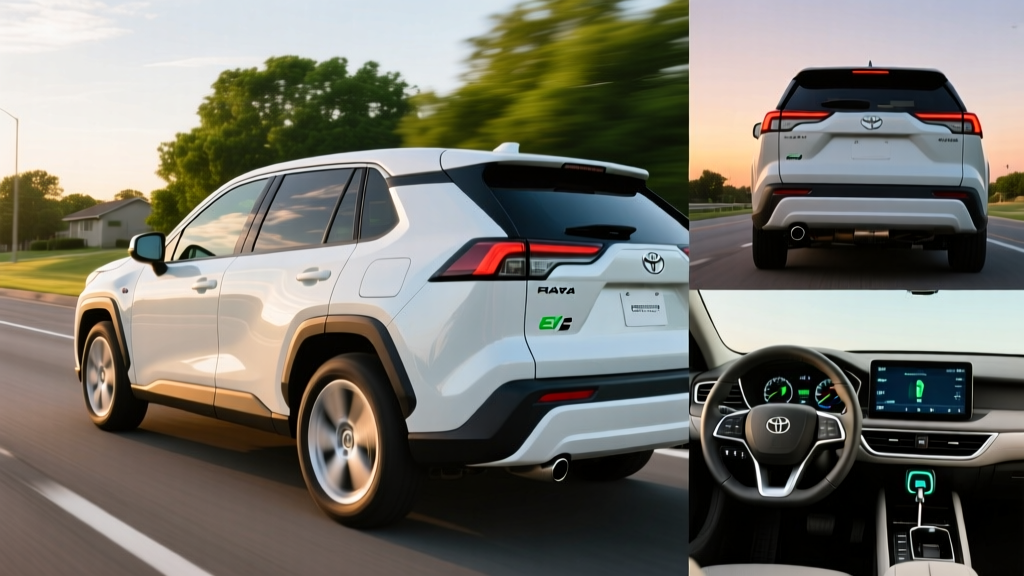
If you've searched for 2022 RAV4 Hybrid miles per gallon, you've probably seen the EPA sticker number — 40 MPG combined — and wondered whether it holds up in everyday driving. The short answer: yes, and in city traffic, you'll often beat it. The Toyota RAV4 Hybrid remains one of the most fuel-efficient compact SUVs on the road, and its conventional hybrid powertrain (no plug required) delivers consistent efficiency across seasons without the charging logistics of a full EV.
This guide covers the exact EPA figures, real-world MPG observations, how the standard RAV4 Hybrid compares to the plug-in RAV4 Prime, battery longevity, and whether this hybrid still makes sense for your garage in 2026.
EPA MPG Ratings and Real-World Fuel Economy
| Driving Cycle | EPA Estimate | Real-World Observation |
|---|---|---|
| City | 41 MPG | 42–45 MPG (hybrids excel at low speeds) |
| Highway | 38 MPG | 35–38 MPG (aerodynamic drag at 70+ mph) |
| Combined | 40 MPG | 38–42 MPG depending on driving mix |
The EPA's official rating for the 2022 Toyota RAV4 Hybrid AWD is 41 city / 38 highway / 40 combined. This applies to all trims (LE, XLE, XLE Premium, SE, XSE, Limited) since they share the same hybrid powertrain.
In real-world mixed driving — a combination of suburban errands, highway commuting, and some hilly terrain — owners typically report 38–42 MPG combined. Cold weather (below 30°F) can reduce efficiency by 5–10% due to engine warm-up cycles and increased cabin heating load, bringing winter combined figures closer to 35–38 MPG. This is still dramatically better than the gas-only 2022 RAV4 AWD, which the EPA rates at 30 MPG combined.
RAV4 Hybrid vs RAV4 Prime: HEV and PHEV Compared
Toyota sold two electrified RAV4 variants for the 2022 model year, and confusing them is easy. Here's the critical distinction:
| Specification | 2022 RAV4 Hybrid (HEV) | 2022 RAV4 Prime (PHEV) |
|---|---|---|
| Powertrain Type | Conventional hybrid — no plug | Plug-in hybrid — charges from outlet |
| Combined Horsepower | 219 hp | 302 hp |
| EPA Combined MPG | 40 MPG | 94 MPGe (electric+gas) / 38 MPG (gas-only) |
| Electric-Only Range | N/A (less than 1 mi at low speed) | 42 miles EPA |
| Battery Capacity | ~1.6 kWh (nickel-metal hydride) | 18.1 kWh usable (lithium-ion) |
| Charging Required | No — self-charging via regen and engine | Yes — Level 1 (~12 hrs) or Level 2 (~2.5 hrs) |
| DC Fast Charging | N/A | No DC fast charge capability |
| 0–60 mph | 7.4 seconds | 5.7 seconds |
| Base MSRP (2022) | $29,075 (LE) | $39,800 (SE) |
| Federal Tax Credit (2022 rules) | None | $7,500 (§30D, pre-IRA sourcing rules) |
The RAV4 Hybrid is a self-charging conventional hybrid. You never plug it in — the gasoline engine and regenerative braking keep a small battery charged, and the electric motor assists during acceleration and low-speed driving. Think of it as a more efficient gas car.
The RAV4 Prime is a plug-in hybrid (PHEV). It has a much larger 18.1 kWh lithium-ion battery that delivers 42 miles of electric-only driving before the gas engine kicks in. You charge it at home using a standard 120V outlet (Level 1, roughly 12 hours for a full charge) or a 240V Level 2 charger (about 2.5 hours). The RAV4 Prime does not support DC fast charging — this is common for PHEVs, which prioritize smaller batteries and home charging.
Powertrain Details: Engine, Motors, and Drivetrain
The 2022 RAV4 Hybrid pairs a 2.5-liter four-cylinder Atkinson-cycle gasoline engine with two electric motor-generators and an electronically controlled continuously variable transmission (eCVT). Here's the breakdown:
- Gas engine: 176 hp / 163 lb-ft torque
- Front electric motor: 118 hp / 149 lb-ft
- Rear electric motor (AWD): 54 hp / 89 lb-ft — provides electronic on-demand AWD
- Net combined system output: 219 hp
- Drivetrain: Electronic AWD standard on all trims (the rear motor engages automatically when slip is detected)
The eCVT isn't a traditional belt-and-pulley CVT — it uses a planetary gearset to blend power from the engine and motors. This design is mechanically simple, which contributes to Toyota's strong hybrid reliability record. There are no friction bands, clutch packs, or torque converters to wear out.
Battery Warranty, Lifespan, and Replacement Cost
Toyota covers the hybrid battery for 10 years or 150,000 miles (whichever comes first) on 2020 and newer models. This is one of the longest hybrid battery warranties in the industry. The warranty covers defects and capacity loss that impairs vehicle operation.
The 2022 RAV4 Hybrid uses a nickel-metal hydride (NiMH) battery pack — a mature, proven chemistry that Toyota has refined over two decades of hybrid production. NiMH is less energy-dense than the lithium-ion packs in PHEVs and full EVs, but it's extremely durable and tolerant of the frequent shallow charge-discharge cycles that hybrids demand.
Based on long-term data from RAV4 Hybrid and Camry Hybrid owners, battery degradation is minimal. Most Toyota hybrid batteries last well beyond the warranty period, with many reaching 200,000+ miles without replacement. When replacement is eventually needed, a new OEM hybrid battery for the RAV4 Hybrid typically costs between $2,000 and $3,500 installed. Refurbished or aftermarket options can reduce this to $1,000–$2,000.
For the RAV4 Prime (PHEV), the larger 18.1 kWh lithium-ion battery carries the same 10-year/150,000-mile warranty. Toyota guarantees the battery will retain at least 70% of its original capacity during the warranty period. A Prime battery replacement is significantly more expensive — estimated at $6,000–$9,000 — but lithium-ion degradation in Toyota's thermally managed packs has proven slow in early data.
Pricing, Trims, and Tax Credit Eligibility
The 2022 RAV4 Hybrid was offered in six trims. Here's the original MSRP pricing:
| Trim | 2022 MSRP | Key Features |
|---|---|---|
| LE | $29,075 | Toyota Safety Sense 2.0, 8" touchscreen, AWD |
| XLE | $30,525 | Dual-zone climate, blind-spot monitor, smart key |
| XLE Premium | $33,410 | SofTex seats, moonroof, power liftgate |
| SE | $33,615 | Sport-tuned suspension, 19" wheels |
| XSE | $34,760 | Two-tone paint, sport interior, 9" touchscreen |
| Limited | $36,900 | Leather, JBL audio, panoramic moonroof, heated/ventilated front seats |
Tax credit status: The conventional RAV4 Hybrid (HEV) does not qualify for the federal §30D clean vehicle tax credit. That credit applies only to plug-in vehicles (PHEVs and BEVs) with sufficient battery capacity. The RAV4 Hybrid's small NiMH battery doesn't meet the threshold.
The RAV4 Prime (PHEV) did qualify for the full $7,500 federal tax credit under the rules in effect for 2022 model-year vehicles purchased before the Inflation Reduction Act's sourcing requirements took effect in 2023. For current-year PHEV purchases, eligibility depends on battery component sourcing, critical mineral content, MSRP caps ($80,000 for SUVs), and buyer income limits. Always verify current rules at IRS.gov's clean vehicle credit page before purchasing.
For used RAV4 Hybrid buyers in 2026, the §25E used clean vehicle credit does not apply to conventional hybrids — only to used PHEVs and BEVs. However, many states offer their own incentives for hybrid purchases; check your state's energy office for current programs.
Pros and Cons of the 2022 RAV4 Hybrid
Pros
- 40 MPG combined EPA; often exceeds in city driving (42–45 MPG)
- No charging infrastructure needed — fills up at any gas station
- Standard AWD across all trims (electronic rear motor)
- 10-year/150,000-mile hybrid battery warranty
- Strong reliability track record (Toyota's 4th-gen hybrid system)
- Competitive cargo space: 37.5 cu ft behind rear seats, 69.8 cu ft folded
- Toyota Safety Sense 2.0 standard (AEB, lane-keep, adaptive cruise, auto high beams)
Cons
- No electric-only driving mode (unlike RAV4 Prime's 42 mi EV range)
- No federal tax credit eligibility for the HEV version
- eCVT drone under hard acceleration (common to all Toyota hybrids)
- Infotainment system feels dated compared to 2023+ RAV4 refresh
- Cabin noise above 70 mph (wind and tire noise)
- Towing limited to 1,750 lbs (vs. 3,500 lbs for gas RAV4 Adventure)
RAV4 Hybrid vs PHEV vs Full EV: Which Fits You?
Choose the RAV4 Hybrid (HEV) if:
- You don't have access to home or workplace charging
- You want maximum fuel savings with zero lifestyle change
- Your budget is under $35,000 (new or lightly used)
- You take frequent long road trips and don't want to plan charging stops
Choose the RAV4 Prime (PHEV) if:
- You can charge at home (even a standard 120V outlet works overnight)
- Your daily commute is under 42 miles round-trip (you'll rarely use gas)
- You want EV-like driving most days with gas-engine backup for road trips
- You qualify for the federal PHEV tax credit, offsetting the higher price
Choose a full EV (like the Toyota bZ4X, Tesla Model Y, or Hyundai Ioniq 5) if:
- You have reliable Level 2 home charging
- You want zero tailpipe emissions and minimal maintenance
- Your daily driving is under 250 miles and you're comfortable with DC fast charging on road trips
- You want the lowest per-mile fuel cost (electricity is typically $0.04–$0.06/mile vs. $0.12–$0.15/mile for the RAV4 Hybrid)
The RAV4 Hybrid occupies a practical sweet spot: it delivers roughly 33% better fuel economy than the gas RAV4 without requiring any charging infrastructure or behavioral changes. For buyers in apartments, condos, or areas with limited public charging, it remains the most accessible path to meaningful fuel savings in an SUV body.
Frequently Asked Questions
How many MPG does the 2022 RAV4 Hybrid actually get?
The EPA rates it at 41 city / 38 highway / 40 combined MPG. In real-world driving, most owners report 38–42 MPG combined, with city-heavy commutes often reaching 42–45 MPG thanks to regenerative braking. Highway-only driving at 75+ mph may drop to 34–36 MPG.
Does the RAV4 Hybrid need to be plugged in?
No. The RAV4 Hybrid is a conventional (self-charging) hybrid. Its small battery is charged by the gasoline engine and through regenerative braking. You simply fill it with gasoline like any other car. Only the RAV4 Prime (PHEV) requires plug-in charging to access its electric-only range.
How far can the RAV4 Prime go on electric only?
The 2022 RAV4 Prime delivers an EPA-rated 42 miles of electric-only range. In mild weather at moderate speeds, some drivers report 45–48 miles. In cold weather or at highway speeds, expect 32–38 miles before the gas engine engages. Total combined range (electric + full gas tank) exceeds 600 miles.
Is the RAV4 Hybrid reliable, and what does a battery replacement cost?
The RAV4 Hybrid has an excellent reliability record. Toyota's hybrid system is one of the most proven in the industry, with millions of units on the road. The hybrid battery is warrantied for 10 years/150,000 miles. If replacement is needed outside warranty, expect $2,000–$3,500 for a new OEM NiMH pack. Many hybrid batteries exceed 200,000 miles without issue.
Does the 2022 RAV4 Hybrid qualify for a tax credit?
The conventional RAV4 Hybrid (HEV) does not qualify for the federal §30D clean vehicle tax credit, which is reserved for plug-in vehicles. The RAV4 Prime (PHEV) qualified for $7,500 under 2022 purchase rules. For current-year purchases, check fueleconomy.gov's tax credit guide for up-to-date eligibility, as battery sourcing and income requirements now apply.
How does the RAV4 Hybrid compare to a full EV in daily costs?
At 40 MPG and $3.50/gallon gas, the RAV4 Hybrid costs about $0.088 per mile in fuel. A comparable EV charging at home at $0.14/kWh and averaging 3.5 miles/kWh costs roughly $0.04 per mile — about half. However, the EV requires home charging installation ($500–$2,000) and may carry higher insurance premiums. Over 5 years and 75,000 miles, the RAV4 Hybrid saves approximately $5,000–$6,000 in fuel versus the gas RAV4, while a full EV saves $8,000–$9,000 but costs more upfront.