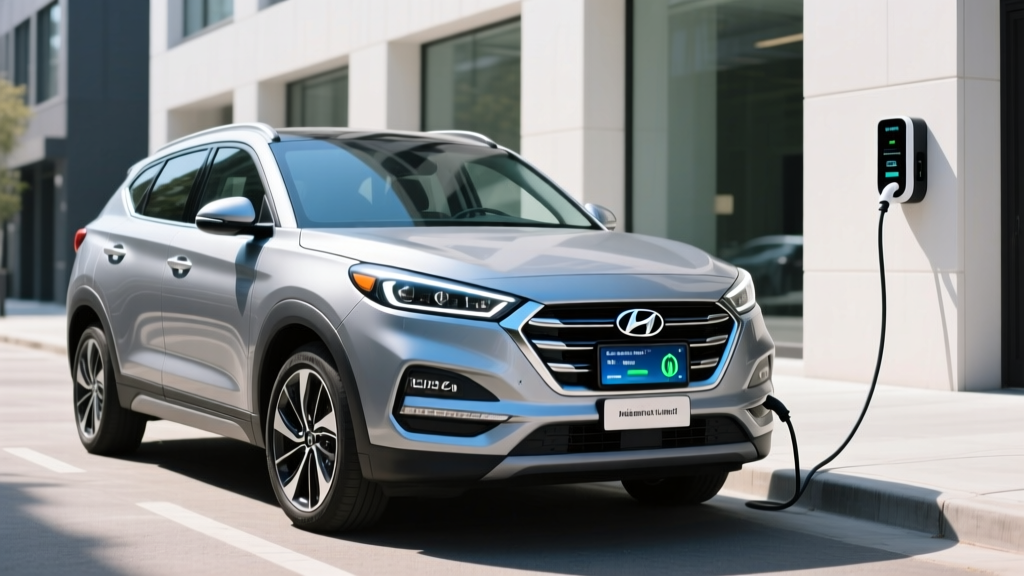
The 2022 Hyundai Tucson Hybrid Limited sits at the top of Hyundai's compact hybrid crossover lineup, blending a turbocharged 1.6-liter engine with an electric motor for 226 combined horsepower and an EPA-estimated 37 MPG combined. Now that the 2022 model year has settled into the used and certified-pre-owned market, it represents one of the more compelling hybrid SUV values available in 2026 — especially for buyers who want all-wheel drive, premium features, and strong fuel economy without plugging in.
This guide breaks down the Tucson Hybrid Limited's real-world fuel economy, powertrain specs, battery longevity, ownership costs, and how it compares to both plug-in hybrids and full battery-electric vehicles.
HEV vs. PHEV: Understanding What the Tucson Hybrid Is
Conventional Hybrid (HEV) — like the Tucson Hybrid: Uses a small battery (1.49 kWh) charged entirely through regenerative braking and the gasoline engine. You never plug it in. It drives like a normal gas car but with significantly improved fuel economy, especially in city driving where the electric motor handles low-speed propulsion.
Plug-In Hybrid (PHEV) — like the Tucson PHEV: Carries a larger 13.8 kWh battery that you plug in to charge. It offers roughly 33 miles of electric-only range before the gas engine engages. It qualifies for certain tax incentives the HEV does not. If you don't plug it in regularly, you lose much of its advantage.
The 2022 Tucson Hybrid is strictly an HEV. There is no plug, no electric-only range to manage, and no charging infrastructure to worry about. You fill up at any gas station and drive. For buyers transitioning from a conventional gas vehicle, this makes the HEV the lowest-friction entry point into electrified driving.
Fuel Economy: EPA Ratings and Real-World MPG
The EPA rates the 2022 Hyundai Tucson Hybrid (all trims, including the Limited) at 37 MPG combined, with a breakdown of 38 city / 36 highway. These figures apply to the standard HTRAW all-wheel-drive system equipped on every Tucson Hybrid.
| Driving Cycle | EPA Rating | Real-World Expectation |
|---|---|---|
| City | 38 MPG | 36–42 MPG (hybrids often exceed EPA in stop-and-go) |
| Highway | 36 MPG | 32–35 MPG (sustained 70+ mph reduces regen benefit) |
| Combined | 37 MPG | 34–39 MPG depending on driving mix |
Real-world context: Like most Toyota and Hyundai hybrids, the Tucson Hybrid tends to exceed its EPA city rating in moderate-temperature urban driving with frequent stops — the electric motor shoulders more load at low speeds, and regenerative braking recaptures energy that a gas-only car wastes as heat. On the highway, however, sustained speeds above 70 MPH reduce the hybrid system's advantage, and real-world highway MPG typically falls 2–4 MPG below the EPA sticker. In cold weather (below 32°F), expect a 5–10% reduction across the board as the engine runs more frequently to provide cabin heat and maintain battery temperature.
According to fueleconomy.gov, the 2022 Tucson Hybrid AWD's combined rating of 37 MPG places it among the top-performing compact hybrid SUVs, trailing the Toyota RAV4 Hybrid's 40 MPG combined but ahead of the Honda CR-V Hybrid's 38 MPG combined (2022 AWD rating).
Powertrain Specs: Engine, Motor, and Combined Output
| Specification | 2022 Tucson Hybrid Limited |
|---|---|
| Engine | 1.6L turbocharged inline-4 (GDI) |
| Engine Output | 178 hp / 195 lb-ft torque |
| Electric Motor | 44.2 kW (59 hp) permanent-magnet synchronous |
| Combined System Output | 226 hp / 258 lb-ft torque |
| Transmission | 6-speed automatic (traditional torque-converter, not CVT) |
| Drivetrain | HTRAW AWD (rear-mounted electric motor drives rear axle) |
| Hybrid Battery | 1.49 kWh lithium-ion polymer |
| 0–60 MPH | ~7.1 seconds (manufacturer estimate) |
| Curb Weight | ~3,815 lbs |
| Towing Capacity | 2,000 lbs (with trailer brakes) |
The Tucson Hybrid's powertrain is notable for using a conventional 6-speed automatic rather than the continuously variable transmissions (CVTs) found in the Toyota RAV4 Hybrid and Honda CR-V Hybrid. This gives the Tucson a more natural acceleration feel — no rubber-band effect under hard throttle — at a minor cost to peak efficiency. The HTRAW all-wheel-drive system uses the rear electric motor to power the rear axle independently, providing torque-vectoring AWD without a mechanical driveshaft. It's effective in rain and light snow, though not designed for serious off-road use.
2022 Tucson Hybrid Limited: What You Get at the Top Trim
The Limited was the highest trim available for the 2022 Tucson Hybrid, with an original MSRP of approximately $37,350 (including destination). Key equipment that distinguishes the Limited from the mid-range SEL Convenience includes:
- Panoramic sunroof with power sunshade
- Leather-trimmed seats with heated and ventilated front seats
- Heated steering wheel
- 10.25-inch digital instrument cluster with navigation
- 10.25-inch touchscreen infotainment with built-in navigation, wireless Apple CarPlay (wired on the large screen), and Android Auto
- Bose premium audio system (8 speakers)
- Highway Driving Assist (HDA) — Hyundai's Level 2 adaptive cruise with lane centering
- Remote Smart Parking Assist (RSPA) — the vehicle can park itself in tight spaces via key fob
- Digital key (NFC-based, Samsung compatible)
- Surround-view monitor and blind-spot view monitor
- LED projector headlights with auto high-beam
On the used market in 2026, certified-pre-owned (CPO) examples of the 2022 Tucson Hybrid Limited typically list between $24,000 and $29,000 depending on mileage, condition, and region, according to aggregated dealer pricing data.
Battery Longevity, Warranty, and Replacement Cost
Hybrid Battery Warranty: Hyundai covers the Tucson Hybrid's lithium-ion battery pack for 10 years / 100,000 miles (whichever comes first) under the original owner. For subsequent owners, the warranty transfers at 10 years / 100,000 miles from the original in-service date — a significant advantage over some competitors that reduce coverage upon resale.
Hybrid System Components: The electric motor, inverter, and related hybrid electronics carry the same 10-year/100,000-mile coverage.
Estimated Battery Replacement Cost (out of warranty): $2,000–$3,500 for the 1.49 kWh hybrid battery pack, based on current Hyundai parts pricing and independent hybrid shop estimates. This is substantially less than a full EV battery replacement because the HEV battery is small.
Reliability outlook: Hyundai's hybrid system has proven durable in real-world fleet data. The 1.49 kWh battery operates within a conservative state-of-charge window (roughly 40–80% SoC), managed by the vehicle's battery management system to minimize degradation. Most Hyundai/Kia hybrid batteries from the 2011–2020 Sonata and Niro generations have exceeded 150,000 miles without requiring replacement. The Tucson Hybrid's battery is smaller and less stressed than a PHEV or EV pack, making catastrophic failure rare.
The IIHS rated the 2022 Tucson Hybrid a Top Safety Pick+ when equipped with specific headlights, and NHTSA awarded it a 5-Star Overall safety rating — both strong indicators of structural integrity that extend to hybrid component protection in collisions.
Tax Credits and Incentives: What Applies to the HEV?
The 2022 Hyundai Tucson Hybrid (HEV) does not qualify for the federal §30D clean vehicle tax credit. That credit — up to $7,500 for new vehicles and up to $4,000 for used — applies only to plug-in electric vehicles (BEVs and PHEVs) meeting specific battery sourcing, MSRP, and buyer income requirements under current IRS rules.
However, the Tucson Hybrid may qualify for:
- State-level hybrid incentives: A limited number of states and municipalities offer rebates or HOV lane access for conventional hybrids. These vary by jurisdiction and change frequently — check your state's energy office or DMV for current programs.
- Employer or utility rebates: Some utilities and corporate fleet programs offer incentives for any electrified vehicle, including HEVs.
- CPO warranty value: While not a tax credit, purchasing a CPO 2022 Tucson Hybrid transfers the remaining factory powertrain and hybrid battery warranty, effectively reducing long-term ownership risk at no additional cost.
If the federal tax credit is a priority for your purchase, the Tucson PHEV (plug-in variant) was eligible for up to $7,500 when purchased new, subject to the buyer's tax liability and applicable income caps. On the used market, the §30D used-vehicle credit (up to $4,000 or 30% of sale price) may apply to a used Tucson PHEV if the sale price is $25,000 or less and income thresholds are met.
Tucson Hybrid vs. PHEV vs. Full EV: Which Fits Your Life?
Choose the Tucson Hybrid (HEV) If:
- You lack access to home or workplace charging
- You want maximum simplicity — no plugs, no apps, no charging planning
- Your budget is under $30,000 (used/CPO market)
- You drive a mix of city and highway and want 37 MPG without behavior changes
- You want AWD for all-weather confidence
Consider the Tucson PHEV or a Full EV If:
- You can install a Level 2 charger at home (240V, ~$500–$1,500 installed)
- You want to minimize or eliminate gasoline use for daily commuting
- The federal tax credit significantly reduces your effective purchase price
- You're ready to plan longer road trips around DC fast-charging stops (EV) or accept a 33-mile electric envelope (PHEV)
- You prioritize lower per-mile energy costs — electricity at $0.14/kWh costs roughly $0.04/mile vs. $0.12–$0.15/mile for gas at 37 MPG
The decision ultimately comes down to charging access and daily driving patterns. If your commute is under 30 miles round-trip and you can charge at home, a PHEV lets you drive most days on electricity while keeping a gas tank for longer trips. If charging isn't feasible, the HEV delivers meaningful fuel savings with zero infrastructure investment. A full EV like the Hyundai Ioniq 5 (303 miles EPA range, ~$42,000 new) eliminates gasoline entirely but requires reliable charging access and a higher upfront budget.
Real-World Ownership Costs: 5-Year Estimate
| Cost Category | Tucson Hybrid (37 MPG) | Gas-Only Tucson AWD (26 MPG) |
|---|---|---|
| Fuel (15,000 mi/yr, $3.40/gal avg) | $1,378/year | $1,962/year |
| 5-Year Fuel Total | $6,892 | $9,808 |
| Annual Savings vs. Gas | ~$584/year ($2,916 over 5 years) | |
| Maintenance (estimated) | Similar to gas — no plugs, no charging equipment to maintain | Baseline |
| Insurance (avg) | Comparable — hybrid surcharge is minimal for HEVs | Baseline |
The Tucson Hybrid saves roughly $580–$650 per year in fuel compared to the non-hybrid AWD Tucson, assuming 15,000 miles annually and national average fuel prices. Over five years, that's approximately $2,900–$3,250 in fuel savings — enough to offset a meaningful portion of the used-market price premium the Hybrid commands over the gas model. Maintenance costs are nearly identical: the hybrid system adds no consumables (no additional fluid changes, no plug-in components to service), and brake wear is often reduced thanks to regenerative braking handling much of the deceleration load.
Frequently Asked Questions
How many MPG does the 2022 Hyundai Tucson Hybrid Limited get?
The EPA rates it at 38 city / 36 highway / 37 combined MPG. In real-world city driving with moderate temperatures, owners frequently report 38–42 MPG. Highway driving at sustained speeds above 70 MPH typically yields 32–35 MPG.
Does the Tucson Hybrid need to be plugged in?
No. The Tucson Hybrid is a conventional HEV. Its 1.49 kWh battery charges automatically through regenerative braking and the gasoline engine. You refuel at any gas station — no plug, no charger, no special infrastructure required.
How far can the Tucson Hybrid drive on electric power alone?
The HEV version has no meaningful electric-only range. The electric motor assists at low speeds and during acceleration, but the gas engine engages almost immediately when you need more than minimal power. If electric-only driving is a priority, look at the Tucson PHEV (33 miles electric-only) or a full EV.
Is the 2022 Tucson Hybrid reliable?
Hyundai's hybrid powertrain has a strong reliability track record, particularly the 1.6L turbo and 6-speed automatic combination used across the Sonata, Niro, and Tucson lineups. The hybrid battery is warrantied for 10 years/100,000 miles, and real-world data from earlier Hyundai hybrids shows most packs lasting well beyond 150,000 miles. The Tucson also earned IIHS Top Safety Pick+ and NHTSA 5-Star ratings.
What does a Tucson Hybrid battery replacement cost?
Out of warranty, expect $2,000–$3,500 for parts and labor at a dealership or qualified hybrid repair shop. This is relatively affordable compared to EV battery replacements ($5,000–$20,000+) because the HEV battery is small (1.49 kWh). Most owners will never need this service within the vehicle's typical lifespan.
Does the 2022 Tucson Hybrid qualify for any tax credit?
Not the federal §30D clean vehicle credit — that applies only to plug-in vehicles (BEVs and PHEVs). Some state or local programs may offer hybrid incentives, and certain utility companies provide rebates. Check your state energy office and utility provider for current offerings. If the federal credit matters to you, consider the Tucson PHEV or a used-EV credit-eligible plug-in vehicle.
How does the Tucson Hybrid compare to the RAV4 Hybrid?
The Toyota RAV4 Hybrid achieves 40 MPG combined (3 MPG better than the Tucson) and has a longer track record of hybrid reliability. The Tucson Hybrid counters with a more refined 6-speed automatic (no CVT drone), a more premium interior at the Limited trim, and generally lower used-market pricing for comparable model years. Both are excellent choices — the RAV4 wins on fuel economy and resale value, the Tucson on driving refinement and feature content per dollar.