Search interest in the 2001 Toyota hybrid — the original first-generation Toyota Prius that arrived in U.S. showrooms in mid-2000 as a 2001 model — remains surprisingly steady more than two decades later. Current owners are researching battery replacements, prospective used-car buyers are evaluating its legendary fuel economy, and EV shoppers often reference it as the car that started the electrification movement. This guide covers everything you need to know about the 2001 Prius today: its real-world MPG, the state of its hybrid battery in 2026, replacement costs, and how it stacks up against the modern HEVs and PHEVs you can buy right now.
The 2001 Toyota Hybrid: America's First Mass-Market HEV
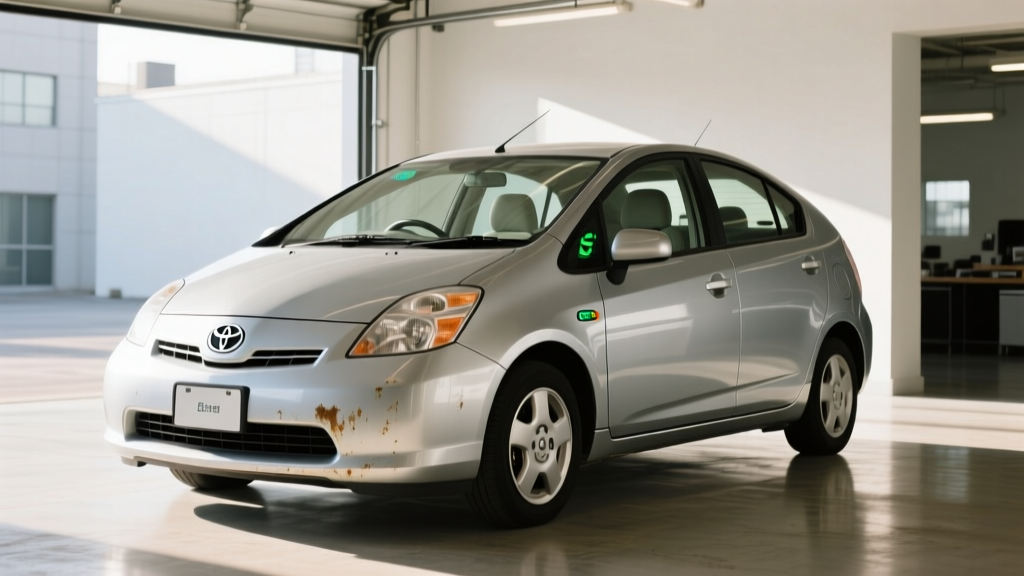
The 2001 Prius (model code NHW11) was Toyota's first hybrid electric vehicle sold in the United States, following its 1997 debut in Japan. It introduced American drivers to the concept of a gasoline engine paired with an electric motor and a nickel-metal hydride (NiMH) traction battery — no plug required. This is a conventional hybrid (HEV), not a plug-in hybrid (PHEV). It charges its battery entirely through regenerative braking and engine-driven generation. You never plug it in.
Under the hood, the 2001 Prius pairs a 1.5-liter four-cylinder gasoline engine (70 hp) with a 33 kW (44 hp) electric motor, routed through Toyota's e-CVT planetary gearset. Combined system output is approximately 100 horsepower. The traction battery is a compact 1.3 kWh NiMH pack operating at 273.6 volts — tiny by modern standards, but sufficient to provide meaningful electric assist during acceleration and enable low-speed electric-only creeping.
| Specification | Value |
|---|---|
| Powertrain | 1.5L I4 + 33 kW electric motor (HEV) |
| Combined Horsepower | ~100 hp |
| Transmission | e-CVT (planetary gearset) |
| Traction Battery | 1.3 kWh NiMH (273.6V) |
| EPA Fuel Economy | 52 city / 45 highway / 48 combined MPG |
| 0–60 mph | ~12.8 seconds |
| Drivetrain | Front-wheel drive |
| Original MSRP | ~$19,995 |
| Plug-In Required? | No — self-charging HEV |
Fuel Economy: EPA Ratings vs. Real-World MPG
The EPA rated the 2001 Prius at an impressive 52 MPG city / 45 MPG highway / 48 MPG combined — figures that remain competitive with many 2026 conventional hybrids. According to fueleconomy.gov, real-world owner-reported data averages around 45–50 MPG combined, with some drivers reporting higher in warm climates with gentle driving.
| Driving Scenario | EPA Estimate | Real-World Expectation |
|---|---|---|
| City | 52 MPG | 48–54 MPG (hybrids often exceed EPA in stop-and-go) |
| Highway | 45 MPG | 40–44 MPG (aerodynamic drag, higher speeds reduce efficiency) |
| Combined | 48 MPG | 45–50 MPG |
| Cold Weather (below 32°F) | Not rated separately | 38–43 MPG (engine runs more for cabin heat, battery less efficient) |
A critical insight for hybrid owners: HEVs like the Prius typically exceed their EPA city rating in real-world stop-and-go driving because regenerative braking recovers kinetic energy that would otherwise be lost. Highway driving is where they fall slightly short, as the electric motor provides less benefit at sustained high speeds and aerodynamic drag dominates.
HEV vs. PHEV vs. EV: Understanding the 2001 Prius in Context
If you're researching the 2001 Toyota hybrid, you may also be weighing whether to stick with a conventional hybrid, upgrade to a modern PHEV, or go full EV. Here's how these three powertrain types differ:
| Feature | HEV (2001 Prius) | PHEV (e.g., 2026 Prius Prime) | BEV (e.g., 2026 Tesla Model 3) |
|---|---|---|---|
| Plug-In Required? | No | Yes (Level 1/2) | Yes (Level 2/DC fast) |
| Electric-Only Range | ~1 mile at low speed | 39–44 miles (EPA) | 272–363 miles (EPA) |
| Battery Size | 1.3 kWh NiMH | 13.6 kWh Li-ion | 60–82 kWh Li-ion |
| Fuel Economy | 48 MPG combined | 52 MPG combined + 127 MPGe | 132 MPGe combined |
| Total Range | ~500 miles | ~600+ miles (electric + gas) | 272–363 miles |
| Home Charging | Not needed | 120V or 240V outlet | 240V recommended |
| Federal Tax Credit (new) | None | Up to $7,500 (§30D) | Up to $7,500 (§30D) |
The 2001 Prius is a pure HEV — it runs on gasoline and uses its small battery solely to improve efficiency. A modern PHEV like the 2026 Toyota Prius Prime gives you roughly 44 miles of electric-only driving before the gas engine engages, making it ideal if you have home charging and a short commute. A full BEV eliminates gasoline entirely but requires reliable charging access and a higher upfront investment.
Battery Lifespan, Degradation, and Replacement Cost
The single biggest concern for anyone owning or buying a 2001 Toyota hybrid today is the traction battery. The original NiMH pack was warrantied for 8 years / 100,000 miles (10 years / 150,000 miles in CARB states like California). Naturally, every original battery is now well past that coverage window.
Battery Warranty & Replacement Reality for the 2001 Prius:
- Original Warranty: 8 years / 100,000 miles (10 yr / 150,000 mi in CARB states)
- Current Status: All original batteries are 24–25 years old — well beyond warranty
- Expected NiMH Lifespan: 10–15 years under normal use; many have been replaced at least once
- OEM Replacement Battery (Toyota): ~$2,000–$2,500 (part only)
- Aftermarket/Refurbished Battery: $800–$1,500
- Full Replacement (parts + labor): $2,500–$4,000 at a dealership; $1,500–$2,800 at an independent hybrid specialist
- Individual Module Replacement: $150–$400 per failed module (NiMH pack has 38 modules; some shops replace only bad ones)
NiMH batteries degrade gradually rather than failing catastrophically. Symptoms include reduced fuel economy (the engine compensates for weaker electric assist), the battery warning light, and reduced regenerative braking capability. Many 2001 Prius owners report second or even third replacement batteries still in service. Independent hybrid shops have become adept at reconditioning and balancing NiMH packs at a fraction of OEM cost.
Modern Alternatives: 2026 Toyota Hybrids Compared
If you're considering whether to repair a 2001 Prius or upgrade, here's how it compares to current Toyota hybrid offerings:
| Model | Type | EPA Combined MPG | Electric-Only Range | Starting MSRP | Battery Warranty |
|---|---|---|---|---|---|
| 2001 Prius | HEV | 48 MPG | ~1 mi | ~$19,995 (original) | Expired |
| 2026 Prius LE | HEV | 57 MPG | N/A | $28,350 | 10 yr / 150,000 mi |
| 2026 Prius Prime SE | PHEV | 52 MPG + 127 MPGe | 44 mi | $33,975 | 10 yr / 150,000 mi |
| 2026 Corolla Hybrid LE | HEV | 50 MPG | N/A | $24,725 | 10 yr / 150,000 mi |
| 2026 RAV4 Hybrid XLE | HEV | 39 MPG | N/A | $33,575 | 10 yr / 150,000 mi |
The 2026 Prius LE achieves 57 MPG combined — a 19% improvement over the 2001 model — while delivering 194 combined horsepower (nearly double), modern safety features (Toyota Safety Sense 3.0), and a lithium-ion battery with a fresh 10-year/150,000-mile warranty. The 2026 Prius Prime SE adds 44 miles of electric-only range on a 13.6 kWh lithium-ion pack, making it viable as a daily EV commuter with gas-engine backup for road trips.
Tax Credits and Incentives: What Applies?
The 2001 Toyota Prius was eligible for a federal tax credit of up to $3,150 when it was new (under pre-2009 energy legislation), but that benefit expired long ago. For used purchases in 2026, the IRS Used Clean Vehicle Credit (§25E) offers up to $4,000 or 30% of the sale price (whichever is less) for qualifying used EVs and PHEVs — but the 2001 Prius, as a conventional HEV, does not qualify. Only plug-in vehicles (PHEVs and BEVs) are eligible.
If you're upgrading to a new PHEV or BEV, the federal §30D Clean Vehicle Credit can provide up to $7,500, subject to MSRP caps ($55,000 for sedans, $80,000 for SUVs/trucks), buyer income limits ($150,000 single / $300,000 joint), and battery component/critical mineral sourcing requirements. Always verify current eligibility on the IRS qualifying vehicles list, as sourcing rules change frequently.
Who Should Keep, Repair, or Replace the 2001 Prius?
Reasons to Keep or Repair a 2001 Prius
- Still achieving 42–50 MPG — competitive with many new cars
- Extremely low annual insurance and registration costs
- Simple mechanics; strong enthusiast/DIY community for hybrid battery repair
- No charging infrastructure needed
- Historical significance as the car that launched the hybrid era
Reasons to Upgrade to a Modern Hybrid or PHEV
- Safety: no airbags beyond front dual-stage, no ESC, no ADAS
- Performance: 100 hp and 12.8-second 0–60 is dangerously slow for modern highways
- Battery risk: repeated replacement costs ($2,500–$4,000 each) may exceed vehicle value
- Modern HEVs deliver 50–57 MPG with 194+ hp and full safety suites
- PHEVs offer 40+ miles of zero-emission daily driving with no range anxiety
Keep it if: The car is mechanically sound, you've budgeted for a potential battery replacement, you value ultra-low operating costs, and you drive primarily in the city where the Prius excels.
Replace it if: You need modern safety features, highway merging confidence, or if a second battery failure would total the car economically. A 2026 Corolla Hybrid LE at $24,725 delivers 50 MPG with a full warranty and Toyota Safety Sense 3.0 — a compelling upgrade path.
Frequently Asked Questions
How many MPG does the 2001 Toyota Prius hybrid get?
The EPA rates the 2001 Prius at 52 city / 45 highway / 48 combined MPG. Real-world owners typically report 45–50 MPG combined, with city driving often exceeding the EPA estimate thanks to regenerative braking. Cold weather can drop efficiency to 38–43 MPG.
Does the 2001 Toyota hybrid need to be plugged in?
No. The 2001 Prius is a conventional hybrid (HEV). Its 1.3 kWh NiMH battery charges exclusively through regenerative braking and the gasoline engine. You never plug it in. This is fundamentally different from a PHEV (plug-in hybrid) or a full EV, both of which require external charging.
How much does it cost to replace the hybrid battery in a 2001 Prius?
A full OEM battery replacement at a Toyota dealer typically costs $2,500–$4,000 including labor. Aftermarket or refurbished NiMH packs run $1,500–$2,800 installed at independent hybrid specialists. Some shops offer individual module replacement for $150–$400 per failed cell, which can be a cost-effective interim solution.
Is the 2001 Toyota Prius reliable in 2026?
The drivetrain (engine + e-CVT + hybrid system) has proven remarkably durable, with many examples exceeding 250,000 miles. The main reliability concern is the aging NiMH traction battery, which will require replacement if it hasn't been swapped already. The e-CVT has no traditional transmission fluid or belts to fail, contributing to long-term durability.
Does the 2001 Prius qualify for any tax credit?
No. The original federal hybrid tax credit expired long ago, and the current Used Clean Vehicle Credit (§25E) applies only to plug-in vehicles (PHEVs and BEVs). As a conventional HEV, the 2001 Prius is not eligible for any current federal tax incentive. Some states offer emissions-related incentives, but these typically apply to newer plug-in vehicles.
HEV vs. PHEV vs. EV — which should I choose?
Choose a conventional HEV (like the Prius) if you want maximum fuel efficiency with zero lifestyle change — no plug, no range planning. Choose a PHEV (like the 2026 Prius Prime) if you have home charging and want 40+ electric-only miles for daily commuting with a gas engine for road trips. Choose a full EV if you want zero tailpipe emissions, lowest per-mile fuel cost, and have reliable home and public charging access.