Quick Verdict: A Practical PHEV for Daily Electric Commuting
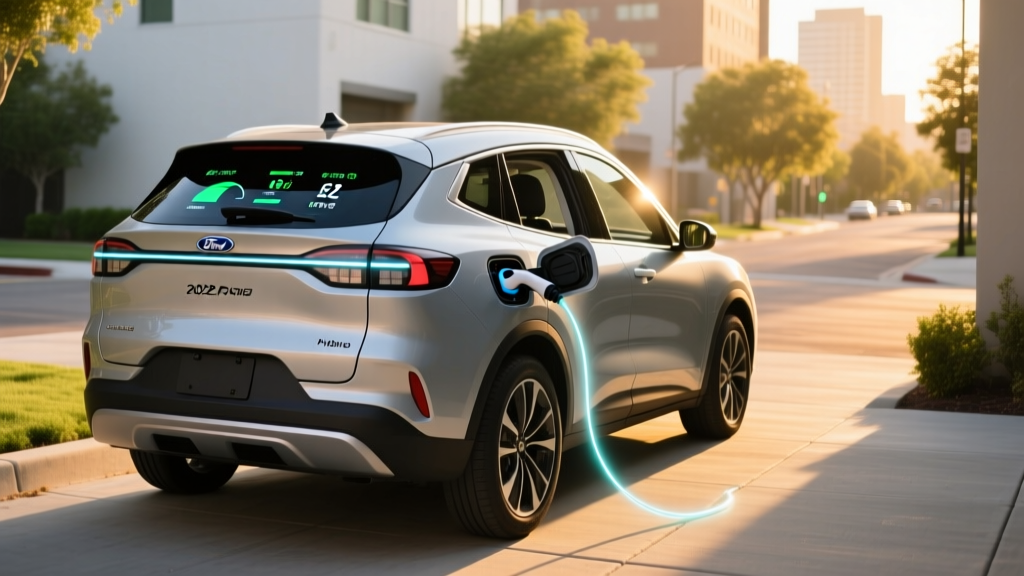
The 2022 Ford Escape Plug-In Hybrid occupies a specific niche: drivers who want electric-only commuting for short trips but aren't ready to commit to a full battery-electric vehicle. With an EPA-rated 37 miles of electric-only range and 105 MPGe combined, it handles most daily errands without burning a drop of gasoline. Once the battery depletes, the 2.5-liter Atkinson-cycle engine kicks in as a conventional hybrid, delivering 40 MPG combined. For the used-EV buyer in 2026, this PHEV remains a pragmatic bridge between gas dependence and full electrification — provided you understand its charging limitations and tax-credit nuances.
The standard Ford Escape Hybrid (HEV) requires no plug — it recharges its small battery through regenerative braking and the engine, achieving roughly 41 MPG combined. The Escape Plug-In Hybrid (PHEV) adds a much larger 14.4 kWh battery pack and a more powerful electric motor, enabling 37 miles of pure electric driving before the engine takes over. You charge the PHEV by plugging it in at home or at a public Level 2 station. If you never plug it in, it still functions as a regular hybrid — but you're leaving efficiency and savings on the table.
Range, Efficiency, and Real-World MPG
| Metric | Value |
|---|---|
| Electric-Only Range | 37 miles (EPA) |
| Combined MPGe (Electric + Gas) | 105 MPGe |
| Gas-Only MPG (Hybrid Mode) | 40 combined (42 city / 37 highway) |
| Total Combined Range | ~520 miles (EV + gas tank) |
| Fuel Tank Capacity | 11.1 gallons |
Real-world expectations: The 37-mile EPA electric range is achievable in mild weather at moderate speeds around town. On the highway at 70+ mph, expect that figure to drop to roughly 28–32 miles. In freezing temperatures (below 30°F), cabin heating and battery thermal losses can reduce electric range by 20–30%, leaving you with approximately 25–30 miles of electric-only driving. Once the battery is depleted, the hybrid-mode 40 MPG combined holds up well in real-world mixed driving — city stop-and-go actually improves hybrid efficiency thanks to regenerative braking.
According to fueleconomy.gov, the 2022 Escape PHEV's annual fuel cost estimate is approximately $1,050, compared to $2,100 for a comparable gas-only compact SUV — a meaningful gap for budget-conscious buyers.
Battery, Charging, and Powertrain Specs
| Spec | Detail |
|---|---|
| Battery Capacity | 14.4 kWh (lithium-ion, NMC chemistry) |
| Engine | 2.5L 4-cyl Atkinson cycle, 162 hp |
| Electric Motor | Permanent-magnet synchronous, 131 hp |
| Combined System Output | 210 hp |
| Transmission | eCVT (planetary gearset, no traditional gears) |
| 0–60 mph | ~8.5 seconds |
| Drivetrain | Front-wheel drive only |
| Max Charge Rate (Level 2) | 3.3 kW (onboard charger) |
| DC Fast Charging | Not supported |
| Level 2 Charge Time (0–100%) | ~3.5 hours at 3.3 kW |
| Level 1 Charge Time (120V) | ~10–11 hours (standard household outlet) |
Charging reality check: The 3.3 kW onboard charger is the Escape PHEV's biggest limitation for drivers who want quick top-ups. Unlike full BEVs that accept 100+ kW at DC fast chargers, this PHEV cannot use DC fast charging at all. You're limited to Level 1 (standard 120V outlet) or Level 2 (240V home or public station). A standard Level 2 home charger at 32 amps will fill the battery in about 3.5 hours — fast enough to recharge overnight or during a workday, but not convenient for mid-day top-ups on road trips.
The silver lining: most PHEV owners charge at home every night and rarely need public charging infrastructure. A basic Level 2 home charger (such as a ChargePoint Home Flex or Ford Connected Charge Station) running on a 240V/20A circuit handles daily needs perfectly. Installation typically costs $500–$1,500 depending on your electrical panel's proximity to the garage, according to industry electrician estimates.
Pricing and Tax Credit Eligibility (2026 Update)
When new, the 2022 Ford Escape PHEV started at approximately $33,075 (SE trim, including destination) and topped out near $40,000 for the Titanium trim. In the 2026 used market, well-maintained examples with 25,000–45,000 miles typically list between $19,000 and $26,000 depending on condition, mileage, and trim.
As a used PHEV purchased from a dealer in 2026, the 2022 Escape Plug-In Hybrid may qualify for the up-to-$4,000 federal used clean vehicle credit under IRS §25E. Key requirements:
- Sale price must be $25,000 or less
- Buyer income caps: $75,000 single / $112,500 head of household / $150,000 married filing jointly (modified AGI)
- Vehicle must be at least 2 model years old (2022 qualifies in 2026)
- Must be purchased from a licensed dealer (private sales don't qualify)
- Battery must have at least 4 kWh capacity (14.4 kWh easily qualifies)
- Credit is 30% of sale price, capped at $4,000
The original $7,500 new-vehicle credit (§30D) no longer applies since this is a used purchase. Always verify eligibility with a tax professional and consult IRS.gov §25E guidance for current-year rules, as income caps and sourcing requirements can change.
Reliability, Battery Warranty, and Replacement Cost
- Hybrid/EV Battery: 8 years / 100,000 miles (whichever comes first) — covers defects and capacity loss below 70% of original capacity
- Hybrid/Electric Drive Components: 8 years / 100,000 miles
- Powertrain (engine, transmission): 5 years / 60,000 miles
- Bumper-to-Bumper: 3 years / 36,000 miles
For a 2022 model purchased in 2026 with typical mileage (30,000–45,000 miles), the hybrid battery warranty still has approximately 4+ years and 55,000+ miles of coverage remaining — a significant advantage over buying a conventional used gas car with no comparable drivetrain protection.
Battery degradation reality: Ford's 14.4 kWh lithium-ion pack uses NMC chemistry with active liquid thermal management, which significantly slows degradation compared to passively cooled packs. Industry data from sources like Geotab's fleet battery study shows that modern liquid-cooled PHEV batteries typically lose 1.5–2.5% capacity per year under normal use. At that rate, a 2022 Escape PHEV battery should retain roughly 88–92% of its original capacity by 2026 — meaning electric range may have dropped from 37 to approximately 33–35 miles, which is still practical for most commutes.
Out-of-warranty replacement cost: If the battery eventually needs replacement beyond the warranty period (typically after 100,000 miles or 8+ years), expect a dealer-installed replacement to cost between $4,500 and $7,000 including labor. Third-party hybrid battery refurbishers and remanufactured units can reduce this to $2,500–$4,000. This is significantly less than a full BEV battery replacement, which can exceed $12,000–$18,000 for larger packs.
Driving Experience and Practicality
The 2022 Escape PHEV drives like a well-mannered compact crossover with a secret: the electric motor's instant torque (131 hp on its own) makes it feel surprisingly responsive off the line, even though the 8.5-second 0–60 time isn't sporty. The eCVT transmission operates without the rubber-band feeling of older CVTs, and the transition between electric and gas power is nearly seamless — most drivers won't notice the engine starting unless they're watching the power-flow display.
Practical trade-offs to note:
- Cargo space: The battery pack sits beneath the rear floor, reducing cargo volume slightly compared to the gas Escape — expect roughly 34.4 cu ft behind the rear seats (vs. 37.5 cu ft in the gas model).
- No AWD option: The PHEV is front-wheel drive only. If you need all-wheel drive for snow or rough roads, you'll need the conventional Escape Hybrid or a gas model.
- Towing: Rated at 1,500 lbs — adequate for a small utility trailer, but not for boats or campers.
- Interior quality: The SE and Titanium trims offer a clean, functional interior with Ford's SYNC 3 infotainment, wireless Apple CarPlay/Android Auto, and the Co-Pilot360 suite of driver-assist features (automatic emergency braking, lane-keeping, blind-spot monitoring).
Who Should Buy the 2022 Escape PHEV — and Who Shouldn't
✓ Choose This PHEV If:
- Your daily commute is under 35 miles round-trip and you can charge at home
- You want electric driving for errands but need gas flexibility for road trips
- You live in an apartment or area with unreliable public charging and can't depend on a full BEV
- You want to reduce fuel costs without range anxiety
- You qualify for the up-to-$4,000 used-EV credit
✗ Look Elsewhere If:
- You need all-wheel drive for snow or mountain driving
- You can't install a Level 2 charger at home (Level 1 works but is slow)
- Your daily commute exceeds 40+ miles — you'll burn gas most days anyway
- You want DC fast charging for road-trip top-ups
- You need maximum cargo space or towing capacity
Escape PHEV vs. Full EV vs. Conventional Hybrid
| Factor | Escape PHEV | Full EV (e.g., Tesla Model Y) | Escape Hybrid (HEV) |
|---|---|---|---|
| Plug Required? | Yes (for max benefit) | Yes (mandatory) | No |
| Electric-Only Range | 37 miles | 260–330+ miles | ~1 mile (motor assist only) |
| Road-Trip Friendly? | Excellent (gas backup) | Good (requires DC charging stops) | Excellent (gas stations everywhere) |
| Annual Fuel Cost | ~$600–$1,050 | ~$500–$700 (electricity) | ~$1,300–$1,500 |
| Maintenance Cost | Moderate (engine + electric) | Low (no engine, no oil changes) | Moderate (conventional) |
| Used Price (2026 est.) | $19,000–$26,000 | $22,000–$35,000+ | $17,000–$23,000 |
Frequently Asked Questions
How many MPG does the 2022 Ford Escape Plug-In Hybrid get?
In hybrid mode (after the battery is depleted), the Escape PHEV achieves 40 MPG combined — 42 city and 37 highway per the EPA. When factoring in electric-only driving, the combined rating is 105 MPGe. Real-world results often exceed the city figure thanks to regenerative braking in stop-and-go traffic, while highway driving at sustained speeds will trend closer to 35–37 MPG in gas-only mode.
How far can the 2022 Escape PHEV go on electric power alone?
The EPA rates the Escape PHEV at 37 miles of electric-only range. In real-world conditions, expect 30–37 miles in mild weather around town, 25–30 miles in freezing temperatures, and 28–32 miles at highway speeds. For most daily commutes under 35 miles, this is enough to drive all-electric if you charge nightly.
Does the 2022 Ford Escape PHEV qualify for a tax credit?
As a new vehicle, the 2022 Escape PHEV originally qualified for a partial federal tax credit. In 2026, purchased as a used vehicle, it may qualify for the federal Used Clean Vehicle Credit (§25E) — up to $4,000 or 30% of the sale price (whichever is less), provided the sale price is $25,000 or less and the buyer meets income caps ($75K single / $150K married filing jointly). State incentives vary; check your local energy office or IRS §25E page for current rules. Always consult a tax professional for your specific situation.
Is the Escape PHEV reliable, and what does battery replacement cost?
Ford's hybrid system has proven reliable across multiple model years. The 14.4 kWh battery is liquid-cooled, which significantly extends its lifespan. The hybrid battery warranty covers 8 years / 100,000 miles, and a 2022 model still has several years of coverage remaining in 2026. Out-of-warranty battery replacement typically costs $4,500–$7,000 at a dealer, or $2,500–$4,000 through third-party refurbishers. Most owners report minimal degradation in the first 4–5 years.
Do I need a special charger at home for the Escape PHEV?
You can charge on a standard 120V household outlet (Level 1), but it takes 10–11 hours for a full charge — workable if you plug in every night. A 240V Level 2 home charger (3.3 kW or higher) cuts that to about 3.5 hours, which is far more convenient. Since the Escape PHEV's onboard charger maxes out at 3.3 kW, even a high-power Level 2 station won't charge it faster. A basic Level 2 home charger installation runs $500–$1,500 including equipment and electrician labor.
Can I take the Escape PHEV on road trips?
Absolutely — this is one of the PHEV's core advantages over a full EV. Once the 37-mile electric range is used up, the car operates as a conventional hybrid with 40 MPG and an 11.1-gallon tank, giving you roughly 480+ miles of total range. You refuel at any gas station in minutes. The trade-off is that you won't benefit from DC fast charging (which isn't supported), so on road trips the electric motor primarily serves as a fuel-efficiency boost rather than a standalone power source.