Quick Verdict: Is the 2012 Prius Plug-In Still Worth It in 2026?
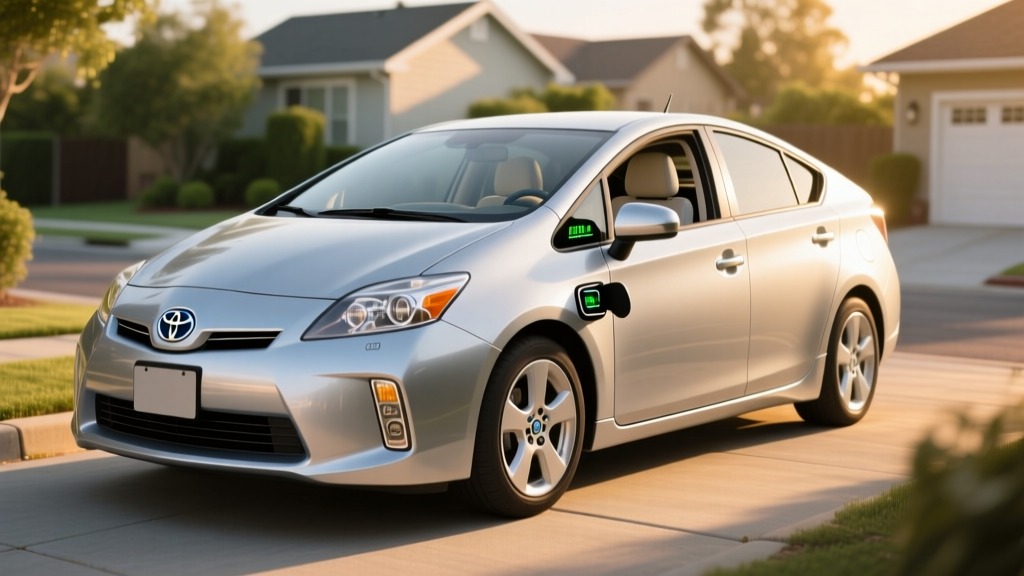
The 2012 Toyota Prius Plug-In Hybrid (often abbreviated as the PHV and sold as the Prius Plug-In in the U.S.) was Toyota's first mainstream attempt at a plug-in hybrid. Built on the third-generation Prius platform, it pairs a 1.8-liter four-cylinder engine with a 4.4 kWh lithium-ion battery pack — yielding an EPA-rated 11 miles of electric-only driving and 50 MPG combined once the gas engine kicks in. For used-car shoppers in 2026, this model offers a compelling entry point into electrified driving at a fraction of the cost of a new PHEV, provided the hybrid battery is healthy.
But at over a decade old, the 2012 Prius Plug-In demands careful scrutiny. Battery degradation, outdated infotainment, and the absence of modern safety tech are real trade-offs. This guide covers everything you need to know before buying one today.
2012 Toyota Prius Plug-In Hybrid — Key Specifications
| Specification | Value |
|---|---|
| Powertrain | 1.8L I4 Atkinson-cycle + electric motor (Hybrid Synergy Drive) |
| Combined Horsepower | 134 hp (net system output) |
| Battery Chemistry / Capacity | Lithium-ion / 4.4 kWh (total), ~3.0 kWh usable |
| EV-Only Range (EPA) | 11 miles |
| Top Speed in EV Mode | 62 mph (limited) |
| MPGe (EV Mode, EPA) | 95 MPGe combined |
| MPG (Gas/Hybrid Mode, EPA) | 50 MPG combined (51 city / 49 highway) |
| Total Combined Range | ~540 miles (EV + gas) |
| Charging (Level 1, 120V) | ~3 hours (0–100%) |
| Charging (Level 2, 240V) | ~1.5 hours (0–100%) |
| DC Fast Charging | Not supported |
| Charge Port | J1772 (Level 1 & Level 2 AC only) |
| 0–60 mph | ~9.8 seconds |
| Cargo Volume | 21.6 cu ft (rear seats up) |
| Curb Weight | ~3,165 lbs |
| Original MSRP (2012) | $32,000–$39,520 (base to Advanced) |
| 2026 Used Price Range (est.) | $6,500–$11,000 depending on mileage & condition |
How Many MPG Does the 2012 Prius Plug-In Get?
The EPA rates the 2012 Prius Plug-In at 50 MPG combined (51 city / 49 highway) in hybrid mode and 95 MPGe combined in electric mode. These figures are sourced from fueleconomy.gov.
EPA Fuel Economy Breakdown
| Mode | City | Highway | Combined |
|---|---|---|---|
| Hybrid (gas + electric) | 51 MPG | 49 MPG | 50 MPG |
| EV-Only (electricity) | — | — | 95 MPGe |
Real-World MPG vs. EPA Sticker
Like most Toyota hybrids, the Prius Plug-In tends to meet or slightly exceed its EPA city rating in real-world stop-and-go driving, thanks to aggressive regenerative braking and frequent engine shutoff. Owners on forums and tracking apps commonly report 48–54 MPG combined in daily driving when the battery is healthy. Highway mileage at sustained 75+ mph speeds tends to drop to 44–47 MPG, as the Atkinson-cycle engine operates less efficiently at high constant loads.
In EV mode, the real-world electric range often falls between 8 and 13 miles depending on temperature, terrain, and driving style. In cold weather (below 40°F), expect EV range to drop to roughly 7–9 miles due to cabin heating demands and reduced battery efficiency.
Electric-Only Range and How Far It Can Go on Battery Alone
The EPA-rated EV-only range is 11 miles, which was competitive when the car launched but feels limited by 2026 standards. For context, the current-generation Toyota RAV4 Prime delivers 42 miles of EV range, and the Prius Prime (2023+) offers 44 miles.
That 11-mile electric range is best understood as an urban errand-runner: enough for a round-trip grocery run or school drop-off within a tight radius, but insufficient for most commutes. The 4.4 kWh lithium-ion battery pack stores roughly 3.0 kWh of usable energy — a fraction of what modern PHEVs carry (the 2026 Prius Prime, for example, uses a 13.6 kWh pack).
Once the battery depletes, the car seamlessly transitions to standard hybrid operation — there is no range cliff. The 11.9-gallon fuel tank provides approximately 540 miles of total combined range.
HEV vs. PHEV: What's the Difference on This Platform?
The 2012 model year offered two Prius variants that are easy to confuse:
| Feature | 2012 Prius (Standard HEV) | 2012 Prius Plug-In (PHEV) |
|---|---|---|
| Battery Type | Nickel-metal hydride (NiMH), 1.3 kWh | Lithium-ion, 4.4 kWh |
| Plug-In Charging | No — charges via regen/engine only | Yes — J1772 AC port |
| EV-Only Range | ~1 mile at low speed | 11 miles (EPA) |
| Combined MPG | 50 MPG | 50 MPG (hybrid) / 95 MPGe (EV) |
| Cargo Space | 21.6 cu ft | Slightly reduced due to larger battery |
| Curb Weight | ~3,042 lbs | ~3,165 lbs |
The standard HEV Prius never needs to be plugged in — it recovers energy through regenerative braking and the gasoline engine. The Plug-In variant adds a larger lithium-ion battery and a charge port, allowing you to pre-charge from the grid for short electric-only trips. If you never plug in the PHEV, it simply operates as a conventional hybrid with slightly more weight.
Charging: Level 1, Level 2, and What You Need at Home
The 2012 Prius Plug-In supports AC charging only, via a standard J1772 connector. There is no DC fast charging capability — a limitation shared by most early PHEVs.
| Charging Level | Power (kW) | Time (0–100%) | Equipment Needed |
|---|---|---|---|
| Level 1 (120V household outlet) | ~1.4 kW | ~3 hours | Included portable cordset |
| Level 2 (240V home/public) | ~3.3 kW | ~1.5 hours | Level 2 station (J1772) |
| DC Fast Charge | N/A | N/A | Not supported |
Given the small 4.4 kWh battery, Level 1 charging from a standard 120V outlet is genuinely practical here — a full charge in about 3 hours means you can easily top up between errands or overnight. A Level 2 home station (typically $400–$700 for equipment, plus $500–$1,500 for electrician installation) will cut that to 90 minutes, but the investment is harder to justify for such a small battery compared to a full EV with a 60–80 kWh pack.
Powertrain and Driving Experience
The 2012 Prius Plug-In uses Toyota's third-generation Hybrid Synergy Drive, combining:
- 1.8-liter Atkinson-cycle inline-4 engine producing 98 hp and 105 lb-ft of torque
- Permanent-magnet electric motor contributing up to 80 hp
- Net system output: 134 hp routed through an eCVT (planetary gearset, not a belt-driven CVT)
The eCVT is a key reliability advantage — it has no belts, clutches, or traditional gear shifts to wear out. Acceleration to 60 mph takes approximately 9.8 seconds, which is leisurely by modern standards but adequate for merging and city driving. The ride is comfortable and quiet at lower speeds, though road noise becomes noticeable above 65 mph.
In EV mode, the car can reach up to 62 mph on electric power alone, though aggressive acceleration will trigger the gas engine regardless of battery charge. The transition between EV and hybrid mode is seamless — most drivers won't notice the engine engaging.
Hybrid Battery Health, Warranty, and Replacement Cost
Battery Warranty (Original)
Toyota's original hybrid battery warranty for the 2012 Prius Plug-In was 8 years / 100,000 miles (extended to 10 years / 150,000 miles in California and states that follow CARB emissions standards). As of 2026, this warranty has expired for virtually all examples on the used market.
Battery Degradation: What to Expect at 12+ Years Old
The 4.4 kWh lithium-ion pack in the 2012 Prius Plug-In has aged better than many early-EV batteries, largely because Toyota's hybrid management system uses a conservative state-of-charge window (roughly 40–80%), which minimizes calendar degradation. That said, after 12–14 years, some capacity loss is inevitable.
Owners of high-mileage examples (120,000+ miles) commonly report EV range dropping from the original 11 miles to 7–9 miles as the battery ages. The hybrid-mode MPG typically remains close to the original 50 MPG figure, since the car relies more on the engine and regenerative braking than on battery capacity for its hybrid efficiency.
Battery Replacement Cost
If the hybrid battery fails or degrades significantly, replacement options in 2026 include:
- New OEM Toyota battery: $2,500–$3,500 (parts only) — installed at a dealer, expect $3,500–$4,500 total
- Refurbished/remanufactured battery: $1,200–$2,000 installed — a popular option for older vehicles
- Individual cell/module replacement: $500–$1,200 — requires a specialist; not all shops offer this
Before purchasing any used 2012 Prius Plug-In, request a hybrid battery health check. A Toyota dealer can pull the battery's State of Health (SoH) data via the OBD-II system. Independent shops with hybrid expertise can also perform this check. Look for a battery that retains at least 70–75% of original capacity.
Is the 2012 Prius Plug-In Reliable?
The third-generation Prius platform (2010–2015) is one of the most thoroughly proven hybrid platforms ever built. The powertrain — particularly the eCVT and the 1.8L 2ZR-FXE engine — routinely exceeds 200,000 miles with basic maintenance. According to long-term owner data and reliability surveys, the Prius Plug-In shares the strong reliability record of the standard Prius, with a few caveats:
- Head gasket issues: Some 2010–2014 1.8L Prius engines develop head gasket leaks around 100,000–150,000 miles. This is more common in cars that have experienced coolant loss or overheating. Watch for white exhaust smoke or coolant consumption.
- EGR (Exhaust Gas Recirculation) valve clogging: Carbon buildup in the EGR system can cause rough idle or engine knocking. A $200–$400 cleaning is recommended every 80,000–100,000 miles.
- 12V auxiliary battery: Like all hybrids, the Prius has a small 12V battery that can fail every 4–6 years. Replacement costs $150–$250.
- Inverter coolant pump: A known wear item; replacement runs $300–$500.
For detailed safety ratings, the NHTSA gave the 2012 Prius a 4-star overall crash rating. The IIHS rated it "Good" in moderate overlap front and side impact tests, though it lacked modern active safety features like automatic emergency braking.
Tax Credits: Did It Qualify, and Does It Now?
When new, the 2012 Toyota Prius Plug-In qualified for a federal tax credit of up to $2,500 under the original IRS §30D plug-in vehicle credit (the credit amount was based on battery capacity — the 4.4 kWh pack yielded a smaller credit than larger-battery EVs). That incentive was available to the original purchaser only.
For used buyers in 2026: The current IRS §25E used clean vehicle credit offers up to $4,000 (or 30% of the sale price, whichever is lower) for qualifying used plug-in vehicles. Key requirements include:
- Sale price must be $25,000 or less (the 2012 Prius Plug-In easily qualifies)
- Buyer income caps: $75,000 single / $112,500 head of household / $150,000 joint
- Vehicle must be at least 2 model years old (qualifies)
- Must be purchased from a licensed dealer (private-party sales do not qualify)
- The vehicle must have a minimum 4 kWh battery (the Prius Plug-In's 4.4 kWh pack qualifies)
This means a qualified buyer purchasing a 2012 Prius Plug-In from a dealer for $8,000 could potentially claim a $2,400 federal tax credit (30% of $8,000). Consult a tax professional to confirm eligibility — rules may vary by tax year and individual circumstances.
Who Should Buy the 2012 Prius Plug-In — And Who Shouldn't?
Pros
- Proven, reliable powertrain with 200,000+ mile potential
- 50 MPG combined is still excellent in 2026
- Very low used purchase price ($6,500–$11,000)
- Can charge from a standard 120V outlet in ~3 hours
- Used EV tax credit may reduce effective cost further
- No range anxiety — gas engine provides 540+ mile total range
Cons
- Only 11 miles of EV range — minimal electric driving benefit
- Hybrid battery is 12+ years old; replacement may be needed
- No DC fast charging
- Outdated infotainment (no Apple CarPlay/Android Auto)
- Lacks modern ADAS (no automatic emergency braking, lane-keeping)
- Modest 134 hp — slow acceleration by current standards
Decision Framework
Choose the 2012 Prius Plug-In if: You want a cheap, ultra-efficient commuter that sips gas, you have access to a 120V outlet for overnight trickle charging, and you prioritize low running costs over technology or performance. It's ideal as a second car or a budget-conscious daily driver.
Choose a newer PHEV (like a 2023+ Prius Prime) if: You want 40+ miles of EV range for a real commute, modern safety features, and a fresh battery warranty. The monthly payment will be higher, but the electric-driving benefit is substantially greater.
Choose a full EV (like a used Chevrolet Bolt or Nissan Leaf) if: You have reliable home charging, your daily driving is under 100 miles, and you want to eliminate gasoline entirely. A full EV has fewer moving parts and lower maintenance costs, but requires a larger charging commitment.
Stick with a conventional HEV (standard Prius) if: You can't charge at home or work. The standard Prius delivers the same 50 MPG without needing any plug-in infrastructure, and its NiMH battery is cheap to replace.
Frequently Asked Questions
How many MPG does the 2012 Toyota Prius Plug-In get?
The EPA rates it at 50 MPG combined (51 city / 49 highway) in hybrid mode and 95 MPGe in electric-only mode. Real-world owners commonly report 48–54 MPG combined depending on driving conditions.
How far can the 2012 Prius Plug-In go on electric only?
The EPA-rated EV-only range is 11 miles. In real-world driving, expect 8–13 miles depending on temperature, terrain, and battery age. Aged batteries in high-mileage examples may deliver only 7–9 miles.
Does the 2012 Prius Plug-In qualify for any tax credit in 2026?
Original purchasers received up to $2,500 in federal credits. Used buyers in 2026 may qualify for the IRS §25E used clean vehicle credit — up to $4,000 or 30% of the sale price — if purchased from a dealer and income limits are met. Consult a tax professional.
Is the 2012 Prius Plug-In reliable, and what does battery replacement cost?
Yes, the third-gen Prius platform is among the most reliable hybrids ever built. The eCVT has no belts or clutches to fail. The lithium-ion hybrid battery may need replacement at 12+ years; expect $1,200–$2,000 for a refurbished unit or $3,500–$4,500 for a new OEM battery at a dealer.
Can I charge the 2012 Prius Plug-In at a public DC fast charger?
No. The 2012 Prius Plug-In supports only AC charging (Level 1 at 120V and Level 2 at 240V) via a J1772 connector. DC fast charging (CHAdeMO, CCS, NACS) is not supported.
Hybrid vs. PHEV vs. EV — which should I choose?
If you can charge at home and drive less than 40 miles daily, a modern PHEV or full EV maximizes electric driving. If you can't charge at home, a conventional HEV (standard Prius) delivers the same 50 MPG without plug-in requirements. The 2012 Prius Plug-In occupies a middle ground: modest EV range for those with easy charging access, but excellent hybrid efficiency regardless.
What should I check before buying a used 2012 Prius Plug-In?
Prioritize a hybrid battery health check (State of Health via OBD-II), inspect for EGR valve clogging, check for head gasket symptoms (coolant loss, white exhaust smoke), verify the 12V battery age, and confirm the charge port and included charging cord function properly. A pre-purchase inspection by a hybrid-experienced mechanic is strongly recommended.