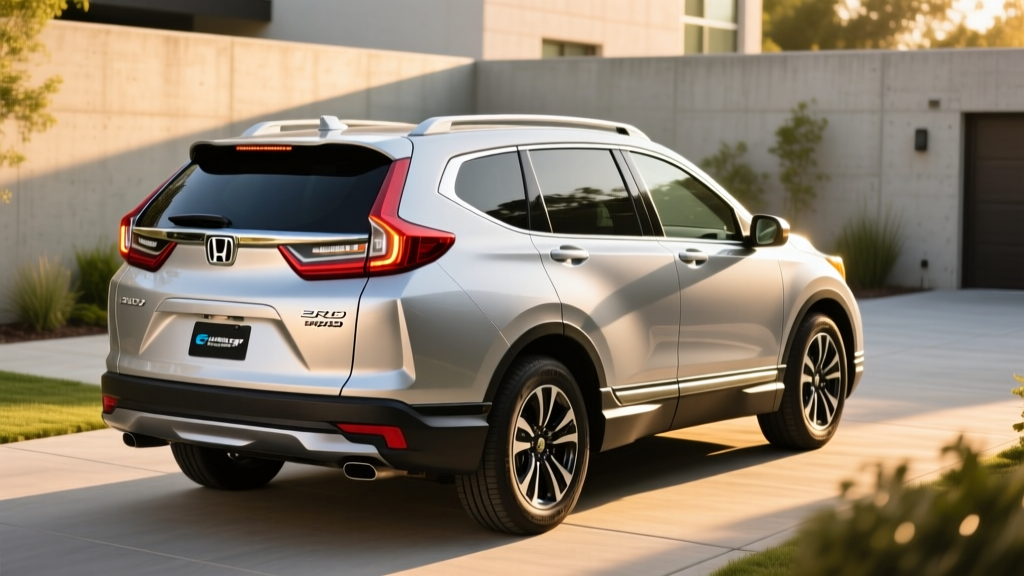
The 2020 Honda CR-V Hybrid Touring sits in a specific sweet spot for buyers who want SUV practicality, all-wheel drive, and strong fuel economy — without plugging in. As a conventional hybrid (HEV), it requires zero lifestyle change from a gas car: you fill it at the pump and the hybrid system handles the rest. Now that this model is available exclusively on the used market, it represents a compelling value proposition for cost-conscious buyers evaluating their electrification options.
This guide breaks down everything a prospective buyer needs: EPA and real-world MPG, the two-motor hybrid powertrain, long-term battery reliability, and how the CR-V Hybrid stacks up against plug-in hybrids and full EVs in 2026.
HEV vs PHEV: What the CR-V Hybrid Actually Is
Before diving into specs, it's critical to understand what you're buying — because the terminology trips up many shoppers.
| Feature | HEV (CR-V Hybrid) | PHEV (e.g., Toyota RAV4 Prime) | BEV (e.g., Tesla Model Y) |
|---|---|---|---|
| Plug-in charging | No — gas only | Yes — Level 1/2 | Yes — Level 1/2/DC |
| Electric-only range | None (EV assist only) | ~25-42 mi | 250-330 mi |
| Fuel/energy source | Gasoline + regen | Gasoline + grid electricity | Grid electricity only |
| Battery size | ~1.3 kWh (small) | ~13-18 kWh | 60-82 kWh |
| Tailpipe emissions | Yes | Yes (when engine runs) | None |
The 2020 CR-V Hybrid is a conventional hybrid (HEV). It has a small lithium-ion battery pack (~1.3 kWh) that charges exclusively through regenerative braking and the gasoline engine. You never plug it in. This is fundamentally different from a plug-in hybrid like the RAV4 Prime or a full battery-electric vehicle like the Model Y. Honda has never offered a CR-V PHEV in the United States.
Fuel Economy: EPA Ratings vs Real-World MPG
The headline number for the 2020 CR-V Hybrid Touring is strong, especially for an AWD compact SUV. Here's the official breakdown from fueleconomy.gov:
| Driving Cycle | EPA MPG |
|---|---|
| City | 40 MPG |
| Highway | 35 MPG |
| Combined | 38 MPG |
Real-world expectations: Honda's two-motor hybrid system excels in stop-and-go traffic, where the electric motors handle low-speed propulsion and the gas engine acts primarily as a generator. In real-world mixed driving, owners commonly report 36–41 MPG combined. City-heavy commuters often exceed the 40 MPG city sticker — a pattern typical of series-parallel hybrids that doesn't apply to most gas cars or EVs (which lose efficiency in cold or at highway speeds).
Highway-dominant driving at 75-80 mph will pull figures closer to 32–34 MPG, as the engine must directly drive the wheels and aerodynamic drag increases. Cold-weather operation in northern climates typically drops combined economy by 2–4 MPG due to reduced battery efficiency, increased engine idling for cabin heat, and winter fuel blends.
For comparison, the gas-only 2020 CR-V AWD with the 1.5L turbo achieves 27 MPG city / 32 highway / 29 combined. The hybrid's 9 MPG combined advantage translates to roughly 100 fewer gallons per year at 15,000 miles — approximately $300–$400 in annual fuel savings depending on local gas prices.
Powertrain Specs: Two-Motor Hybrid System
| Specification | 2020 CR-V Hybrid Touring |
|---|---|
| Engine | 2.0L Atkinson-cycle 4-cylinder |
| Engine output | 143 hp / 129 lb-ft torque |
| Electric motors | Two-motor system (propulsion + generator) |
| Electric motor output | 181 hp / 232 lb-ft torque |
| Combined system output | 212 hp |
| Drivetrain | AWD (standard on all Hybrid trims) |
| Transmission | e-CVT (no traditional gears) |
| Hybrid battery | ~1.3 kWh lithium-ion |
| 0-60 mph | ~7.8 seconds |
| Towing capacity | Not rated for towing |
| Cargo volume | 33.2 cu ft (rear seats up) / 68.7 cu ft (folded) |
Honda's Sport Hybrid Intelligent Multi-Mode Drive (i-MMD) system is one of the most refined hybrid architectures on the market. Unlike Toyota's planetary-gear e-CVT, Honda's system operates primarily in series-hybrid mode: the gas engine spins a generator motor that produces electricity, which either powers the propulsion motor directly or charges the small battery. At highway cruising speeds, a lock-up clutch connects the engine directly to the front wheels for efficiency.
The result is a driving experience that feels more like an EV around town — smooth, responsive, with instant torque from the electric motors — while maintaining the range and convenience of a gas car. The AWD system uses a mechanical driveshaft to the rear axle (not a separate rear motor), which is simpler but means rear-axle torque is limited.
Battery Longevity, Warranty, and Replacement Cost
Honda Hybrid Battery Warranty: 8 years / 100,000 miles (10 years / 150,000 miles in California and states adopting CARB emissions standards). The warranty covers defects and capacity loss that causes the vehicle to fail emissions or hybrid-system diagnostics.
The 2020 CR-V Hybrid's ~1.3 kWh lithium-ion battery pack is small and operates within a narrow state-of-charge window — typically between 40% and 80%. This shallow-cycling strategy is the primary reason hybrid batteries outlast their capacity: they're never deeply discharged or fully charged, which minimizes chemical degradation.
Expected lifespan: Based on fleet data and owner reports from Honda and Toyota hybrids now exceeding 200,000 miles, hybrid battery packs routinely last 12–15 years before capacity loss becomes noticeable. "Noticeable" in a hybrid means slightly reduced fuel economy and more frequent engine engagement — not a vehicle-stranding failure.
Replacement cost if out of warranty: A new OEM Honda hybrid battery pack for the CR-V Hybrid costs between $2,000 and $3,500 installed at a dealership as of 2026. Third-party reconditioned packs are available for $1,200–$2,000. Individual cell replacement is possible at specialist shops for $500–$1,000 but is less common. Given that the 2020 model is still within the 8-year federal hybrid battery warranty window through 2028, most original owners will not face this cost.
The hybrid system also includes the power control unit (inverter) and both electric motors. These components share the same warranty coverage and have proven highly reliable, with failure rates well below 1% in Honda's hybrid fleet.
2020 CR-V Hybrid Touring: Pricing and Tax Credit Status
Honda discontinued the CR-V Hybrid after the 2022 model year (replaced by the 2023+ CR-V Hybrid on a new platform), so the 2020 model is available only on the used market in 2026.
Original MSRP (2020): The Touring trim started at approximately $37,630 including destination.
Used market pricing (2026): Expect to pay $22,000–$28,000 for a 2020 CR-V Hybrid Touring with 50,000–80,000 miles, depending on condition, mileage, and region. Lower-mileage examples in excellent condition may command up to $30,000.
Federal tax credit: The 2020 CR-V Hybrid does not qualify for the §30D federal clean vehicle credit. That credit applies only to plug-in electric vehicles (PHEVs and BEVs) with a minimum battery capacity of 7 kWh — the CR-V Hybrid's ~1.3 kWh pack falls far short. There is also a separate used clean vehicle credit (up to $4,000) under §25E, but it too requires the vehicle to be a qualifying plug-in EV. Standard hybrid vehicles like this CR-V receive no federal purchase incentive.
Some states and local utilities offer rebates for used hybrid purchases or registration, but these vary widely by jurisdiction. Check your state energy office or utility provider for current programs.
Hybrid vs PHEV vs EV: Which Powertrain Fits You?
The 2020 CR-V Hybrid Touring is the right call for a specific buyer profile. Here's a decision framework based on real ownership patterns:
Choose the CR-V Hybrid (HEV) if:
- You have no access to home or workplace charging (apartment, street parking)
- Your commute is city-heavy with frequent stops
- You want AWD capability without EV range concerns in winter
- You prefer zero lifestyle change from a gas car
- Your budget is $22K–$28K (used market)
Consider a PHEV or full EV instead if:
- You can install a Level 2 charger at home
- Your daily driving is under 40 miles (PHEV covers this on electricity alone)
- You want to minimize or eliminate gasoline purchases
- You qualify for the §30D tax credit (up to $7,500 for new PHEVs/BEVs)
- You want the latest tech platform (2023+ CR-V Hybrid or a BEV)
A plug-in hybrid like the Toyota RAV4 Prime (42 miles electric-only, 94 MPGe) offers the best of both worlds if you can charge at home — but it commands a significant premium on the used market ($38,000–$45,000) and was subject to allocation constraints. A full EV like the Hyundai Ioniq 5 or Tesla Model Y eliminates fuel costs entirely but requires reliable charging access and a higher upfront investment.
The 2020 CR-V Hybrid's advantage is simplicity and proven reliability at an accessible price point. You trade the ability to drive on electricity for a lower purchase price, no charging infrastructure requirement, and a powertrain with a decade of demonstrated durability.
Touring Trim Features and What to Inspect Used
The Touring was the top trim for the 2020 CR-V Hybrid and came fully equipped. Standard features include leather-trimmed seats, a heated steering wheel, heated rear seats, a hands-free power tailgate, wireless phone charging, a premium 9-speaker audio system, Honda Sensing (adaptive cruise, lane-keeping, collision mitigation), and a 7-inch touchscreen with Apple CarPlay and Android Auto.
Used-buying inspection priorities:
- Hybrid system health: Ask for a hybrid battery state-of-health readout from a Honda dealer. The battery should show minimal degradation at under 80,000 miles.
- Brake wear: Regenerative braking extends pad life significantly — original brake pads at 60,000+ miles are common. If they've been replaced early, investigate why.
- AC compressor: The electric AC compressor is a known wear item on Honda hybrids. Confirm cold AC performance during a test drive.
- Software updates: Verify that the dealer performed any outstanding TSB (technical service bulletin) updates for the hybrid system and infotainment.
- AWD operation: Test on a low-traction surface or wet pavement to confirm the rear axle engages under acceleration.
Frequently Asked Questions
How many MPG does the 2020 Honda CR-V Hybrid Touring get?
The EPA rates it at 40 MPG city, 35 MPG highway, and 38 MPG combined. Real-world owners typically report 36–41 MPG combined depending on driving mix and climate. City-dominant driving often yields the best results, which is the opposite of a conventional gas car.
Does the 2020 CR-V Hybrid need to be plugged in?
No. The 2020 CR-V Hybrid is a conventional hybrid (HEV), not a plug-in hybrid. The small battery charges through regenerative braking and the gasoline engine. You fuel it exclusively at a gas station, just like a non-hybrid car.
Does the 2020 CR-V Hybrid qualify for any federal tax credit?
No. The IRS §30D clean vehicle credit and the §25E used clean vehicle credit both require a plug-in vehicle with a minimum battery capacity of 7 kWh. The CR-V Hybrid's ~1.3 kWh battery does not qualify. No federal purchase incentive applies to conventional hybrids. Check with your state energy office for any local hybrid incentives.
Is the 2020 CR-V Hybrid reliable, and what does battery replacement cost?
Yes — Honda's i-MMD hybrid system has proven highly reliable, with very few reported failures. The hybrid battery is warranted for 8 years/100,000 miles (10 years/150,000 miles in CARB states), meaning a 2020 model remains covered through at least 2028. If replacement is ever needed out of warranty, expect $2,000–$3,500 for an OEM pack installed, or $1,200–$2,000 for a reconditioned unit. Most hybrid batteries last 12–15 years based on fleet data.
How does the CR-V Hybrid compare to the gas-only 2020 CR-V?
The hybrid delivers 38 MPG combined versus 29 MPG combined for the gas AWD model — a 31% improvement. It also produces more combined horsepower (212 hp vs 190 hp) and provides smoother acceleration thanks to electric motor torque. The tradeoff is a slightly higher purchase price on the used market and a small reduction in cargo space due to the hybrid battery placement under the rear floor (33.2 cu ft vs 39.2 cu ft behind the rear seats in the gas model).
Should I buy a used 2020 CR-V Hybrid or a newer model?
The 2023+ CR-V Hybrid rides on an all-new platform with more interior space, updated tech (including a larger 9-inch screen), and slightly improved fuel economy (40/35/37 MPG for the Sport Touring Hybrid). However, used 2023+ examples still command $33,000–$38,000. If budget is the primary driver, the 2020 model offers 90% of the experience at a $10,000+ discount. The 2020 model also remains under its hybrid battery warranty through 2028.