The 2020 Corolla Hybrid at a Glance in 2026
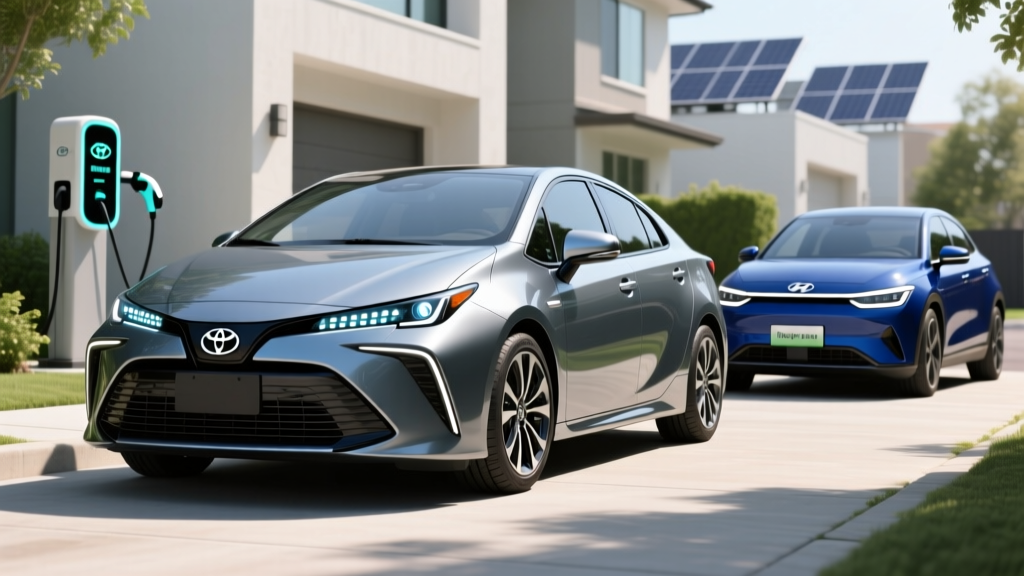
The 2020 Toyota Corolla Hybrid was Toyota's first hybridized Corolla sedan for the U.S. market, borrowing the proven powertrain from the Prius and wrapping it in a conventional compact-sedan body. Six years later, it remains one of the most fuel-efficient used cars you can buy — and one of the least complicated to own. With no plug, no range anxiety, and a hybrid battery backed by a 10-year/150,000-mile warranty, the 2020 Corolla Hybrid is a pragmatic choice for buyers who want EV-like city efficiency without any lifestyle change.
This guide covers everything a 2026 used-car shopper needs to know: real-world MPG, powertrain specs, battery longevity, ownership costs, and how it stacks up against plug-in hybrids and full EVs.
| Spec | Value |
|---|---|
| Powertrain | 1.8L 4-cyl Atkinson-cycle + electric motor (HEV) |
| Combined Horsepower | 121 hp |
| Transmission | eCVT (planetary gearset) |
| Drivetrain | AWD-e (electric rear axle) |
| EPA MPG (City / Hwy / Combined) | 53 / 46 / 52 |
| Fuel Tank | 11.4 gallons |
| Total Range | ~593 miles |
| Hybrid Battery | Nickel-metal hydride (NiMH), ~1.3 kWh |
| Plug-in Charging | No — self-charging HEV |
| 0–60 mph | ~7.8 seconds (est.) |
| Original MSRP (LE trim) | $23,100 |
| Typical 2026 Used Price | $16,000–$21,000 |
| Battery Warranty | 10 years / 150,000 miles |
HEV vs. PHEV: Why the Corolla Hybrid Does Not Plug In
A common point of confusion among first-time hybrid shoppers is the difference between a conventional hybrid (HEV) and a plug-in hybrid (PHEV). The 2020 Corolla Hybrid is an HEV — it has no charging port, no electric-only driving range to speak of, and requires zero change to your fueling routine. You fill it with gasoline and drive.
| Feature | HEV (Corolla Hybrid) | PHEV (e.g., Prius Prime) |
|---|---|---|
| Plugs in? | No | Yes (Level 1/2) |
| Electric-only range | <1 mile at low speed | 25–44 miles (model-dependent) |
| Battery size | ~1.3 kWh (NiMH) | 13.6 kWh (Li-ion, 2023+ Prius Prime) |
| Regenerative braking | Yes | Yes |
| Federal tax credit (§30D) | Not eligible | Up to $7,500 (if eligible) |
| Home charger needed | No | Recommended |
The Corolla Hybrid's small NiMH battery captures energy from regenerative braking and the gasoline engine, then deploys it to assist acceleration and enable brief engine-off coasting. The result is exceptional city MPG without ever needing to think about charging infrastructure.
Fuel Economy: EPA Numbers vs. Real-World MPG
The EPA rates the 2020 Corolla Hybrid at 53 city / 46 highway / 52 combined MPG (fueleconomy.gov). That combined figure is among the highest of any non-plug-in vehicle sold in the U.S.
| Driving Condition | EPA MPG | Real-World Expectation |
|---|---|---|
| City | 53 | 50–58 (hybrids often beat EPA in stop-and-go) |
| Highway | 46 | 42–48 (aerodynamic drag reduces hybrid advantage) |
| Combined | 52 | 48–54 |
Why hybrids often exceed EPA city estimates: The EPA city cycle includes moderate-speed stop-and-go driving, which is where regenerative braking recaptures the most energy. Owners who drive in dense urban traffic with frequent stops often report 55+ MPG. Conversely, sustained highway driving at 75+ mph diminishes the hybrid system's advantage because the electric motor contributes less at high constant speeds and aerodynamic drag dominates.
At 52 MPG combined and a national average of $3.25/gallon (early 2026), the Corolla Hybrid costs roughly $0.063 per mile in fuel. Compare that to a 30-MPG gas compact at $0.108/mile — a savings of about $675 per year at 15,000 miles driven.
Powertrain Deep Dive: 121 HP and AWD-e
The 2020 Corolla Hybrid pairs a 1.8-liter Atkinson-cycle four-cylinder engine (97 hp, 105 lb-ft) with a front electric motor (71 hp, 120 lb-ft) through Toyota's eCVT planetary gearset. Combined system output is 121 horsepower. A second, smaller electric motor on the rear axle provides AWD-e — an on-demand all-wheel-drive system that engages the rear wheels only when slip is detected, typically from a stop or in low-traction conditions.
This is the same architecture Toyota used in the contemporary Prius AWD-e and has since refined across multiple generations. It is not a performance powertrain — 0–60 mph takes roughly 7.8 seconds — but it delivers smooth, quiet acceleration with seamless transitions between electric and gas power that most drivers barely notice.
The AWD-e system adds minimal weight and no mechanical driveshaft, so it doesn't meaningfully reduce fuel economy compared to a FWD-only hybrid. For buyers in snow-belt states, this is a genuine advantage over FWD-only competitors like the Hyundai Ioniq Hybrid.
Hybrid Battery Longevity, Warranty, and Replacement Cost
The single biggest concern prospective hybrid buyers raise is battery lifespan. The 2020 Corolla Hybrid uses a nickel-metal hydride (NiMH) traction battery — a chemistry Toyota has deployed across millions of Prius hybrids since 1997. NiMH is less energy-dense than lithium-ion but is exceptionally durable and tolerant of the shallow charge-discharge cycles that hybrid systems use.
Toyota covers the 2020 Corolla Hybrid's battery for 10 years or 150,000 miles, whichever comes first. That warranty transfers to subsequent owners. A 2020 model purchased in 2026 with 60,000 miles would retain coverage through 2030 or 150,000 miles. Toyota also covers all hybrid-system components (inverter, electric motors, eCVT) under the same 10-year/150,000-mile hybrid system warranty.
What happens when the battery degrades? Toyota's hybrid battery warranty guarantees the battery will retain sufficient capacity for normal hybrid operation. In practice, NiMH hybrid batteries rarely fail catastrophically. Individual cells can weaken over time, and the most common "failure" is reduced fuel economy rather than a dead battery.
| Option | Estimated Cost | Notes |
|---|---|---|
| New OEM battery (Toyota dealer) | $2,500–$3,500 | Includes labor; full warranty |
| Refurbished/remanufactured battery | $1,000–$2,000 | Replaced cells; 1–3 year warranty typical |
| Individual cell replacement (specialist) | $500–$1,000 | Only weak cells replaced; requires diagnostics |
| Used salvage battery | $400–$800 | Risky; unknown remaining life |
Based on long-term data from the Prius — which shares this powertrain — most hybrid batteries last 150,000–200,000+ miles before needing attention. Some Prius taxis have exceeded 300,000 miles on the original battery. For a 2020 Corolla Hybrid with typical mileage (50,000–80,000 miles in 2026), the battery should have a decade or more of remaining service life.
Does the 2020 Corolla Hybrid Qualify for a Tax Credit?
No. The 2020 Corolla Hybrid is a conventional HEV and does not qualify for the federal §30D Clean Vehicle Credit. That credit applies only to plug-in electric vehicles (BEVs and PHEVs) meeting battery-capacity, MSRP, income, and critical-mineral sourcing requirements (IRS §30D rules).
There is no federal tax credit for conventional hybrids in 2026. Some states may offer minor incentives for fuel-efficient vehicles, but these vary widely and are typically modest compared to EV credits. Check your state's energy office or department of revenue for specifics.
The trade-off: while you forgo the credit, you also forgo the higher purchase price of a PHEV or BEV, the need for home charging infrastructure, and any range-planning concerns. The Corolla Hybrid's total cost of ownership often undercuts both EVs and PHEVs when you factor in purchase price, maintenance, and the absence of charging costs.
2020 Corolla Hybrid vs. PHEV vs. Full EV: Which Fits You?
- You lack home charging access (apartment, street parking)
- You want 50+ MPG with zero behavior change
- Your budget is under $22,000
- You drive 12,000–18,000 miles/year in mixed conditions
- You can charge at home (Level 1 or 2)
- Most daily trips are under 40 miles
- You want electric commuting + gas for road trips
- You qualify for the §30D credit on a new purchase
- You have reliable home Level 2 charging
- Daily driving is under 250 miles
- You want the lowest per-mile fuel cost (~$0.04/mi)
- You qualify for tax credits and want minimal maintenance
The Corolla Hybrid's advantage is simplicity. There is no charging cable, no battery preconditioning, no public-charging reliability concern, and no route planning. You drive it exactly like a gas car and it simply uses far less fuel. For buyers in charging deserts or multi-unit dwellings where home charging isn't feasible, it is often the smartest electrified option available.
Pros and Cons of the 2020 Corolla Hybrid in 2026
- 52 MPG combined — among the best of any car ever sold in the U.S.
- AWD-e standard — rare in the hybrid compact segment
- No plug-in required; zero lifestyle adjustment
- 10-year/150,000-mile hybrid battery warranty (transferable)
- Toyota reliability and strong resale value
- Low maintenance (no oil-change urgency; regenerative braking extends pad life)
- Affordable on the used market ($16K–$21K in 2026)
- Only 121 hp — modest acceleration; highway merging requires planning
- LE trim only for 2020 — no SE or XLE hybrid option that year
- Small 11.4-gal tank limits range to ~593 mi (still excellent)
- Rear-seat headroom is tight for taller passengers
- No DC fast charging (not applicable — HEV)
- Infotainment feels dated vs. 2024+ competitors
- No federal tax credit eligibility
Frequently Asked Questions
How many MPG does the 2020 Corolla Hybrid get?
The EPA rates it at 53 city / 46 highway / 52 combined MPG. Real-world owners typically see 48–54 MPG combined, with city-heavy drivers sometimes exceeding the EPA city figure thanks to regenerative braking.
Is the 2020 Corolla Hybrid reliable?
Yes. Toyota's Hybrid Synergy Drive is one of the most proven powertrains in automotive history, with decades of real-world data from the Prius fleet. The 2020 Corolla Hybrid carries Toyota's 10-year/150,000-mile hybrid system warranty, and the NiMH battery chemistry is exceptionally durable. Major reliability indices (Consumer Reports, J.D. Power) consistently rate Toyota hybrids among the most dependable vehicles on the road.
What does a Corolla Hybrid battery replacement cost?
A new OEM battery from a Toyota dealer runs $2,500–$3,500 installed. Refurbished units cost $1,000–$2,000, and individual cell replacement by a hybrid specialist can be as low as $500–$1,000. However, most NiMH hybrid batteries last 150,000–200,000+ miles, and many never need replacement during the car's useful life.
Does the 2020 Corolla Hybrid qualify for any tax credit?
No. The federal §30D Clean Vehicle Credit applies only to plug-in vehicles (BEVs and PHEVs). The Corolla Hybrid is a conventional HEV with no plug and no qualifying battery capacity. Some states may offer minor efficiency incentives, but there is no federal credit. Check IRS.gov for current rules.
How far can the 2020 Corolla Hybrid drive on a full tank?
With its 11.4-gallon fuel tank and 52 MPG combined rating, the Corolla Hybrid can travel approximately 593 miles between fill-ups. Highway-heavy driving may reduce that to roughly 525 miles; city-heavy driving can push it past 600 miles.
Can I convert the Corolla Hybrid to a plug-in?
No. There is no safe or legal aftermarket conversion to add plug-in capability to the Corolla Hybrid. The vehicle was engineered as a self-charging HEV with a small NiMH battery and no onboard charger. If plug-in capability is a priority, look at the Toyota Prius Prime (PHEV) instead.
Is the 2020 Corolla Hybrid a good used buy in 2026?
For buyers who want maximum fuel economy with minimum complexity, yes. At $16,000–$21,000 on the used market, it offers 52 MPG, standard AWD-e, Toyota reliability, and a hybrid battery that likely has 100,000+ miles of remaining life — all without requiring a home charger or any change to your fueling habits.