Not every driver is ready to go fully electric — and that's where hybrids earn their keep. Whether you're eyeing a conventional hybrid (HEV) that never needs a plug or a plug-in hybrid (PHEV) that covers your commute on electricity alone, understanding the real trade-offs is essential before you sign on the dotted line. This guide breaks down hybrid cars benefits and disadvantages with exact EPA numbers, battery warranty data, and ownership costs so you can choose the right powertrain for your driving life in 2026.
HEV vs PHEV: What's the Difference?
The single biggest mistake shoppers make is lumping all hybrids together. A conventional hybrid and a plug-in hybrid operate on fundamentally different principles, and confusing them leads to bad purchase decisions.
| Feature | Conventional Hybrid (HEV) | Plug-In Hybrid (PHEV) |
|---|---|---|
| Plug-in charging required? | No — regenerates via braking & engine | Yes — plug in for electric-only miles |
| Battery size | 0.5–2.0 kWh (small) | 10–25 kWh (usable) |
| Electric-only range | None (EV assist only at low speed) | 20–45 miles typical |
| Fueling | Gasoline only | Gasoline + electricity |
| Best for | No home charging, long highway drives | Home charging access, short commutes |
| Federal tax credit | Not eligible (§30D excludes HEVs) | Up to $7,500 if eligible |
| Upfront cost premium vs gas | $1,000–$3,000 | $4,000–$8,000 |
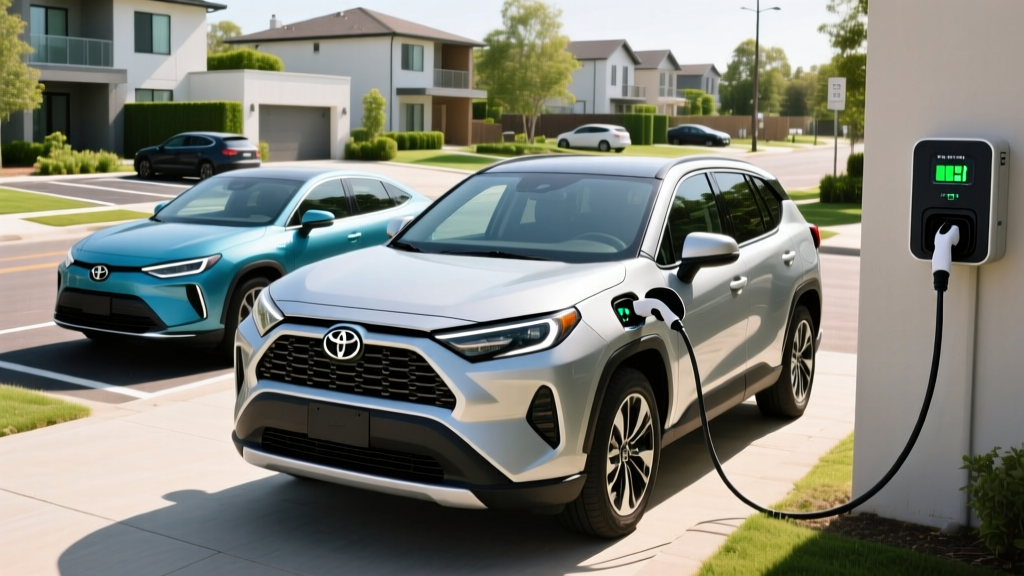
A conventional hybrid like the Toyota RAV4 Hybrid uses a small battery and electric motor to supplement the gasoline engine. It captures energy from regenerative braking and never needs to be plugged in. You simply fill it with gas and drive — but with significantly better fuel economy than a non-hybrid counterpart.
A plug-in hybrid like the Toyota RAV4 Prime carries a much larger battery pack (18.1 kWh usable) that provides genuine electric-only driving — typically 25–45 miles — before the gasoline engine kicks in. Once the battery is depleted, it operates like a conventional hybrid. The PHEV is essentially two vehicles in one: a short-range EV for daily errands and a gas-hybrid for road trips.
Fuel Economy: EPA MPG Numbers That Matter
Fuel savings are the headline benefit of any hybrid, but the numbers vary dramatically depending on whether you choose HEV or PHEV — and how you drive.
| Model | Type | City MPG | Highway MPG | Combined MPG | PHEV Electric Range | Combined MPGe (PHEV) |
|---|---|---|---|---|---|---|
| Toyota RAV4 Hybrid | HEV | 41 | 38 | 40 | — | — |
| Toyota RAV4 Prime | PHEV | 40 (gas mode) | 36 (gas mode) | 38 (gas mode) | 42 mi | 94 MPGe |
| Honda CR-V Hybrid | HEV | 43 | 36 | 40 | — | — |
| Hyundai Tucson PHEV | PHEV | 35 (gas mode) | 35 (gas mode) | 35 (gas mode) | 33 mi | 80 MPGe |
| Toyota Prius | HEV | 57 | 56 | 57 | — | — |
| Toyota Prius Prime | PHEV | 52 (gas mode) | 48 (gas mode) | 50 (gas mode) | 44 mi | 127 MPGe |
Source: fueleconomy.gov — EPA estimates for 2025–2026 model year vehicles.
Real-World MPG: Where Hybrids Surprise You
Here's a nuance most buyers miss: conventional hybrids frequently exceed their EPA city estimates in real-world driving because stop-and-go traffic maximizes regenerative braking. Owners of the Toyota Prius and RAV4 Hybrid routinely report 43–50 MPG in urban conditions. On the highway, however, hybrids tend to fall slightly below their EPA ratings — typically by 2–4 MPG — because the electric motor provides less assist at sustained high speeds and aerodynamic drag dominates.
For PHEVs, real-world electric-only range is heavily influenced by temperature and driving style. The EPA-rated 42 miles of electric range on a RAV4 Prime may shrink to 30–35 miles in winter (below 40°F) due to cabin heating demands and reduced battery efficiency. In mild weather with conservative driving, some owners report matching or slightly exceeding the EPA electric range figure.
Powertrain Specs: What's Under the Hood
Hybrids pair a gasoline engine with one or more electric motors, and the combined output can be surprisingly stout. Here's how three popular models stack up:
| Model | Engine | Combined HP | 0–60 mph | Battery (kWh usable) | Drivetrain |
|---|---|---|---|---|---|
| Toyota RAV4 Hybrid | 2.5L 4-cyl + 2 motors | 219 hp | 7.4 sec | ~1.6 kWh | AWD (e-AWD rear motor) |
| Toyota RAV4 Prime | 2.5L 4-cyl + 2 motors | 302 hp | 5.7 sec | 18.1 kWh | AWD (e-AWD rear motor) |
| Toyota Prius Prime | 2.0L 4-cyl + 1 motor | 220 hp | 6.6 sec | 13.6 kWh | FWD |
| Hyundai Tucson PHEV | 1.6L turbo 4-cyl + motor | 261 hp | 7.1 sec | 13.8 kWh | AWD |
The RAV4 Prime's 302 hp combined output makes it one of the quickest vehicles in the Toyota lineup — a PHEV performance advantage that catches many shoppers off guard. The larger electric motor and bigger battery deliver torque-fill that a conventional hybrid simply can't match.
Charging a PHEV: Times, Connectors, and Limitations
If you're considering a PHEV, charging logistics matter. Unlike full EVs with 75+ kWh batteries, PHEV batteries are small enough that Level 2 (240V) charging is usually sufficient for overnight replenishment.
| Model | Battery (kWh) | Level 1 (120V) | Level 2 (240V) | DC Fast Charge? |
|---|---|---|---|---|
| Toyota RAV4 Prime | 18.1 | ~12 hours | ~2.5 hours (6.6 kW) | No |
| Toyota Prius Prime | 13.6 | ~10 hours | ~2 hours (6.6 kW) | No |
| Hyundai Tucson PHEV | 13.8 | ~10 hours | ~2 hours (7.2 kW) | No |
| Jeep Wrangler 4xe | 17.3 | ~12 hours | ~2.5 hours (7.2 kW) | No |
Critical note: Most PHEVs do not support DC fast charging. The battery packs are too small to justify the hardware cost, and the charge rate would be limited by the pack's C-rate anyway. A standard Level 2 home charger (240V, 32A–40A) will fully replenish any PHEV overnight — typically in 2–3 hours. This is a significant advantage over full EVs, which can require 20–40 minutes at a DC fast charger for a 10–80% fill.
If you don't have access to a garage or driveway for a Level 2 charger, a PHEV's electric range advantage is severely diminished. You can charge on a standard 120V outlet, but 10–12 hours for a full charge means you'll rarely start with a full battery unless your daily mileage is very low.
Pricing, Tax Credits, and Total Cost of Ownership
Hybrids cost more upfront than their gasoline-only counterparts, but the fuel savings — and in the case of PHEVs, potential tax credits — can offset the premium.
Base MSRP Comparison (2025–2026 Model Year)
- Toyota RAV4 Hybrid (LE): ~$33,000 MSRP
- Toyota RAV4 Prime (SE): ~$44,500 MSRP
- Toyota Prius (LE): ~$29,000 MSRP
- Toyota Prius Prime (SE): ~$34,000 MSRP
- Hyundai Tucson PHEV (SEL): ~$39,000 MSRP
Federal Tax Credit Eligibility (§30D)
Conventional hybrids (HEVs) do not qualify for the federal §30D clean vehicle tax credit. That credit is reserved for plug-in vehicles — BEVs and PHEVs — that meet specific requirements.
2026 §30D Tax Credit Requirements for PHEVs:
- Credit amount: Up to $7,500 ($3,750 for battery components + $3,750 for critical minerals)
- MSRP cap: SUVs/pickups/vans ≤ $80,000; sedans ≤ $55,000
- Buyer income cap: AGI ≤ $150,000 (single), $225,000 (head of household), $300,000 (joint)
- Battery sourcing: Must meet escalating critical-mineral and battery-component requirements per IRS guidelines
- Point-of-sale transfer: Eligible buyers can transfer the credit to the dealer for an immediate price reduction at purchase
- Minimum battery capacity: ≥ 7 kWh (all current PHEVs meet this)
Always verify eligibility with a tax professional and the fueleconomy.gov tax credit lookup before purchasing. Sourcing rules tighten annually.
5-Year Cost Snapshot: Hybrid vs Gas vs PHEV
Assuming 15,000 miles/year, $3.50/gallon gas, and $0.14/kWh electricity:
| Vehicle | 5-Year Fuel Cost | Upfront Premium vs Gas | Net 5-Year Savings vs Gas |
|---|---|---|---|
| Gas-only SUV (25 MPG combined) | $10,500 | — | — |
| Toyota RAV4 Hybrid (40 MPG) | $6,563 | ~$2,000 | ~$1,937 |
| Toyota Prius (57 MPG) | $4,605 | ~$1,500 | ~$4,395 |
| RAV4 Prime (PHEV, 60% EV driving) | $4,020* | ~$8,000 (minus credit) | Varies by credit eligibility |
*PHEV cost assumes 60% of miles driven on electricity at $0.14/kWh and 40% on gasoline at 38 MPG.
Battery Reliability, Warranty, and Replacement Costs
Battery longevity is consistently the top concern among hybrid shoppers — and it's the area where the data is most reassuring.
Hybrid Battery Warranty Coverage (2026)
| Manufacturer | Hybrid Battery Warranty | Powertrain Warranty |
|---|---|---|
| Toyota | 10 years / 150,000 miles | 5 years / 60,000 miles |
| Hyundai / Kia | 10 years / 100,000 miles | 10 years / 100,000 miles |
| Honda | 8 years / 100,000 miles (10/150k in CARB states) | 5 years / 60,000 miles |
| Ford | 8 years / 100,000 miles | 5 years / 60,000 miles |
Toyota's hybrid synergy drive system has an exceptional reliability track record. The Prius, now in its fifth generation, has demonstrated that hybrid battery packs routinely last 150,000–200,000+ miles with minimal degradation. The small battery in a conventional hybrid undergoes shallow charge cycles (typically staying between 40% and 80% state of charge), which dramatically extends cell life compared to a full EV that cycles from 10% to 90%.
Replacement cost if out of warranty:
- Conventional hybrid (HEV) battery: $2,000–$4,000 depending on model
- PHEV battery: $5,000–$9,000 depending on capacity and model
- Refurbished/remanufactured options available for $1,000–$2,500 (HEV)
For context, a conventional gas vehicle's transmission replacement typically costs $3,000–$7,000 — and hybrids eliminate the traditional transmission entirely, using an e-CVT planetary gearset that has virtually no wear components. Many hybrid owners never face a battery replacement during their ownership period.
Benefits and Disadvantages: The Honest Breakdown
Hybrid Benefits
- 30–50% better fuel economy vs comparable gas-only vehicles, especially in city driving
- No charging infrastructure needed (HEV) — fill up at any gas station
- Proven long-term reliability — Toyota's hybrid system has 25+ years of real-world data
- Lower maintenance costs — regenerative braking extends pad life; no traditional transmission
- PHEV dual-mode flexibility — electric commute + gas road trips with zero range anxiety
- Potential $7,500 federal tax credit for eligible PHEV buyers
- Strong resale value — hybrids hold value well as fuel prices fluctuate
- AWD availability without the fuel-economy penalty of traditional AWD systems
Hybrid Disadvantages
- Higher upfront cost — $1,000–$8,000 premium over gas-only equivalents
- HEV fuel savings take years to recoup the purchase premium at low annual mileage
- PHEV requires home charging to realize electric-range benefits — useless without a plug
- Reduced cargo space in some models due to battery packaging
- Highway MPG advantage is smaller — hybrids shine in the city, less so at 75 mph
- PHEV complexity — two full powertrains (engine + EV) mean more systems to maintain long-term
- HEVs don't qualify for federal tax credits — only PHEVs and BEVs are eligible
- Engine noise under hard acceleration — e-CVT drone is noticeable in some models
Hybrid vs PHEV vs Full EV: Which Is Right for You?
Choose a Conventional Hybrid (HEV) If:
- You don't have access to home or workplace charging
- You drive mostly in the city with frequent stop-and-go traffic
- You want maximum simplicity — no plugs, no new habits
- Your annual mileage is moderate (10,000–15,000 mi) and fuel savings alone justify the premium
- You frequently take long road trips and don't want to plan around charging stops
Choose a Plug-In Hybrid (PHEV) If:
- You have reliable home Level 2 charging (garage or driveway with 240V outlet)
- Your daily commute is under 40 miles round-trip (fits within electric-only range)
- You want EV-like daily driving but need gas flexibility for weekend road trips
- You qualify for the §30D federal tax credit, offsetting the higher purchase price
- You live in a region with extreme winters where EV range loss is a concern
Choose a Full EV (BEV) If:
- You have home charging and your daily driving is under 250 miles
- You want the lowest per-mile energy cost and near-zero routine maintenance
- You want access to HOV lanes, maximum tax incentives, and the latest ADAS technology
- You're ready to plan road trips around DC fast-charging networks
Frequently Asked Questions
How many MPG does a hybrid really get in real-world driving?
Real-world MPG for conventional hybrids often exceeds EPA city estimates by 2–5 MPG because stop-and-go driving maximizes regenerative braking. The Toyota Prius, rated at 57 MPG combined, regularly achieves 55–62 MPG in urban driving. Highway fuel economy tends to fall 2–4 MPG below EPA estimates. For PHEVs in gas-only mode, expect similar results to their HEV counterparts, minus 1–3 MPG due to the extra battery weight.
How far can a PHEV go on electric-only power?
Current 2026 PHEVs offer 20–45 miles of electric-only range. The Toyota Prius Prime leads the pack at 44 miles EPA-rated, while the RAV4 Prime delivers 42 miles. Real-world electric range drops 15–25% in cold weather (below 40°F) due to cabin heating loads and reduced battery efficiency. If your commute is under 35 miles round-trip, most PHEVs will let you drive months without visiting a gas station.
Are hybrid batteries expensive to replace?
Conventional hybrid battery replacement costs $2,000–$4,000 out of warranty; PHEV batteries run $5,000–$9,000. However, hybrid batteries rarely fail within the warranty period (8–10 years / 100,000–150,000 miles). Toyota's hybrid batteries have demonstrated 200,000+ mile lifespans in taxi and fleet use. The shallow charge cycles in an HEV are far less stressful on cells than full EV deep cycles, contributing to exceptional longevity.
Does a conventional hybrid qualify for any tax credit?
No. The federal §30D clean vehicle credit applies only to plug-in vehicles — PHEVs and BEVs — with a minimum 7 kWh battery. Conventional hybrids (HEVs) do not plug in and are not eligible for the federal credit. Some states and utilities offer separate rebates for hybrids, but these are increasingly rare. Check your state's energy office and local utility for any remaining programs.
Do I need to change how I drive to benefit from a hybrid?
Not at all. Modern hybrids manage the gas-electric blending automatically. You'll get the best fuel economy with smooth, moderate acceleration and by allowing the regenerative braking system to slow the car (rather than riding the friction brakes). Most hybrids offer selectable drive modes (Eco, Normal, Sport) that adjust throttle response and regeneration intensity, but even in default mode, the efficiency gains are substantial without any behavioral change.
Is a hybrid more reliable than a gas-only car?
Data from Consumer Reports and long-term fleet studies consistently rank Toyota and Lexus hybrids among the most reliable vehicles on the road. The hybrid system eliminates the traditional automatic transmission (a common failure point), extends brake pad life through regenerative braking, and places less thermal stress on the engine since the electric motor handles low-speed loads. The added complexity of the hybrid system has proven remarkably durable over 25 years of production.
Hybrids aren't for everyone — but for the millions of drivers who can't yet commit to a full EV, they represent the most practical bridge technology available. The key is matching the right hybrid type to your charging access, commute pattern, and budget. Whether you land on a 57-MPG Prius, a 302-hp RAV4 Prime, or a no-plug-needed CR-V Hybrid, the numbers are clear: you'll burn less fuel, spend less on maintenance, and keep the flexibility that pure EVs haven't fully matched yet.